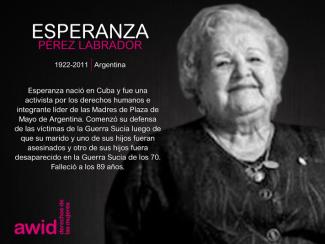
Esperanza Pérez Labrador

Young feminist activists play a critical role in women’s rights organizations and movements worldwide by bringing up new issues that feminists face today. Their strength, creativity and adaptability are vital to the sustainability of feminist organizing.
At the same time, they face specific impediments to their activism such as limited access to funding and support, lack of capacity-building opportunities, and a significant increase of attacks on young women human rights defenders. This creates a lack of visibility that makes more difficult their inclusion and effective participation within women’s rights movements.
AWID’s young feminist activism program was created to make sure the voices of young women are heard and reflected in feminist discourse. We want to ensure that young feminists have better access to funding, capacity-building opportunities and international processes. In addition to supporting young feminists directly, we are also working with women’s rights activists of all ages on practical models and strategies for effective multigenerational organizing.
We want young feminist activists to play a role in decision-making affecting their rights by:
Fostering community and sharing information through the Young Feminist Wire. Recognizing the importance of online media for the work of young feminists, our team launched the Young Feminist Wire in May 2010 to share information, build capacity through online webinars and e-discussions, and encourage community building.
Researching and building knowledge on young feminist activism, to increase the visibility and impact of young feminist activism within and across women’s rights movements and other key actors such as donors.
Promoting more effective multigenerational organizing, exploring better ways to work together.
Supporting young feminists to engage in global development processes such as those within the United Nations
Collaboration across all of AWID’s priority areas, including the Forum, to ensure young feminists’ key contributions, perspectives, needs and activism are reflected in debates, policies and programs affecting them.
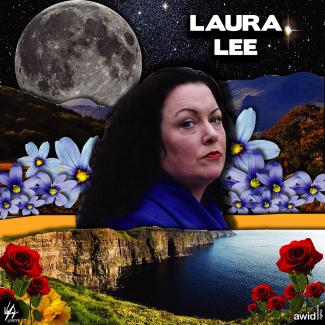
Laura fue una abogada y líder activista que luchó valientemente por la descriminalización del trabajo sexual en Irlanda.
Es recordada como «una combatiente por la libertad de lxs trabajadorxs sexuales, una feminista, una madre para su hija y una amiga necesaria para mucha gente».
Laura promovió el reconocimiento de las personas de la industria del sexo como trabajadorxs merecedorxs de derechos. Presentó demandas por la descriminalización, e inició una revisión judicial en la Corte Suprema de Belfast respecto de las provisiones que criminalizan la compra de servicios sexuales. Declaró que su intención era llevar el caso a la Corte Europea de Derechos Humanos.
Voulez-vous vous inspirer des stratégies de résistance créatives des féministes du monde entier ? Souhaitez-vous découvrir des initiatives féministes qui nous montrent comment nous pouvons tou.te.s vivre dans un monde plus juste ? Voulez-vous en savoir plus sur les modèles de soins et de guérison féministes à apporter à votre propre communauté ? Est-ce un oui retentissant que nous entendons ? OUI!
Alors consultez Crear | Résister | Transform : un festival pour les mouvements féministes. Ce festival s'est déroulé virtuellement tout au long du mois de septembre 2021 sur toutes les plateformes de l'AWID, et vous pouvez désormais en faire l'expérience à votre rythme.
Les sessions ci-dessous sont pour vous et tou.te.s les incroyables militant.e.s féministes et de justice sociale que vous connaissez. Rassemblons-nous pour partager nos stratégies de résistance, co-créer de la magie féministe et transformer ce monde ensemble.
La domination croissante des marchés financiers internationaux et des institutions dans la définition des politiques économiques mondiales a pour effet de confisquer le pouvoir des personnes dans l’intérêt des élites mondiales et des grandes entreprises.
Notre rapport sur les flux financiers illégaux explore leur impacts disproportionnés sur la justice de genre. Il expose les cadres politique et juridique qui permettent aux entreprises de jouir d'abus fiscaux au détriment des personnes et de la planète.
Le rapport conclut avec ces sept recommandations politiques féministes pour demander plus de transparence et de responsabilité des entreprises afin de stopper les flux financiers illégaux.
Les flux financiers illicites attirent une attention sans précédent, par exemple dans le cadre de négociations sur le développement autour du Programme de développement à l’horizon 2030 ou lors de la Conférence sur le financement du développement d’Addis-Abeba en 2015. Ils font également les gros titres dans les médias traditionnels avec la diffusion de documents concernant des opérations financières offshore ayant fait l’objet de fuites, une affaire connue sous le nom des « Panama Papers ».
Pour donner un autre exemple, lors d’un référendum en février 2017, le peuple équatorien a voté pour empêcher les politiciens et les fonctionnaires de posséder des actifs, des entreprises ou des capitaux dans des paradis fiscaux. Le gouvernement équatorien est maintenant une voix de premier plan au sein du G77, aux Nations Unies, en faveur de la création d’un organisme fiscal mondial de l’ONU pour mettre un terme aux paradis fiscaux.
Ce coup de projecteur constitue potentiellement une opportunité pour les féministes, les mouvements sociaux et les défenseur-euse-s de la justice fiscale de faire pression en faveur de la transformation du système financier mondial qui renforce les inégalités au niveau mondial, y compris les inégalités de genre.
Nous proposons ci-dessous sept revendications politiques pour contribuer aux actions de plaidoyer des féministes et des activistes oeuvrant en faveur de la justice sociale, des droits des femmes et de l’égalité de genre :
Listen to the story here:
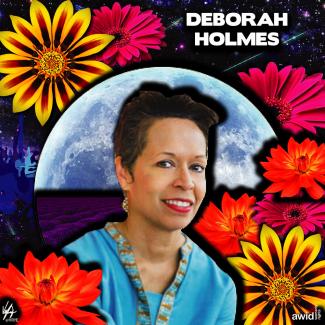
Jusqu’à son décès, à la suite d’une lutte brève mais agressive contre le cancer, Deborah était la directrice de la communication et de la mobilisation au Women’s funding network (le réseau de financement des femmes), WFN.
Entre 2008 et 2017, elle avait également travaillé auprès du Fonds mondial pour les femmes. Deborah était extrêmement appréciée et respectée par le conseil d'administration, l’équipe et les partenaires du Fonds mondial pour les femmes.
Kavita Ramdas, ex-PDG a déclaré, à juste titre, que Deborah était « la combinaison unique d’un être mêlant chaleur, générosité, intelligence et style, avec un engagement passionné pour faire fusionner la beauté et la justice. Elle avait compris le pouvoir des histoires. Le pouvoir de la voix des femmes. Le pouvoir de l'expérience vécue. Le pouvoir de renaître de ses cendres et de dire aux autres que c'était possible. Et nous continuons à nous relever. »
Musimbi Kanyoro, l'actuelle PDG du Fonds mondial pour les femmes, a ajouté: « Nous avons perdu une sœur et sa vie illumine des valeurs qui nous unissent et nous inspirent tou-te-s. Alors que nous sommes tou-te-s réuni-e-s pour pleurer le décès de Deborah, souvenons-nous et célébrons sa vie remarquable, audacieuse et passionnée. »
Anti-rights mobilization at the United Nations constitutes a response to the significant feminist and progressive organizing. It involves a constant threat for women's rights, especially when it comes to sexual and reproductive rights and an open door to racism, xenophobia and all kinds of discrimination.
Get to know all their tactics and discourses worldwide.
We’re looking at an attack on the human rights system, and all of these fundamentalisms are coming together to try to weaken the fabric of multilateralism, and that’s happening in large part at the expense of marginalized groups of people. It’s happening at the expense of women, and it’s happening through tactics that are often about gender and sexuality.
Cynthia Rothschild
Independent human rights expert, OURs member
We’ve experienced a lot of pushback from different states, from different civil society actors, from private corporations and large donors who are funding the activities of these anti-rights actors.
Meghan Doherty
Director of Global Policy and Advocacy with Action Canada
Read more on what we do at the Human Rights Council
Zhan Chiam
ILGA's Gender Identity and Gender Expression Senior Programme Officer
Paola Salwan Daher
Global Advocacy Adviser at the Center for Reproductive Rights
La pandemia de COVID-19 le mostró al mundo la importancia de lxs trabajadorxs esenciales. Estamos hablando de limpiadorxs, enfermerxs, paramédicxs, trabajadorxs del hogar, transportistxs, las personas que trabajan en los supermercados, entre muchísimas otras. Su trabajo es atender y garantizar el bienestar de lxs demás y hacer funcionar nuestras economías.
Pero mientras ellxs nos cuidan…
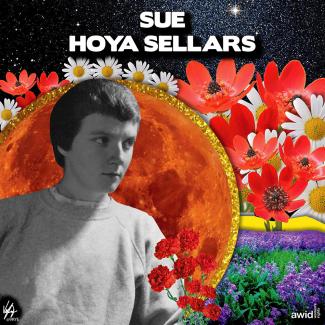
Sue was an artist, activist and teacher born in 1936 in Maryland, USA.
Sue created art for women, about women. As a lesbian feminist, and for a time, a separatist, she was committed to creating women-only spaces. In 1976 she purchased land that is still held by women who visit to make art. Sue took a fierce stand on the protection of women and girls.
With her groundbreaking futuristic, classical and anthropological approach, she filled any room she entered with intellect, authentic eccentricity, unforgiving wit, and humor. Her ideas about consciousness and creativity continue to inspire many people.
كلا. نقدّر عملك لكننا لا نطلب من الأفراد تعبئة الاستطلاع في الوقت الحالي.
Six thematic anchors hold the Feminist Realities framework of the Forum. Each anchor centers feminist realities, experiences and visions, on the continuum between resistance and proposition, struggle and alternative. We seek to explore together what our feminist realities are made of and what enables them to flourish in different spheres of our life.
These realities may be fully articulated ways of living, dreams and ideas in the making, or precious experiences and moments.
The anchors are not isolated themes, but rather interconnected containers for activities at the Forum. We envision many activities to be at the intersection of these themes, at the intersection of different struggles, communities and movements. The descriptions are preliminary, and continue to evolve as the Feminist Realities journey continues.
This anchor centers questions of how we -- as individuals, communities, and movements -- meet our basic needs and secure the resources that we need to thrive, in ways that center care for people and nature. By “resources” we mean food, water, clean air, as well as money, labor, information, knowledge, time, and more.
Drawing on feminist resistance to the dominant economic system of exploitation and extractivism, the anchor highlights the powerful and inspiring feminist proposals, experiences and practices of organizing our economic and social life. Food and seed sovereignty, feminist visions of work and labor, just and sustainable systems of trade, are just some of the questions to explore. We will bravely face the contradictions that emerge from the need to survive in oppressive economic systems.
This anchor positions funding and resourcing for organizations and movements in a broad feminist analysis of economic justice and wealth creation. It explores how to move resources where they are needed, from tax justice and basic income to different models of philanthropy and creative & autonomous resourcing for movements.
We seek to build new visions and amplify existing realities and experiences of feminist governance, justice and accountability. In the face of the global crisis and rising fascisms and fundamentalisms, this anchor centers feminist, radical and emancipatory models, practices and ideas of organizing society and political life, - locally and globally.
The anchor will explore what feminist governance looks like, from feminist experiences of municipalism to building institutions outside of nation-states, to our visions of multilateralism. We will exchange experiences of justice and accountability processes in our communities, organizations and movements, including models of restorative, community-based and transformative justice that reject state violence and the prison-industrial complex.
Centering experiences of travel, migration and refuge as well as feminist organizing, we seek a world without deadly border regimes; a world of free movement and exciting journeys.
The role of technology in our lives is ever increasing and the line between online and offline realities blurred. Feminists make widespread use of technologies and online space to build community, learn from each other, and mobilise action. With online spaces, we can expand the boundaries of our physical world. On the flip side, digital communications are largely owned by corporations with minimal accountability to users: data mining, surveillance and security breaches have become the norm, as well as online violence and harassment.
This anchor explores the feminist opportunities and challenges within digital realities. We’ll look at alternatives to privately owned platforms that dominate the digital landscape, well-being strategies for navigating online spaces, and uses of technology to overcome accessibility challenges. We’ll explore the potentials of technology in relation to pleasure, trust and relationships.
We hold feminist realities also within ourselves -- the embodied experience. Control of our labour, mobility, reproduction, and sexuality continues to be central to patriarchal, cis-heteronormative and capitalist structures. Defying this oppression, people of diverse genders, sexualities and abilities create encounters, spaces and sub-cultures of joy, care, pleasure and deep appreciation for ourselves and each other.
This anchor will explore multiple ideas, narratives, imaginations, and cultural expressions of consent, agency and desire as held by women, trans, non-binary, gender non-conforming and intersex people in different societies and cultures.
We will exchange strategies for winning reproductive rights and justice, and articulate social practices that enable and respect bodily autonomy, integrity and freedom. The anchor links different struggles and movements to inform each other’s perceptions and experiences of wellbeing and pleasure.
Imagine a feminist planet. What is the sound of the water, the smell of the air, the touch of the earth? What is the relationship between the planet and its living beings, humans included? Feminist realities are realities of environmental and climate justice. Feminist, indigenous, decolonial and ecological struggles are often rooted in transformative visions and relations among people and nature.
This anchor centers the wellbeing of our planet, and reflects on the ways in which humans have interacted with and reshaped our planet. We seek to explore aspects of traditional knowledge and biodiversity as part of sustaining a feminist planet, and learn about feminist practices around degrowth, commoning, models of parallel economies, agro-ecology, food and energy sovereignty initiatives.
While we see all the anchors as related, this one is truly cross-cutting so we invite you to add an organizing dimension to whatever anchor(s) your proposed activity links to.
How is feminist organizing happening in the world today? This question turns our attention to actors, power dynamics, resources, leadership, to the economies we are embedded within, to our understanding of justice and accountability, to the digital age, to our experiences of autonomy, wellbeing and collective care. Across all anchors, we hope to create a space for honest reflection on power and resources distribution and negotiation within our own movements.
The Forum is more than a four-day convening. It is one more stop on a movement strengthening journey around Feminist Realities that has already begun and will continue well beyond the Forum dates.
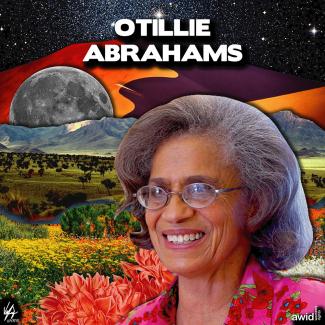
Ottilie fue una activista feminista, educadora y política de Namibia.
Fue una de las fundadoras de la Organización Popular del Sudoeste Africano (SWAPO), del Club Yu Chi Chan (un grupo armado revolucionario) y del Frente Nacional de Liberación del Sudoeste Africano (SWANLIF). También fue una de las fundadoras de la Asociación de Mujeres de Namibia y del Proyecto Niñas. A lo largo de su vida, Ottilie defendió el derecho a discutir, a pensar, a disputar y a exigir. Movilizó a las mujeres, organizó a estudiantes y docentes y criticó a otrxs camaradas por su elitismo y su corrupción.
Ottilie trabajó intensamente para desmantelar el patriarcado y para crear una democracia participativa concreta, feminista, transformadora y liberadora.
A menudo decía: «Descansaré cuando muera».