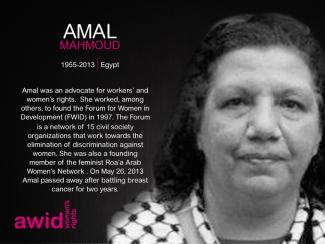
Ahmal Mahmoud

Young feminist activists play a critical role in women’s rights organizations and movements worldwide by bringing up new issues that feminists face today. Their strength, creativity and adaptability are vital to the sustainability of feminist organizing.
At the same time, they face specific impediments to their activism such as limited access to funding and support, lack of capacity-building opportunities, and a significant increase of attacks on young women human rights defenders. This creates a lack of visibility that makes more difficult their inclusion and effective participation within women’s rights movements.
AWID’s young feminist activism program was created to make sure the voices of young women are heard and reflected in feminist discourse. We want to ensure that young feminists have better access to funding, capacity-building opportunities and international processes. In addition to supporting young feminists directly, we are also working with women’s rights activists of all ages on practical models and strategies for effective multigenerational organizing.
We want young feminist activists to play a role in decision-making affecting their rights by:
Fostering community and sharing information through the Young Feminist Wire. Recognizing the importance of online media for the work of young feminists, our team launched the Young Feminist Wire in May 2010 to share information, build capacity through online webinars and e-discussions, and encourage community building.
Researching and building knowledge on young feminist activism, to increase the visibility and impact of young feminist activism within and across women’s rights movements and other key actors such as donors.
Promoting more effective multigenerational organizing, exploring better ways to work together.
Supporting young feminists to engage in global development processes such as those within the United Nations
Collaboration across all of AWID’s priority areas, including the Forum, to ensure young feminists’ key contributions, perspectives, needs and activism are reflected in debates, policies and programs affecting them.
Maria is a graphic designer and visual communicator. Maria has worked with NGOs and Human Rights like Profamilia and OXFAM. As a woman of the Global South, she feels especially called to use her skills to work with organizations that help protect the wellbeing, as well the rights of millions of girls and women in Latin America.
Building on initial desk research and consultations with allies that led us to rule out many other options in the region, we organized a thorough round of site visits to Nepal, Malaysia, Sri Lanka, Thailand, Indonesia and (later) Taiwan.
Each site visit included not just scoping the logistical infrastructure but meeting with local feminist groups and activists to better understand the context, and their sense of potential opportunities and risks of an AWID forum in their context.
They often expressed conflicted feelings about the opportunities and risk that the visibility of an event like the Forum could bring to them. In one, during the first 30 minutes of our meeting we heard unanimously from the activists gathered that an AWID Forum would be subject to huge backlash, that LGBTQ rights were a particular political hot-button and that fundamentalist groups would turn out in full force to interrupt the event. When our response was “ok, then you don’t feel it’s a good idea”, again the unanimous response was “of course it is, we want to change the narrative!”.
It was difficult to hear and see in some of these places how many feminist activists wanted to leverage the opportunity of a visible big event and were prepared to face the local risks; but our considerations as hosts of close to 2,000 people from around the world impose a different calculation of risk and feasibility.
We also grappled with questions of what it means to organize a feminist forum that is aligned to principles around inclusion, reciprocity and self-determination, when state policy and practice is usually directly counter to that (although officials in the ministries of Tourism work very hard to smooth that over).
In many of these places, monitoring the context felt like an exercise on a pendulum that could swing from open and safe for feminist debates in one moment to stark repression and xenophobia the next, sacrificing feminist priorities as political bargaining chips to pacify right wing, anti-rights forces.
Our challenges in Asia Pacific led us to consider: would it be easier if we moved the Forum to a different region? Yet today, we would not be able to organize an AWID Forum in Istanbul as we did in 2012; nor would we be able to do one in Brazil as we did in 2016.
With all of this complexity, AWID selected Taipei as the Forum location because:
In organizing the AWID Forum, we are trying to build and hold space as best we can for the diverse expressions of solidarity, outrage, hope and inspiration that are at the core of feminist movements.
At this moment, we see Taipei as the location in the Asia Pacific region that will best allow us to build that safe and rebelious space for our global feminist community.
The fact is, there is no ideal location in today’s world for a Forum that centers Feminist Realities. Wherever we go, we must build that space together!
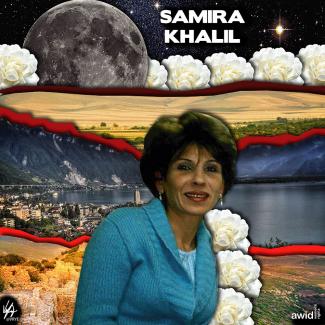
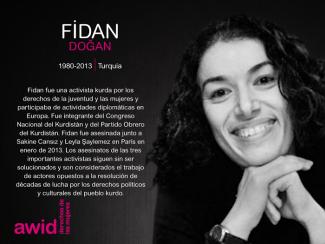
Samira fue una activista siria bajo el régimen de Bashar al-Asad.
Desde muy joven, se opuso a todas las formas de despotismo, especialmente en relación al régimen autoritario en el que vivía. En 2013, Samira fue secuestrada junto a otrxs tres destacadxs activistas. Se cree que se la llevaron del Centro para la Documentación de Violaciones de Duma, en el área rural de Damasco.
El principal sospechoso de su desaparición es el Ejército del Islam (el cual niega estar involucrado). No ha habido una investigación formal de la desaparición de Samira y desde entonces no se ha sabido nada de ella. Samira estaba comprometida con su país y se negaba a abandonar Siria hasta tanto no sintiera que su trabajo por el empoderamiento de las mujeres y en la documentación de los crímenes ya no fuera necesario.
يركّز استطلاع "أين المال" على وقائع التمويل للتنظيمات النسوية، تسأل أغلبية الأسئلة عن تمويل مجموعتكم/ن بين الأعوام 2021-2023. سوف تحتاجون أن تكون لديكم/ن معلومات معيّنة عند تعبئة الاستطلاع مثل ميزانيتكم/ن السنوية ومصادر التمويل الأساسية.
nous prenons position en solidarité les un·e·s avec les autres ainsi qu’avec différentes luttes en défense de la justice et des libertés. Nous nous efforçons de mobiliser et renforcer l’action collective et de pratiquer des méthodes significatives de collaboration.
Leila es una líder, defensora y consultora feminista transnacional, con más de veinticinco años de experiencia en la promoción de los derechos humanos, la igualdad de género y la justicia sexual y reproductiva en salud, derechos y justicia a nivel local y global. Leila nació en Argelia y se educó en Estados Unidos, Francia y Marruecos; a lo largo de su carrera profesional, ha vivido y trabajado en África, Europa y Estados Unidos.
Durante más de cinco años fue Vicepresidenta de Programas en el Fondo Global de Mujeres (GFW), supervisando el otorgamiento estratégico de subvenciones, el fortalecimiento de los movimientos, la incidencia global y las colaboraciones filantrópicas. En GFW duplicó las subvenciones otorgadas a más de 17 millones USD, inauguró el trabajo sobre movimientos feministas y de género en las crisis, creó un programa para niñas adolescentes liderado por un consejo asesor de niñas, y dirigió su trabajo de incidencia filantrópica. Antes de eso, entre 2002 y 2016 se desempeñó en el equipo de dirección de Ipas, donde publicó extensamente sobre derecho al aborto y justicia, lideró tareas de incidencia globales, y se asoció con grupos feministas que trabajan sobre gestión autónoma, movilización comunitaria y reducción de estigmas respecto de la integridad corporal y de los derechos sexuales y reproductivos. Mientras vivió en África del Norte, cofundó una empresa consultora feminista interseccional, Strategic Analysis for Gender Equality (SAGE), que trabajaba en las intersecciones de los derechos económicos, de género y sexuales y reproductivos, y dirigió el trabajo nacional, regional y mundial sobre género de la oficina de El Cairo de la Fundación Ford durante cinco años.
Leila tiene una vasta experiencia en educación popular, incidencia, organizaciones sin fines de lucro, juntas de desarrollo, filantropía, y monitoreo y evaluación. Es una hábil comunicadora comprometida con la utilización del enfoque interseccional para priorizar y difundir las voces y las experiencias de las personas más marginadas. Ha recibido la beca «Op-ed Public Voices» de la Fundación Ford, y fue becaria Fulbright en Marruecos. Sus publicaciones cubren una amplia gama de tópicos, incluyendo enfoques feministas y decoloniales a la filantropía, la promoción de los derechos humanos de las mujeres en contextos mayoritariamente musulmanes, estrategias feministas para impulsar la justicia reproductiva, el fomento de los abortos autogestionados, y la lucha contra los estigmas y la discriminación.
Actualmente Leila se desempeña como Copresidenta de la Junta Directiva del Centro por los Derechos Constitucionales (CCR), e integra la Junta Directiva del Highlander Research and Education Center. Es también funcionaria del consejo de rendición de cuentas del Numun Feminist Technology Fund y del comité asesor de la African Women’s Human Rights Defenders Platform. Anteriormente ha integrado las Juntas de la SisterSong Women of Color Reproductive Justice Collective, de la Red Mundial de Mujeres por los Derechos Reproductivos (WGNRR), del Fondo Global de Mujeres (GFW), del Fondo de Acción para el Aborto Seguro (SAAF), y del Proyecto de Tecnologías para la Salud Reproductiva (RHTP). Fue elegida Tesorera e integrante del Comité Ejecutivo de la Junta Directiva de Prospera, y del Comité de Dirección de Fenomenal Funds por cuatro años. Leila tiene una Maestría en Salud Pública, y una Maestría en Estudios de Medio Oriente y Norte de África; ha estudiado derecho islámico en Marruecos, y cursó estudios doctorales en sociología en Francia. Ha estudiado árabe y alemán, habla francés e inglés en forma fluida.
Ассоциация «Права женщин в развитии» и Фонд «Красный зонт» приглашают Вас принять участие в диспуте-семинаре на тему феминизма и секс-работы.

10 ноября 2020г. в 14:00 по UTC (сверьтесь с вашим местным временем)
В рамках данной сессии, сотрудницы (-ки) Ассоциации «Права женщин в развитии» будут делиться своими знаниями и опытом работы в условиях виртуального общения. Мы поговорим об основных сложностях и интерсекциональности в работе секс-работниц (-ков) и феминисток (-ов).
Подумайте над своими вопросами!
Для участниц (-ков) будет предоставлен перевод на испанский, французский и русский языки.
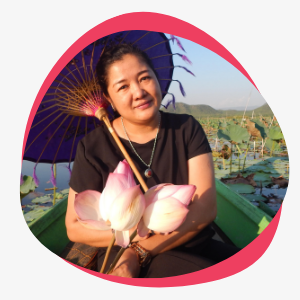
Кей Тхи является секс-работницей и с 2007 года лоббирует вопросы здоровья и прав секс-работниц (-ков). За последние девять лет она участвовала в программе по предупреждению ВИЧ среди женщин, работающих в секс-индустрии, и мужчин, имеющих половые связи с мужчинами, в Мьянме. В настоящее время Кей Тхи является региональной координаторкой Азиатско-Тихоокеанской сети секс-работниц (-ков) (АТССР) и работает с партнерами по всему Азиатско-Тихоокеанскому региону.
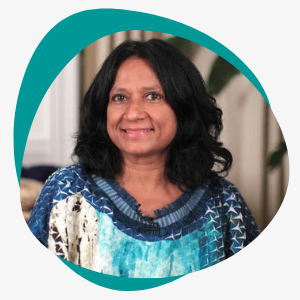
Гитанджали является соосновательницей и исполнительной директоркой организации CREA (Нью-Дели). Она феминистка и любительница кино, работала по вопросам сексуальности, репродуктивного здоровья, гендера, прав человека и насилия в отношении женщин на различных уровнях - в качестве активистки, грантодательницы и на директивном уровне.
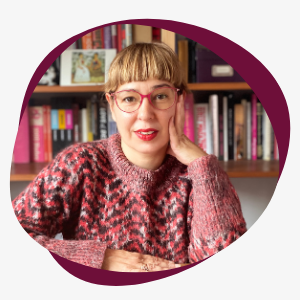
Вера присоединилась к фонду «Красный зонт» в августе 2017 года в качестве сотрудницы по программам. Вера родилась в Испании, где окончила факультет журналистики Университета Сан Пабло в Валенсии. Последние 7 лет она является активной участницей организации «X-talk», очень вовлечена в работу Коллектива Стриптизерш (-ров) Восточного Лондона, а также является участницей съемочной группы «Опера секс-работниц (-ков)».
Заинтересованы в том, чтобы вскоре стать частью этого диспут-семинарa и других обучения?!
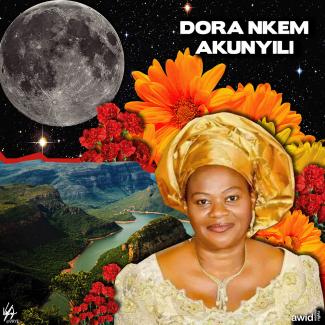
Née dans l'État de Benue, au Nigeria, Dora était une pharmacienne experte et érudite ainsi qu’une dirigeante communautaire de renommée mondiale.
Lorsqu'elle est devenue directrice générale de l'Agence nationale pour la gestion et le contrôle des aliments et drogues (NAFDAC) entre 2001 et 2008, son travail d’envergure révolutionnaire a initié un changement de paradigme au sein de la fonction publique nigériane. Au cours de son mandat, elle a mené des réformes dans l'application des politiques et des réglementations qui ont permis de réduire de manière radicale le nombre de faux médicaments qui ont affecté le secteur pharmaceutique nigérian.
Après avoir incarné la réalité d’une femme courageuse et compétente qui a défié les maux d’une société à dominante patriarcale et qui a conduit au changement, elle est devenue une icône de l’émancipation des femmes. Entre 2008 et 2010 elle a été nommée ministre de l'Information et de la Communication.
Elle est décédée des suites d'un cancer et laisse dans le deuil son mari, ses six enfants et ses trois petits-enfants.
Мы запрашиваем эти данные, чтобы облегчить просмотр ответов, избежать дублирования и иметь возможность связаться с вашей организацией в случае, если вы не смогли завершить опрос и/или если у вас возникли сомнения или дополнительные вопросы. Здесь вы можете узнать больше о том, как мы используем личную информацию, которую собираем в ходе нашей работы.
Alexandra is an anglo-colombian feminist with over 20 years of experience in local, national and international HIV and sexual and reproductive health and rights programming. She has extensive experience in resource mobilization and donor relations with private philanthropic foundations and multilateral agencies on behalf of international, national and local NGOs, predominantly in Latin America and the Caribbean. Prior to AWID, Alexandra worked at Fundación Si Mujer, a feminist abortion provider and educator in Colombia, RedTraSex and the International HIV/AIDS Alliance.
Alexandra has a BA in International Relations and Development Studies from Sussex University and a MSc in Public Health from the London School of Hygiene and Tropical Medicine. In rare moments when she is not working or parenting, she loves to swim, eat and has recently begun to play Zelda: Breath of the Wild with her son.
Par Alejandra Laprea
Qu’il est difficile de condenser la puissance et la diversité des voix qui s'élèvent en Amérique latine afin de vous présenter les autres réalités qui émergent dans ce vaste territoire, ces réalités féministes que nous construisons à partir du mouvement et des organisations populaires….
Pendant longtemps, j’ai tenté de paramétrer ma recherche et la sélection des films qui vous permettraient d’avoir un aperçu de tous ces rêves et projets qui se matérialisent peu à peu sur les territoires ‘notre-américains’, comme nous aimons à les appeler. La tâche a été ardue : il a fallu tenter d'établir des paramètres tels que la présence géographique, la justice linguistique et la représentation de la diversité des populations : indiennes, afro-descendantes, migrantes, et la multiplicité des drapeaux et des luttes qui découlent de toutes ces voix. Je suis arrivée à la conclusion que la création de cette compilation était un travail qui prendrait plusieurs années, un de ces projets en perpétuelle construction.
Pour ce salon, je suis partie à la recherche d'œuvres liées à la mobilisation et à la militance, ainsi que de documents qui donneront peut-être lieu à de grands débats que nous n'avons pas encore eus.
Dans cette sélection de films, vous découvrirez les voix de réalisatrices qui ne se contentent pas de restituer les réalités féministes palpitant dans chaque recoin de ce territoire vaste et divers, mais explorerez aussi des oeuvres qui, dans leur conception même, s'interrogent sur le pourquoi, le qui et le comment du cinéma ou de l'audiovisuel. Ces femmes comprennent le cinéma comme un outil de lutte, comme quelque chose de plus que de simples images à apprécier sur un écran. Pour ces réalisatrices ou collectifs de cinéastes, le cinéma et l'audiovisuel constituent un outil capable de promouvoir la discussion, d'ouvrir un débat, bref, une ressource pour la pédagogie populaire et féministe.
Ainsi, cette petite présentation est un voyage à travers les réalités féministes à deux niveaux : d’un côté, il y a ces histoires que vous découvrirez, et de l’autre, le travail de ces cinéastes qui cherchent à expérimenter, à créer d’autres réalités féministes dans leur façon de faire de l’audiovisuel et de raconter des histoires.
Bon voyage au gré de ces films de résistance, créatifs et transformateurs !
Direction: Giovana García Soto
Docu-fiction
Spanish with English subtitles
In Lima is Burning our work plays with documentary and fiction to take us into the life of Gía, a non-binary person, who uses performance art as a tool to denounce and transgress, as a vital manifesto against transfobia in every space, including gays spaces. With Gía we also take a look at transfeminism as a safe community in which Gía feels embraced, where she shares feelings and affections.
Giovana Garcia Sojo is a young peruvian audiovisual producer, specialized in low-budget production, creation for children and adolescents in cinema and cinematographic script by the International School of Cinema and Television - EICTV in San Antonio de Baños - Cuba. Giovana has developed her path as a director towards women and feminized identities, Lima is Burning is one of her first works.
Réalisé par Patricia Ortega
Fiction
Sous-titres en anglais
Patricia Ortega, directrice de “Yo Imposible” explore à travers Ariel, une jeune dont l’intersexualité a été violentée chirurgicalement dans son enfance, les multiples façons dont on tente de normaliser la diversité sexuelle et de genre.
Le film nous raconte comment Ariel a découvert qu’elle était née intersexe et qu’elle avait subi plusieurs chirurgies visant à normaliser ses organes génitaux. Cette découverte confronte le personnage à la redécouverte de son corps, à la reconstruction de son identité et nous confronte, nous qui regardons le film, à la remise en question d’une société dominée par l’hétéronormativité qui invisibilise les autres et les condamne au malheur.
Patricia Ortega, cinéaste vénézuélienne vivant en Argentine, a étudié à l’Ecole internationale de Cinéma et Télévision de Cuba et s’est spécialisée dans la réalisation de films. À travers la fiction, elle traite les situations extrêmes que les femmes ou les corps féminisés traversent et leurs façons de les surmonter.
“Yo Imposible” est une prise de position face à la conception d’un monde qui n’est conçu qu’en termes de masculin/féminin et qui invisibilise les autres. «Ces personnes ne sont pas malades, simplement génétiquement différentes. On intervient sur leurs organes génitaux et leur corps au moyen d'hormones sans leur autorisation, ce qui constitue une violation de leurs droits humains et de leur identité, et on cherche à les faire entrer dans les canons établis.» - Patricia Ortega
Réalisé par Maria Torrellas Liebana
Documentaire
Sous-titres en anglais
María Torrellas nous raconte la révolution cubaine à travers les femmes qui l’ont fait vivre, dont Vilma Espín, Celia Sánchez et Haydee Santamaría, entre autres.
Mais on ne peut pas se limiter à raconter l'histoire de la révolution cubaine par les femmes au passé, et c'est une lutte quotidienne que Torrellas dévoile en donnant la voix aux paysannes cubaines, professionnelles, étudiantes et ouvrières d’aujourd’hui. Dans «Cubanas, mujeres en revolución», nous découvrons les défis actuels des femmes cubaines face aux préjugés persistants, aux nouvelles formes de violence et au défi constant de créer de nouvelles réalités féministes pour celles et celleux qui viendront après elles dans un territoire assiégé depuis plus de soixante-dix ans par l'impérialisme américain.
María Torrellas est une communicante et documentariste. Elle a une longue carrière cinématographique et a obtenu, entre autres, le prix Santiago Alvarez in Memoriam pour son documentaire : Memoria de una Hija de Oshun (Mémoire d’une fille d’Oshún).
«Dans ce documentaire, j’ai souhaité mêler les luttes des héroïnes d’hier à celles des femmes d’aujourd’hui. Il s’agit d’histoires racontées par les femmes elles-mêmes où elles évoquent également les combattantes qu’elles admirent le plus. J’ai été impressionnée d’entendre “la révolution nous a tout donné” ou “que serait devenue ma famille sans la révolution?” de la bouche de camarades aux origines humbles, paysannes ou noires.» - María Torrellas
Réalisé par Gabriela Arnal et Marzel Ávila pour Fondo de Acción Urgente - LAC
Équateur 2019
Sous-titres en anglais
CUIDANDERAS, qui fusionne les mots ‘cuidar’ (prendre soin) et ‘curanderas’ (guérisseuses), est la synthèse d’une série portant sur les femmes en Amérique latine sur leurs territoires, des femmes qui mettent leur corps et toute leur énergie à protéger leurs communes, à protéger ce que nous offre la pachamama en nous engageant à en faire usage avec autant de sagesse que le reste des êtres vivants. Cette mini-série de documentaires nous présente les histoires de trois collectifs de femmes latinoaméricaines qui se dédient à prendre soin de leurs territoires, guérir leurs corps et affronter les modèles extractivistes et racistes en Équateur, en Colombie et en Bolivie.
Province d’Orellana, Équateur. Depuis plusieurs siècles, les femmes Waorani se battent pour leur territoire amazonien et la préservation de leur culture autochtone. Aujourd’hui, elles sont confrontées aux menaces de l’industrie pétrolière et son modèle de production mortifère. Depuis la jungle, des leaders appartenant à l’Association des femmes Waorani de l’Amazonie équatorienne (AMWAE, d’après son sigle en espagnol) exposent les raisons de leur résistance et nous montrent cette joie inépuisable qui symbolise leur plus grande force.
Buenaventura, Colombie. Dans le port le plus grand et le plus violent de Colombie, ravagé par des décennies de conflit armé, de racisme et de machisme, un groupe de femmes refuse de sombrer dans la peur et résiste dans l’adversité. La Red Mariposas de Alas Nuevas (Réseau papillons aux ailes nouvelles) réunit des femmes noires de la côte pacifique colombienne qui travaillent de concert pour protéger leur territoire, récupérer leurs traditions ancestrales et guérir les blessures de cette violence systématique et structurelle.
Protéger et prendre soin du corps-terre-territoire est la vocation des femmes autochtones, paysannes et irrigantes (chargées des irrigations) en Bolivie face à un modèle extractiviste qui menace leurs vies, leur santé, leur intégrité physique et sexuelle et la survie de leurs communautés et de leurs territoires. Le Réseau de défenseuses de la Terre Mère a réuni des femmes de plus de 12 communautés autochtones afin de défendre leur droit à l’eau et dénoncer les violations des droits humains et des droits de la nature perpétrées par les industries extractives, tout en récupérant leurs savoirs et pratiques ancestrales de soin collectif.
«CUIDANDERAS, un mot qui combine ‘cuidadoras’ (celles qui prennent soin) et ‘curanderas’ (guérisseuses), présente les histoires de femmes défenseuses latinoaméricaines qui se consacrent à prendre soin de leurs territoires comme de leurs corps. La force collective de ces femmes a changé l’histoire de leurs communautés en Équateur, en Colombie et en Bolivie face à l’extractivisme et au racisme.»
Réalisé par Carlina Reynso
Argentine 2013
Espagnol
Si quelque chose a marqué les luttes féministes en Amérique latine, c'est assurément le cri lancé à l'échelle continentale en faveur d’un avortement libre, sûr et gratuit. Du nord au sud, les mouvements féministes se lèvent et descendent dans la rue pour lutter en faveur de la libération de notre premier territoire : notre corps. Ce documentaire sur l'avortement au sein de ce salon s’avère ainsi indispensable à l’heure de comprendre le pouvoir de nos femmes latino-américaines.
“Yo aborto, Tu Abortas Todxs Callamos” raconte l’histoire de sept femmes, dont la réalisatrice du documentaire, issues de classes socioculturelles différentes, qui se penchent sur une problématique dont chacune a, un jour ou l’autre, fait l’expérience dans son propre corps : l’avortement clandestin.
À travers leurs témoignages, la réalisatrice tente de démonter les mythes liés à l’interruption volontaire de grossesse, de déstigmatiser la question et de renouveler notre regard sur l’une des formes de violence les plus courantes dans les Amériques.
Réalisatrice, chercheuse et productrice de cinéma féministe, c’est aussi une activiste féministe qui anime des ateliers de création de scénarios d’un point de vue du genre afin de multiplier les films illustrant des réalités différentes et des histoires contre-hégémoniques. Carolina Reynoso conjugue de manière équilibrée activisme et création dans chacune de ses œuvres.
«Nous sommes un groupe de réalisateurs·rices audiovisuel·le·s qui avons réalisé ce documentaire pour continuer à lutter en faveur d’un avortement libre, sûr et gratuit en Argentine. Le film présente les témoignages de sept femmes, dont la réalisatrice du documentaire, issues de différentes classes socioculturelles qui se penchent sur une problématique dont chacune a, un jour ou l’autre, fait l’expérience dans son propre corps: l’avortement clandestin.» -L’équipe de tournage
Nosotras Audiovisuales, collectif de réalisatrices chiliennes
Chili 2020
Lien vers le micro documentaire:
Espagnol
"Historias Urgentes" est une série créée par des femmes afin de visibiliser les besoins et les expériences revêtant une importance pour la population des territoires qui composent le Chili d'aujourd'hui. Cette série audiovisuelle est née pour entretenir la flamme ayant attisé la révolte sociale en octobre 2019 dans un Chili diversifié qui s'était réveillé et avait alors déclaré : «ça suffit».
"Resistencia en ollas comunes", la première de ces "Historias urgentes", nous montre, par la voix de quatre femmes d'Iquique, de Valparaíso, de Chillán et de Santiago, comment les soins se trouvent en première ligne de la résistance, créant d'autres réalités féministes pour elles-mêmes et pour les communautés où vivent les femmes d'Amérique latine.
Nosotras audiovisuales
Cette organisation, qui réunit des femmes ayant un lien avec l’audiovisuel chilien, est née en 2017 du besoin de connecter les femmes qui travaillent dans l’audiovisuel. Elle encourage ainsi le réseautagel, la collaboration et l’information entre femmes du secteur audiovisuel, ainsi que leurs travaux et leurs points de vue sur le monde du travail.
Nosotras Audiovisuales participe à la révolte chilienne en enregistrant et créant des contenus de création collective.
Micol Metzner
Argentine 2019
Castillan
À partir de son expérience personnelle, la réalisatrice Micol Metzner présente une œuvre qui mêle documentaire et fiction, sa voix de cinéaste engagée à celle de milliers de femmes victimes de la traite sur le continent et démontre enfin que la solidarité entre femmes constitue la meilleure protection.
Réalisatrice audiovisuelle et formée à l’Institut d’arts cinématographiques d’Avellaneda, cette directrice artistique et monteuse fait partie du Cluster audiovisual de la Ciudad de Buenos Aires (Cluster audiovisuel de la ville de Buenos Aires), un espace communautaire et coopératif multisectoriel qui réalise des projets indépendants.
Elle anime des ateliers de cinéma dans certains quartiers et dans des contextes carcéraux (institutions pour mineur·e·s et prisons pour femmes). Elle fait partie de la société de production audiovisuelle MVM.
«La société de production MVM est née de la nécessité de pouvoir exprimer beaucoup de choses que nous exprimons habituellement dans la rue et de pouvoir le faire de manière créative à travers le dessin, l'audiovisuel et la photographie.
La société de production MVM est un lieu de recherche sur le langage, le graphisme et l'audiovisuel d’un point de vue féministe. C'est aussi un lieu qui permet de se libérer de tout ce que nous vivons et de générer des productions artistiques, parfois pour guérir, parfois pour créer des espaces de débat, comme c’est le cas de ce court métrage... Je n'imaginais pas que ce serait le cas, mais à chaque fois que le court métrage est diffusé, beaucoup de choses sortent, il engendre des discussions qui sont beaucoup plus enrichissantes que le court métrage en soi. Et le fait que ce soit notre travail qui déclenche ça, c’est formidable...».
Facebook: @AWIDWomensRights
Instagram: @awidwomensrights
Twitter ENG: @awid
Twitter ES: @awid_es
Twitter FR: @awid_fr
LinkedIn: Association for Women's Rights in Development (AWID)
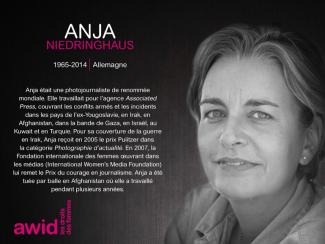
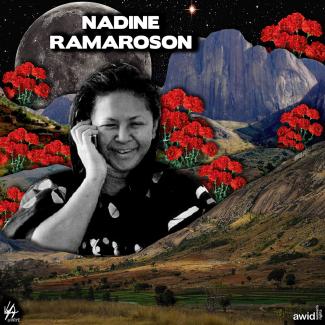
Nadine was a role model to many for her work supporting women and the most vulnerable in her community. She was committed to helping the poor and homeless in particular.
Though her death was reported as an accident, the Ramaroson family, led by her father, André Ramaroson led an investigation that pointed to evidence that she had been murdered. She is reported to have died in a fatal accident occurred between Soanierano - Ivongo and Ste Marie - a story that has been refuted by her family.
She received numerous death threats for her bold political positions. Her case remains in court in Antananarivo (the capital of Madagascar).
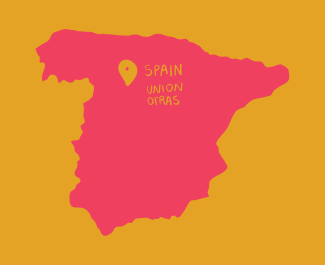
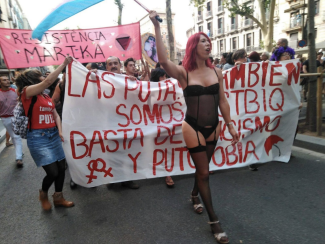
Te presentamos a Sabrina Sanchez, increíble mujer trans, migrante, trabajadora sexual, organizadora, transfeminista y una de las fundadoras del sindicato OTRAS.
Originaria de la Ciudad de México, emigró a España hace 17 años después de graduarse en comunicaciones y comenzó a trabajar como trabajadora sexual.
No pasó mucho tiempo antes de que se involucrara con el activismo trans y el activismo de trabajadoras sexuales en Barcelona. Después de unirse al colectivo Asociación de Profesionales del Sexo (Aprosex), comenzó a trabajar en su secretaría y fundó el sindicato español de trabajadoras sexuales OTRAS.
Actualmente vive en Ámsterdam, donde trabaja como coordinadora de la Alianza Europea de Trabajadoras Sexuales.
Dato divertido: ¡también es mecánica de automóviles y corredora!
O questionário está disponível até o final de julho de 2024. Queira preencher o mesmo dentro deste prazo para garantir que as suas respostas são incluídas na análise.