
Clara Luper
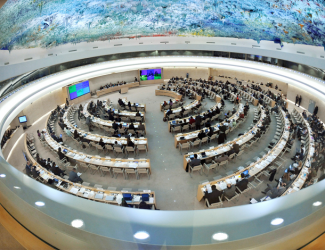
The Human Rights Council (HRC) is the key intergovernmental body within the United Nations system responsible for the promotion and protection of all human rights around the globe. It holds three regular sessions a year: in March, June and September. The Office of the UN High Commissioner for Human Rights (OHCHR) is the secretariat for the HRC.
Debating and passing resolutions on global human rights issues and human rights situations in particular countries
Examining complaints from victims of human rights violations or activist organizations on behalf of victims of human rights violations
Appointing independent experts (known as “Special Procedures”) to review human rights violations in specific countries and examine and further global human rights issues
Engaging in discussions with experts and governments on human rights issues
Assessing the human rights records of all UN Member States every four and a half years through the Universal Periodic Review
AWID works with feminist, progressive and human rights partners to share key knowledge, convene civil society dialogues and events, and influence negotiations and outcomes of the session.
Joanne es una feminista africana que siente pasión por la lucha contra las desigualdades de género en el continente africano. Ha trabajado con varias organizaciones, medios de comunicación y grupos de reflexión globales, incluidos Amnistía Internacional, Wrthy, el Instituto de Investigación en Desarrollo Local, la BBC, la Comunidad de África Oriental (CAO), entre otros. Integra la junta de Freely in hope, una ONG radicada en Kenia y Zambia, que busca capacitar a lxs sobrevivientes y defensorxs para convertirse en líderes de la lucha para poner fin a la violencia sexual, y de Msingi Trust, un movimiento de activistas que trabajan en la confluencia de la fe y los derechos humanos. Posee una maestría en Administración de Empresas, maestrías en Política Pública y una licenciatura en Derecho. Tiene adicción por los libros, en especial, por la literatura de ficción.
El trauma no es el evento mismo; es cómo responden nuestros cuerpos a los eventos que sentimos como peligrosos. A menudo queda atravesado en el cuerpo, hasta que lo abordamos. No se puede convencer a nuestro cuerpo de que no responda, simplemente lo hace.
Maria est graphiste et communicatrice visuelle. Elle a travaillé dans le secteur des Organisations Non-Gouvernementales et des droits humains, avec par exemple Profamilia et OXFAM. En tant que femme du Sud Global, elle se sent particulièrement appelée à utiliser ses compétences pour travailler avec des organisations qui contribuent à protéger le bien-être ainsi que les droits de millions de filles et de femmes en Amérique latine.
“If we can inherit trauma, can we inherit an imprint related to love?”
With over 30 years of finance experience, Christine has devoted her career to furthering nonprofit missions on a global scale. Her contributions extend to serving as Treasurer on the Board of an NGO. Christine joined AWID in 2007 as Controller and in 2023 took on the role as Director of Finance. During her spare time she enjoys traveling, gardening and hiking.
مع استمرار الرأسمالية الأبوية الغيريّة في دَفعِنا نحو الاستهلاكية والرضوخ، نجد نضالاتنا تُعزَل وتُفصَل عن بعضها الآخر من خلال الحدود المادّية والحدود الافتراضية على حدٍّ سواء.
The AWID Forum has always been a space that doesn’t shy away from much needed and difficult conversations. We welcome these submissions when the organizers can carefully hold a respectful and safer space for the participants.
Alexandra est une féministe anglo-colombienne qui dispose de plus de 20 ans d'expérience dans les programmes locaux, nationaux et internationaux en matière de VIH et de santé et droits sexuels et reproductifs. Elle possède une vaste expérience dans la mobilisation de ressources et les relations donateur·rice·s avec des fondations philanthropiques privées et des agences multilatérales pour le compte d'ONG internationales, nationales et locales, principalement situées en Amérique latine et dans les Caraïbes. Avant de rejoindre l'AWID, Alexandra a travaillé à la Fundación Si Mujer, une prestataire féministe d’accès à l’avortement et éducatrice en Colombie, à RedTraSex et à l'Alliance internationale contre le VIH/SIDA.
Alexandra est titulaire d'une licence en relations internationales et en études de développement de l'Université du Sussex et d'un master en santé publique de la London School of Hygiene and Tropical Medicine. Dans les rares moments qui ne sont pas dédiés à son travail ou sa parentalité, elle adore nager, manger et a récemment commencé à jouer à Zelda: Breath of the Wild avec son fils.
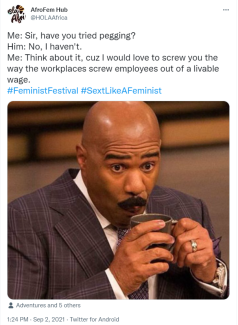
أنا: هل سبق أن ثبتّ شيئاً بقضيب؟
هو: لا، لم أفعل
أنا: تمَعَّن بالعمليّة الآن، لأنني سأُريك شخصيًا، كيف تضع الرأسمالية قضيب
استغلالها في أجساد العمّال
¡Sí! En este momento el formulario requiere que se completen los nombres de lxs presentadorxs aun si no están confirmadxs todavía. Entendemos que es probable que se produzcan cambios durante el año.
Jemutai se passionne pour les plantes et puise son inspiration dans la nature et dans toutes les interconnexions qui la composent. Cette fascination pour l’interdépendance des éléments se reflète dans son approche du travail, de la construction communautaire, des soins et du soutien. Iel croit en la présence vibrante de ses ancêtres au fond d’iel et vit pour expérimenter, se souvenir, défendre, apprécier et célébrer leurs luttes, leurs triomphes et leurs valeurs.
En tant que féministe queer intersectionnel·le et défenseur·euse des droits humains, Jemutai a consacré sa carrière à l’équité et à l’inclusion. Passionné·e par le développement organisationnel, iel dispose d’une formation en administration et en octroi de subventions. Iel œuvre désormais à la création de rassemblements pertinents, en fournissant un soutien et un leadership opérationnels et en veillant à ce que les espaces soient inclusifs, sûrs et élaborés avec soin et précision.
Jemutai croit profondément en la philosophie de l’Ubuntu, l’idée que « je suis parce que nous sommes ». Cette croyance en notre humanité partagée et en notre interdépendance mutuelle inspire son approche, basée sur la collaboration, ainsi que son engagement à créer un environnement favorable et inclusif pour tous·tes, en particulier pour les personnes structurellement réduites au silence et marginalisées.
Dans le cadre de notre engagement à nouer des liens plus profonds avec des artistes via nos pratiques de co-création de Réalités Féministes, AWID a collaboré avec un Groupe de Travail Artistique visant à faire progresser et à renforcer les programmes et réalités féministes, dans les communautés et mouvements via l’expression créative. Notre intention ici est de rassembler des féministes créatifs·ves dans un espace puissant et audacieux pour grandir et vivre librement, et briser les récits toxiques en les remplaçant par des alternatives transformatrices.
Cette exposition rassemblera le travail d’artistes et de collectifs du monde entier, de celle.ux qui créent activement la différence que nous voulons voir dans ce monde. Ces féministes créatifs·ves comprennent Upasana Agarwal, Nicole Barakat, Siphumeze Khundayi, Katia Herrera, Ali Chavez Leeds, Colectivo Morivivi, Ika Vantian, ainsi que les organisateurs·rices de l’exposition #MeToo en Chine. Leurs voix résonnent avec force dans leur refus d'accepter les limites imposées par le patriarcat, et amplifient leurs engagements envers les communautés dans lesquelles, et avec lesquelles, i.elles travaillent. Chaque œuvre représente, à sa façon, des actes de résistance quotidienne, des histoires et des identités inédites, des liens avec la terre et nos ancêtres et, plus important encore, la solidarité qui existe au sein et entre les mouvements et luttes féministes. Ces artistes inspirent et sont inspiré·e·s par des stratégies créatives de résistance et d'initiatives féministes qui nous montrent comment nous pouvons vivre ensemble dans un monde plus juste - un monde qui place au centre le soin et la guérison.
لغات العمل في جمعية حقوق المرأة في التنمية هي الإنجليزية والفرنسية والإسبانية. ستتم إضافة اللغة التايلاندية كلغة محلية، بالإضافة إلى لغة الإشارة وإجراءات الاتصال الأخرى. يمكن إضافة لغات أخرى إذا سمح التمويل بذلك، لذا تحقق/ي مرة أخرى بانتظام للحصول على التحديثات. نحن نهتم بالعدالة اللغوية وسنحاول تضمين أكبر عدد ممكن من اللغات بقدر ما تسمح به مواردنا. نأمل في خلق فرص متعددة للكثيرين/ات منا للتواجد بلغاتنا والتواصل مع بعضنا البعض.
AWID’s work is made possible through the financial support of a wide range of donors including multilateral and bilateral agencies, private foundations and women’s funds.