
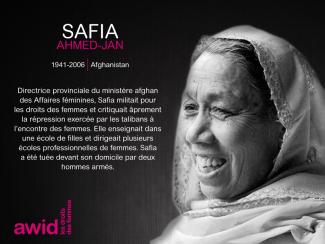
Safia Ahmed-Jan
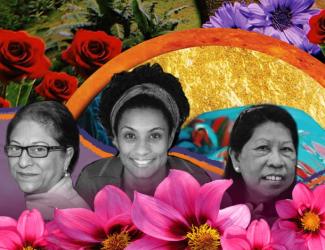
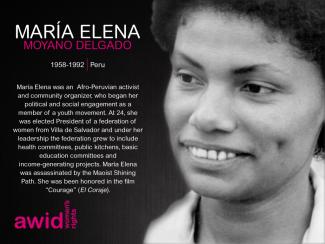
AWID’s Tribute is an art exhibition honouring feminists, women’s rights and social justice activists from around the world who are no longer with us.
This year’s tribute tells stories and shares narratives about those who co-created feminist realities, have offered visions of alternatives to systems and actors that oppress us, and have proposed new ways of organising, mobilising, fighting, working, living, and learning.
49 new portraits of feminists and Women Human Rights Defenders (WHRDs) are added to the gallery. While many of those we honour have passed away due to old age or illness, too many have been killed as a result of their work and who they are.
This increasing violence (by states, corporations, organized crime, unknown gunmen...) is not only aimed at individual activists but at our joint work and feminist realities.
The portraits of the 2020 edition are designed by award winning illustrator and animator, Louisa Bertman.
AWID would like to thank the families and organizations who shared their personal stories and contributed to this memorial. We join them in continuing the remarkable work of these activists and WHRDs and forging efforts to ensure justice is achieved in cases that remain in impunity.
“They tried to bury us. They didn’t know we were seeds.” - Mexican Proverb
It took shape with a physical exhibit of portraits and biographies of feminists and activists who passed away at AWID’s 12th International Forum, in Turkey. It now lives as an online gallery, updated every year.
To date, 467 feminists and WHRDs are featured.
Par Nkhensani Manabe
Le titre de la conversation « Pansexuel, Gynasexuel ou Abrosexuel ? Une plongée dans la queerness, le plaisir et la positivité sexuelle » donne matière à réflexion. Tiffany Kagure Mugo, auteure, éducatrice et programmatrice de HOLAAfrica, commence la discussion par une lecture de Touch, une collection récemment publiée d'essais de fiction et de non-fiction sur le sexe, la sexualité et le plaisir. Dans cet extrait, l'auteure avance l'idée que le plaisir est constant et continu, qu'il se retrouve dans les activités quotidiennes et ne se limite pas aux relations sexuelles.
Cette idée, du plaisir faisant autant partie de la vie quotidienne qu'autre chose, guide la discussion, couvrant également les thèmes du désir, de l'attirance et de l'orientation sexuelle.
Dès le départ , il y a ce sentiment d'espoir et de possibilité. Tiffany présente des options et explique les alternatives, nous donnant un nouveau langage pour parler de qui nous sommes, de ce que nous aimons et de comment nous le voulons. Il est question de désir et de sexe, mais surtout de connaissance de soi et d'autonomisation. Tiffany parle avec passion du fait de prendre des décisions à partir d'un lieu de pouvoir : apprendre de sa propre identité afin de pouvoir faire les meilleurs choix pour soi-même.
Dans une discussion ouverte et libre, représentant l'attitude que Tiffany voudrait que nous adoptions tou·te·s, nous apprenons que les savoirs sur le sexe et la sexualité sont en constante évolution, et que leurs limites se déplacent. Ce qu’on a peut-être appris ou, plus important encore, ce dont nous avons été tenus à l'écart en tant qu'enfants ou adultes, est précisément le point de départ pour désapprendre et se déprogrammer. Tiffany souligne que les jeunes de nos jours ont besoin d'outils pour comprendre les expériences qu'iels vivent déjà, un rappel sur le fait de ne jamais sous-estimer ce que les enfants et les adolescent·e·s savent sur le type de plaisir(s) qu’iels poursuivent dans la vie.
La conversation m’a ouvert l’esprit sur un point : me connaître m'aidera à prendre confiance en moi ; je pourrai aborder les relations en prenant soin non seulement de moi-même mais des autres. Apprendre le langage de l'orientation, de l'attirance, du désir et du plaisir contribuera à approfondir mes relations futures. J'ai apprécié le fait d'avoir un espace pour réfléchir à cet aspect de ma vie - ces parties privées et intimes auxquelles je n'accède pas souvent. L'enthousiasme de Tiffany pour le plaisir et l'identité a repoussé mes propres limites et m’a permis d'ouvrir de nouvelles possibilités personnelles.
L'idée d'apprendre à établir des liens holistiques n'est pas encore courante. Globalement, nous vivons dans une culture de connexions instantanées et éphémères. Il n'y a pratiquement jamais de temps pour réfléchir réellement à la raison et au type de relation ou de partenariat que nous recherchons - du moins, pas avant une période de crise.
Bien sûr, il existe des espaces dédiés à accueillir les questions et les discussions, tels que le festival AWID Crear Résister Transform et d'autres plateformes ou publications en ligne de pensée libre - mais l'accès à l'information à partir d'une source utile et sans jugement est toujours laborieux . Cela peut être dû en partie au fait que les gens ne font pas confiance au langage de la sexualité et du plaisir.
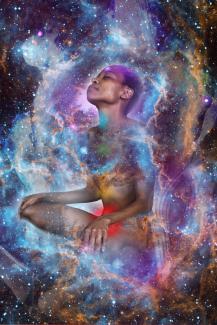
La notion de langage et d'outils se répète tout au long de la présentation. Tiffany et ses collègues assurent la fonction de parler, d'enseigner et d’alimenter. Voir ce dont les personnes ont besoin, où elles se trouvent, ce qu'elles veulent pour elles-mêmes et marcher à leurs côtés pendant qu'elles construisent leurs mondes idéaux. Leur donner de nouveaux mots et définitions pour les aider à façonner leurs identités à différentes étapes de leur vie.
Les conversations de ce type sont nécessaires, même dans une société qui diffuse à tout moment une myriade de messages sur la santé, plus ou moins détaillés. Les gens ont parfois besoin d’être tirés à l'écart pendant les grands moments collectifs et encouragés à connaître leurs opinions et leurs désirs individuels. C'est ce que fait le discours de Tiffany : il donne aux gens un espace au sein du plus grand puzzle.
Sexuel - signifie le désir exprimé d'avoir des relations avec une ou plusieurs personnes
Sensuel - le désir de toucher une ou plusieurs personnes, d'être physiquement proche sans nécessairement avoir des rapports sexuels
Romantique - le désir de sortir ou d'être en relation avec une ou plusieurs personnes
Platonique - le désir de nouer des amitiés étroites
Esthétique - le désir de regarder et d'apprécier l'apparence d'une ou de plusieurs personnes
Ces cinq types ou niveaux d'attraction offrent un raccourci du désir et du plaisir, et aident à contextualiser les différents types de plaisir que les gens peuvent éprouver.
Penser l'attirance au-delà du physique ou du sexuel offre une nouvelle perspective sur les liens. C'est une chance de relâcher la pression sur les relations, ouvrant des opportunités pour des partenariats différents, plus éclairés et épanouissants.
Cette liberté et ces connaissances soulignées par Tiffany constituent une feuille de route pour l'avenir. La présentation a ainsi offert une perspective nouvelle sur ce qui est possible.
Comme le soulignait l'extrait d'ouverture, le plaisir est continu. À la lumière de la discussion de Tiffany, il devient clair que le plaisir est également dynamique et excitant. Il y a toujours plus à apprendre.
Cela peut être intimidant au début, mais de l'autre côté de l'hésitation, il y a de l'espoir, du potentiel et de la liberté.
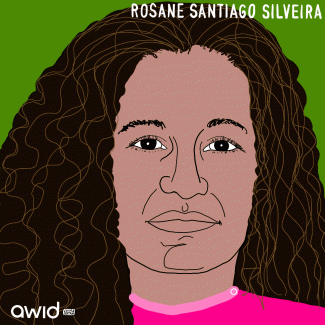
Rosane Santiago Silveira era conocida afectuosamente como «Rô Conceição». Fue una activista ambiental y por los derechos humanos que luchó fervientemente para proteger el medio ambiente en las zonas más amenazadas.
Esta lucha incluyó la defensa así como también la protección ambiental en la isla de Barra Velha, cuando estuvo amenazada por la exploración petrolera, mediante campañas contra la apropiación de tierras y la expansión de las plantaciones de eucaliptus en el Estado de Bahía, donde Rosane integraba el Consejo de la Reserva Extractivista de Cassurubá.
«La Reserva Extractiva es un área protegida donde las familias residentes se ganan la vida con productos naturales extraídos del bosque. Estas actividades ayudan a mantener la integridad del bosque.» - Global Justice Ecology Project (fuente original: Rede Brasil Atual)
Rosane participó en actividades sindicales, y en movimientos culturales y por los derechos humanos. Dedicó gran parte de sí misma, no solamente a las causas que la afectaban directamente, sino a problemas de la tierra, los bosques, los ríos y las comunidades cuyos derechos y vidas están continuamente en riesgo.
Fue torturada y asesinada el 29 de enero de 2019 en Nova Viçosa, una ciudad del sur de Bahía.
«Lamentablemente, hoy existe un sentimiento de inseguridad total, por la ausencia del Estado en la investigación de estos delitos. Estuvimos con ella en Navidad, todos se dieron cuenta de que estaba preocupada, y ahora sabemos que había recibido tres amenazas de muerte.» - Tuian, hijo de Rosane, en una entrevista con Rádio Brasil Atual (fuente original: Rede Brasil Atual)
Mientras estés en São Paulo, Brasil, puedes visitar la Ocupação 9 de Julho y pedir una comida colaborativa. También puedes comprar sus productos en su tienda online desde el extranjero.
Visita la tienda en línea de la Asociación de Mujeres Afrodescendientes del Norte del Cauca (ASOM) donde puedes encontrar hermosos productos hechos a mano.
Hay varias formas de apoyar a Metzineres: puedes hacer una donación económica, donar materiales y servicios, o proponer una formación, un taller o una actividad (para más información, ¡ver aquí!)
¿Cuánto sabes sobre financiamiento feminista? 📊 Pon a prueba tu conocimiento sobre la movilización de recursos para el financiamiento de la organización feminista, respondiendo al cuestionario "¿Dónde está el dinero?":
Completa el quiz en línea Descarga la versión para imprimir
Queremos expresar nuestro más sincero agradecimiento a todos los diversos grupos, colectivos y organizaciones feministas de todo el mundo que respondieron a la encuesta WITM. Su participación y sus puntos de vista han sido inestimables y enriquecerán enormemente nuestra comprensión colectiva de los recursos feministas a nivel mundial.
I have belonged to you for as long as I can remember. As a young girl, I did not know there was a word -feminist- for us people, who aspire to overcome and dismantle the patriarchy, who seek refuge in the arms of inclusion and intersectionality, who treat people as equals regardless of their gender, race, sexuality, religion, and ethnicity, who are constantly learning to do better, to be better and to use their privilege to uplift others.
When I was 14, my middle school French teacher, a 6ft tall thirty-year-old man, assaulted a female student in my class in front of all of us. The student, who was a childhood friend of mine, and several girls in my class went to the headmaster to report him, parents got involved, and the entire class of 30 students vouched for the girl. But all our attempts to hold him accountable failed and the administration covered up the girl’s story and he never got fired or persecuted. The girls in my class and I were outraged so we did what every young raging feminist would do. WE EGGED HIS CAR! and though the eggs get washed off easier and the paint we used to write “Pig” and “Khamaj '' -scumbag- needed to get scrubbed off. I will never forget how that made us girls feel. Liberated, enraged, happy, close-knit, and in power. The same feeling replicates in every feminist setting I have been in ever since. The teen feminist in me grew up to join Women Deliver, AWID, Unootha, facilitate feminist workshops at university, and even get persecuted for my feminist affiliation at 19, but that’s another story for another letter.
Feminist movements and spaces offer me safety and empowerment. They are the mothers we wished we had and the link we needed to connect and organize ourselves despite our differences against a common enemy that has been undermining everyone, patriarchy. It is through you that I learned to be resilient and to gather my strengths and skills and direct them towards uplifting others and bringing to light the marginalized and giving a voice to the voiceless.
What I love most about you, feminist movements is that you mess up sometimes, you disregard and marginalize as well, you have bias as does every other movement but what makes you different is that you always strive to be better. Accountability is not something you’re afraid of and you are an ever-changing collective that reflects how altruism and philanthropy in the effort of gender equity change as time passes.
May you always grow, may you do better, may you always rage, may you always roar, may you always love, may you always speak different tongues, and may you always be in power.
Love, light, and rage,
Lina
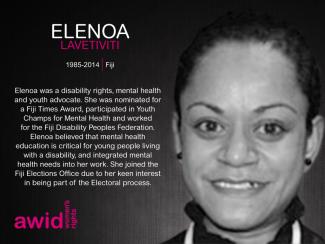
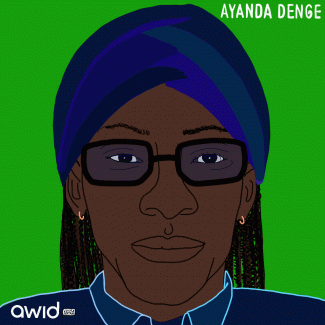
« Je suis un miracle… Je suis donc née d’une mère! Moi qui commence à bégayer, J’ai eu une vie à nulle autre pareille... » - Ayanda Denge (lisez le poème entier ci-dessous)
En tant qu’activiste fervente et engagée de la justice sociale, elle s'est battue pour les droits des travailleures du sexe, des personnes trans et des personnes vivant avec le VIH et le sida. Elle a également été une conférencière motivatrice sur la sensibilisation au cancer ainsi que fait campagne en faveur de logements sociaux et abordables, en particulier au profit des pauvres et des travailleures. Ayanda s'est dressée comme une montagne contre les différents visages souvent violents de la discrimination.
« Lorsque vous êtes transgenre, ce n’est pas une double dose, mais une triple dose de stigmatisation et de discrimination que vous recevez. Vous êtes discriminé·e en raison de votre identité sexuelle, en raison de votre travail et en raison de votre statut sérologique VIH. » - Ayanda Denge, 2016
Elle a été présidente par intérim de la Sex Workers Education and Advocacy Taskforce (SWEAT, groupe de travail sur l’éducation et la défense des travailleures du sexe) et coordonnatrice de liaison pour Sisonke, un mouvement national de travailleures du sexe sud-africain.
« D’ici, de notre siège régional à SWEAT, où je siège au conseil d'administration, en passant par Sisonke, un mouvement de travailleures du sexe au Cap, nous ne faisons qu’un. Nous avons un même cri et c'est un cri qui est reconnu dans le monde entier par les travailleures du sexe de toute la planète. Nous voulons la décriminalisation du travail du sexe ». - Ayanda Denge, 2016
Elle vivait dans la maison Ahmed Kathrada, qui était occupée par la campagne Reclaim the City en faveur de logements sociaux. En 2018, Ayanda avait été élue responsable de la maison. Le 24 mars 2019, elle a été poignardée à mort dans sa chambre. L'année précédente, un autre résident avait été tué.
Reclaim the City fait le lien entre la sécurité des résident·e·s des maisons et le gouvernement de province qui les prive d'électricité et du droit humain à l'eau potable :
« Nous ne pouvons dissocier la sécurité des femmes et des personnes LGBTQI vivant dans le squat du refus du gouvernement de la province du Cap-Occidental de rétablir l'électricité et l'eau potable dans la maison Ahmed Kathrada.
La maison est dans le noir complet le soir. Nous avons besoin de lumière pour nous protéger les un·e·s les autres. On a l'impression que la province veut punir les pauvres et les ouvrier·ère·s, dont le seul crime était d'avoir besoin d'un toit. Certes, ils ont le droit de ne pas être d’accord avec nos raisons de squatter, mais ils devraient avoir honte de faire passer la politique avant la sécurité et la dignité des résident·e·s de cette ville.
Repose en paix, camarade Ayanda Denge, nous reprenons le flambeau et nous nous souviendrons de toi dans cette lutte pour un logement décent et central. »
Poème d’Ayanda :
Je suis un miracle…
Je suis donc née d’une mère!
Moi qui commence à bégayer,
j’ai eu une vie à nulle autre pareille.
Née dans la douleur
Nourrie par la pluie
Pour gagner en hauteur
Je vivais dans les égouts.
Là je verse une larme,
je me relève et brandis ma lance.
Les voix résonnent, n’ayez pas peur
Des défis à relever dans l’année,
Des défis de souffrance dans mon dossier;
La communauté applaudit, croyant que j’ai gagné la course;
Mais en réalité mon travail avance à pas de tortue;
À genoux je m’incline et demande grâce.
Car le Seigneur
Est mon épée;
Pour rappeler à l’humanité
Qu’il apporte la sérénité.
Pourquoi, Seigneur, suis-je ce miracle?
Le Seigneur me répond par la pluie et le tonnerre,
Pour avoir interrogé mon père
Qui a dans le livre des agneaux
Un prénom nommé Ayanda.
Dans la rue ma vie n’a jamais été douce
Les personnes que j’ai dû croiser;
Parfois, je ne les saluais jamais;
Et même lorsque j’avais besoin de manger;
Je préférais tirer ma révérence
Plutôt que de prendre place.
Écoutez le poème de la voix d'Ayanda
« Car ma vie est pareille à celle d’une fleur de lotus, hors des eaux sombres et troubles, j'ai fleuri pour être belle et forte… »- Ayanda Denge, regardez et écoutez
« Ayanda, je voudrais te dire que dans nos coeurs, dans nos esprits, tu es toujours une survivante. Tu n’es plus là mais tu es partout, parce que tu es amour. Comme c’est merveilleux d’être aimé·e, et de donner de l’amour. Et c’est là, Ayanda, le cadeau que tu nous as fait. Merci pour tout cet amour, nous avions vraiment besoin de toi. Je te promets qu’à l’avenir, nous nous engageons tou·te·s à poursuivre la lutte à laquelle tu as consacré tant d’énergie et de temps. Et nous nous engagerons à obtenir justice pour cette fin de vie abominable que tu as connue. » - Transcription d’un message, lors d’un hommage d'adieu à Ayanda
« Ayanda était une activiste par nature. Elle connaissait ses droits et n’hésitait pas à se battre pour les droits des autres. En ce qui me concerne, je n’ai pas été surprise qu’elle s’implique auprès de nombreuses organisations, il était évident qu’elle aimait les gens. Elle ne défendait pas nécessairement les droits des LGBTI, mais les droits de toutes et de tous. » - la soeur d’Ayanda

Notre force collective, notre sagesse et notre engagement sont illimités... mais pas nos comptes en banque.
Cette synthèse s’appuie sur les réponses de 1 174 organisations féministes, de défense des droits des femmes, LBTQI+ et alliées (désignées ci-après comme « organisations féministes et de défense des droits des femmes ») issues de 128 pays, ayant participé à l’enquête Où est l’argent pour l’organisation des mouvements féministes ?
Je suis ravie de te faire part d’un de mes rendez-vous les plus remarquables en tant que féministe en situation de handicap. C’était le 30 mai 2014. L’Organisation nationale des puissantes dames porteuses d’un handicap visuel (NOVEL) participait aux festivités de la Fashion Week 2014 des Philippines, au profit de notre campagne de plaidoyer pour les cannes blanches. Deux dames aveugles défilaient sur le podium pour promouvoir la canne blanche comme symbole de l’égalité des genres, de l’autonomisation, de l’inclusion totale et de la participation égale des femmes et des filles porteuses de handicap visuel au sein de la société.
J’étais extrêmement nerveuse au moment de leur passage devant la foule, en tant que porte-parole de notre projet auprès des productions Runway (j’avais douloureusement attendu cette approbation pendant une année entière), sachant qu’elles n’étaient pas des mannequins, elles avaient été nommées Madame Philippines Vision et la première dauphine 2013 de Madame Philippines sur Roues, Signe et Vision par Tahanang Walang Hagdanan, Inc. (« Maison sans marches »). Elles n’avaient pas pu participer à leur séance d’orientation et s’étaient entraînées la veille au soir sans pouvoir le faire avec des mannequins professionnelles. Avant que ne commence le spectacle, je les avais appelées pour booster leur confiance et prier ensemble que Dieu les guide. Lorsqu’elles ont quitté le podium, j’ai pris une grande respiration alors que les larmes coulaient sur mes joues. Je me sentais euphorique parce que nous y étions parvenues malgré toutes les difficultés! Notre message au monde disant que les femmes et les filles en situation de handicap visuel pouvaient marcher en toute dignité, liberté et indépendance sur la même base d’égalité que les autres, grâce à notre appareil d’aide – les cannes blanches – qui était passé! On a parlé de nous sur les réseaux sociaux ainsi que sur les chaînes de télévision.
Ma vie de féministe en situation de handicap a débutcé comme un moyen de réparer mon manque de confiance et de trouver une autre trajectoire de réussite pour ma vie après avoir survécu à une vicieuse attaque à l’acide en 2007, alors que j’attendais le véhicule qui devait me ramener chez moi depuis le bureau. Mes yeux ont été fortement touchés, au point où je suis devenue une femme malvoyante.
Ce progrès n’est pas sans coût, tout comme il n’est pas parfait. Les activistes féministes, les groupes et les activistes se retrouvent face aux difficultés typiques rencontrées dans les contextes conservateurs et affectés par des conflits. Mais l’impact du mouvement des jeunes féministes au Soudan mérite d’être encensé. Dépasser les obstacles internes des différences de culture, de religion et des conflits historiques est un défi en soi, que les jeunes féministes au Soudan semblent relever activement. La création d’écoles féministes au Darfour et dans le Kordofan révèle la trajectoire unique du travail des jeunes féministes au Soudan, dont nous pouvons tirer des enseignements.
Je n’avais jamais pensé que ma vie pourrait être aussi joyeuse et pleine de sens avant de rencontrer les femmes leaders du mouvement pour le genre et le handicap, qui n’ont cessé depuis d’exercer une influence positive sur moi. Leurs mots d’encouragement m’ont plu et sont devenus la musique la plus douce à mes oreilles. Mon cœur brisé bondit comme un oiseau qui prend son envol à chaque fois que je pense à elles et au féminisme qui m’a encouragée à contribuer pour que les choses changent pour nos sœurs en situation de handicap qui sont invisibles et pour celles qui continuent à être discriminées. Jusqu’à ce jour, je suis consumée par le désir d’être avec le mouvement. Je ne peux cacher mon excitation chaque fois que je soumets des propositions de projets à différentes parties prenantes pour l’autonomisation, le développement et la promotion de nos sœurs en situation de handicap. Ou à chaque fois que j’interviens dans des conversations locales, nationales et internationales pour faire entendre nos voix, même lorsque cela est à mes dépens.
De manière inattendue, j’ai été choisie pour représenter notre pays à l’assemblée générale de l’Union mondiale des aveugles (UMA) en 2012 en Thaïlande, bien que je venais d’arriver dans le mouvement en faveur du handicap. Cette même année, j’ai été la seule femme élue au comité de l’Union philippine des aveugles (UPA). J’ai eu envie de me rapprocher de nos sœurs ayant un handicap visuel et de les informer sur leurs droits et afin qu’elles connaissent les questions transversales. En 2013, nous avons officiellement lancé NOVEL pour soutenir l’autonomisation de nos sœurs en situation de handicap, constituer des coalitions de mouvements de plurihandicap et de mouvements de femmes et promouvoir le développement inclusif du genre du handicap.
Ma participation en tant que copersonne pour les ressources des femmes en situation de handicap dans notre soumission au rapport alternatif à la CEDAW en 2016 avec les groupes de femmes marginalisées, coordonné par Women’s Legal and Human Rights Bureau (WLB), m’a ouvert de nombreuses portes et également permis de travailler avec différentes organisations de femmes et de participer aux Journées internationales de l’inclusion de Berlin en 2017, aux côtés de trois leaders philippines en situation de handicap; journées au cours desquelles nous avons fait part de nos bonnes pratiques, et principalement de notre engagement auprès de mouvements des femmes d’autres pays.
Ma trajectoire en tant que féministe en situation de handicap a été une véritable montagne russe émotionnelle pour moi. J’en ai retiré beaucoup de joie et un sentiment de valeur lors du travail pour la promotion de nos sœurs en situation de handicap pour une participation totalement inclusive, égale et efficace dans la société, mais je me suis également sentie frustrée et en colère lorsque j’ai tout donné et que j’ai essuyé des remarques négatives. Malgré tout, c’est ce que je ressens parce que je suis amoureuse du mouvement.
Je vois mon avenir dans le travail en solidarité avec le mouvement afin de veiller à ce que nos sœurs, en situation de handicap ou non, puissent profiter de, et participer également et entièrement dans la société.
Plein d’amour,
Gina Rose P. Balanlay
Féministe en situation de handicap
Philippines
NOUS SOMMES LA SOLUTION
Là où les organisations de terrain pilotent et les multinationales sont tenues responsables.
📅 Mardi 11 novembre 2025
📍 En ligne et à l'Universidade Federal do Pará, Belém
The body is a powerful entity. As women, our bodies are controlled, oppressed and policed from the womb. The way we look, move, dress, walk, speak, gesture, laugh. I often wondered at what drives patriarchal fears around the power of female bodies. Where I come from sex work and sex workers were whispered of with simultaneous contempt, disgust, fascination, pity and condemnation.
Where I come from sex work and sex workers were whispered of with simultaneous contempt, disgust, fascination, pity and condemnation.
I first encountered sex work and sex workers at age 22. Simple conversations, sitting in circles, chatting over coffee and tea, we explored each other’s lives, experiences, thoughts and feelings.
For sex workers, sex work was the most worthwhile choice out of all other options to pay bills, to support family, to have more flexible working hours, to have sex. Just as I chose my job as the most worthwhile, to pay bills, to support family, to have more flexible working hours.
These individuals, women and men, taught me that I made my own decisions about my body… where I focus its life and energy, whether I use it for pleasure or pain, whether I trade it in or give it freely, and how I want to feel about my body. The awareness was as exciting as it was empowering.
Crear | Résister | Transform: a festival for feminist movements – 2021… you accompanied me through a series of life-changing moments (!!!)
We call these ‘events,’ though in truth, to me, your feminist learning spaces are, where I take a little of what’s inside me, a little of what your speakers say and some from the discussions to go deeper into our understanding.
Sharing… Partaking… Immersing…
in strength, in vulnerability, in pleasure.
Simply being the transformative feminist that I am, without pretentions, without misgivings…
Welcoming the transformative feminist that I have always been, without even knowing the term or acknowledging it in such a manner or in such terms…
Finding home for the fiercely transformative feminist living within me…
Despite the anger, rage and frustration of not being treated as equals and being treated with ‘less __ than,’
I did not always consider myself a feminist nor did I recognise myself within the feminist movement or discourse… Truly, I appreciate doors being held open, chairs being pulled out to be seated, acknowledgement as a woman, of my femininity.
At times I dismissed the patriarchy with annoyance, at times, I responded with frustration and anger but I did not address it… I did not notice its sinister, insidious toxicity… I was privileged enough to be able to work through it, to survive it, to overcome it, to excel in spite of it… I did not question enough, challenge enough, push my boundaries enough… I did not do enough…
connecting with sex workers, exploring sexuality, and the women for peace and security...
Until I became fully aware and understood the implications of both privilege and oppression that was intersectional.
Until I realised what it meant to fight for gender justice and not simply ‘equality for all.’
Practitioner and facilitator no longer, I am a transformative feminist practitioner and facilitator.
Being a feminist means that I will act
Plunging into uncertain, fragile, complex (and possibly quite violent) future…
I am deeply grateful for you and I promise to remain fierce in addressing and redressing problematic issues around gender, race, ethnicity, social class, sexual orientation and ability, and remain present and faithful to the struggle for inclusion, equity and justice.
Khin Khin
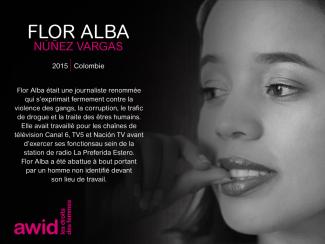
Nous avons le plaisir de vous présenter Mariama Sonko, agricultrice rurale, éco-féministe et défenseuse des droits humains, vivant actuellement à Niaguis, une ville du sud-ouest du Sénégal.
Ayant grandi dans une famille et une communauté rurale d’agriculteur·rices, elle a été témoin du rôle essentiel des femmes dans la production alimentaire et la conservation des semences depuis son plus jeune âge, tout en étant immergée dans le travail de la terre.
Mariama défend les savoirs agricoles locaux et les pratiques paysannes depuis les années 90. En tant que mère de 5 enfants, la nourriture qu'elle cultive elle-même est la principale source de subsistance de sa famille.
Elle est actuellement présidente de Nous Sommes la Solution et s'engage à promouvoir les pratiques agroécologiques et l'agriculture familiale, à encourager la souveraineté alimentaire, la biodiversité et la préservation des semences paysannes, et à exiger un accès équitable aux ressources et à la terre à travers l'Afrique de l'Ouest.
Source: AWID’s Feminist Realities Festival Crear | Résister | Transform - Day 2/ 2ème jour/ 2º día
*Website in French
¿Cómo reaccionas cuando parece que el mundo desciende sobre ti? Tidinha se encontró en una situación en la que logró ser escuchada al cuestionar la elección de la sede, y al mismo tiempo descubrió visiones y sueños compartidos y se dio cuenta de que no está sola.