Memory as Resistance: A Tribute to WHRDs no longer with us
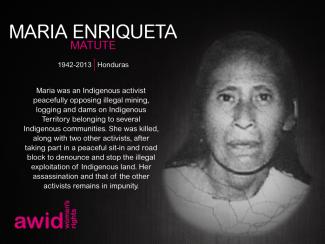
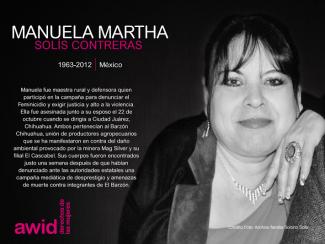
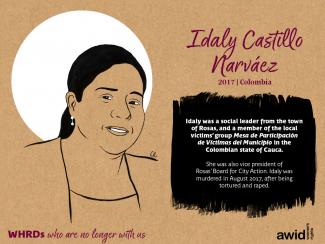
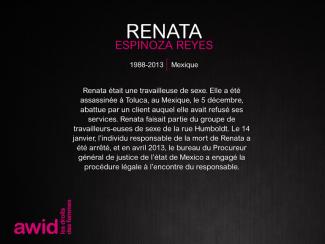
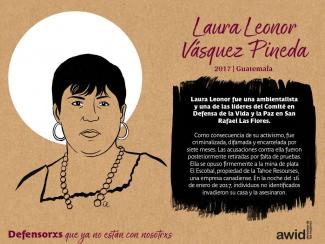
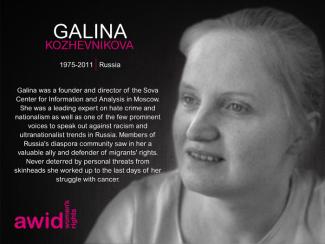
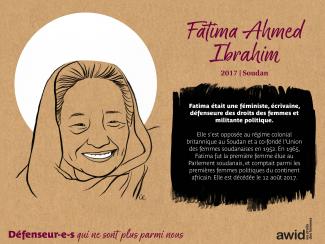
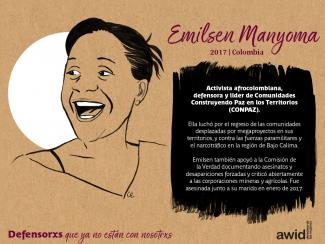
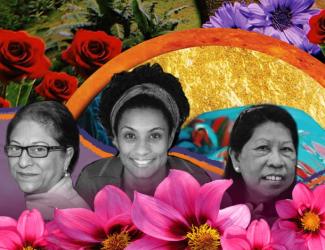
AWID’s Tribute is an art exhibition honouring feminists, women’s rights and social justice activists from around the world who are no longer with us.
In 2020, we are taking a turn
This year’s tribute tells stories and shares narratives about those who co-created feminist realities, have offered visions of alternatives to systems and actors that oppress us, and have proposed new ways of organising, mobilising, fighting, working, living, and learning.
49 new portraits of feminists and Women Human Rights Defenders (WHRDs) are added to the gallery. While many of those we honour have passed away due to old age or illness, too many have been killed as a result of their work and who they are.
This increasing violence (by states, corporations, organized crime, unknown gunmen...) is not only aimed at individual activists but at our joint work and feminist realities.
The stories of activists we honour keep their legacy alive and carry their inspiration forward into our movements’ future work.
The portraits of the 2020 edition are designed by award winning illustrator and animator, Louisa Bertman.
AWID would like to thank the families and organizations who shared their personal stories and contributed to this memorial. We join them in continuing the remarkable work of these activists and WHRDs and forging efforts to ensure justice is achieved in cases that remain in impunity.
“They tried to bury us. They didn’t know we were seeds.” - Mexican Proverb
The Tribute was first launched in 2012
It took shape with a physical exhibit of portraits and biographies of feminists and activists who passed away at AWID’s 12th International Forum, in Turkey. It now lives as an online gallery, updated every year.
To date, 467 feminists and WHRDs are featured.
Related Content
Snippet FEA A Caring Economy (ES)
Economías de
CUIDADOS
Feministas Centrando
el Cuidado en la Economía
¿Qué pasaría si volviéramos a imaginar formas de cuidar a nuestras comunidades?
¿Y si la economía no estaría enfocada en la ganancia de una pequeña élite sino en el cuidado de nuestro bienestar individual y colectivo, y de la Naturaleza?
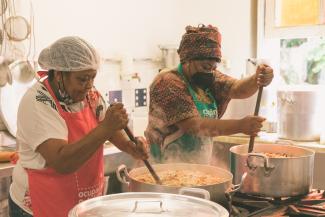
Estas historias tratan de la construcción de comunidades de cuidado con y para las personas que históricamente y actualmente están excluidas, privadas de sus derechos y deshumanizadas tanto por el Estado como por la sociedad.
Estas son las historias de las feministas que centran el cuidado en la economía.
Lillian Masediba Ngoyi
Je suis en train de rédiger un rapport de recherche. L’AWID peut-elle m’aider ?
L’AWID fournit une profusion de ressources pour vous aider dans votre recherche.
Nous vous invitons à explorer nos sections Domaines prioritaires et Informez-vous ou utlisez l'outil de recherche pour trouver des informations sur un suject spécifique.
Nous recommendons particulièrement la consultation de notre boîte à outils « Où est l’argent pour les droits des femmes ? » (« Where Is The Money for Women's Rights? », WITM). Cette boîte à outils est une méthodologie de recherche autogérée pour soutenir les individus et les organisations qui souhaitent mener leur propre recherche sur les tendances de financement en adaptant la méthodologie de recherche de l’AWID à une région, une question ou une population spécifique.
Snippet - CSW68 - March 11 - EN
Day 1
11th March
Jennifer López
Snippet FEA Carmen Silva (FR)
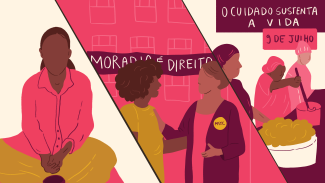
Ocupação 9 de Julho
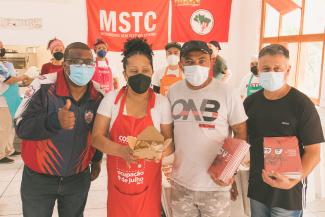
Lorsque vous arriverez au centre-ville de São Paulo, vous verrez le bâtiment Ocupação 9 de Julho (Occupation de l’Avenue du 9 Juillet), un espace culturel et un site important dans la lutte pour le logement social.
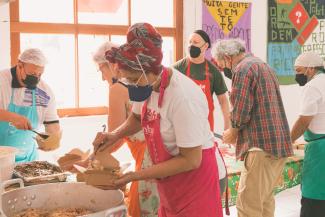
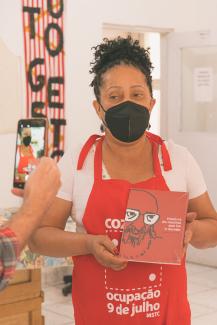
C'est le travail du Mouvement des Travailleur·euses Sans-Abri (Movimento dos Sem-Teto do Centro, MSTC), un mouvement de plus de 2000 personnes qui agit dans le centre-ville et convertit les espaces abandonnés en logements pour les travailleur·euses à faible revenu, les enfants, femmes, adultes, personnes âgées, migrant·e·s et réfugié·e·s. Dans ce bâtiment en particulier, 122 familles sont nourries et logées.
Madelaine Parent
2007: CSO engagement rises with the creation of the WWG on FfD
The Women’s Working Group on Financing for Development (WWG on FfD), an alliance of women’s rights organizations and networks, was launched in October 2007 to advocate for the advancement of gender equality, women’s empowerment and human rights in the FfD related UN processes.
- The Third High-level Dialogue on Financing for Development, 23-25 October 2007 saw an upsurge in civil society participation. Aside from the six round table sessions, there were hearings for civil society and the business sector.
- AWID delivered a statement at the plenary on behalf of Civil Society calling for governments to give greater attention to the importance of women’s rights organizations as agents of development, and the need to promote new mechanisms for financing for women in developing and least developed countries. The statement urged governments to give greater support to gender architecture in the United Nations so that the system as a whole could make progress in terms of its commitment to gender equality, women’s empowerment and human rights, including the economic, social, cultural and environmental rights of all persons.
Snippet - CSW68 - Feminist Community Evening - EN
🎤AWID's Feminist Community Evening
a gathering for feminist activists attending CSW68
(with special guests!)
📅Tuesday, March 12
🕒6-9.30pm EST
🏢 Blue Gallery, 222 E 46th St, New York
RSVP required
Jane Julia de Oliveira
Snippet FEA ASOM (EN)
Association of Afro-Descendant Women of the Northern Cauca
Black women community organizing in the Cauca Valley in Colombia can be traced back to the country's colonial past, which is marked by the racism, patriarchy, and capitalism that sustained slavery as a means to exploit the region’s rich soils. These organizers are the heroines of a broad movement for black autonomy - one that fights for the sustainable use of the region's forests and natural resources as vital to their culture and livelihood.
For 25 years, the Association of Afro-Descendant Women of the Northern Cauca (Asociación de Mujeres Afrodescendientes del Norte del Cauca, ASOM) has been dedicated to bringing power to Afro-Colombian women’s organizing in northern Cauca.
They became established in 1997 as a response to ongoing human rights violations, the absence of public policies, inadequate management of natural resources, and the lack of opportunities for women in the territory.
They have forged the struggle to secure ethnic-territorial rights, to end violence against women, and gain recognition of women’s roles change-making peace-building in Colombia.
Jyotika Singh
2013: el sexto Diálogo de Alto Nivel revisa el progreso de los ODM
- El Sexto Diálogo de Alto Nivel sobre la Financiación para el Desarrollo, que tuvo lugar el 7 y 8 de octubre de 2013, se centró en analizar los progresos hacia los ODM e identificar las brechas a ser abordadas en las conversaciones acerca del nuevo marco para el desarrollo.
- Durante la sesión, el Grupo de Trabajo sobre el desfase en el logro de los ODM presentó un informe en el que hizo referencia al fracaso en alcanzar el ODM 8 (Alianza mundial para el desarrollo) como un factor decisivo que explicaba los obstáculos para el logro de los demás ODM. Ese informe demostró que en el nuevo marco para el desarrollo post-2015 se debía prestar más atención a crear alianzas globales fuertes que garantizaran compromisos vinculantes.
Snippet - WITM Who should - ES
¿Quién debería responder la encuesta?*
La encuesta está orientada a agrupaciones, organizaciones y movimientos que trabajan específica o primordialmente por los derechos de las mujeres, las personas LBTQI+ y la justicia de género, en todos los contextos, en todos los ámbitos y en todas las regiones. Si alguno de estos es el pilar fundamental de tu agrupación, colectivo, red o cualquier otro tipo de organización —ya sea que esté registrada, sea de reciente creación o de larga data—, te invitamos a responder la encuesta.

*En esta oportunidad, no estamos solicitando respuestas de individuos ni de fondos feministas o de mujeres.
Obtén más información sobre la encuesta:
Consultar las preguntas frecuentes
Rosalyn Albaniel Evara
Snippet FEA Mano Cambiada (ES)

MANO CAMBIADA
Término de las comunidades negras del Norte del Cauca para la minga, el trabajo colaborativo en fincas, basado en el apoyo mutuo y la solidaridad.
Myriam Merlet
Mai 2015: les consultations sur la version préliminaire du document final ont lieu
Sessions de consultation complémentaires sur la version préliminaire du document final
- Le 7 mai, les co-facilitateurs ont publié la version révisée du document final de la troisième Conférence sur FdD (en anglais).
- Pour permettre d’améliorer le document final, des sessions complémentaires ad hoc portant sur cette version révisée du document final ont été organisées du 12 au 15 mai 2015, puis du 26 au 29 mai 2015, au siège de l’ONU à New York.