Jean-Marc Ferré | Flickr (CC BY-NC-ND 2.0)
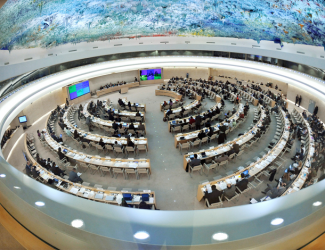
A general view of participants at the 16th session of the Human Rights Council in Geneva, Switzerland.

Special Focus

AWID is an international, feminist, membership organisation committed to achieving gender equality, sustainable development and women’s human rights

Human Rights Council (HRC)

The Human Rights Council (HRC) is the key intergovernmental body within the United Nations system responsible for the promotion and protection of all human rights around the globe. It holds three regular sessions a year: in March, June and September. The Office of the UN High Commissioner for Human Rights (OHCHR) is the secretariat for the HRC.

The HRC works by:

  • Debating and passing resolutions on global human rights issues and human rights situations in particular countries

  • Examining complaints from victims of human rights violations or activist organizations on behalf of victims of human rights violations

  • Appointing independent experts (known as “Special Procedures”) to review human rights violations in specific countries and examine and further global human rights issues

  • Engaging in discussions with experts and governments on human rights issues

  • Assessing the human rights records of all UN Member States every four and a half years through the Universal Periodic Review

Learn more about the HRC


AWID works with feminist, progressive and human rights partners to share key knowledge, convene civil society dialogues and events, and influence negotiations and outcomes of the session.

With our partners, our work will:

◾️ Monitor, track and analyze anti-rights actors, discourses and strategies and their impact on resolutions

◾️ Raise awareness of the findings of the 2017 and 2021 OURs Trends Reports.

◾️Support the work of feminist UN experts in the face of backlash and pressure

◾️Advocate for state accountability
 
◾️ Work with feminist movements and civil society organizations to advance rights related to gender and sexuality.
 

Related Content

Snippet - Join CSW69 Conversations Intro_FR

Rejoignez-nous en prenant part aux conversations #FreezeFascisms!

 (#BloquerLesFascismes) !

Alors que nous affrontons de multiples crises dans le monde entier, nos mouvements œuvrent sans relâche à construire une influence qui dépasse les structures de pouvoir traditionnelles. La vague de décrets présidentiels américains vise à nous intimider, mais aucune idéologie fasciste, quelle que soit son ampleur, ne peut effacer notre existence et notre résistance.

Nous vous invitons à rejoindre la campagne de solidarité pour dénoncer et résister aux forces fascistes qui sapent les mouvements féministes et de justice de genre dans vos communautés !

  • Déclenchez des conversations au sein d’un espace courageux : partagez vos initiatives de lutte et de résistance aux fascismes à votre échelle sur la plateforme de la Communauté AWID. Pas encore membre ? Rejoignez-nous ici. 
  • Soutenez les mouvements qui ont été touchés : relayez les collectes de fonds, les ressources disponibles, les efforts d’entraide en utilisant #FreezeFascisms #BloquerLesFascismes (nous sommes toujours sur X, Instagram, Facebook, LinkedIn, mais aussi sur Bluesky !
  • Mobilisez-vous autour d’alternatives : nous avons créé une communauté de pratiques à adopter pour des alternatives économiques féministes et un financement autonome. Inscrivez-vous pour en faire partie ici(en anglais)

Fadila M.

Fadila M. was a Soulaliyate tribal activist from Azrou, the Ifrane region of Morocco. She fought against a specific form of land discrimination directed against tribal women.

As part of the Soulaliyate Women’s Land-Use Rights Movement, she worked towards overhauling the framework legislation relating to the management of community property through the 2019 adoption of three projects of laws guaranteeing the equality of women and men.

According to the customary laws in force, women had no right to benefit from the land, especially those who were single, widowed or divorced. The rights to collective land in Morocco were transmitted traditionally between male members of a family of over 16 years of age. Since 2007, Fadila M. had been part of the women’s movement, the first grassroots nationwide mobilization for land rights. Some of the achievements included that in 2012 for the first time Soulaliyate women were able to register on the lists of beneficiaries and to benefit from compensation relating to land cession. The movement also managed to get the 1919 dahir (Moroccan King's decree) amended to guarantee women the right to equality.

Fadila M. died on 27 September 2018. The circumstances of her death are unclear. She was part of a protest march connected to the issue of collective land and while authorities reported her death as being accidental, and her having a cardiac arrest on the way to the hospital, the local section of the Moroccan Association of Human Rights (AMDH) pointed out that Fadila was suffocated by a member of the police force using a Moroccan flag. Her family requested investigation but the results of the autopsy were not known.

Find out more about the Soulaliyate Women’s Land-Use Rights Movement


Please note: As there was no photograph/image of Fadila M. available to us, the artwork (instead of a portrait) aims to represent what she fought and worked for; land and rights to live and have access to that land and what grows on it.

Snippet FEA We are living in a world right (FR)

Nous vivons dans un monde où la destruction de la Nature alimente notre économie mondiale actuelle. Même en période de crise climatique, les gouvernements continuent d'encourager les industries agricoles à grande échelle à se développer. Ces activités empoisonnent la terre, menacent la biodiversité et détruisent la production alimentaire et les moyens de subsistance locaux. Pendant ce temps, alors que les femmes produisent la majorité de la nourriture dans le monde, elles ne possèdent presque aucune terre.

Et si nous percevions la terre et la Nature non pas comme une propriété privée à exploiter, mais comme une totalité avec laquelle vivre, apprendre et coexister harmonieusement ? Et si nous réparions nos relations avec la terre et adoptions des alternatives plus durables qui nourrissent à la fois la planète et ses communautés?

Nous Sommes la Solution (NSS) est l'un des nombreux mouvements dirigés par des femmes qui s'efforcent d'atteindre cet objectif.

Voici leur histoire.

FRMag - Resistance from the Kitchen

Notre arepa: Cuisine en résistance

par Alejandra Laprea

Je vis dans le pays de l’impossible, où les bombes ne tombent pas alors que nous connaissons la guerre. (...)

Lire

illustration : « Entretejidas » (« Entrelacées »), par Surmercé > 

Khaoula Ksiksi

Biography

Khaoula Ksiksi is a passionate advocate for justice, equity, and liberation. As a Gender, Equality, Diversity, and Inclusion (GEDI) Advisor, she works to make inclusivity a lived reality, not just a policy, across humanitarian programs and crisis contexts. She collaborates with teams to challenge structural oppression using bold, transformative tools rooted in lived experience.

Her activism began on the frontlines of Tunisia’s anti-racism movement. With Mnemty, she helped push through the country’s first anti-discrimination law, forcing a national reckoning with racial injustice. She later co-founded Voices of Black Tunisian Women to amplify Black women’s leadership, build solidarity networks, and demand visibility in a society that often silences them.

Khaoula is also a founding member of Falgatna, a radical queer-feminist movement fighting for SOGIESC rights and supporting LGBTQI+ communities through direct action, digital resistance, and survivor-centered advocacy.

Previously, she led regional feminist and climate justice projects at the Rosa Luxemburg Foundation in North and West Africa.

At the heart of her work is a deep belief: no one is free until we all are. Her activism is both a fight and a love letter to her people, her communities, and the world we deserve.

Add to stories
Off

Snippet - Feminist Mixer - FR

Rencontre féministe : speed dating pour féministes !

✉️ Sur inscription uniquementInscrivez-vous ici

📅 Mardi 11 mars 2025
🕒 18.00h-20.00h EST

🏢 Chef's Kitchen Loft with Terrace, 216 East 45th St 13th Floor New York

Organisé par : AWID

Rosa Candida Mayorga Muñoz

Rosa Cándida Mayorga Muñoz fue una trabajadora social guatemalteca, líder sindical y defensora de los derechos laborales. La llamaban cariñosamente «Rosita».

En la década de 1980, Rosa se convirtió en la primera mujer integrante del Comité Ejecutivo del Sindicato de Trabajadores del Instituto Nacional de Electrificación (STINDE), un sindicato al que se había incorporado originalmente para defender los derechos laborales de las mujeres. Para ella, esto significaba luchar por la igualdad de oportunidades en una empresa en la que muchas mujeres enfrentaban un sistema discriminatorio y violento creado por las autoridades de la compañía. Rosa también había sufrido acoso sexual en su lugar de trabajo, tanto por parte de sus compañeros de trabajo, como de los funcionarios. Sin embargo, no era alguien a quien se pudiera acallar.

Rosa continuó con su pelea y fue parte del esfuerzo por configurar la lucha en una forma más específica, la del «Pacto colectivo de condiciones de trabajo INDE -STINDE». Este pacto fue pionero: el primero en tipificar el concepto de acoso (sexual) en Guatemala. Sirve como referencia para la legislación guatemalteca en temas laborales, y es un estímulo para otros sindicatos.

«No tenía herramientas de lucha más que sus propios ideales... Muchas veces fue intimidada, hostigada para dejar por un lado la lucha, pero su valentía a enfrentar generaba la imagen de la esperanza para los sindicalistas de bases. Rosita se trazó una imagen de respeto, no solo dentro de su sindicato, sino ante las autoridades de la institución, ante el movimiento de mujeres; fue reconocida, como pionera, del movimiento de mujeres sindicalistas, en un espacio que había sido más desarrollado por hombres.» - Maritza Velasquez, ATRAHDOM

Rosa falleció el 4 de abril de 2018, a la edad de 77 años.

Snippet - GII Intro (ES)

La inversión con impacto de género y el auge de las falsas soluciones.

Un análisis para los movimientos feministas

La inversión con impacto de género (IIG) se ha convertido en tendencia como una solución a la desigualdad de género. Sin embargo, como lo demuestra nuestro informe, en realidad es parte del problema. Las instituciones públicas y privadas que fomentan la IIG la equiparan con la promoción de la igualdad de género y con mayores recursos para mujeres y niñas.

Ninguna de estas aseveraciones tiene una base empírica.

Por el contrario, la IIG es otra expresión de la subordinación de nuestras vidas y nuestras sociedades a la misma lógica financiera que ha configurado, y sigue configurando, las profundas desigualdades de nuestro mundo.

Con este informe, AWID ofrece a lxs lectorxs (feministas, defensorxs de la justicia de género y otrxs actorxs del sector de la inversión con impacto de género) un análisis crítico y pruebas fundamentadas para entender la IIG, sus narrativas y sus implicancias económicas y políticas para los movimientos feministas.

FRMag - Let the invisible be visible

Let the invisible be visible: A Genderfluid Bodybuilder’s Manifesto in Hong Kong

by Siufung Law

“97..! 98.. where is 98? 98! Please come back to the lineup!... 99! 100!...” The backstage lady relentlessly asked each athlete to queue up at the humid, sweaty, overcrowded backstage. (...)

Read

< artwork: “When They See Us” by Lame Dilotsotlhe

What is AWID?

The Association for Women's Rights in Development (AWID) is an international feminist membership organization.

We work to achieve gender justice and women’s human rights by strengthening the collective voice, impact and influence of global women’s rights advocates, organizations and movements. 

Read more about AWID

Snippet - CSW69 On autonomous resourcing - EN

On autonomous resourcing alternatives

Mirna Teresa Suazo Martínez

Mirna Teresa Suazo Martínez faisait partie de la communauté garifuna (afro-descendante et autochtone) Masca et vivait sur la côte nord des Caraïbes du Honduras. Elle était leader de sa communauté et fervente défenseure du territoire autochtone, une terre qui a été violée le jour où l'Institut national agraire du Honduras a accordé des licences territoriales à des personnes extérieures à la communauté. 

Ce fait déplorable a été à l'origine de harcèlements, d'abus et de violences répétés contre Masca, où les intérêts économiques de différents groupes se sont heurtés à ceux des forces armées et des autorités honduriennes. Selon l'Organisation fraternelle noire du Honduras (OFRANEH), la stratégie de ces groupes consiste à expulser et exterminer la population autochtone. 

« Masca, la communauté garifuna située près de la vallée du Cuyamel, se trouve dans la zone d’influence de l’une des villes présumées modèles, une situation qui a déclenché des pressions territoriales le long de la côte garifuna. » - OFRANEH, 8 septembre 2019

Mirna Teresa, présidente du conseil d'administration de la communauté de Masca à Omoa, avait elle aussi fermement rejeté la construction de deux centrales hydroélectriques sur la rivière Masca, qui porte le même nom que sa communauté.

« La communauté garífuna attribue l'aggravation de la situation dans leur région à son opposition à l'exploitation touristique, à la monoculture de palmiers africains et au trafic de drogue, tandis qu'elle cherche parallèlement à construire une vie alternative au travers de la culture de la noix de coco et d'autres produits d'autoconsommation ». - Voces Feministas, 10 septembre 2019 

Mirna Teresa a été assassinée le 8 septembre 2019 dans son restaurant « Champa los Gemelos ». 

Elle est l'une des six femmes défenseures garifunas à avoir été assassinées rien qu'entre septembre et octobre 2019. Selon l'OFRANEH, les autorités n'ont pas mené d'enquête sur ces crimes.

« En ce qui concerne les communautés garífuna, une grande partie des homicides sont liés au régime foncier et à la gestion des terres. Cependant, les querelles entre les organisations criminelles ont abouti à des meurtres, à l’instar de ceux ayant eu lieu récemment à Santa Rosa de Aguán ». - OFRANEH, 8 septembre 2019

Snippet Forum Stories Title

Stories of Change: AWID Forums

FRMag - Ghosts Of Girlhood

Fantasmas de niña

por Akua Antiwiwaa

Delante mío hay una foto vieja, borrosa. En ella, estoy toda vestida de blanco, desde las perlas sujetas en mi cabello y apretadas contra mis orejas, hasta las que rodean holgadamente mis pequeñas muñecas. (...)

Leer

arte: «Cultura Negra», Astrid Milena González Quintero >

¿AWID es una organización feminista?

Snippet - AWID Community Jobs Board

AWID Members logo

AWID Community Jobs Board: Available for all AWID members, upon signing up for the AWID Community access. Whether you're looking for full-time advocacy roles, project-based consulting opportunities, paid internships or volunteer positions, this community-led jobs board is a valuable resource to help you find work that makes change possible.

Stacey Park Milbern

“I do not know a lot about spirituality or what happens when we die, but my crip queer Korean life makes me believe that our earthly bodyminds is but a fraction, and not considering our ancestors is electing only to see a glimpse of who we are.” - Stacey Park Milbern

Stacey Park Milbern was a self-identifying queer disabled woman of colour and a trailblazer. A long-standing and respected organizer and leader in the disability rights and justice movement, she also advocated for the rights of many different communities, not just her own. Stacey’s activism had mighty roots in her experience at the intersections of gender, disability, sexuality and race.

Stacey, along with some friends, co-created the Disability Justice Culture Club, a group working to support various and especially vulnerable communities, including helping homeless people gain access to resources during the COVID-19 pandemic. 

She was also a co-producer of an impact campaign for Netflix’s documentary “Crip Camp”, a board member of the WITH Foundation, and led organizations at local, state and national levels. Stacey wrote beautifully and powerfully:

“My ancestors are people torn apart from loves by war and displacement. It’s because of them I know the power of building home with whatever you have, wherever you are, whoever you are with. My ancestors are queers who lived in the American South. It’s because of them I understand the importance of relationships, place and living life big, even if it is dangerous. All of my ancestors know longing. Longing is often our connecting place...” - Stacey Park Milbern

She was born in Seoul, Korea and grew up in North Carolina, later  continuing her journey in the San Francisco Bay Area. Stacey passed away of complications from surgery on her 33rd birthday on 19 May 2020. 


Read an essay by Stacey Park Milbern
Listen to an interview with Stacey Park Milbern
#StaceyTaughtUs: Record your story for the Disability Visibility Project

Tributes:

“She was, a lot of people would say, a leader. She kind of encompassed all of it. You know, sometimes there's like a lead from the front, lead from the middle, lead from the back. And she was just somehow able to do all of that.” - Andraéa LaVant, disability rights activist

“What a blow to lose Stacey when our communities need her leadership more than ever, and at a time when her strength, insight, and grit were receiving increased recognition outside of disability circles, giving her a greater platform to advance her life’s work...We will not have the gift of learning where her charismatic leadership would have taken us. But let there be no doubt: What Stacey gave us, in a relatively short time, will continue benefiting others for years to come.” - Disability Rights Education and Defense Fund (DREDF)