Priority Areas

Supporting feminist, women’s rights and gender justice movements to thrive, to be a driving force in challenging systems of oppression, and to co-create feminist realities.

Movement Building

Related Content

Remembering: A Tribute to WHRDs no longer with us

AWID honors feminists and Women Human Rights Defenders (WHRDs) who have died and whose contributions to the advancement of human rights are very much missed.


Celebrating Activists and WHRDs

AWID’s WHRD Tribute is a photo exhibition featuring feminist, women’s rights and social justice activists from around the world who are no longer with us. 

The Tribute was first launched in 2012, at AWID’s 12th International Forum, in Turkey. It took shape with a physical exhibit of portraits and biographies of feminists and activists who passed away. The initiative was described by Forum participants as being a unique, moving and energizing way to commemorate our collective history.

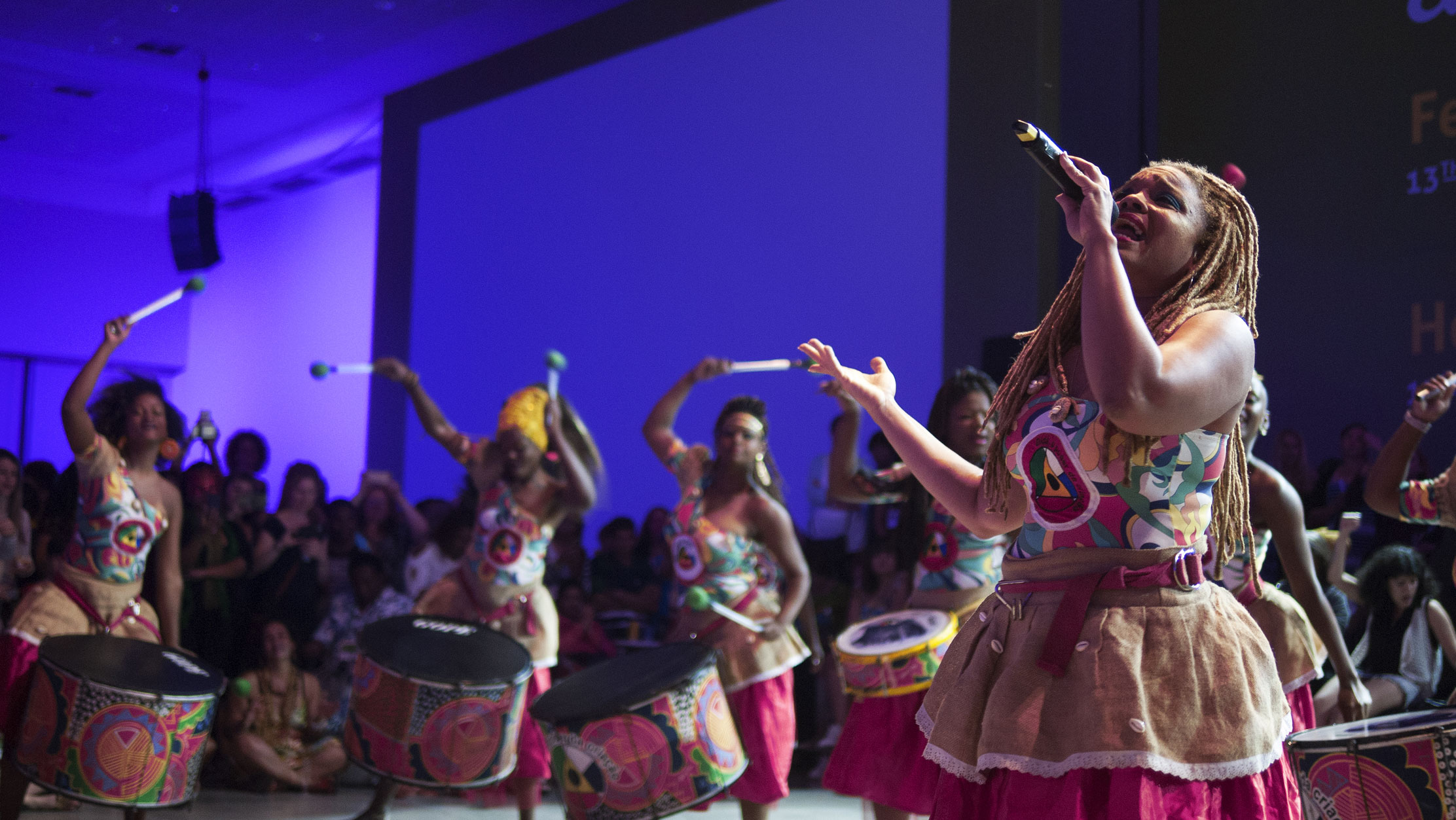
At the 13th International Forum in Brazil, we honored activists and WHRDs with a mural unveiling ceremony in four languages, a dance performance and a Brazilian ritual.

In between the events, the Tribute lives as an online gallery that is updated every year as part of the 16 Days Campaign Against Gender Based Violence (25 November – 10 December).

Contributions from all over the world

Since 2012, through our annual Tribute to Women Human Rights Defenders (WHRDs) no longer with us, over 400 feminists and WHRDs from 11 regions and 80 countries have been featured. 

AWID would like to thank the families and organizations who shared their personal stories and contributed to this memorial. We join them in continuing the remarkable work of these women and forging efforts to ensure justice is achieved in cases that remain in impunity.

Visit the WHRD Tribute online exhibit

The violence and threaths against WHRDs persist

In addition to paying homage to these incredible activists, the Tribute particularly sheds light on the plight of WHRDs who have been assassinated or disappeared.

One third of those featured in the Tribute were activists who have been murdered or disappeared in suspicious circumstances. They were specifically targeted for who they were and the work they did to challenge: 

  • State power
  • Heteronormativity
  • Fundamentalisms
  • Corporations
  • Patriarchy
  • Organized Crime
  • Corruption
  • Militarization…

Women like Agnes Torres, from Mexico, was killed because of her gender identity and sexual orientation; or Cheryl Ananayo, an environmental activist from the Philippines was assassinated as she struggled against a mining company; or Ruqia Hassan, a Syrian independent journalist and blogger killed for her criticism of ISIS. And so many others.

With the WHRD Tribute, we bring them all into our collective memory and carry their legacy of struggle as our torch in the feminists’ and women’s rights movements. We recognize that security, safety and self-care must be a priority in all our political agendas. And we call on to governments and international bodies to collectively address violence against feminists and WHRDs.

We believe this is a critical step to ensure the sustainability of our movements for gender equality, women’s rights, and justice for all.

Visit the WHRD Tribute online exhibit

Snippet FEA Carmen Silva (EN)

Ocupação 9 de Julho

When you come to the center of São Paulo, you will see the building of the Ocupação 9 de Julho - a landmark in the struggle for social housing and an important cultural site. This is the work of The Homeless Workers Movement (Movimento dos Sem-Teto do Centro, MSTC) a movement of over 2000 people that operates in the city center and converts abandoned spaces into housing for low-income workers, children, women, adults, the elderly, migrants and refugees. In this particular building, they provide food and shelter to 122 families. 

Advancing Movements

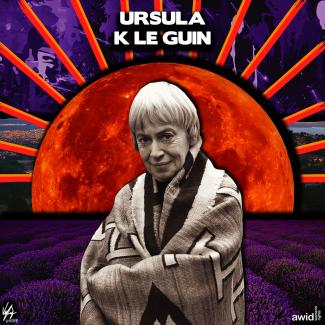
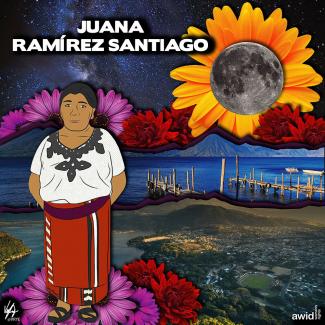
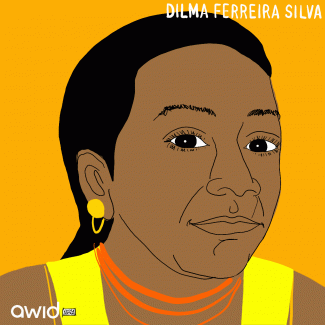
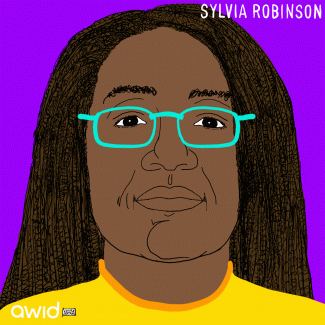
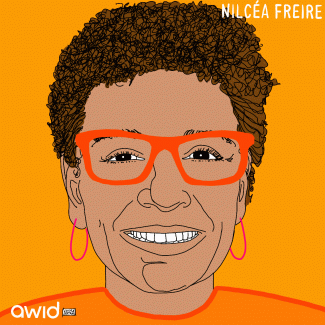
6 Women Human Rights Defenders (WHRDs) across Western and Southeastern Europe have in their lifetime researched, campaigned, participated in and advanced peace and women’s rights movements be it through political and social activism or through dance. We are grateful for the legacy they have left. Please join AWID in honoring these women, their activism and legacy by sharing the memes below with your colleagues, networks and friends and by using the hashtags #WHRDTribute and #16Days.


Please click on each image below to see a larger version and download as a file


Snippet FEA Environments Of Shelter (EN)

Metzineres provides the following kinds of support, known as

Environments of Shelter:

Where does the project come from?

We believe that the economy, the market, the financial system and the premises upon which they are built are critical areas of feminist struggle. Thus, our vision for a just economy goes beyond promoting women’s rights and empowerment in the market, to evaluating the role of gendered oppressions in shaping economic arrangements and transforming these to ensure gender and economic justice.


Process

We are neither starting from zero, nor alone in this attempt to put forward feminist propositions for a just economy.  Many of the propositions herein have been advanced or exist in practice within diverse communities challenging and resisting the mainstream market and growth-based economic systems.

It is also very important to note that there is growing awareness of the fact that micro solutions are not always the answer to macro problems, even if they represent important spaces for resistance and movement building and that there may be limitations to particular alternatives to address the injustices of the current capitalist system at a global scale.

Goals

However, feminist alternatives for a just economy are critical to create dents in the system and draw lessons for transformative systemic change. Here we cannot presume to offer a comprehensive nor a complete account on how to create a just feminist economic model, or even models. But we can, but rather draw from cross-movement dialogue with trade unions, environmental, rural and peasants movements, to articulate the propositions for the journey towards this vision.

What do we want to change?

The neoliberal model driving the global economy has repeatedly demonstrated its inability to address the root causes of poverty, inequalities, and exclusion. Neoliberalism, and has in fact contributed to the very creation and exacerbation of these injustices.

Characterized by globalisation, liberalization, privatisation, financialisation and conditional aid, mainstream development policies over the past 3 decades have wreaked havoc on livelihoods over the past 3 decades. These policies have also sustained a trajectory of deepening inequalities, gendered injustices, and environmental destruction that the world can no longer afford to endure.

While there are people those who assert that economic growth, facilitated by giving free reign to corporations and businesses, can sustain a tide that will (eventually) raise all boats.

However, the notion of development that has prevailed for the past decades, built for the most part upon the premise of limitless economic growth, is going through an ideological crisis.

The myth of economic growth as a panacea for our problems is being debunked.


See also

Our vision

5 Major Threats

Snippet FEA We are living in a world (EN)

We are living in a world where the destruction of Nature fuels our current global economy.

Even in times of climate crisis, governments continue to encourage large-scale agriculture industries to expand. These activities poison the land, threaten biodiversity, and destroy local food production and livelihoods. Meanwhile, while women produce the majority of our food in the world, they own almost none of the land.

What if we perceived land and Nature not as private property to exploit, but as a whole to live in, learn from, and harmoniously coexist with? What if we repaired our relationships with the land and embraced more sustainable alternatives that nurture both the planet and its communities?

Nous Sommes la Solution (We Are the Solution, NSS) is one of many women-led movements striving to do this. This is their story.