AWID Forum: Co-creating Feminist Futures
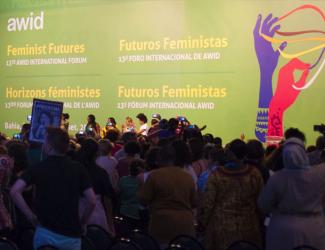
In September 2016, the 13th AWID international Forum brought together in Brazil over 1800 feminists and women’s rights advocates in a spirit of resistance and resilience.
This section highlights the gains, learnings and resources that came out of our rich conversations. We invite you to explore, share and comment!
What has happened since 2016?
One of the key takeaways from the 2016 Forum was the need to broaden and deepen our cross-movement work to address rising fascisms, fundamentalisms, corporate greed and climate change.
With this in mind, we have been working with multiple allies to grow these seeds of resistance:
- Our Seed Initiatives, has helped 20 ideas that emerged at the Forum to grow into concrete actions
- The video “Defending people and planet” and guide “Weaving resistance through action” put courageous WHRDs in the spotlight and present concrete strategies they use to confront corporate power.
- With our animations about the State of Our Feminist Movements and Climate and Environmental Justice, movements now have creative tools to support their advocacy work.
- The compiling artistic expressions of our #MovementsMatter series continues to inspire stronger and more creative organizing around the world.
- Movements can also benefit from new methodologies on Visioning Feminist Futures (Coming up soon!)
And through our next strategic plan and Forum process, we are committed to keep developing ideas and deepen the learnings ignited at the 2016 Forum.
What happens now?
The world is a much different place than it was a year ago, and it will continue to change.
The next AWID Forum will take place in the Asia Pacific region (exact location and dates to be announced in 2018).
We look forward to you joining us!
The next AWID Forum will take place in the Asia Pacific region (exact location and dates to be announced in 2018).
We look forward to you joining us!
About the AWID Forum
AWID Forums started in 1983, in Washington DC. Since then, the event has grown to become many things to many peoples: an iterative process of sharpening our analyses, vision and actions; a watershed moment that reinvigorates participants’ feminisms and energizes their organizing; and a political home for women human rights defenders to find sanctuary and solidarity.
Related Content
Key opposition strategies and tactics
Despite their rigidity in matters of doctrine and worldview, anti-rights actors have demonstrated an openness to building new kinds of strategic alliances, to new organizing techniques, and to new forms of rhetoric. As a result, their power in international spaces has increased.
There has been a notable evolution in the strategies of ultra conservative actors operating at this level. They do not only attempt to tinker at the edges of agreements and block certain language, but to transform the framework conceptually and develop alternative standards and norms, and avenues for influence.
Strategy 1: Training of UN delegates
Ultra conservative actors work to create and sustain their relationships with State delegates through regular training opportunities - such as the yearly Global Family Policy Forum - and targeted training materials.
These regular trainings and resources systematically brief delegates on talking points and negotiating techniques to further collaboration towards anti-rights objectives in the human rights system. Delegates also receive curated compilations of ‘consensus language’ and references to pseudo-scientific or statistical information to bolster their arguments.
The consolidated transmission of these messages explains in part why State delegates who take ultra-conservative positions in international human rights debates frequently do so in contradiction with their own domestic legislation and policies.
Strategy 2: Holding international convenings
Anti-rights actors’ regional and international web of meetings help create closer links between ultra conservative Civil Society Organizations (CSOs), States and State blocs, and powerful intergovernmental bodies. The yearly international World Congress of Families is one key example.
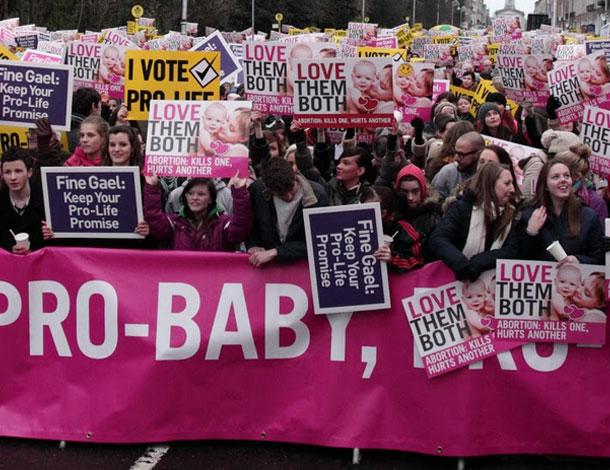
These convenings reinforce personal connections and strategic alliances, a key element for building and sustaining movements. They facilitate transnational, trans-religious and dynamic relationship-building around shared issues and interests, which leads to a more proactive approach and more holistic sets of asks at the international policy level on the part of anti-rights actors.
Strategy 3: Placing reservations on human rights agreements
States and State blocs have historically sought to undermine international consensus or national accountability under international human rights norms through reservations to human rights agreements, threatening the universal applicability of human rights.
The Convention on the Elimination of Discrimination Against Women (CEDAW) has received by far the most reservations, most of which are based on alleged conflict with religious law. It is well-established international human rights law that evocations of tradition, culture or religion cannot justify violations of human rights, and many reservations to CEDAW are invalid as they are “incompatible with the object and purpose” of CEDAW. Nevertheless, reference to these reservations is continually used by States to dodge their human rights responsibilities.
‘Reservations’ to UN documents and agreements that are not formal treaties - such as Human Rights Council and General Assembly resolutions - are also on the rise.
Strategy 4: Creating a parallel human rights framework
In an alarming development, regressive actors at the UN have begun to co-opt existing rights standards and campaign to develop agreed language that is deeply anti-rights.
The aim is to create and then propagate language in international human rights spaces that validates patriarchal, hierarchical, discriminatory, and culturally relativist norms.
One step towards this end is the drafting of declarative texts, such as the World Family Declaration and the San Jose Articles, that pose as soft human rights law. Sign-ons are gathered from multiple civil society, state, and institutional actors; and they are then used a basis for advocacy and lobbying.
Strategy 5: Developing alternative ‘scientific’ sources
As part of a strategic shift towards the use of non-religious discourses, anti-rights actors have significantly invested in their own ‘social science’ think tanks. Given oxygen by the growing conservative media, materials from these think tanks are then widely disseminated by conservative civil society groups. The same materials are used as the basis for advocacy at the international human rights level.
While the goals and motivation of conservative actors derive from their extreme interpretations of religion, culture, and tradition, such regressive arguments are often reinforced through studies that claim intellectual authority. A counter-discourse is thus produced through a heady mix of traditionalist doctrine and social science.
Strategy 6: Mobilizing Youth
This is one of the most effective strategies employed by the religious right and represents a major investment in the future of anti-rights organizing.
Youth recruitment and leadership development, starting at the local level with churches and campuses, are a priority for many conservative actors engaged at the international policy level.
This strategy has allowed for infiltration of youth-specific spaces at the United Nations, including at the Commission on the Status of Women, and creates a strong counterpoint to progressive youth networks and organizations.

Strategy 7: Defunding and delegitimizing human rights mechanisms
When it comes to authoritative expert mechanisms like the UN Special Procedures and Treaty Monitoring Bodies and operative bodies like the UN agencies, regressive groups realize their potential for influence is much lower than with political mechanisms[1].
In response, anti-rights groups spread the idea that UN agencies are ‘overstepping their mandate,’ that the CEDAW Committee and other Treaty Bodies have no authority to interpret their treaties, or that Special Procedures are partisan experts working outside of their mandate. Anti-rights groups have also successfully lobbied for the defunding of agencies such as the United Nations Population Fund (UNFPA).
This invalidation of UN mechanisms gives fuel to state impunity. Governments, when under international scrutiny, can defend their action on the basis that the reviewing mechanism is itself faulty or overreaching.
Strategy 8: Organizing online
Conservative non-state actors increasingly invest in social media and other online platforms to promote their activities, campaign, and widely share information from international human rights spaces.
The Spanish organization CitizenGo, for example, markets itself as the conservative version of Change.org, spearheading petitions and letter-writing campaigns. One recent petition, opposing the establishment of a UN international day on safe abortion, gathered over 172,000 signatures.
Overarching Trends:
- Learning from the organizing strategies of feminists and other progressives.
- Replicating and adapting successful national-level tactics for the international sphere.
- Moving from an emphasis on ‘symbolic protest’ to becoming subversive system ‘insiders.’
By understanding the strategies employed by anti-rights actors, we can be more effective in countering them.
[1] The fora that are state-led, like the General Assembly, the Human Rights Council, and UN conferences like the Commission on the Status of Women and the Commission on Population and Development
Other Chapters
Cecilia Loria
Carmen de la Cruz
Carmen had a long career advocating for women’s rights both in NGOs and within the United Nations (UN) system.
She taught courses in several Spanish and Latin American universities, and published numerous articles and reports on women, gender and peace in developing countries.
Her writing and critical reflections have impacted a whole generation of young women. In her last years, she was responsible for the Gender Practice Area in the Regional Center of the United Nations Development Program (UNDP) for Latin America, from where she supported very valuable initiatives in favour of gender equality and women's human rights.

Snippet - Intro WITM - AR
نكمل مشوار بناء الحشد الذي بدأناه قبل 20 عاماً لموارد أفضل وأكبر لحركات التغيير الاجتماعي بقيادة نسوية، تدعوكم/ن جمعية حقوق المرأة في التنمية لاستكمال استطلاعنا
" "أين التمويل للتنظيمات النسوية" (WITM)
الرجاء اختيار اللغة المفضلة للإجابة على الاستطلاع في أقصى يمين الصفحة
Snippet FEA Map of Georgia (FR)
Siete recomendaciones feministas de políticas para frenar los flujos financieros ilícitos
La creciente dominación de los mercados y las instituciones financieras internacionales en la definición de las políticas económicas globales ha tenido como resultado la captura del poder popular en aras del interés de las élites y las grandes corporaciones globales.
Este informe «Flujos financieros ilícitos» analiza su desproporcionado impacto de género y los marcos legales y políticos actuales que permiten a las corporaciones multinacionales beneficiarse del fraude fiscal en detrimento de las personas y el planeta.
El informe concluye con siete recomendaciones feministas de políticas para exigir transparencia y rendición de cuentas por parte del poder corporativo para frenar los flujos financieros ilícitos.
Recomendaciones de políticas para la incidencia
Los flujos financieros ilícitos están llamando la atención como nunca antes: ya sea en negociaciones para el desarrollo, como los que condujeron a la Agenda 2030 y a la Conferencia sobre Financiamiento para el
Desarrollo de Addis Abeba en 2015, u ocupando los titulares de los medios hegemónicos con la publicación de documentos filtrados sobre finanzas offshore conocidos como los «Panama Papers». En otro ejemplo, en un
referendum de febrero de 2017, el pueblo ecuatoriano votó para prohibir que políticxs y funcionarixs públicxs posean acciones, compañías o capital en paraísos fiscales. El Gobierno de Ecuador es ahora, dentro del grupo
G-77, una de las voces principales que reclaman en las Naciones Unidas la creación de un organismo tributario global para poner fin a los paraísos fiscales.
Esta atención pública potencialmente da impulso para que lxs feministas, los movimientos sociales y lxs defensores de la justicia tributaria presionen por la transformación del sistema financiero internacional, donde
se arraigan desigualdades globales, incluidas las desigualdades de género.
Ofrecemos aquí siete pedidos de políticas como contribución a los crecientes esfuerzos de incidencia de actores por la justicia social, feministas, por los derechos de las mujeres y por la igualdad de género.
1. Abordar los flujos financieros ilícitos como una violación de los derechos humanos y los derechos de las mujeres:
- Los FFI impiden el cumplimiento de la obligación de los Estados de movilizar los máximos recursos disponibles para la realización de los derechos humanos, incluidos los compromisos de larga data sobre los derechos de las mujeres y la igualdad de género.
- El aumento de la de la rendición de cuentas de las corporaciones es una posibilidad que está sobre la mesa del Consejo de Derechos Humanos de las Naciones Unidas (ONU). Ya se ha establecido un grupo de trabajo abierto intergubernamental para elaborar un instrumento vinculante internacional que regule, según las normativas internacionales de derechos humanos, las actividades de las corporaciones transnacionales y otras empresas comerciales. Este proceso tiene el potencial de abordar la evasión fiscal corporativa como una violación de los derechos humanos, incluidos los derechos de las mujeres, y debería recibir más apoyo de los países del Norte y del Sur globales.
2. Garantizar que las corporaciones multinacionales paguen su parte:
- • Desarrollar mecanismos internacionales para detener las prácticas fiscales fraudulentas y evitar las exenciones fiscales a las corporaciones. Los Estados miembros de las Naciones Unidas deberían iniciar negociaciones para redactar el borrador de una convención de la ONU para combatir las prácticas fiscales fraudulentas. La convención debería adoptar un sistema de consolidación y prorrateo para gravar las ganancias corporativas globales.
- Revisar específicamente las regulaciones nacionales de los países ricos que requieren que las CMN paguen impuestos solo en el país de residencia y no en los países de actividad económica. Esta práctica daña sobre todo a los países en desarrollo, ya que cada vez pierden más base tributaria que se desplaza a jurisdicciones de baja o nula tributación. Al respecto deberían considerarse propuestas tales como el enfoque de tributación unitaria.
3. Apoyar el establecimiento de un organismo tributario internacional de las naciones Unidas:
- Un organismo tributario de las Naciones Unidas, con iguales derechos de voto y membresía universal, debería tener la facultad de revisar la política tributaria nacional, regional y global y de garantizar que los Estados cumplan con los compromisos de larga data sobre derechos humanos, incluidos los derechos de las mujeres y la igualdad de género.
4. Promover la transparencia y la recolección de datos con perspectiva de género:
- Deben realizarse mayores esfuerzos globales para pulir los datos comparables sobre fraude fiscal, por ejemplo, con datos desglosados por género que ponen al desnudo los prejuicios de género de ciertos sistemas tributarios.
- Los países deben garantizar un esquema para el intercambio automático de información que garantice el acceso público y global a datos clave que afectan los recursos disponibles para la realización de los derechos humanos.
- Implementar obligaciones informativas país por país para que las corporaciones multinacionales publiquen, como parte de sus informes anuales, las ganancias obtenidas y los impuestos pagados en cada país donde operan.
- Debe haber más cooperación de los gobiernos para compartir sus registros públicos nacionales que dan a conocer los verdaderos beneficiarios de compañías, fideicomisos, fundaciones y estructuras legales similares, además de otra información financiera.
5. Promover la justicia tributaria a través de políticas fiscales nacionales progresivas:
- Promover la justicia tributaria a través de políticas fiscales progresivas. Esto implica aumentar el peso de los impuestos directos sobre los ingresos de capital y los sectores sociales de alta rentabilidad y, al mismo tiempo, reducir y eliminar el peso tributario que recae en las mujeres y las personas pobres. Los segmentos precarizados de la sociedad, donde las mujeres están sobrerrepresentadas, no deberían terminar pagando más impuestos, en relación con sus ingresos, que los segmentos más adinerados, que a menudo se benefician de subsidios impositivos, moratorias y reducciones fiscales.
- Los gobiernos deben revisar desde una perspectiva crítica los dañinos acuerdos comerciales y de inversión que otorgan incentivos y exenciones fiscales, que perpetúan la desigualdad y los prejuicios de género.
6. Garantizar la participación de las organizaciones por los derechos de las mujeres, los movimientos sociales y la sociedad civil progresista en sentido amplio:
- Las decisiones sobre política económica y fiscal carecen a menudo de perspectiva de género. La interacción de los ministerios de género y de finanzas, y de estos con la sociedad civil y las defensoras de derechos humanos, es fundamental para entender mejor el impacto que tienen las decisiones sobre los ingresos públicos en los derechos de las mujeres y la igualdad de género.
- Debe establecerse un ambiente propicio que proteja a las defensoras de derechos humanos y otrxs activistas (incluidxs lxs denunciantes y activistas para la justicia tributaria) que expongan el fraude fiscal e informen sobre la corrupción.
7. Poner fin a la impunidad de las actividades delictivas asociadas con los flujos financieros ilícitos y garantizar la rendición de cuentas:
- Establecer un mecanismo coordinado global entre autoridades fiscales nacionales, mecanismos de derechos humanos e igualdad de género y unidades de inteligencia, para garantizar que las actividades delictivas asociadas con los FFI no continúen impunes.
- Fortalecer los sistemas de justicia nacionales y globales para lograr la rendición de cuentas de individuos y entidades por la financiación de actividades delictivas a través de los FFI.
Body
Diana Staubli

Efua Dorkenoo
Conocida afectuosamente como «Mama Efua», su trabajo con el movimiento para terminar con la mutilación genital femenina (MGF) se extendió a lo largo de tres décadas y ayudó a llamar la atención internacional y a generar acciones para erradicar esta práctica dañina.
En 1983, Efua fue una de las fundadoras de FORWARD (The Foundation for Women’s Health, Research and Development, La fundación para la salud de las mujeres, la investigación y el desarrollo), que se convirtió en una organización líder en la batalla por crear conciencia sobre la MGF. Su libro de 1994, Cortar la rosa: mutilación genital femenina, es considerado el primer libro sobre MGF y aparece en la lista de «Los 100 mejores libros africanos del siglo XX» de la Universidad de Columbia.
Originaria de Ghana y enfermera de profesión, Efua se incorporó a la Organización Mundial de la Salud (OMS) en 1995 y con empeño logró la inclusión de la MGF en las agendas de los Estados miembros de la OMS. También trabajó estrechamente con el Gobierno nigeriano en la elaboración de una política nacional integral que sentó las bases para las leyes contra la MGF de Nigeria, que todavía están vigentes. Su trabajo pionero culminó en una campaña liderada por África, «La generación de las niñas», dedicada a terminar con la MGF en el plazo de una generación.
Efua demostró que una persona puede convertirse en una voz unificadora para un movimiento y ahora resultan más relevantes que nunca sus sabias palabras: «la identidad compartida puede ayudar a reunir a activistas que vienen de contextos diferentes y a que tengan un sentido de propósito en común».

Snippet - WITM To make - RU

Сделать видимой сложность обеспечения ресурсами различных феминистских организаций
Snippet FEA collaborator and allies Photo 2 (EN)
Bureau administratif
Pour toute question administrative, vous pouvez contacter notre bureau :
- +1 416 594 3773
- 192 Spadina Avenue, Suite 300 | Toronto, ON, M5T 2C2 | Canada
Esperanza Pérez Labrador

Zita Kavungirwa Kayange
Zita était une défenseure des droits des femmes de la région du Grand Kivu.
Elle a été la première directrice exécutive d’UWAKI, une organisation de femmes bien connue. Par son travail avec le Réseau des Femmes pour la Défense des Droits et la Paix (RFDP) et le Caucus des femmes du Sud-Kivu pour la paix, elle a consacré sa vie à rétablir la paix dans l'est de la RDC. Elle a très fermement dénoncé l'utilisation de la violence sexuelle comme arme de guerre.
En 2006, elle s'est présentée comme candidate aux premières élections démocratiques en RDC. Bien qu’elle n’ait pas gagné, elle a continué à défendre les droits des femmes et la communauté du Sud-Kivu se souvient d’elle avec affection.

Snippet - WITM Survey will remain open - AR
سيبقى الاستطلاع مفتوحاً حتى 31 يوليو (تموز) 2024
الرجاء اختيار لغتك في الزاوية اليمنى الرجاء اختيار اللغة المفضلة للإجابة على الاستطلاع في أقصى يمين الصفحة
ذا كنت ترغب في معرفة المزيد، انضم إلى لقاء للأعضاء/ العضوات: أين المال؟ يوم الاثنين 27 مايو (أيار) الساعة 9:00 بالتوقيت العالمي - مع ترجمة
فورية باللغتين الفرنسية والإنجليزية.
14:00 بالتوقيت العالمي - مع ترجمة فورية باللغتين الإسبانية والإنجليزية
سنستمع إلى فريق الحركات النسوية لتوفير الموارد التابع لجمعية حقوق المرأة في التنمية (جمعية حقوق المرأة في التنمية) حول خصوصيات وعموميات تمويل التنظيمات النسوية.
انضم/ي إلينا كعضو/ة في وكن/وني جزءًا من جلسة التواصل هذه.
الرد على الدعوة هنا
(Registration only available in English)
Snippet FEA Workers demonstrations in Georgia 3 (ES)
資助建議
本頁面為如何資助您參與第14屆AWID論壇提供一些想法和靈感。
在您計劃將要在論壇上開展的活動時,請同時考慮如何為參加論壇提供資金支持。典型的費用支出包括:住宿、旅行、簽證、論壇註冊費等。
重要的是請注意,該論壇將有很多“開放空間”和學習、交流運動的機會,而正式會議的數量則少很多。(請參閱下面的“在籌款中如何描述我們的論壇”,以瞭解在您的宣傳中可使用的語言。)
與您目前的資助者合作:
首先聯繫您當前的資助者:最好的選擇始終是求助於當前的捐助者。
請確保提前準備:我們建議最晚在2020年初與這些資助方聯繫。許多支持女權組織的資助者為論壇旅行分配了一些預算。其他的資助方也可能將其囊括在續訂補助金中或包含在其他旅行基金裡。
如果貴組織有資助者,請告訴他們您想參加AWID論壇並學習、體驗、交流和建立網絡,即使您的活動還未被選中。為了能夠支持您的參與,您的捐助者需要提前了解此事,因此請立即告訴她們吧!(她們已經在決定將在2020年分配哪些資金)。
尋求新的資助者:
如果您目前沒有捐助者的支持或無法獲得論壇旅行的贈款,請考慮與新的捐助者聯繫。
- 您可以在AWID的門戶網站“誰能資助我組織女性的維權?” (In English) 中看到特定資助者的介紹。
- 考慮去接觸國家、區域或全球等層面的女權主義與女性基金會。(In English)
- 探索資助者網絡,例如Candid和歐洲基金會中心 (In English),以獲取您所在地區的資助者列表和機會。
各個資助方的申請截止日期和要求不盡相同,並且撥款審查過程可能需要數月的時間。如果您正在考慮申請新的資金,請盡快開始申請。
有創意的靈感:
女權主義運動長期以來在資助我們自己的行動方面保持著創造力。以下是我們收集的一些想法,用於啟發不同的籌款方式:
- 動員您的社區來支持參與:通過社區晚宴、舞蹈晚會以及本地的表演、活動和遊覽等方式從會員中籌集少量資金。
- 通過使用 gofundme, indiegogo, plumfund, or kickstarter 等各種在線工具組織捐贈圈和眾包來動員網絡。
- 獲得本地的收入來源,包括來自個人捐助者和會費的收入。
- 考慮通過與其他社區和社會正義團體的戰略夥伴關係共同集資。
想瞭解更多靈感,請參閱AWID正在進行的關於自主資源的系列文章,其中包括有關籌集參會資金的具體想法。(in English)
機會補助金:
AWID正在努力使論壇成為一個真正的全球性聚會,保障來自不同運動、地區和年齡層的參會者都可以參與。鑑於此,AWID為參與者調集資源並提供有限數量的機會補助金,以幫助她們支付參加論壇的費用。
AWID的機會補助金將為部分論壇參與者和會議/活動的主持人提供支持。您可以在申請過程中指出是否要申請AWID機會補助金。我們無法保證您能否申請到,所以我們強烈建議您為自己參加會議和論壇尋求其他資助。
即使您已申請了AWID的機會補助金,我們仍鼓勵您繼續探索其他的選擇來資助您參加論壇。機會補助金的申請結果將在2020年6月結束之前得到確認。請記住,這些資源非常有限,我們無法為所有申請人提供支持。
在籌款中如何描述我們的論壇:
當您與資助方或您自己的網絡聯繫時,這裡的一些示例信息可能會有所幫助。您可以隨時以對您有用的任何方式進行調整!
AWID論壇是一個聯合創建的女權運動空間,可激發參與者自身的行動積極性,並在多種權利和正義運動中加強與他人的聯繫。參與者可以從希望、能量和激進的想像力中汲取靈感,加深共享的分析和學習,建立跨領域的運動團結,以製定更加綜合的議程並推進聯合戰略。
我們的組織正在尋求資金參加論壇,以便與來自世界各地的其他活動家和運動聯繫在一起,加強我們的戰略並分享工作成果。我們受到過往參與者的啟發,她們描述了這場全球女權主義聚會的力量:
“在四天的時間裡……各種聲音交織在一起,形成了關於性別平等狀況的全球視角。當我說“全球”一詞時,我是指同時翻譯成七種不同的語言……”
“它提醒著我們,我們並不孤單。論壇提供了必要的途徑幫助我們將集體力量轉化為運動。無論是何種意識形態、身份或邊界,我們的力量都體現在我們的願景和對彼此的支持中。”
重要的是請注意,該論壇將有很多“開放空間”和學習、交流運動的機會,而正式會議的數量則少很多。儘管很多與會者不會參加正式的會議,但仍有寶貴的空間來學習、制定戰略和體驗女權運動在行動中的集體力量。
預算的考慮:
在計算花費以及思考需要募集多少款項時,最重要的是要考慮可能出現的成本。以下是要考慮的關鍵項目支出的示例:
- 機票
- 論壇註冊費(請注意,即便AWID授予您機會補助金,您也要自己支付註冊費)
- 簽證費用
- 旅遊健康保險
- 往返機場的本地旅行(出租車或其他交通工具)
- 中途停留的費用,例如飛機需要長時間中途停留時的住宿費和伙食費
- 住宿(如果您旅行很遠,可以給自己一天的恢復時間,無論是在之前或之後)
- 設備(旅行期間需要的WiFi或國際通訊費用,AWID將在論壇期間提供WiFi)
- 論壇上分享或交換的任何材料(可視教具,報告,藝術品!)的材料費
- 雜費和/或包括食物與其他花銷的每日津貼(論壇期間,AWID將提供所有午餐和咖啡/茶歇,外加一頓晚餐)
- 附件,例如可能使您的旅行更加舒適、安全和有重要意義的任何其他支持
我們期待與您在論壇上見面!
論壇是一個協作過程
該論壇不僅僅是一個四天的會議。它更為女權主義現實實踐的運動增強之旅提供了另一個驛站,該旅程早已開始也將在論壇結束後繼續。
Body