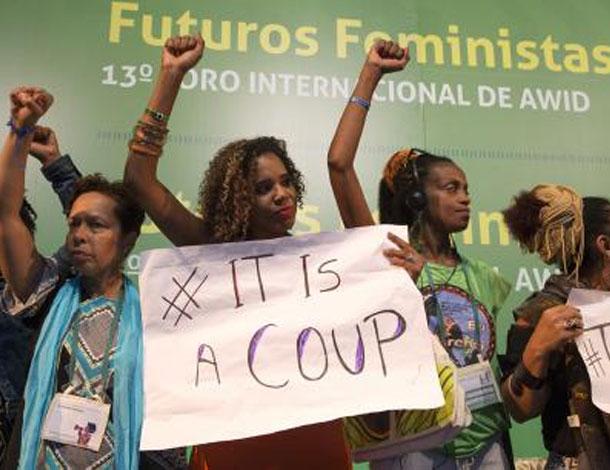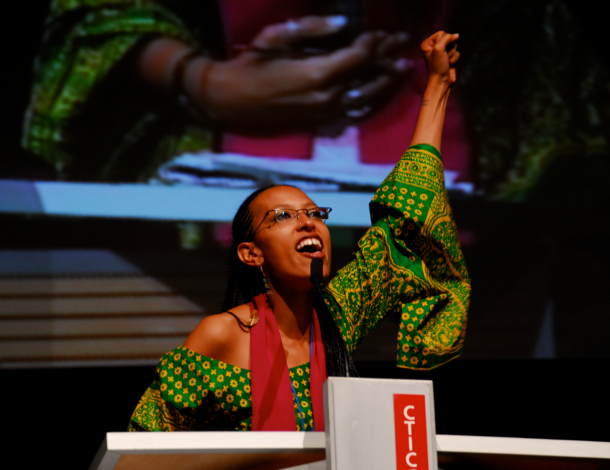
Philippe Leroyer | Flickr (CC BY-NC-ND 2.0)

Special Focus

AWID is an international, feminist, membership organisation committed to achieving gender equality, sustainable development and women’s human rights

Women Human Rights Defenders

WHRDs are self-identified women and lesbian, bisexual, transgender, queer and intersex (LBTQI) people and others who defend rights and are subject to gender-specific risks and threats due to their human rights work and/or as a direct consequence of their gender identity or sexual orientation.

WHRDs are subject to systematic violence and discrimination due to their identities and unyielding struggles for rights, equality and justice.

The WHRD Program collaborates with international and regional partners as well as the AWID membership to raise awareness about these risks and threats, advocate for feminist and holistic measures of protection and safety, and actively promote a culture of self-care and collective well being in our movements.


Risks and threats targeting WHRDs  

WHRDs are exposed to the same types of risks that all other defenders who defend human rights, communities, and the environment face. However, they are also exposed to gender-based violence and gender-specific risks because they challenge existing gender norms within their communities and societies.

By defending rights, WHRDs are at risk of:

  • Physical assault and death
  • Intimidation and harassment, including in online spaces
  • Judicial harassment and criminalization
  • Burnout

A collaborative, holistic approach to safety

We work collaboratively with international and regional networks and our membership

  • to raise awareness about human rights abuses and violations against WHRDs and the systemic violence and discrimination they experience
  • to strengthen protection mechanisms and ensure more effective and timely responses to WHRDs at risk

We work to promote a holistic approach to protection which includes:

  • emphasizing the importance of self-care and collective well being, and recognizing that what care and wellbeing mean may differ across cultures
  • documenting the violations targeting WHRDs using a feminist intersectional perspective;
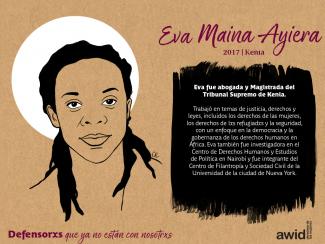
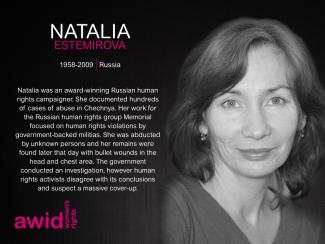
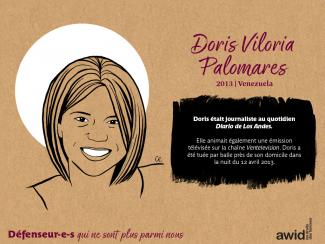
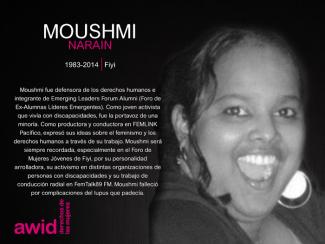
  • promoting the social recognition and celebration of the work and resilience of WHRDs ; and
  • building civic spaces that are conducive to dismantling structural inequalities without restrictions or obstacles

Our Actions

We aim to contribute to a safer world for WHRDs, their families and communities. We believe that action for rights and justice should not put WHRDs at risk; it should be appreciated and celebrated.

  • Promoting collaboration and coordination among human rights and women’s rights organizations at the international level to  strengthen  responses concerning safety and wellbeing of WHRDs.

  • Supporting regional networks of WHRDs and their organizations, such as the Mesoamerican Initiative for WHRDs and the WHRD Middle East and North Africa  Coalition, in promoting and strengthening collective action for protection - emphasizing the establishment of solidarity and protection networks, the promotion of self-care, and advocacy and mobilization for the safety of WHRDs;

  • Increasing the visibility and recognition of  WHRDs and their struggles, as well as the risks that they encounter by documenting the attacks that they face, and researching, producing, and disseminating information on their struggles, strategies, and challenges:

  • Mobilizing urgent responses of international solidarity for WHRDs at risk through our international and regional networks, and our active membership.

Related Content

Snippet2 - WCFM type of funding- EN

Court icon

Type of funding:

Be it core funding, programmes & projects or rapid response/ emergency grants.

OURS 2021 - Explorar los capítulos

Explorar los capítulos

Pleasure(s) as the key to personal freedom

By Nkhensani Manabe

The conversation title "Pansexual, Gynasexual or Abrosexual? A dive into queerness, pleasure and sex positivity" gives one much to think about. Tiffany Kagure Mugo, author, educator and curator of HOLAAfrica, begins the discussion with a reading from Touch, a recently published collection of fiction and non-fiction essays on sex, sexuality and pleasure. In this excerpt, the author puts forward the idea that pleasure is constant and ongoing, it is to be found in everyday activities and is not confined to sexual intercourse.

This idea, that pleasure is as much a part of daily life as anything else, runs through the discussion, which also covers topics of desire, attraction and sexual orientation.

Pleasure Garden exhibition: the photographic and illustrative collaboration produced by Siphumeze and Katia

Early on, there is this sense of hope and possibility. Tiffany presents options and explains alternatives, giving us new language to speak about who we are, what we like, and how we want it. This is about desire and sex, but mostly it is about self-knowledge and empowerment. Tiffany speaks passionately about making decisions from a place of power: learning your own identity so that you are able to make the best choices for yourself. 

In a conversation that is open and free, representing the attitude that Tiffany would have us all adopt, we learn that knowledge about sex and sexuality is ever-changing, the boundaries are shifting. What we may have learned or, more importantly, been kept away from as children or adults is exactly where we should start unlearning and reprogramming. Tiffany notes that young people these days need tools to understand the experiences they are already having, a reminder to never underestimate what children and teenagers know about the kind of pleasure(s) they want to pursue in life.

The conversation opened my mind to something: knowing myself will help to build my confidence; I will be able to approach relationships with care not only for myself but for others, too. Learning the language of orientation, attraction, desire and pleasure will go towards deepening my future connections. I appreciated the space to think about this aspect of my life -- the private, intimate parts that I don’t access often. Tiffany’s enthusiasm about pleasure and identity pushed my own boundaries, allowing me to entertain new personal possibilities. 

The idea of learning how to make holistic connections is still not common. Largely, we live in a culture of instant and fleeting connections. There is hardly any time to truly reflect on how and why we are seeking relationship or partnership -- at least, not until a moment of crisis. 

Of course, there are selected spaces that welcome questions and discussions, such as the AWID Crear Résister Transform Festival and other free-thinking online platforms or publications -- but access to information from a helpful, non-judgemental source is something people are still trying to figure out. This may be in part because people are not confident in the language of sexuality and pleasure. 

Sex and Spirtuality
Pleasure Garden exhibition: the photographic and illustrative collaboration produced by Siphumeze and Katia

The notion of language and tools repeats itself throughout Tiffany’s presentation. Tiffany and her colleagues are doing the work of talking, teaching and nurturing. Seeing what people need, where they are, what they want for themselves, and walking alongside them as they build their ideal worlds. Giving them new words and definitions to help give shape to their identities at different stages of their lives. 
These are the kinds of conversations that are necessary, even in a society that has myriad healthcare messages broadcast with varying degrees of details at any given moment. Sometimes people need to be brought back from the big picture moments and encouraged to learn about their individual opinions and desires. This is what Tiffany’s talk does: it gives people a space in the larger puzzle. 

A highlight of Tiffany’s talk was the section on the different types of attraction. 

Sexual -- as in, the express desire to have intercourse with a person or people
Sensual -- the desire to touch a person or people, to be physically close without necessarily including intercourse
Romantic -- the desire to date or be in a relationship with a person or people
Platonic -- the desire to build close friendships 
Aesthetic -- the desire to look at and be pleased by the appearance of a person or people

These five types or levels of attraction offer a shorthand for desire and pleasure, and help to contextualise the different kinds of pleasure people can experience. 

Thinking of attraction beyond the physical or sexual offers a new perspective on connection. It is a chance to take the pressure off relationships, which opens up opportunities for different, more enlightened and fulfilling partnerships. 

This freedom and knowledge that Tiffany presents is a roadmap to the future. The presentation offered a new perspective on what is possible. 

As the opening excerpt states, pleasure is ongoing. In light of Tiffany’s discussion, it is also clear that it is dynamic and exciting. There is always more to know. 

This may be daunting at first, but on the other side of hesitation is hope, potential and freedom. 

Navleen Kumar

"She was not a person. She was a power."
- a fellow activist remembering Navleen Kumar

Navleen Kumar was a fervent land rights and social justice activist in India.

With commitment and integrity, she worked for more than a decade to protect and restore the lands of Indigenous people (adivasi) in Thane district, an area taken away by property and land developers using such means as coercion and intimidation. She fought this injustice and crime through legal interventions at different courts, realizing that manipulation of land records was a recurrent feature in most cases of land acquisition. In one of the cases, that of the Wartha (a tribal family), Navleen found out that the family had been cheated with the complicity of government officials.

Through her work, she helped restore the land back to the Wartha family and continued to pursue other cases of adivasi land transfers.

“Her paper on the impact of land alienation on adivasi women and children traces the history and complexities of tribal alienation from the 1970s, when middle class families began to move to the extended suburbs of Mumbai as the real estate value in the city spiralled.

Housing complexes mushroomed in these suburbs, and the illiterate tribals paid the price for this. Prime land near the railway lines fetched a high price and builders swooped down on this belt like vultures, to grab land from tribals and other local residents by illegal means.”
-Jaya Menon, Justice and Peace Commission 

During the course of her activism, Navleen received numerous threats and survived several attempts on her life. Despite these, she continued working on what was not only important to her but contributed to changing the lives and realities of many she supported in the struggle for social justice. 

Navleen was stabbed to death on 19 June 2002 in her apartment building. Two local gangsters were arrested for her murder. 

Do I have to be an AWID member to participate in the Forum?

No, you don't have to be an AWID member to participate but AWID members receive a discounted registration fee as well as a number of other benefits. Learn more on how to become an AWID member.

Clone of Snippet - Intro WITM - ES

«¿Dónde está el dinero para las organizaciones feministas?»

¿Cuánto sabes sobre financiamiento feminista? 📊 Pon a prueba tu conocimiento sobre la movilización de recursos para el financiamiento de la organización feminista, respondiendo al cuestionario "¿Dónde está el dinero?":

Completa el quiz en línea Descarga la versión para imprimir


La encuesta ha cerrado. ¡Muchas gracias!

Queremos expresar nuestro más sincero agradecimiento a todos los diversos grupos, colectivos y organizaciones feministas de todo el mundo que respondieron a la encuesta WITM. Su participación y sus puntos de vista han sido inestimables y enriquecerán enormemente nuestra comprensión colectiva de los recursos feministas a nivel mundial.

ours chapter 6

Chapitre 6

Les tendances antidroits au sein des systèmes régionaux des droits humains

À la Commission africaine et au Système interaméricain, les antidroits promeuvent les notions essentialistes de culture et de genre pour miner les avancées en matière de droits et décrédibiliser la redevabilité. Les antidroits gagnent en influence dans les systèmes de protection des droits humains régionaux et internationaux.

En lire plus

Carta de amor a los movimientos feministas #1

Querida y maravillosa persona:

Sé que estás muy cerca. Puedes sentirlo, ¿verdad?: cómo las cosas necesitan cambiar y cómo necesitas centrarte.

Sobres de álbum de recortes que dicen Cartas de amor a los movimientos feministas. El sobre en la parte superior dice Tu ninfa de la selva con capa espectacular.

Esta es una carta para decirte que lo hagas. Elige tu sanación. Elige estar bien. Mejor que bien. Elige estar plenx, ser feliz. Llora a lágrima viva solo por tí y por nadie más. Elige cerrar la puerta ante el mundo y decirle «Vuelvo en 5 minutos». O en cinco días. O en cinco años.

O nunca.

Elige no hacerte cargo de todo. Elige no asumir nada. Porque nada de eso es tuyo. Nunca lo fue. Te dijeron desde que naciste que eran tuyos. Los problemas de tu familia. Los problemas de tus amantes. Los problemas de tus vecinxs. Los problemas del mundo. Ese susurro constante de que esos problemas te pertenecen. Que son tuyos. Tuyos para cargarlos, tuyos para llevarlos sobre los hombros. Tuyos para solucionarlos. 

Eso fue una mentira.
Un engaño 
         Un engaño de larga duración.
                                             Una estafa.

Los problemas del universo no son tuyos.

Los únicos problemas que son tuyos son los tuyos. Todxs lxs demás pueden irse de paseo. 

Permítete dejarlo todo y adentrarte en la selva. Hazte amigx de una ninfa vestida de margaritas, crea una biblioteca pequeña en las raíces de un árbol. Baila desnudx y aúlla a la luz de la luna. Conversa con Oshun en el lecho del río. 

            O simplemente tómate una taza de té cuando necesites un momento para respirar.

Permítete desaparecer en la niebla y reaparecer tres países más allá como unx misteriosx chocolaterx con un pasado dudoso y afición por capas espectaculares y cigarros puros.

            O deja de responder a las llamadas del trabajo durante los fines de semana.

Permítete nadar hasta una isla desierta con unx amante y vestirte solo con las cáscaras de los cocos que usaron para hacer el ron de coco que beben al atardecer. 

            O di que no cuando no tengas la capacidad de crear un espacio de contención para alguien.

Las opciones para sostenerte a ti mismx son infinitas. 

Hagas lo que hagas, debes saber que el mundo siempre seguirá girando. Por eso es bello y por eso duele.. No importa a quién o qué elijas por encima de tí mismx y de tu alma, el mundo siempre seguirá girando. 

Por lo tanto, elígete a tí mismx. 

Por la mañana, con la primera luz, elígete a tí mismx. Cuando sea la hora del almuerzo, o te den ganas de llorar durante las horas de trabajo, elígete a tí mismx.  Por la noche, cuando estés calentando las sobras porque no tuviste tiempo de volver a cocinar, elígete a vos mismx. Cuando la ansiedad te despierte y la existencia esté en silencio a las 3:45 am.

Elígete a tí mismx.

Porque el mundo siempre seguirá girando, inclinado, y tú mereces tener a alguien que siempre intente acomodarlo para tí. 

Cariños,
tu ninfa de la selva con capa espectacular.

Nadyn Jouny

Lo personal es político, y la apasionada y valiente Nadyn Jouny personificó este mantra feminista. Nadyn experimentó de primera mano el dolor de la violencia estructural de los sistemas legales que despojan a las mujeres de sus derechos.

Cuando Nadyn decidió solicitar el divorcio, los tribunales religiosos chiítas, bajo las Leyes de Estatuto Personal Libanesas, le negaron la custodia de su joven hijo Karam. Nadyn, como tantas otras mujeres del Líbano y de otros países, se vio atrapada entre el dolor imposible de dejar una relación no deseada y abusiva y de perder a la vez los derechos sobre su hijo.  Sin embargo, Nadyn se defendió, y lo habría de hacerlo hasta el último día.

Nadyn utilizó su  habilidad con los medios de comunicación para convertirse en una voz  franca a favor de las mujeres que luchan contra la discriminación en la legislación familiar, en el Líbano y a nivel internacional. Nadyn cofundó el grupo autofinanciado "Protecting Lebanese Women" [Protegiendo a las Mujeres Libanesas] (PLW, por sus siglas en inglés) y se unió a muchas otras madres libanesas que se enfrentaban a problemas similares de custodia. Juntas, trabajaron para crear conciencia sobre las injusticias extremas a las que se enfrentaban, a nivel nacional, protestaron ante los tribunales religiosos por sus derechos y, a nivel internacional, llamaron la atención de los medios de comunicación.

Nadyn también trabajó con ABAAD - Resource Center for Gender Equality [Centro de Recursos para la Igualdad de Género], otra organización por los derechos de las mujeres en el Líbano, para realizar campañas en favor de los derechos de las mujeres, la igualdad en la legislación familiar y relativa a las custodias y contra los matrimonios forzados y precoces.

Para muchxs de sus colegas, Nadyn llegó a "simbolizar la lucha de una madre libanesa contra la supresión y la misoginia de todo tipo" (en inglés), al utilizar "su experiencia personal y trayectoria individual de empoderamiento, dio a otras mujeres esperanza para que ellas también pudieran ser un catalizador para el cambio positivo" - ABAAD - Centro de Recursos para la Igualdad entre los Géneros, Líbano.

El 6 de octubre de 2019, Nadyn murió trágicamente en un accidente de automóvil cuando se dirigía a protestar por los injustos aumentos de impuestos en un país que ya se enfrentaba a una espiral de crisis financiera. Nadyn Jouny tenía solo 29 años en el momento de su muerte.

¿Y si no puedo asistir en persona? ¿El Foro tendrá formato híbrido?

¡Sí! Actualmente estamos explorando tecnologías innovadoras que permitan una conexión y participación significativas.

WITM - Refreshed DATA SNAPSHOTS - FR

Présentation des donnée

Notre force collective, notre sagesse et notre engagement sont illimités... mais pas nos comptes en banque.

Cette synthèse s’appuie sur les réponses de 1 174 organisations féministes, de défense des droits des femmes, LBTQI+ et alliées (désignées ci-après comme « organisations féministes et de défense des droits des femmes ») issues de 128 pays, ayant participé à l’enquête Où est l’argent pour l’organisation des mouvements féministes ?. Les données reflètent les expériences vécues entre 2021 et 2023, et sont examinées au regard des tendances de restrictions budgétaires qui se profilent pour 2024–2025.

Découvrez l’état des lieux du financement des organisations féministes aujourd’hui.

Instantanés de données à venir

Workshop Methodology

Coming soon:

Workshop Methodology

Want to bring people together to strengthen resistance? This methodology for workshops offers group exercises to increase collective knowledge and power, with options to adapt to your needs.

Coming soon!

Love letter to Feminist Movements #7

Dearest Feminist community,

I am pleased to share with you one of my remarkable dates as feminist with disability. It was May 30, 2014 when we (the Nationwide Organization of Visually-Impaired Empowered Ladies NOVEL) participated in the Philippine Fashion Week Holiday 2014 for our white cane advocacy campaign.  Two ladies who are blind walked down the catwalk to promote the white cane as one of the symbols of gender equality, empowerment, full inclusion and equal participation of women and girls with visual impairment in society. 

Love letter to feminist movements from Your dramatically cloaked jungle nymph.

Their walk in front of the crowd were extremely a nerve-wracking experience for me, as the proponent of our project with the Runway Productions (I enduringly waited for a year for its approval), knowing that they were not models, they were the crowned Ms. Philippines Vision and 1st Runner Up of 2013 Ms. Philippines on Wheels, Signs and Vision by Tahanang Walang Hagdanan, Inc. (House with No Steps). Also, they fell on their orientation and practiced the evening before the event and they didn’t have practice with professional models. Before the show started, I talked to them via mobile phone to boost their confidence and to pray together for God’s guidance. When they exited the catwalk, I breathed deeply while my tears were flowing. I was feeling euphoric because we did it despite the challenges we’ve been through! Our message to the world that women and girls with visual impairment can walk with dignity, freedom and independence on an equal basis with others, with the use of our assistive device - white canes was successfully delivered! We trended in social media and we were featured by television networks. 

My life as a feminist with disability started as a means to mend my broken spirit and to see a different path towards finding my life’s purpose after I became victim-survivor to a vicious acid attack in 2007  while I was waiting for a ride going home from office. My eyes were severely damaged, to the point that I became a woman with low vision.

I never knew how joyful and purposeful my life could be again until I met women leaders in the gender and disability movement who influenced me to keep going. Their words of encouragement attracted me and became the sweetest music to my ears. My broken heart leaped like a hummingbird in flight every time I think of them and feminism which stimulated me to partake in making difference for our invisible sisters with disabilities and to those who continue to experience discrimination. To date, I am consumed by the desire to be with the movement. I cannot hide my excitement whenever I submit project proposals to different stakeholders for our sisters with disabilities' empowerment, development and advancement; and to make representations in local, national and international conversations to amplify our voices even at my expense.

Unexpectedly, I was selected as our country’s female representative in the 2012 World Blind Union (WBU) General Assembly in Thailand even though I was a newcomer in the disability movement.  In the same year, I was elected as the only woman officer of the Philippine Blind Union (PBU) in its assembly. I was inspired to reach out, gather and empower our sisters with visual impairment on their rights and to know their intersecting issues. In 2013, we officially launched the Nationwide Organization of Visually-Impaired Empowered Ladies (NOVEL) to support the empowerment of our sisters with disabilities, build coalitions with cross-disability and women’s movements and promote gender and disability-inclusive development.

My participation as co-focal person of women with disabilities in our 2016 CEDAW Shadow Report submission convened by Women’s Legal and Human Rights Bureau (WLB) with the marginalized groups of women, opened many doors such as working with various women’s organizations and attending the 2017 Inclusion Days International in Berlin, Germany together with 3 Filipino women leaders with disabilities to share our good practices, mainly our engagement with the women’s movement in our country. 

My journey as feminist with disability has been an emotional roller coaster for me. It gave me  happiness and a sense of worth when I participated in promoting for our sisters with disabilities full inclusion, equal and effective participation in society, yet I felt frustrated and upset when I gave my all but I received negative remarks. Nevertheless, I feel that way because I am in love with the movement.    
I see my future working in solidarity with the movement to ensure that our sisters with and without disabilities can equally and fully enjoy and participate in society. 
 

Love lots, 
Gina Rose P. Balanlay
Feminist with disability
Philippines 

Doris Valenzuela Angulo

Doris Valenzuela Angulo était une activiste sociale, leader et défenseure des droits humains afrodescendante de Buenaventura, en Colombie. Elle faisait partie du réseau national Comunidades Construyendo Paz en Colombia (CONPAZ, Communautés construisant la paix en Colombie) composé d’organisations présentes dans les communautés affectées par le conflit armé œuvrant en faveur de la non-violence et la justice socio-environnementale.

Doris s’opposait à la violence paramilitaire continue, aux pressions incessantes des mégaprojets cherchant à déplacer sa communauté, et à la complicité de  l’État. Confrontée à l’un des contextes les plus difficiles de son pays, elle joua un rôle de premier plan dans l’initiative de résistance non-violente sans précédent Espacio Humanitario Puente Nayero, un lieu urbain conçu pour assurer la cohésion communautaire, la sécurité, la créativité et l’action collective. 

Ce combat non-violent unique en son genre des familles de l’Espacio Humanitario Puente Nayero attira l’attention et le soutien des agences tant locales qu’internationales. En septembre 2014, la Commission interaméricaine des droits de l’Homme accorda des mesures de protection préventives à la communauté, ordonnant au gouvernement colombien d’adopter des mesures nécessaires en vue de protéger la vie et l’intégrité physique des habitant·e·s. Les menaces et la violence des paramilitaires se poursuivirent néanmoins. Malgré l’assassinat de son fils Cristian Dainer Aragón Valenzuela en juillet 2015,Doris continua à mettre toute son énergie à éviter le recrutement forcé des enfants et des jeunes par les néo-militaires. Elle devint alors également une cible, recevant constamment des menaces pour son activisme et le travail qu’elle accomplissait.

Les incessantes agressions et menaces de mort dont elle était l’objet forcèrent Doris à quitter la Colombie. Elle vécut en Espagne de février 2017 à février 2018, dans le cadre du programme de protection temporaire d’Amnesty International pour les défenseur·e·s des droits humains en danger.

Doris a été assassinée en avril 2018 à Murcie, en Espagne, par son ex-compagnon. Elle n’avait que 39 ans. 


Hommages :

« Doris, cette année passée avec toi nous a montré combien une personne peut avoir la capacité de transformer et créer de l’espoir en dépit des événements profondément négatifs et dévastateurs qui jalonnent sa vie... Nous poursuivons notre engagement à défendre tous les droits humains. Ton courage et ta lumière nous guideront toujours. » - Montserrat Román, Amnesty International, Groupe de La Palma, Espagne

Extrait de « Mots pour Doris Valenzuela Angulo », d’Elsa López

« ... Tu le savais. Tu l’as toujours su. Et malgré tout cela, tu as résisté sans faillir à tant d’injustice, de misère, de persécution. Tu t’es élevée, fière et acharnée, contre ceux qui continuaient à vouloir que tu abandonnes tout espoir, que tu t’abaisses, que tu te rendes. Debout, tu as réclamé haut et fort ta liberté et la nôtre, qui était la tienne. Rien ni personne n’est parvenu à paralyser tes efforts pour changer le monde et le rendre plus généreux et plus vivable. Tu vis parmi nous, aujourd’hui plus vivante que jamais malgré la mort. Tu vis encore par tes actes, par ton courage, par ta grandeur lorsque tu pleurais pour cette terre promise que tu invoquais à chacun de tes cris, pour tous ces déserts que tu as habités. Toi. Toujours en vie. Doris Valenzuela Angulo.
Ce ne sont que des mots. Je sais. Je le sais, moi aussi. Mais les mots nous unissent, nous protègent, nous donnent la force et le soutien nécessaires pour continuer à aller vers la lumière que tu défendais tant... »

Qu'en est-il de la justice climatique? Est-ce vraiment le moment d'effectuer autant de vols internationaux ?

Nous nous posons la même question et nous pensons qu'elle n’admet pas de réponse simple. Le Forum de l’AWID pourrait être, pour de nombreux participant·e·s, l'un des rares voyages internationaux qu'ils·elles effectueront au cours de leur vie. La pandémie nous a révélé les possibilités mais aussi les limites des espaces virtuels pour la construction de mouvements : rien ne vaut une rencontre en personne. Les mouvements ont besoin de connexions transfrontalières pour renforcer leur pouvoir collectif face aux menaces qui pèsent sur eux, notamment la crise climatique. Nous sommes d'avis que le prochain Forum de l'AWID pourrait ouvrir un espace stratégique afin d'organiser ces conversations et explorer les alternatives qui se posent aux voyages internationaux. L'élément hybride du Forum est une composante importante de cette exploration.

Snippet - COP30 - 6th International Rights of Nature Tribunal - FR

6e Tribunal international pour les droits de la nature : un nouvel engagement envers Mère Nature

Là où les organisations de terrain pilotent et les multinationales sont tenues responsables.

📅 Mardi 11 novembre 2025
📍 En ligne et à l'Universidade Federal do Pará, Belém

Plus d'infos ici

Crear | Résister | Transform: A Walkthrough of the Festival! | Content Snippet EN

As heteropatriarchal capitalism continues to force us into consumerism and compliance, we are finding that our struggles are being siloed and separated by physical as well as virtual borders.

And with the additional challenges of a global pandemic to overcome, this divide-and-conquer strategy has been favorable for the proliferation of exploitation across many areas.

Yet, From September 1 to September 30, 2021, Crear | Résister | Transform: a festival for feminist movements! took us on a journey of what it means to embody our realities in virtual spaces. At the festival, feminist activists from across the world came together, not only to share experiences of hard-won freedoms, resistances, and cross-borders solidarities, but to articulate what a transnational form of togetherness could look like. 

It is this togetherness that has the potential to defy borders, weaving a vision for a future that is transformative because it is abolitionist and anti-capitalist. Spread out over a month, across digital infrastructures that we occupied with our queerness, our resistance, and our imaginaires, the festival showed a way to deviate from the systems that make us complicit in the oppression of others and ourselves. 

Though Audre Lorde taught us that the master’s tools will never dismantle the master’s house, Sara Ahmed showed us that we can misuse them. Because we had to make space for assembly, in spite of all the other demands on our time, it became possible to imagine a disruption to the reality of heteropatriarchal capitalism.

Now, if we understand assembly as a form of pleasure, then it becomes possible to make the link between transgressive pleasure and transnational/transdigital resistance. Between the kinds of pleasure that challenges borders on the one hand, and queerness, campiness, land and indigenous struggle, anti-capitalism, and anti-colonial organizing on the other. 

This issue attempted to capture a sense of how the festival’s exercise in assembly took on multiple shapes and imaginations. Beyond direct collaborations with some of its speakers and dreamers, we brought on a plethora of other voices from the Global South to be in conversation with many of its themes and subjects. Below is a map of some of the festival’s panels that most inspired us.