Jean-Marc Ferré | Flickr (CC BY-NC-ND 2.0)
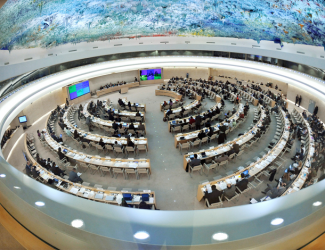
A general view of participants at the 16th session of the Human Rights Council in Geneva, Switzerland.

Special Focus

AWID is an international, feminist, membership organisation committed to achieving gender equality, sustainable development and women’s human rights

Human Rights Council (HRC)

The Human Rights Council (HRC) is the key intergovernmental body within the United Nations system responsible for the promotion and protection of all human rights around the globe. It holds three regular sessions a year: in March, June and September. The Office of the UN High Commissioner for Human Rights (OHCHR) is the secretariat for the HRC.

The HRC works by:

  • Debating and passing resolutions on global human rights issues and human rights situations in particular countries

  • Examining complaints from victims of human rights violations or activist organizations on behalf of victims of human rights violations

  • Appointing independent experts (known as “Special Procedures”) to review human rights violations in specific countries and examine and further global human rights issues

  • Engaging in discussions with experts and governments on human rights issues

  • Assessing the human rights records of all UN Member States every four and a half years through the Universal Periodic Review

Learn more about the HRC


AWID works with feminist, progressive and human rights partners to share key knowledge, convene civil society dialogues and events, and influence negotiations and outcomes of the session.

With our partners, our work will:

◾️ Monitor, track and analyze anti-rights actors, discourses and strategies and their impact on resolutions

◾️ Raise awareness of the findings of the 2017 and 2021 OURs Trends Reports.

◾️Support the work of feminist UN experts in the face of backlash and pressure

◾️Advocate for state accountability
 
◾️ Work with feminist movements and civil society organizations to advance rights related to gender and sexuality.
 

Related Content

Où et quand se tiendra le prochain Forum de l'AWID ?

Le 14e Forum international de l'AWID aura lieu du 20 au 23 septembre 2021 à Taipei, Taiwan.

En savoir plus

L’activisme au Moyen-Orient et en Afrique du Nord

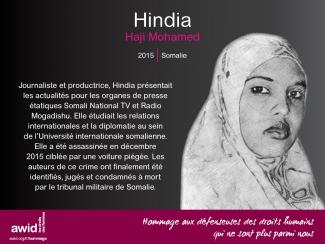
Notre hommage en ligne met à l’honneur cinq défenseuses des droits humains assassinées au Moyen-Orient ou en Afrique du Nord. Ces défenseuses étaient avocates ou militantes et ont œuvré pour les droits des femmes ou pour les droits civils. Leur mort met en évidence les conditions de travail souvent difficiles et dangereuses dans leurs pays respectifs. Nous vous invitons à vous joindre à nous pour commémorer la vie, le travail et l’activisme de ces femmes. Faites circuler ces mèmes auprès de vos collègues et amis ainsi que dans vos réseaux et twittez en utilisant les hashtags #WHRDTribute et #16Jours.


S'il vous plaît cliquez sur chaque image ci-dessous pour voir une version plus grande et pour télécharger comme un fichier 

[scald=2457:sdl_editor_representation]


Notre groupe, organisation et/ou mouvement n’est pas déclaré, pouvons-nous quand même participer à l’enquête?

Tout à fait, nous souhaitons connaître votre opinion et votre expérience du financement.

Snippet FEA Audio A Caring Economy (FR)

Olivia Arévalo Lomas

Olivia était la cheffe spirituelle des peuples autochtones Shipibo Konibo.

Sage femme et grand-mère autochtone, elle était connue pour sa préservation de la médecine traditionnelle et des chants sacrés de son peuple (les íkaros). Olivia Arévalo était une défenseure engagée en faveur des droits culturels et environnementaux de son peuple. L’assassinat d’Olivia s’est produit dans un contexte de conflit territorial entre la communauté Shipibo et les entreprises qui souhaitent s’accaparer leurs terres pour cultiver de l’huile de palme.

Les membres de sa communauté ont déclaré: « Sa mort est une agression contre toute la communauté Shipibo. Elle était la mémoire vivante de son peuple ».


Olivia Arévalo Lomas, Peru

WHRDs from Sub-Saharan Africa

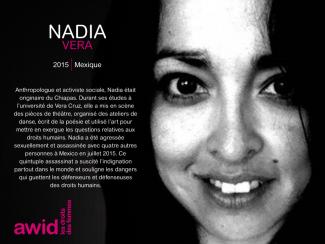
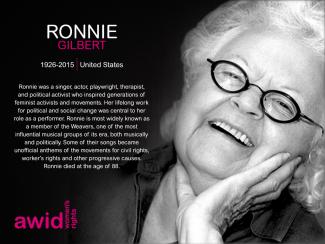
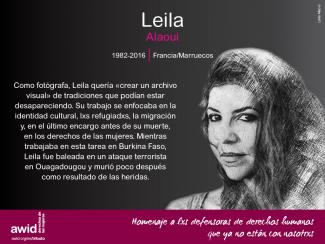
In our 2015 Online Tribute to Women Human Rights Defenders No Longer With Us we are commemorating four women from Sub-Saharan Africa, three of whom were murdered due to their work and/or who they were in their gender identity and sexual orientation. Their deaths highlight the violence LGBT persons often face in the region and across the globe. Please join AWID in honoring these women, their activism and legacy by sharing the memes below with your colleagues, networks and friends and by using the hashtags #WHRDTribute and #16Days. 


Please click on each image below to see a larger version and download as a file


How can I access the survey?

The survey is available on KOBO, an open-source platform for collecting, managing, and visualizing data. To participate, simply click on the survey link here and follow the instructions to complete the survey. 

Snippet FEA In numbers (EN)

IN NUMBERS

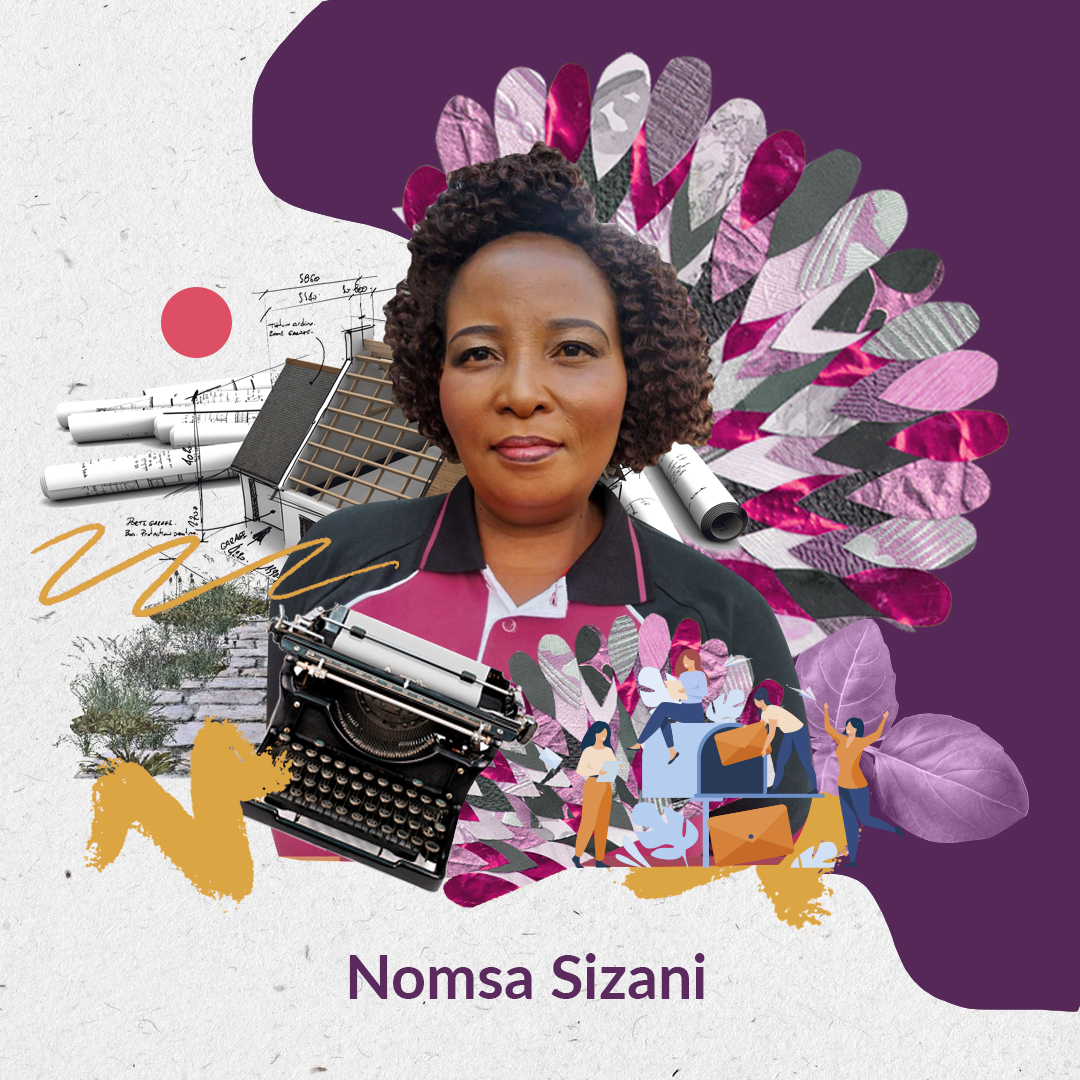
Carmen Griffiths

Carmen was the Head of the Construction Resource and Development Collective (CRDC) and was instrumental in supporting women’s involvement in the construction industry in Jamaica.

She also worked on issues of disaster preparedness for rural and urban women. She worked closely with women (especially single mothers) teaching them how to use hurricane straps and other technology to secure their homes. She worked in the area of water and sanitation and was a strong advocate for sustainable environmental management and development.

She was a part of the Huairou Commission and advocated for grassroots women on such issues as shelter, energy, and sustainable livelihoods.


Carmen Griffiths, Jamaica

Research methology

Over eight years, we did four global surveys and built a research methodology.

In 2013, we published three global reports. These reports confirm that women’s rights organizations are doing the heavy lifting to advance women’s rights and gender equality by using diverse, creative and long-term strategies, all while being underfunded.

Our 2010 global survey showed that the collective income of 740 women’s organizations around the world totaled only USD 104 million. Compare this with Greenpeace International, one organization with a 2010 budget of USD 310 million1. Imagine the impact these groups could have if they were able to access all the financial resources they need and more?

AWID’s WITM research has catalyzed increased funding for women’s rights organizing. WITM research was a driving force behind the Catapult crowdfunding platform, which has raised USD 6.5 million for women’s rights. The Dutch Government cited WITM research as a reason for its unprecedented MDG 3 Fund of EU 82 million. WITM research has also led to the creation of several new funds: FRIDA – The Young Feminist Fund, the Indigenous Women’s Fund, Fundo Elas, the Mediterranean Women’s Fund and the Rita Fund.

Funding trends analyses

While the WITM research has shed important light on the global funding landscape, AWID and partners have identified the need to dig deeper, to analyze funding trends by region, population and issue. In response, organizations are now using AWID’s WITM research methodology to do their own funding trends analyses. For example, in November 2013, Kosova Women’s Network and Alter Habitus – Institute for Studies in Society and Culture published Where is the Money for Women’s Rights? A Kosovo Case Study.

At the same time, AWID continues to collaborate with partners in Where is the Money for Indigenous Women’s Rights (with International Indigenous Women’s Forum and International Funders for Indigenous Peoples) and our upcoming Where is the Money for Women’s Rights in Brazil? (with Fundo Elas).

Several organizations have also conducted their own independent funding trends research, deepening their understanding of the funding landscape and politics behind it. For example, the South Asian Women’s Fund was inspired by AWID’s WITM research to conduct funding trends reports for each country in South Asia, as well as a regional overview. Other examples of research outside of AWID include the collaboration between Open Society Foundations, Mama Cash, and the Red Umbrella Fund to produce the report Funding for Sex Workers Rights, and the first-ever survey on trans* and intersex funding by Global Action for Trans* Equality and American Jewish World Service.


¿La encuesta ¿Dónde está el dinero? es accesible para personas con discapacidades?

Sí, es accesible para personas con diverso grado de discapacidades auditivas, visuales, cognitivas y de movilidad.

Snippet Intro The Feminist Realities Magazine (ES)

La revista de las Realidades Feministas

Las Realidades Feministas proclaman y personifican la esperanza y el poder.

Las encontramos en todo lo que nos muestra que existen otras formas de vivir, de pensar y de hacer,  desde las expresiones cotidianas que se evidencian en cómo nos relacionamos con otrxs hasta los sistemas alternativos de gobernanza y de justicia. Las realidades feministas son formas de resistencia a sistemas de poder como el patriarcado, el capitalismo y la supremacía blanca. 

Son propuestas poderosas que nos orientan hacia la idea de lo que es posible y nos muestran cómo los procesos de organización feminista están abriendo caminos hacia la justicia en movimientos y comunidades de todo el mundo. 

Descargar la revista completa (PDF)

Explorar la revista

Kate McInturff

Desde su paso por Peacebuild hasta la Canadian Feminist Alliance for International Action [alianza feminista canadiense para la acción internacional], Amnistía Internacional y el Canadian Centre for Policy Alternatives (CCPA, centro canadiense para las alternativas políticas), Kate tuvo durante toda su vida una pasión por los derechos de las mujeres y la igualdad de género y dedicó su carrera a luchar contra la desigualdad y a hacer del mundo un lugar más compasivo.

Fue integrante del Comité Coordinador de Social Watch [observatorio social] y colaboró con los informes del Observatorio Social Nacional canadiense. Como investigadora senior en el CCPA, Kate fue aclamada a nivel nacional por hacer la investigación, escribir y producir el informe anual «Los mejores y los peores lugares para ser mujer en Canadá».

Murió tranquilamente, rodeada de su familia, luego de una batalla de tres años con el cáncer de colon. Sus seres queridos la describen como «una feminista divertida, valiente y sin remordimientos».


Kate McInturff, Canada

7. Synthesize your research findings

Now that you have analyzed all your data – from your survey, interviews, desk research and potentially other sources – you can create your final product.

In this section:

Create your final product

Your final product will be the document that will summarize, analyze and criticize your data. That will be the piece that you will share with your community to present and explain your research to your audience.

At AWID, we often write a comprehensive written report that analyzes each set of data and synthesizes all of our findings, then later create smaller products, such as infographics and summaries (explained in the subsequent section “Finalize and format”).

1. Write clearly

  • Organize your data as you would like to tell a story. You can follow the order of your survey. Or you can regroup some questions to lead to your conclusion in a smooth and progressive way.
  • Adapt your language to your audience. Use universal language and avoid jargon or too technical terms.

Importance of the editor

An editor will proofread, ensure concise writing, conduct fact-checking, point out inconsistencies that need to be resolved, arrange the flow of the document and possibly suggest titles.

Your editor should preferably be someone who understands and knows your WITM work but who was not directly involved in the research. This will bring in a fresh perspective.

2. Make it pretty

  • Use the data collected to create graphs and tables. These type of visuals are a compelling way to highlight the main findings of your research and validate your analysis.

  • Source relevant images that can illustrate your report.

  • Highlight key-numbers and/or powerful testimonials.

Remember: The more accessible your product is, the more people will want to read (and share!) it.

Back to top


Gather review & inputs

At this point, you have collected all your data, analyzed it and transformed it into your final product, likely in a long report.

1. Polish your results

Before moving on to the next steps – you should share your final research product with your advisor organizations, activists, and donors.

This is a great moment to check the following points:

  • Are there any key points missing in your analysis of the present funding landscape and trends?
  • Are there any key points missing in your conclusions?
  • Are there any inaccuracies in the data that need to be corrected?
  • General suggestions on strengthening the report to achieve your goals as listed in your research framing.

Once you have inputted all feedback from your advisors, be sure to run it by your editor once more.

This will now be the final, completed version of your report.  If you intend to publish the final report in other languages, now is the time to send it for translation.

2. Facilitate the feedback

  • Your advisors are likely busy with their regular responsibilities. Be sure to request feedback within a reasonable deadline.
  • Keep your request for feedback brief and specific, so it is easy for them to respond. If you like, you can simply copy and paste the bullet points we have provided.
  • If you are publishing in multiple languages, ensure you have advisors who can also review the final translated versions of your product(s).

This is a significant contribution from your advisors. Consider offering them some form of recognition.

Back to top


Previous step

6. Conduct desk research

Next step

8. Finalize and format


Estimated time:

• 2 - 5 months

People needed:

• 1 or more research person(s)
• 1 Editor (or web-editor if you create an online product)
• Translator(s), if done in more than one language

Resource needed:

• List of advisor organizations, activists, and donors.
• Concept note (from “Frame your research” section)
• Survey topline results
• Prepared interview questions
• Interview results
• Desk research data
• All other data used in report


Previous step

6. Conduct desk research

Next step

8. Finalize and format


Ready to Go? Worksheet

Download the toolkit in PDF