AWID Forum: Co-creating Feminist Futures
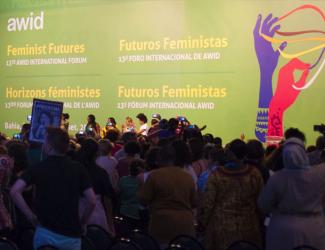
In September 2016, the 13th AWID international Forum brought together in Brazil over 1800 feminists and women’s rights advocates in a spirit of resistance and resilience.
This section highlights the gains, learnings and resources that came out of our rich conversations. We invite you to explore, share and comment!
What has happened since 2016?
One of the key takeaways from the 2016 Forum was the need to broaden and deepen our cross-movement work to address rising fascisms, fundamentalisms, corporate greed and climate change.
With this in mind, we have been working with multiple allies to grow these seeds of resistance:
- Our Seed Initiatives, has helped 20 ideas that emerged at the Forum to grow into concrete actions
- The video “Defending people and planet” and guide “Weaving resistance through action” put courageous WHRDs in the spotlight and present concrete strategies they use to confront corporate power.
- With our animations about the State of Our Feminist Movements and Climate and Environmental Justice, movements now have creative tools to support their advocacy work.
- The compiling artistic expressions of our #MovementsMatter series continues to inspire stronger and more creative organizing around the world.
- Movements can also benefit from new methodologies on Visioning Feminist Futures (Coming up soon!)
And through our next strategic plan and Forum process, we are committed to keep developing ideas and deepen the learnings ignited at the 2016 Forum.
What happens now?
The next AWID Forum will take place in the Asia Pacific region (exact location and dates to be announced in 2018).
We look forward to you joining us!
About the AWID Forum
AWID Forums started in 1983, in Washington DC. Since then, the event has grown to become many things to many peoples: an iterative process of sharpening our analyses, vision and actions; a watershed moment that reinvigorates participants’ feminisms and energizes their organizing; and a political home for women human rights defenders to find sanctuary and solidarity.
Related Content
#MeToo in China Snippet EN
#MeToo in China
#MeToo in China Exhibition was first held in 2019 and toured in 5 cities. The aim of the exhibition is to bring the personal experiences of the victims and activists to greater prominence and, through engagement with these stories, to inspire our audience to join in the fight. The exhibition has itself become a part of the #MeToo struggle—the exhibition has been beset by challenges on its tour throughout China, on more than one occasion even facing closure.
Leila Hessini
Leila es una líder, defensora y consultora feminista transnacional, con más de veinticinco años de experiencia en la promoción de los derechos humanos, la igualdad de género y la justicia sexual y reproductiva en salud, derechos y justicia a nivel local y global. Leila nació en Argelia y se educó en Estados Unidos, Francia y Marruecos; a lo largo de su carrera profesional, ha vivido y trabajado en África, Europa y Estados Unidos.
Durante más de cinco años fue Vicepresidenta de Programas en el Fondo Global de Mujeres (GFW), supervisando el otorgamiento estratégico de subvenciones, el fortalecimiento de los movimientos, la incidencia global y las colaboraciones filantrópicas. En GFW duplicó las subvenciones otorgadas a más de 17 millones USD, inauguró el trabajo sobre movimientos feministas y de género en las crisis, creó un programa para niñas adolescentes liderado por un consejo asesor de niñas, y dirigió su trabajo de incidencia filantrópica. Antes de eso, entre 2002 y 2016 se desempeñó en el equipo de dirección de Ipas, donde publicó extensamente sobre derecho al aborto y justicia, lideró tareas de incidencia globales, y se asoció con grupos feministas que trabajan sobre gestión autónoma, movilización comunitaria y reducción de estigmas respecto de la integridad corporal y de los derechos sexuales y reproductivos. Mientras vivió en África del Norte, cofundó una empresa consultora feminista interseccional, Strategic Analysis for Gender Equality (SAGE), que trabajaba en las intersecciones de los derechos económicos, de género y sexuales y reproductivos, y dirigió el trabajo nacional, regional y mundial sobre género de la oficina de El Cairo de la Fundación Ford durante cinco años.
Leila tiene una vasta experiencia en educación popular, incidencia, organizaciones sin fines de lucro, juntas de desarrollo, filantropía, y monitoreo y evaluación. Es una hábil comunicadora comprometida con la utilización del enfoque interseccional para priorizar y difundir las voces y las experiencias de las personas más marginadas. Ha recibido la beca «Op-ed Public Voices» de la Fundación Ford, y fue becaria Fulbright en Marruecos. Sus publicaciones cubren una amplia gama de tópicos, incluyendo enfoques feministas y decoloniales a la filantropía, la promoción de los derechos humanos de las mujeres en contextos mayoritariamente musulmanes, estrategias feministas para impulsar la justicia reproductiva, el fomento de los abortos autogestionados, y la lucha contra los estigmas y la discriminación.
Actualmente Leila se desempeña como Copresidenta de la Junta Directiva del Centro por los Derechos Constitucionales (CCR), e integra la Junta Directiva del Highlander Research and Education Center. Es también funcionaria del consejo de rendición de cuentas del Numun Feminist Technology Fund y del comité asesor de la African Women’s Human Rights Defenders Platform. Anteriormente ha integrado las Juntas de la SisterSong Women of Color Reproductive Justice Collective, de la Red Mundial de Mujeres por los Derechos Reproductivos (WGNRR), del Fondo Global de Mujeres (GFW), del Fondo de Acción para el Aborto Seguro (SAAF), y del Proyecto de Tecnologías para la Salud Reproductiva (RHTP). Fue elegida Tesorera e integrante del Comité Ejecutivo de la Junta Directiva de Prospera, y del Comité de Dirección de Fenomenal Funds por cuatro años. Leila tiene una Maestría en Salud Pública, y una Maestría en Estudios de Medio Oriente y Norte de África; ha estudiado derecho islámico en Marruecos, y cursó estudios doctorales en sociología en Francia. Ha estudiado árabe y alemán, habla francés e inglés en forma fluida.
Rosalie Eldora Sindi Medar Gould e
Ika Vantiani Snippet ES
Ika Vantiani
Ika Vantiani es una artista, curadora y artesana de Yakarta, Indonesia. Su obra explora la idea de ser mujer en la sociedad actual, en la cual los medios de comunicación y el consumo están entretejidos. Ika usa la disciplina del collage, y la expande al arte callejero, a talleres e instalaciones. Integra colectivos artísticos tales como Micro Galleries, The Collage Club y It’s In Your Hands Collective.
Fatima Qureshi
A nomad of cultures, born in Hong Kong, rooted in Turkish-Pakistani heritage, Fatima’s love for narratives - both in reading and co-creating them - fueled her passion for communications activism. Supported by her education in journalism, Fatima has worked for 7 years in digital and media communications fields with NGOs that provide education opportunities and legal aid to refugee and asylum seekers, as well as with the Muslim feminist movement which applies feminist and rights-based lenses in understanding and searching for equality and justice within Muslim legal tradition. She is a regular op-ed writer on feminist issues in the Global South.
Through storytelling in this hyper-digital age of social media, Fatima continues to collaborate with community organizers and grassroots activists to create audiovisual content with the aim to cultivate bridges of understanding towards collective liberation and decolonization. On days when she’s not working, she intently watches independent feminist films coming from Iran, Morocco and Pakistan and on other days, she performs spoken word poetry with her comrades in Kuala Lumpur.
Dicle Kogacioglu
Références intéressantes
Découvrez ces projets élaborés par les équipes de l'AWID pour promouvoir le plaidoyer et les perspectives féministes.
Nana Abuelsoud
Nana es una organizadora feminista e investigadora en derechos reproductivos y políticas demográficas que reside en Egipto. Es miembro de RESURJ (organización feminista por la justicia sexual y reproductiva), del Órgano Asesor del Proyecto A del Líbano y de la Comisión de la Comunidad de Mama Cash. Nana tiene una maestría en Salud Pública del Instituto KIT y la Universidad Vrije de Ámsterdam. En su trabajo, da seguimiento y contextualiza las políticas demográficas nacionales, al tiempo que reúne información para abordar la eugenesia moderna, las ayudas internacionales de carácter regresivo y el autoritarismo. Anteriormente, formó parte de la Fundación de Ginebra para la Educación y la Investigación Médica, la Iniciativa Egipcia para los Derechos Personales y el Colectivo Feminista Ikhtyar de El Cairo.
Regina Martínez
ما هي لغات المنتدى؟
لغات العمل في جمعية حقوق المرأة في التنمية هي الإنجليزية والفرنسية والإسبانية. ستتم إضافة اللغة التايلاندية كلغة محلية، بالإضافة إلى لغة الإشارة وإجراءات الاتصال الأخرى. يمكن إضافة لغات أخرى إذا سمح التمويل بذلك، لذا تحقق/ي مرة أخرى بانتظام للحصول على التحديثات. نحن نهتم بالعدالة اللغوية وسنحاول تضمين أكبر عدد ممكن من اللغات بقدر ما تسمح به مواردنا. نأمل في خلق فرص متعددة للكثيرين/ات منا للتواجد بلغاتنا والتواصل مع بعضنا البعض.
Snippet The revolution will be feminist_Fest (EN)
Plenary session:
The revolution will be feminist—or it won’t be a revolution
Manal Tamimi Palestine
Bubulina Moreno, Colombia
Karolina Więckiewicz, Poland
Anwulika Ngozi Okonjo, Nigeria
¿Cómo se inició AWID?
AWID surgió en 1982 y se ha ido transformando con el paso de los años en una verdadera organización mundial.
Saber más de nuestra historia
Leer «From “WID” to “GAD” to Women’s Rights: The First Twenty Years of AWID» (en inglés)
Helen Bamber
كم تكلفة المشاركة؟
يرجى حساب تكاليف السفر إلى بانكوك، والإقامة والبدل اليومي، والتأشيرة، وأي احتياجات خاصة بإمكانية الوصول، والنفقات الطارئة، بالإضافة إلى رسوم التسجيل التي سيتم الإعلان عنها قريبًا. تتراوح أسعار الفنادق في منطقة سوكومفيت في بانكوك ما بين 50 دولارًا أمريكيًا إلى 200 دولار أمريكي في الليلة الواحدة في حالة حجز غرفة مزدوجة.
يحصل أعضاء جمعية حقوق المرأة في التنمية على خصم عند التسجيل، لذلك إذا لم تكن عضوًا/ة بعد، فإننا ندعوك إلى التفكير في أن تصبح عضوًا/ة والانضمام إلى مجتمعنا النسوي العالمي.
Snippet Festival Day 5, 6 Fest (ES)
![]() |
Asamblea Placentera: Tejiendo Proyectos Feministas ColaborativosGhiwa Sayegh, Kohl: A Journal for Body and Gender Research De brujeria, chamanismo y otros conocimientos insurrectos contra el patriarcadoSofía Blanco Sixtos, Colectiva Feminista MAPAS |
Quels sont les enjeux sur lesquels travaille l’AWID ?
L’AWID œuvre à renforcer la justice de genre et les droits humains des femmes.
Nous travaillons à renforcer les voix et l'impact des défenseuses des droits humains, des organisations et des mouvements.
Nos Domaines prioritaires sont étroitement liés aux réalités internationales. Ils sont le reflet de situations de plus en plus précaires qui sapent les droits des femmes à l’échelle mondiale.
- La justice économique
- Les ressources pour les droits des femmes
- S'opposer aux fondamentalismes religieux
- Les défenseuses des droits humains
- L'activisme des jeunes féministes
Nan Robertson
هل هناك مواضيع ذات الخطوط الحمراء التي يجب علينا تجنب تقديمها؟
لقد كان منتدى جمعية حقوق المرأة في التنمية دائمًا مساحة لا تخجل من النقاشات الصعبة والمطلوبة بشدة. نحن نرحب بهذه المشاركات عندما يتمكن المنظمون/ات بعناية من توفير الاحترام والأمان في المساحة للمشاركين/ات.