
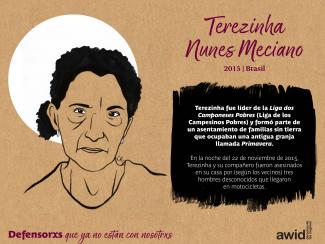
Terezinha Nunes Meciano
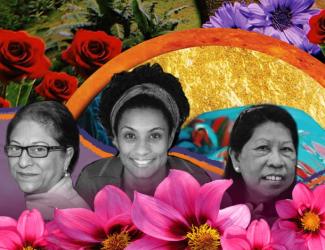
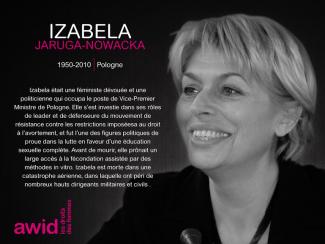
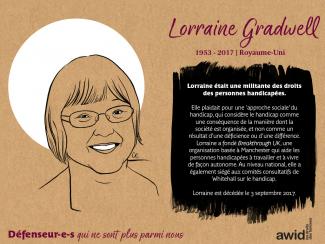
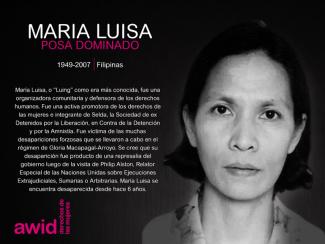
L’hommage se présente sous forme d’une exposition de portraits d’activistes du monde entier qui ne sont plus parmi nous qui ont lutté pour les droits des femmes et la justice sociale.
Cette année, tout en continuant à convoquer la mémoire de celleux qui ne sont plus parmi nous, nous souhaitons célébrer leur héritage et souligner les manières par lesquelles leur travail continue à avoir un impact sur nos réalités vécues aujourd’hui.
49 nouveaux portraits de féministes et de défenseur·e·s viennent compléter la gallerie. Bien que de nombreuses des personnes que nous honorons dans cet hommage sont décédé·e·s du fait de leur âge ou de la maladie, beaucoup trop d’entre iels ont été tué·e·s à cause de leur travail et de qui iels étaient.
Visiter notre exposition virtuelle
Les portraits de l'édition 2020 ont été illustrés par Louisa Bertman, artiste et animatrice qui a reçu plusieurs prix.
L’AWID tient à remercier nos membres, les familles, les organisations et les partenaires qui ont contribué à cette commémoration. Nous nous engageons auprès d’elleux à poursuivre le travail remarquable de ces féministes et défenseur·e·s et nous ne ménagerons aucun effort pour que justice soit faite dans les cas qui demeurent impunis.
« Ils ont essayé de nous enterrer. Ils ne savaient pas que nous étions des graines » - Proverbe mexicain
Le premier hommage aux défenseur-e-s des droits humains a pris la forme d’une exposition de portraits et de biographies de féministes et d’activistes disparu·e·s lors du 12e Forum international de l’AWID en Turquie. Il se présente maintenant comme une gallerie en ligne, mise à jour chaque année.
Depuis, 467 féministes et défenseur-e-s des droits humains ont été mis·es à l'honneur.
Dans le monde entier et au sein des mouvements sociaux, les personnes désireuses d’innover ont tendance à se sentir seules et impuissantes face au « statu quo du mouvement ». Historiquement, les Forums de l’AWID ont joué un rôle dans le soutien de ces innovateur·trices en leur offrant une plateforme où leurs idées et pratiques sont accueillies et renforcées par les pensées et actions d’autres personnes de différentes régions et communautés qui les ont déjà explorées. Sara Abu Ghazal, féministe palestinienne au Liban, nous parle de ce qu’ont représenté les Forums pour toute une nouvelle génération de féministes de la région MENA (Moyen-Orient et Afrique du Nord) qui ont introduit de nouvelles façons de s’organiser, de nouvelles conceptions du féminisme et de nouvelles questions dans le paysage régional des droits des femmes.
Asociación de Mujeres Afrodescendientes del Norte del Cauca
Esta política rige para todas las páginas alojadas en https://www.awid.org/ y para cualquier otro sitio web bajo el control de AWID (el «Sitio web») y para las suscripciones a estos sitios. No se aplica a páginas alojadas por otras organizaciones distintas a AWID, hacia las cuales podemos dirigir un hipervínculo y cuyas políticas de privacidad pueden ser diferentes. Por favor, lee la siguiente política para que puedas comprender nuestra política de privacidad en cuanto a su naturaleza, propósito, uso y divulgación de tu información personal e identificable que es recogida a través de este sitio web.
En general, puedes navegar este sitio web sin enviarnos información personal. Sin embargo, en algunas circunstancias, te pediremos esa información personal.
Cuando te encuentras en el sitio web y se te pide información personal, estás compartiendo esa información sólo con AWID.
1.1.1 La información que nos das para recibir actualizaciones de AWID:
Cuando te registras para usar el sitio (por ejemplo, te suscribes para recibir correos electrónicos o para solicitar membresía) nos das la información necesaria acerca de ti, como tu nombre, país, idioma, para recibir actualizaciones por correo electrónico. Nos das esta información a través de formularios seguros y es almacenada en servidores seguros.
1.1.2 La información de pago que nos das para hacerte miembrx o para anotarte en algún evento:
Además, puede ser necesario que nos des información sobre el pago cuando te haces miembrx o cuando te anotas para eventos. AWID no almacena en sus servidores ninguna información relativa a tarjetas de crédito y usa portales seguros para procesar la información relativa a pagos.
1.1.3 La información opcional que decidiste darnos (con consentimiento)
Cuando te comunicas con AWID o nos das información opcional a través de formularios en el sitio web o utilizas el sitio para comunicarte con otrxs miembrxs, recogemos información sobre tu comunicación y cualquier otra información que elijas dar.
1.1.4 Información que nos das a través de los formularios de contacto o cuando te comunicas directamente con nosotrxs
Cuando te comunicas con nosotrxs, recogemos tu comunicación y toda otra información que decidas darnos.
Además, cuando interactúas con el Sitio web, nuestros servidores pueden llevar un registro de actividad que no te identifica personalmente («Información no personal»). Por lo general, recogemos las siguientes categorías de información no personal:
Para más información sobre las cookies, por favor consulta All about cookies.
Si no deseas recibir cookies puedes cambiar fácilmente tu navegador web para que rechace las cookies o notificarte cuando recibes una nueva cookie. Puedes mirar aquí cómo hacerlo.
AWID utiliza la información que recogemos acerca de ti para:
Si te has subscrito a los boletines electrónicos de AWID o a nuestras actualizaciones por correo electrónico o si te has hecho miembrx, te enviaremos comunicaciones regularmente en la forma especificada en el área correspondiente del sitio web. Puedes cancelar la suscripción de cualquiera de los boletines electrónicos o actualizaciones de correo electrónico en cualquier momento siguiendo los pasos indicados para ello en nuestros correos.
Es importante para AWID que tu información de identificación individual sea precisa. Siempre estamos buscando cómo hacer más fácil que puedas revisar y corregir la información que AWID tiene acerca de ti en nuestro sitio web. Si cambias tu dirección de correo electrónico, o si cualquier otra información que tengamos es incorrecta o desactualizada, por favor escríbenos a esta dirección.
Con excepción de lo explicado más abajo, AWID no revelará ninguna información personal acerca de ti que sea identificable, y no venderá ni alquilará a tercerxs listados conteniendo tu información. AWID podrá revelar información cuando tenga tu permiso para hacerlo o bajo circunstancias especiales, por ejemplo cuando crea de buena fe que la ley se lo exige.
De manera permanente implementamos y actualizamos las medidas administrativas, técnicas y de seguridad física para proteger tu información de accesos no autorizados, pérdida, destrucción o alteración. Algunas de las salvaguardas que usamos para proteger tu información son cortafuegos, encriptación de datos y controles de acceso a la información. Si sabes o tiene razones para creer que tus credenciales de membresía a AWID se han perdido, han sido robadas, malversadas o comprometidas de alguna forma o en caso de que sepas o sospeches de uso no autorizado de tu cuenta de membresía a AWID, por favor ponte en contacto con nosotrxs a través de nuestra página.
Esta política puede cambiar periódicamente. La política modificada será publicada en este sitio web y al final del texto se actualizará la fecha de Última actualización. Se enviará un correo electrónico con la actualización de la política revisada y si no estás de acuerdo con ella tendrás la opción de cancelar tu suscripción o suscripciones con nosotrxs. También puedes escribirnos aquí. ¡Agradecemos tus opiniones!
Última actualización: mayo de 2019
 |
 |
 |
 |
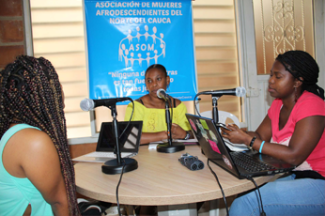 |
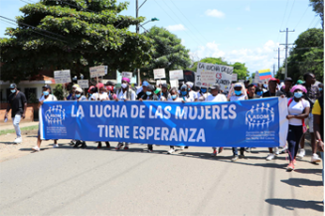
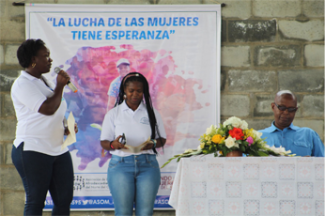
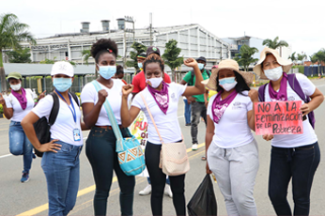
Activistas de ASOM en encuentros, desfiles y eventos

Tributo: Recordamos a lxs activistas feministas que cambiaron nuestro mundo
En esta galería en línea, rendimos homenaje a más de 450 valientes feministas y activistas de todas las regiones del mundo y 88 países que ya no están con nosotrxs.
Lxs traemos a todxs a nuestra memoria colectiva y llevamos su legado de lucha como nuestra antorcha en los movimientos feministas y por los derechos de las mujeres.
Usa los filtros para refinar tu búsqueda

Ce calendrier est un cadeau que nous vous faisons à vous et aux 8 000 membres de notre communauté féministe mondiale. C’est notre promesse de moments d’activisme et de connexion pour l’année à venir. Ces derniers mois ont porté leur lot d’injustices indescriptibles. Cette année encore, continuons à cultiver la puissance du collectif, à établir des stratégies et à trouver des solutions porteuses d’espoir. Pour un monde plus juste pour toustes.
En feuilletant les pages de ce calendrier, vous remarquerez la diversité des œuvres de nos membres artistes, qui se servent de leur travail pour amplifier et relier nos différents mouvements sous le parapluie féministe. Vous retrouvez-vous dans ces pages ? Y retrouvez-vous votre mouvement, vos communautés ? Nous vous encourageons à utiliser ce calendrier utile pour marquer le temps, l’espace, mais aussi pour inscrire les possibilités d’établir des connexions avec les féministes et les activistes.
Pour renforcer notre voix et notre pouvoir collectifs en faveur de davantage de financement de meilleure qualité pour l’organisation des mouvements féministes, de défense des droits des femmes, des personnes LBTQI+ et des mouvements alliés dans le monde entier.

Venez rencontrer Aura Roig, militante féministe visionaire, anthropologue, directrice et fondatrice de la coopérative Metzineres.
Elle a consacré les deux dernières décennies à la recherche, à la conception et à la mise en place de politiques de soutien aux personnes qui se droguent, basées sur la réduction des méfaits, les droits humains et le féminisme intersectionnel.
Après avoir expérimenté et appris des communautés qui consomment des drogues dans le monde entier, elle est retournée à Barcelone pour créer la Xarxa de Dones que Usen Drogues (le Réseau des Femmes qui Consomment des Drogues, XADUD). XADUD était un espace d'entraide et de solidarité avec la lutte pour les droits des groupes marginalisés, qui plus tard deviendra la coopérative Metzineres.
Aujourd'hui, Aura travaille à étendre le modèle Metzineres pour prendre en charge des groupes plus grands, tout en documentant de manière approfondie son parcours et son apprentissage prolifiques.
Las realidades feministas son ejemplos palpables de los mundos justos que estamos creando conjuntamente. Existen ahora, en las múltiples formas en que vivimos, luchamos y construimos nuestras vidas.
Estas realidades feministas van más allá de la resistencia contra los sistemas de opresión, y nos muestran cómo sería un mundo sin dominación, ni explotación ni supremacía.
Estas son las historias que queremos descubrir, compartir y ampliar a lo largo de este viaje por las realidades feministas.
Creamos y difundimos alternativas: Creamos juntxs arte y expresiones creativas se centran en celebrar la esperanza, el optimismo, la sanación y la imaginación radical que inspiran las realidades feministas.
Construimos conocimiento: Documentamos, demostramos y difundimos metodologías que ayudarán a identificar las realidades feministas en nuestras diferentes comunidades.
Promovemos agendas feministas: Expandimos y profundizamos nuestro pensamiento colectivo y nuestra organización para promover soluciones y sistemas justos que encarnen valores y visiones feministas.
Movilizamos acciones solidarias: Involucramos a movimientos feministas, de derechos de las mujeres, de justicia de género y aliados para que compartan, intercambien y creen juntos realidades, narrativas y propuestas feministas en el 14º Foro Internacional de AWID.
Aunque ponemos énfasis en el proceso que lleva al Foro y en lo que ocurre después, el evento de cuatro días es un espacio importante en el que ocurre la magia que queremos crear, gracias a la energía única que despierta y a las oportunidades que se abren cuando nos reunimos.
Les dé fuerza a las Realidades Feministas al nombrarlas, celebrarlas y generar entusiasmo por las experiencias y propuestas que nos muestran de qué somos capaces, alimentando así nuestra imaginación colectiva.
Nos llene de esperanza y de energía que son combustibles tan necesarios para la resiliencia y el activismo por los derechos y la justicia
Fortalezca las conexiones, la reciprocidad y la solidaridad entre los diversos movimientos feministas, y entre ellos y otros movimientos por los derechos y la justicia
Aquí podrás leer más acerca del proceso del Foro
The global survey is a key pillar of the third iteration of our action-oriented research: “Where is the Money for Feminist Organizing?” (in short, Where is the Money or WITM). The results of the survey will be further elaborated and explored through in-depth conversations with activists and funders and cross-referenced with other existing analysis and research on the state of funding for feminists and gender equality globally.
The full “Where is the Money for Feminist Organizing” report will be published in 2026.
 To learn more how AWID has been shining a light on money for and against feminist movements check out the work of our Resourcing Feminist Movements Initiative here.