Análisis Especiales

AWID es un organización feminista internacional de membresía, que brinda apoyo a los movimientos que trabajan para lograr la justicia de género y los derechos de las mujeres en todo el mundo.

Foro de AWID: Co-creando futuros feministas

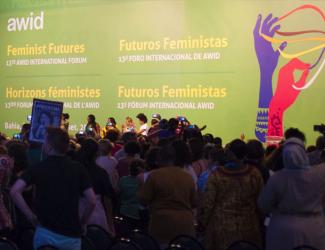
En septiembre de 2016, 1800 feministas y activistas por los derechos de las mujeres de todos los rincones de nuestros movimientos se congregaron en las costas de Bahia, en el 13º Foro Internacional de AWID.

En esta sección se destacan los logros, los aprendizajes y los recursos que surgieron de las ricas conversaciones mantenidas. Te invitamos a analizar, compartir y comentar.


¿Qué ha pasado desde 2016?

Uno de los aportes más importantes del Foro fue la necesidad de ampliar y profundizar nuestro trabajo entre movimientos, frente a la confluencia de los fascismos en auge, fundamentalismos, codicia corporativa y cambio climático.

Con esto en mente, AWID, en asociación con múltiples aliadxs, ha estado trabajando para que estas semillas de resistencia:

AWID se ha comprometido, mediante su próximo plan estratégico y su proceso del Foro, a continuar y profundizar las relaciones, las lecciones y los procesos iniciados en el Foro 2016 y basándonos en el momento actual.

¿Que pasa ahora?

El mundo es un lugar muy diferente de lo que era un año atrás, y seguirá cambiando en los próximos años.

El próximo Foro de AWID se realizará en la región del Pacífico Asiático (el lugar y la fecha exactos serán anunciados en 2018). Esperamos que te unas a nosotrxs.

Sobre el Foro de AWID

Los Foros de AWID comenzaron en 1983 en Washington DC. Desde entonces, el evento ha crecido hasta convertirse en muchas cosas para muchas personas: un proceso iterativo para darle forma a nuestros análisis, objetivos y acciones; un hito crucial que fortalece los feminismos de lxs participantes e infunde energías a sus procesos de organización; un hogar político donde lxs defensoras de derechos humanos encuentran un santuario y solidaridad.

Más información sobre los Foros anteriores

Contenido relacionado

Sainimili Naivalu

“I’ve witnessed discrimination on the streets, being teased on the streets and verbally abused on the streets. I have also made numerous friends and have met a lot of people. There may be dangers out there but I am a survivor and this is where I will be for now.”
- Sainimili Naivalu

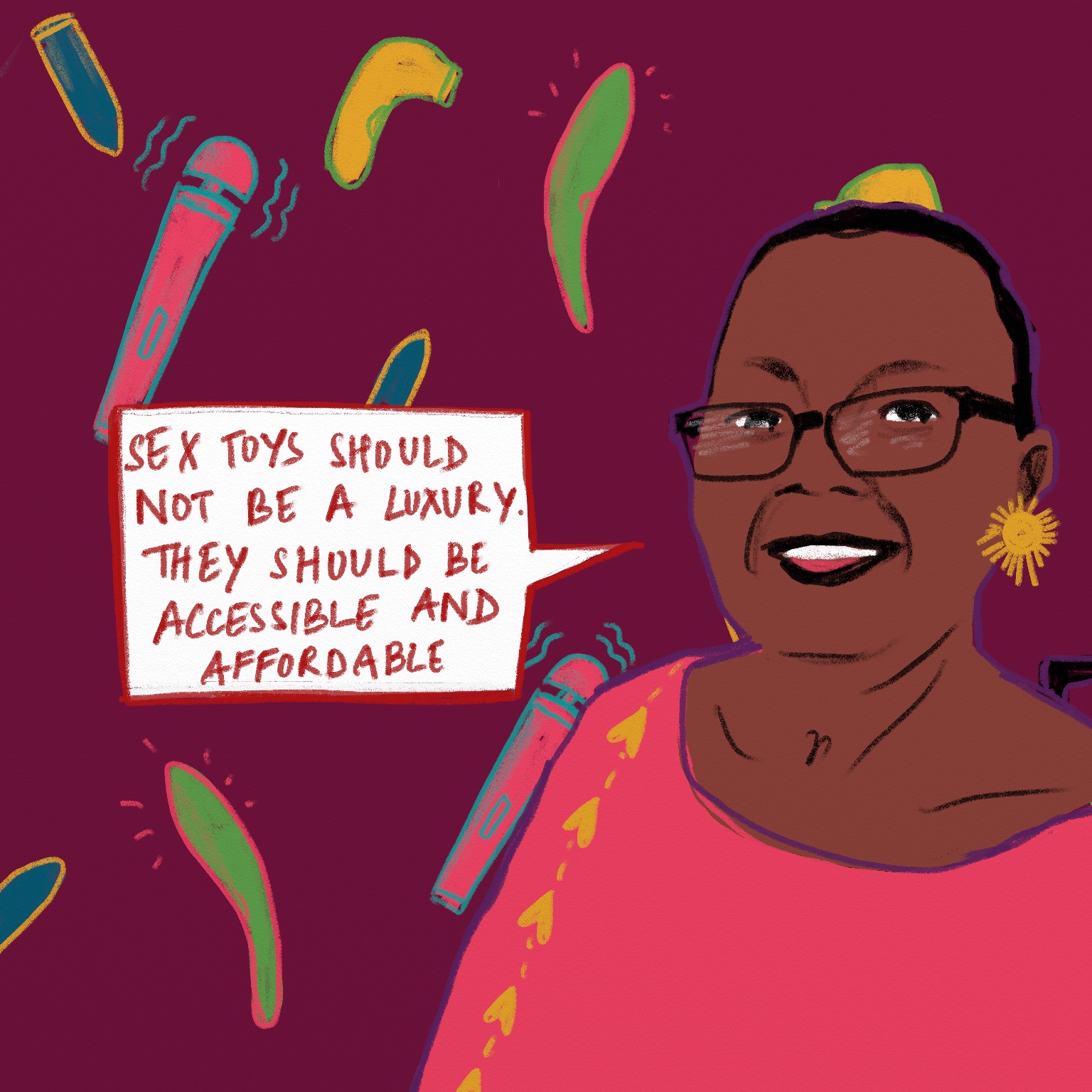
Sainimili Naivalu was a feminist and disability rights activist from the village of Dakuibeqa on Beqa Island, Fiji.

She demanded policy makers and stakeholders provide disability friendly policies and services such as the construction of ramps in towns and cities to increase accessibility. Physical barriers were not the only ones she strived to change. From her own experience, she knew that more difficult changes need to take place in social and economic spheres. Many of the challenges disabled people face are rooted in attitudes that carry discrimination and stigma. 

A survivor and a fighter, Sainimili contributed to co-creating feminist realities that foster inclusion and shift attitudes towards disabled people. As a member of the Spinal Injury Association of Fiji (SIA) and through Pacific Disability Forum’s Pacific Enable project she attended the International Labour Organisation “Start Your Business” training in Suva, enabling her to transform her ideas into her own business. She was an entrepreneur at the Suva Market Stall 7, offering manicure services, as well as running SIA’s women’s market stall selling handicrafts, sulus and artifacts. Sainimili’s plan was to expand her business and become a major employer of disabled people.

In addition to her activism, she was also a table tennis medalist and youth champion. 

A vivacious personality, Sainimili was one of a kind. You would always know that Sainimili is in a room because her laughter and her stories would be the first thing that you would notice.
- Michelle Reddy

Sainmili passed away in 2019. 

Snippet FEA Metzineres (FR)

Metzineres

En vous promenant dans le quartier du Raval à Barcelone, vous croiserez peut-être Metzineres, une coopérative féministe par et pour les femmes et personnes trans et non-binaires qui consomment de la drogue.

Imaginez un endroit sans stigmatisation, où les femmes et personnes trans et non-binaires peuvent consommer des drogues en toute sécurité. Un lieu qui offre sécurité, soutien et accompagnement aux femmes et personnes trans et non-binaires dont les droits sont systématiquement bafoués par la guerre contre la drogue et qui subissent violence, stigmatisation et répression en conséquence.

Juste à l'extérieur de l'entrée, les passant·es et les visiteur·euses sont accueilli·e·s par un immense tableau noir où figurent des conseils, des astuces, des souhaits et des dessins de personnes qui consomment de la drogue. Il existe également un calendrier qui présente une série d'activités auto-organisées par la communauté Metzineres. Qu'il s'agisse d'ateliers coiffure et cosmétique, des émissions radio, des pièces de théâtre, de repas communs offerts à la communauté ou des cours d'autodéfense, il y a toujours quelque chose à faire!

La coopérative offre des sites de consommation sûrs ainsi que des services qui couvrent les besoins de base des gens. Il y a des lits, des casiers, des douches, des toilettes, des machines à laver et une petite terrasse extérieure où les gens peuvent se détendre ou jardiner.

Metzineres opère dans un cadre de réduction des méfaits, qui tente de réduire les conséquences négatives de la consommation de drogue. Mais la réduction des méfaits est bien plus qu'un ensemble de pratiques: c'est une politique ancrée dans la justice sociale, la dignité et les droits des personnes qui consomment des drogues.

Snippet - WITM To make - ES

Para darle visibilidad a la complejidad de la dotación de recursos para las diversas formas de organización feministas.

What are some of the debates and conflict areas?

Sylvia Rivera

Sylvia Rivera fue activista por los derechos civiles, travesti y trabajadora sexual.

Conocida como la Drag Queen de color de Nueva York, Sylvia fue feroz e incansable en su voluntad por cambiar las cosas, y en su defensa de  quienes quedaron marginadxs y excluidxs cuando el movimiento por los "derechos de la comunidad gay"  se volvió predominante en los Estados Unidos, a principios de los 70.

En 1973, durante un conocido discurso por el día de Christopher Street, Sylvia gritó en medio de la multitud de integrantes de la comunidad LGBT:

"Todos ustedes me dicen, anda y esconde la cola entre las patas.
No voy a seguir aguantando esta mierda.
Me han golpeado.
Me han roto la nariz.
Me han metido en la cárcel.
He perdido mi trabajo.
He perdido mi departamento
por la liberación gay, ¿y todos ustedes me tratan así?
¿Qué carajo les pasa a todos ustedes?
¡Piensen en eso!"

En 1969, a la edad de 17 años, Sylvia participó en los emblemáticos disturbios de Stonewall, al lanzar, presuntamente, el segundo cóctel molotov para protestar por la redada policial en este bar gay de Manhattan. Siguió siendo una figura central en los levantamientos posteriores, organizando mítines y luchando contra la brutalidad policial.

En 1970, Sylvia trabajó junto con Marsha P. Johnson para establecer Street Transvestite Action Revolutionaries [Acción Travesti Callejera Revolucionaria] (S.T.A.R., por sus siglas en inglés), un colectivo político y una organización que establecería proyectos de apoyo mutuo para las personas trans que vivían en la calle, aquellxs que luchaban contra la drogadicción, las que estaban encarceladas y, en particular, para las personas trans de color  que vivían en la pobreza.

Desafiante de las etiquetas, Silvia vivió la vida de una manera que retaba a las personas del movimiento de liberación gay a pensar de manera diferente. Ella dijo:

"Me fui de casa a los 10 años, en 1961.  Hice la calle en la 42. El inicio de los años 60 no era un buen momento para lxs drag queens, los chicos afeminados o los chicos que usaban maquillaje como nosotrxs. En ese entonces nos golpeaba la policía, y todo el mundo. Yo no salí realmente como drag queen hasta finales de los 60, cuando se arrestaba a lxs drag queens, qué degradación había. Recuerdo que la primera vez que me arrestaron, ni siquiera estaba vestida totalmente en drag. Estaba caminando y los policías me arrebataron de la calle. La gente ahora quiere llamarme lesbiana porque estoy con Julia, y yo digo: "No. Soy sólo yo. No soy lesbiana". Estoy cansada de que me etiqueten. Ni siquiera me gusta la etiqueta transgénero. Estoy cansada de vivir con etiquetas. Sólo quiero ser quien soy. Soy Sylvia Rivera. 

A través de su activismo y su coraje, Sylvia ofreció un espejo que reflejaba todo lo que estaba mal en la sociedad, pero también la posibilidad de transformación. Sylvia nació en 1951 y falleció en 2002.

Snippet FEA Get Involved 1 (EN)

GET INVOLVED!

Follow the work of these organizations on their social media accounts and websites:

Snippet - WITM About the survey - EN

ABOUT THE SURVEY

  • GLOBAL & DIVERSE: Reflecting on resourcing realities of feminist organizing at a global scale and disaggregated by region
  • CONTEXTUALIZED: Centering voices, perspectives and lived experiences of feminist movements in all their richness, boldness and diversity in their respective contexts
  • CO-CREATED: Developed and piloted in close consultations with AWID members and movement partners
  • COMPLEMENTARY: Contributing to and amplifying existing evidence on the state of resourcing for feminist, women’s rights and gender justice organizing by activists, feminist funders and allies
  • MULTI-LINGUAL: Accessible in Arabic, English, French, Portuguese, Russian and Spanish.
  • PRIORITIZING PRIVACY & SECURITY: We are committed to maintaining the confidentiality and integrity of your data. Read our Privacy Policy to learn more about the measures we take to ensure the protection of your information
  • ACCESSIBLE: Accessible to people with a diverse range of hearing, movement, sight, and cognitive abilities, taking approximately 30 minutes to complete
  • REPLICABLE: Replicable by movements in their respective contexts; WITM survey tools and datasets will be publicly available to support more feminist research and collective advocacy.

No puedo presentar una propuesta escrita, ¿aceptan otros formatos?

Como expresión de nuestro compromiso con hacer que todos los aspectos del Foro AWID sean accesibles, aceptaremos propuestas en forma de audio/video cuando se trate de personas/organizaciones/grupos que no puedan enviarlas por escrito. Si decides enviar tu propuesta en formato de audio/video, por favor responde las preguntas en el mismo orden en que aparecen en el Formulario para Presentar Actividades.

Para presentar un archivo de audio/video, por favor escríbenos utilizando nuestro formulario de contacto. Seleccione «propuesta de actividad» como asunto de mensaje.

Contactanos

Cynthia Cockburn

Cynthia Cockburn était une sociologue, écrivaine, universitaire, photographe et militante pour la paix féministe.

Elle a étudié les aspects genrés de la violence et du conflit et fait d’importantes contributions au mouvement pacifiste en explorant les thèmes de la masculinité et de la violence, ainsi que par son activisme local et international.

Ayant introduit une analyse féministe aux questions de militarisation et de guerre, Cynthia figurait parmi les universitaires dont les écrits et analyses illustraient la manière dont la violence basée sur le genre joue un rôle essentiel dans la perpétuation de la guerre. Travaillant en étroite collaboration avec des activistes pacifistes dans des pays en conflit, ses conclusions portaient sur des contextes aussi divers que l’Irlande du Nord, la Bosnie-Herzégovine, Israël et la Palestine, la Corée du Sud, le Japon, l’Espagne et le Royaume-Uni. Sa recherche et ses écrits universitaires ont permis d’éclairer le fait que la violence soit vécue selon un continuum de temps et d’échelle, et perçue très différemment lorsque l’on y applique le prisme du genre.

Elle disait que « [l]e genre nous aide à voir la continuité, la connexion entre les évènements de violence ».

Cynthia a pu mettre ses recherches en pratique grâce à son activisme local et international auprès de mouvements pour la démilitarisation, le désarmement et la paix. Elle a aidé à lancer le camp de femmes pour la paix de Greenham Common, qui prônait le désarmement nucléaire universel en Grande-Bretagne, ainsi que participé à la mise en place de la branche londonienne des Women in Black. Au fil des ans, Cynthia a organisé et participé à des veillées hebdomadaires locales et à la chorale politique Raised Voices, interprétant et écrivant certaines des paroles des chansons. Elle fut également active au sein du groupe Women’s International League for Peace and Freedom (WILPF), du Forum des socialistes féministes européennes et de Women Against Fundamentalism.

« Cynthia émettait une lumière féministe, tissait les communautés féministes entre elles, entonnait des chants de paix, écoutait, écoutait, écoutait, observait les oiseaux – et suspendait le flot de circulation. Je lui serai toujours reconnaissante et redevable, l’« autre » Cynthia. » – Cynthia Enloe

Cynthia est née en juillet 1934 et s’est éteinte en septembre 2019, à l’âge de 85 ans.

Snippet FEA EoS The Powerful (EN)

Illustration of a pink human in white underwear doing a power pose

The Powerful
Self-protection and strengthening

Snippet - WITM Acknowledgements - EN

Acknowledgements

AWID gratefully acknowledges the many people whose ideas, analysis and contributions have shaped the “Where is the Money for Feminist Organizing?” research and advocacy over the years.

First and foremost, our deepest thanks goes to the AWID members and activists who engaged in WITM consultations and piloted this survey with us, sharing so generously of their time, analysis and hearts.

Our appreciation to feminist movements, allies and feminist funds, including but not limited to: Black Feminist Fund, Pacific Feminist Fund, ASTRAEA Lesbian Foundation for Justice, FRIDA Young Feminist Fund, Purposeful, Kosovo Women’s Network, Human Rights Funders Network, Dalan Fund and PROSPERA International Network of Women's Funds - for your rigorous research on the state of resourcing, sharp analysis and continued advocacy for more and better funding and power for feminist and gender justice organizing in all contexts.

Join the global community of feminists speaking up about the state of resourcing, demanding more and better funding and power for feminists everywhere

¿Qué incluye el costo de inscripción?

El costo de inscripción para el Foro de AWID cubre, para todxs lxs participantes:

  •  Pleno acceso a los cuatro días del Foro
  • Almuerzos y pausas para café/té durante los días del Foro
  • Materiales de consulta
  • Interpretación simultánea durante las plenarias y algunas sesiones/actividades subsidiarias determinadas (inglés, francés, español e idioma local)
  • Participación en la cena/fiesta de celebración
  • Aplicación móvil con programa definitivo y función de chat
  • Servicio de wi-fi gratuito dentro del área de Foro
  • Traslados desde/al aeropuerto y transporte hotel-sede-hotel.

Binta Sarr

Binta Sarr was an activist for social, economic, cultural and political justice, and a hydraulic engineer in Senegal. After 13 years in civil service, she left this path to work with rural and marginalized women. 

Out of this engagement grew the Association for the Advancement of Senegalese Women (APROFES), a grassroots movement and organization Binta founded in 1987. One of her main approaches was leadership training, relating not only to economic activities but also to women's rights and access to positions of decision-making. 

“Grassroots populations must organize, mobilize, assume citizen control and demand democratic governance in all sectors of public space. The priority of social movements must go beyond the fight against poverty and must be focused on articulated and coherent development programs in line with human rights principles, while taking into account their needs and concerns both at the national and sub-regional levels and from a perspective of African and global integration.” - Binta Sarr

Rooted in Binta’s conviction that fundamental change in women’s status requires transformation in male attitudes, APROFES took an interdisciplinary approach, using radio, seminars and popular theatre, as well as providing innovative public education and cultural support for awareness-raising actions. Its popular theatre troupe performed original pieces on the caste system in Senegal, alcoholism, and conjugal violence. Binta and her team also looked at the crucial connection between the community and the broader world.

“For APROFES, it is a question of studying and taking into account the interactions between the micro and the macro, the local and the global and also, the different facets of development. From slavery to colonization, neocolonialism and the commodification of human development, most of the resources of Africa and the Third World (oil, gold, minerals and other natural resources) are still under the control of financial cartels and other multinationals that dominate this globalized world.” - Binta Sarr

Binta was one of the founding members of the female section of the Cultural and Sports Association Magg Daan. She received commendations from the Regional Governor and the Minister of Hydrology for her "devotion to rural people."

Born in 1954 in Guiguineo, a small rural town, Binta passed away in September 2019.


Tributes:

“The loss is immeasurable, the pain is heavy and deep but we will resist so as not to mourn Binta; we will not mourn Binta, we will keep the image of her broad smile in all circumstances, to resist and be inspired by her, maintain, consolidate and develop her work…” - Aprofes Facebook page, September 24, 2019

"Farewell Binta! We believe your immense heritage will be preserved." - Elimane FALL, president of ACS Magg-Daan 
 

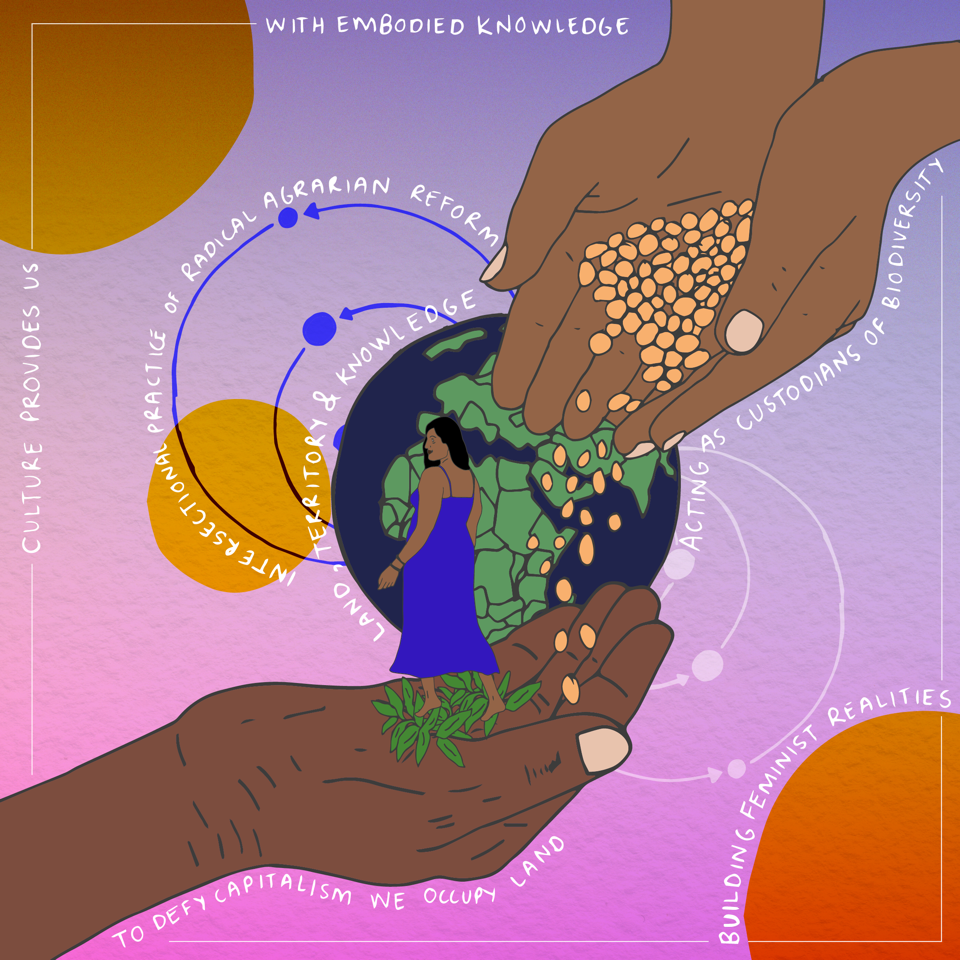
Snippet FEA Land and Agroecology (ES)

AGROECOLOGÍA Y

SOBERANÍA ALIMENTARIA

Mujeres Rurales Cuidando la Naturaleza y las Comunidades

Our group, organization and/or movement is not registered, should we take the survey anyway?

Absolutely, we want to hear about your experience with resourcing.

No puedo asistir al Foro en persona: ¿en qué otra forma puedo participar?

Más que un simple evento, el Foro de AWID es parte de nuestro Viaje de Realidades Feministas, con muchos espacios en los cuales reunirse, en línea o en forma presencial, para compartir, discutir, elaborar estrategias, y crear conjuntamente realidades feministas.

Infórmate sobre el Viaje de Realidades Feministas y sobre todo lo que sucederá en este Viaje antes del Foro. ¡Y mantente sintonizadx para los anuncios post-Foro!

Estamos estudiando opciones para la participación virtual en el Foro, y compartiremos la información cuando sepamos qué podemos ofrecer.