AWID es un organización feminista internacional de membresía, que brinda apoyo a los movimientos que trabajan para lograr la justicia de género y los derechos de las mujeres en todo el mundo.
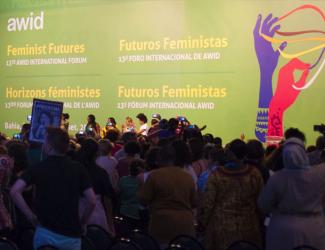
En septiembre de 2016, 1800 feministas y activistas por los derechos de las mujeres de todos los rincones de nuestros movimientos se congregaron en las costas de Bahia, en el 13º Foro Internacional de AWID.
En esta sección se destacan los logros, los aprendizajes y los recursos que surgieron de las ricas conversaciones mantenidas. Te invitamos a analizar, compartir y comentar.
¿Qué ha pasado desde 2016?
Uno de los aportes más importantes del Foro fue la necesidad de ampliar y profundizar nuestro trabajo entre movimientos, frente a la confluencia de los fascismos en auge, fundamentalismos, codicia corporativa y cambio climático.
Con esto en mente, AWID, en asociación con múltiples aliadxs, ha estado trabajando para que estas semillas de resistencia:
AWID se ha comprometido, mediante su próximo plan estratégico y su proceso del Foro, a continuar y profundizar las relaciones, las lecciones y los procesos iniciados en el Foro 2016 y basándonos en el momento actual.
¿Que pasa ahora?
El mundo es un lugar muy diferente de lo que era un año atrás, y seguirá cambiando en los próximos años.
El próximo Foro de AWID se realizará en la región del Pacífico Asiático (el lugar y la fecha exactos serán anunciados en 2018). Esperamos que te unas a nosotrxs.
Sobre el Foro de AWID
Los Foros de AWID comenzaron en 1983 en Washington DC. Desde entonces, el evento ha crecido hasta convertirse en muchas cosas para muchas personas: un proceso iterativo para darle forma a nuestros análisis, objetivos y acciones; un hito crucial que fortalece los feminismos de lxs participantes e infunde energías a sus procesos de organización; un hogar político donde lxs defensoras de derechos humanos encuentran un santuario y solidaridad.
Check out the AWID Feminist Film Club program “Holding up the Skies” - a film series on Feminist Realities from Africa and the African Diaspora curated by Gabrielle Tesfaye
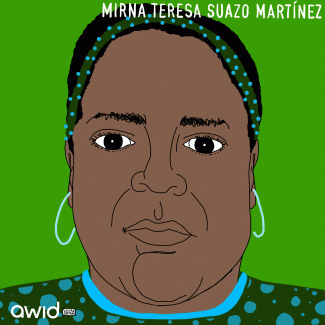
Mirna Teresa Suazo Martínez was part of the Garifuna (Afro-descendent and Indigenous) Masca community, living on the North Caribbean coast of Honduras. She was a community leader and a fervent defender of the Indigenous territory, a land that was violated when the National Agrarian Institute of Honduras gave territorial licenses to people outside of the community.
This deplorable deed resulted in repeated harassment, abuse and violence against the Masca, where economic interests of different groups met those of Honduran armed forces and authorities. According to the Black Fraternal Organization of Honduras (OFRANEH), the strategy of these groups is to evict and exterminate the Indigenous population.
“Masca, the Garifuna community located next to the Cuyamel Valley, is part of the area of influence of one of the supposed model cities, a situation that has triggered territorial pressures along the Garifuna coast.” - OFRANEH, 8 September 2019
Mirna Teresa, president of the Board of Trustees of the Masca Community in Omoa, was also firmly rejecting the construction of two hydroelectric plants on the river that carries the same name as her community, Masca.
“The Garífuna community attributes the worsening of the situation in their region to their opposition to tourist exploitation, the monoculture of African palm and drug trafficking, at the same time that it seeks to build an alternative life through the cultivation of coconut and other products for self-consumption.” - Voces Feministas, 10 September 2019
Mirna Teresa was murdered on 8 September 2019 in her Restaurant “Champa los Gemelos”.
She was one of six Garifuna women defenders murdered between September and October 2019 alone. According to OFRANEH, there was no investigation by the authorities into these crimes.
“In the case of the Garífuna communities, a large part of the homicides are related to land tenure and land management. However, squabbles between organized crime have resulted in murders, such as the recent ones in Santa Rosa de Aguán.” - OFRANEH, 8 September 2019
Snippet - COP30 - Resistance Hubs Section Title - ES
Nodos de resistencia por la justicia climática
Nominación de feministas audaces para sumarse a la Junta Directiva de AWID
Cada año, en AWID buscamos renovar y enriquecer las perspectivas y la experiencia reflejadas en nuestra Junta Directiva a través de la incorporación de nuevxs afiliadxs.
Por favor, ayúdanos a identificar a feministas audaces y dedicadxs a fin de incluirlxs en la lista de nominaciones para la elección a la Junta Directiva de AWID, a realizarse el 29 de julio de 2022.
Las personas elegidxs se sumarán por un período de 3 años, a partir de principios de 2023. Esta es una oportunidad para contribuir a la gobernanza de nuestra organización y formar parte de un grupo increíble de feministas de todo el mundo
Por favor, también comparte esta invitación a candidaturas entre tus redes.
¿A quién estamos buscando?
Ante todo, estamos buscando candidatxs comprometidxs con la misión de AWID, capaces de establecer conexiones entre las luchas locales y globales, y que puedan ayudarnos en la reflexión sobre cómo optimizar el posicionamiento y las fortalezas de AWID en un contexto en constante evolución. Además, lxs candidatxs deben estar dispuestxs a cumplir con los deberes y las responsabilidades legales de la Junta Directiva de AWID en beneficio de la organización.
La participación en la Junta de AWID es una función voluntaria que requiere compromiso y dedicación durante todo el año. Se espera que lxs integrantes de la Junta se comprometan a dedicar un mínimo de 10 a 15 días al año para asistir a reuniones presenciales y virtuales, y contribuir con otras comunicaciones.
En AWID, aspiramos a que nuestro Consejo refleje la diversidad en todas sus formas, especialmente, en términos de identidad de género, orientación sexual, edad, geografía y origen. Además, buscamos integrantes de la Junta con experiencia relevante para las áreas de trabajo prioritarias de AWID.
Si bien consideraremos todas las candidaturas recibidas, teniendo en cuenta la composición actual de la Junta, daremos prioridad a los siguientes aspectos:
Candidatxs con experiencia de trabajo en las intersecciones de los derechos de las mujeres / justicia de género y
Financiamiento
Justicia climática
Justicia para personas con discapacidad, y/o
Tecnología
Candidatxs de las siguientes regiones:
África
Sudamérica
¿Qué aportan a AWID lxs integrantes de la Junta Directiva?
La Junta Directiva es clave para orientar la dirección estratégica de AWID y apoyar a nuestra organización para que cumpla su misión en coherencia con el mundo en el que vivimos y las necesidades de nuestros movimientos.
Lxs integrantes de la Junta Directiva contribuyen al día a día de la organización de muchas maneras: aportando su experiencia en gobernanza en otros espacios, como también perspectivas de diversos sectores de los movimientos feministas y experiencia sustantiva en áreas relevantes para la estrategia de AWID.
Lxs candidatxs que finalmente resulten elegidxs se incorporarán a la Junta Directiva de AWID en 2023, acompañándonos en el lanzamiento de nuestro nuevo plan estratégico liderado por lxs nuevxs Codirectorxs Ejecutivxs de AWID, y en la planificación de nuestro próximo Foro internacional.
(Puedes nominarte a ti mismx o a alguien que conozcas, con su consentimiento
Por favor, ayúdanos a difundir este llamado a candidaturas compartiéndolo en tus redes.
Si bien cualquier persona puede presentar una nominación, solo lxs afiliadxs de AWID pueden votar en las elecciones para nuestra Junta Directiva - ¡Únete a AWID hoy mismo!
¡Gracias, desde ya, por ayudarnos a encontrar a lxs próximxs maravillosxs integrantes de la Junta Directiva que apoyarán a AWID en su camino hacia el futuro!
When can I register for the Forum? How much does it cost to register? What does Registration Include?
Registration will start early 2024. We will announce the exact registration date and registration fee soon. Registration will include participation in the Forum, plus lunch and snacks (breakfast to be provided at the hotels), and one onsite dinner.
ours chapter 3 fr
Chapitre 3
Les discours antidroits
Les discours antidroits continuent à évoluer. Outre le recours à des arguments religieux, culturels et traditionnels, les acteur·rice·s antidroits s’approprient le langage de la justice sociale et des droits humains pour travestir leurs véritables programmes et gagner ainsi en légitimité.
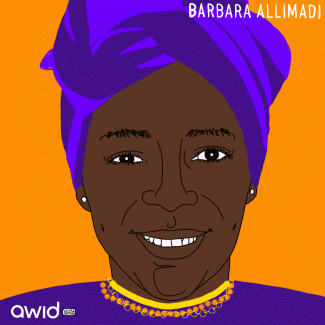
Barbara Allimadi fue una activista política y defensora de los derechos humanos de Uganda. En 2012, co-organizó una protesta contra la agresión policial a Ingrid Turinawe, una figura política de la oposición, que fue televisada y muestra cómo un policía le aprieta el pecho. Durante la protesta, Barbara, junto con otras compañeras activistas, se quitaron la ropa hasta quedarse en sujetador frente a la Estación Central de Policía de Kampala. Este hecho pasó a conocerse en Uganda como la infame "protesta de los sujetadores".
"Nos decidimos por la protesta de los sujetadores. Pensamos que sería lo más apropiado para lo que había sucedido. Con esta acción, no es que estuviésemos diciendo que no nos respetásemos a nosotras mismas. Estábamos indignadas con lo que había sucedido." - Barbara Allimadi, 2013 (Daily Monitor, en inglés)
Barbara se licenció en Ingeniería Electrónica y de Comunicaciones en la Universidad Metropolitana de Londres, y ejerció como ingeniera de redes en el Reino Unido. Era,además, una fan entusiasta de la música reggae. Regresó a Uganda en 2007, cuando su madre falleció.
En 2019, fue nombrada Coordinadora de Asuntos Internacionales y de la Diáspora de la Alianza para la Transformación Nacional (ANT, por sus siglas en inglés), un partido político lanzado ese año por un líder de la oposición.
"Queremos garantizar la seguridad de la vida y la propiedad, no el dolor, las lesiones o incluso la muerte a manos de unas fuerzas de seguridad que se supone deberían protegernos. Y lo más importante, queremos un entorno estable y propicio donde podamos realizar nuestros sueños y aspiraciones". - Barbara Allimadi, video de ANT (en inglés)
Barbara falleció el 27 de abril de 2020.
Tributos:
"Estaba muy orgullosa de mi hermana por muchas razones, pero, en particular, por su intrépida búsqueda de la paz, la democracia, la justicia y la igualdad en Uganda. En los momentos más álgidos de su activismo, Barbara lideró muchas marchas por las calles de Kampala, hacia las comisarías de policía y el Parlamento". - Doris Allimadi, hermana de Barbara
"Nos enteramos con profunda tristeza del prematuro fallecimiento de Barbara Allimadi. Ella ha sido una fuerza valiente, implacable y valerosa para el movimiento de liberación de Uganda. Queremos dar nuestro más sentido pésame a su familia. La echaremos mucho de menos". - Akina Mama wa Afrika (tweet, 28 April 2020)
"El fallecimiento de Barbara es una noticia muy triste para nosotrxs y para toda su familia. Barbara dedicó su vida a luchar por la justicia, la libertad y los derechos de las personas desde la sociedad civil, hasta que se unió, recientemente, al partido." Maj Gen Mugisha Muntu, coordinador nacional de la ANT (por sus siglas en inglés)
"Una hermana hermosa, encantadora, divertida, carismática e inspiradora. Mis hijxs han perdido a su tía. Uganda ha perdido a una audaz y valiente defensora de la libertad. Barbara dijo una vez: "Mientras siga habiendo aliento en ti, sigue trabajando por conseguir tus sueños". - Doris Allimadi, hermana de Barbara.
Snippet - COP30 - Political Education Toolbox - ES
📚 Caja de herramientas de educación política
Denunciar la captura corporativa. Comprender las soluciones falsas. Elaborar alternativas. Todo lo que necesitas para ejecutar la campaña “¿De quién es esta COP?”
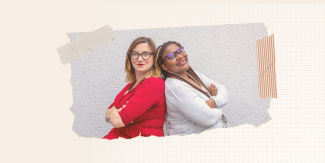
Olajumoke « Jay » Abdullahi et Kym Oliver sont des féministes révolutionnaires à plus d'un titre.
Les deux amies se font appeler les Triple Cripples (invalides en triple) parce qu'elles subissent trois niveaux de discrimination en tant que femmes noires handicapées. Jay, aujourd'hui âgée de 31 ans, a eu la polio bébé et utilise une attelle de jambe et des béquilles pour se soutenir, tandis que Kym, âgée de 25 ans, a la sclérose en plaques et utilise un fauteuil roulant pour se déplacer. Le nom de leur duo découle d'une tentative de redéfinir le mot « invalide », qui, selon elles, « a été affligé aux personnes handicapées comme une insulte, une façon certaine de nous rappeler que nous étions « défectueuses » et allions toujours être moins que. »
En tant que femmes noires, Kym et Jay ont été victimes du stéréotype racial mondialisé qui hypersexualise les peaux foncées. Dans leur livre intitulé Heart of The Race: Black Women's Lives in Britain, Bryan, Dadzie et Scafe décrivent comment les femmes noires ont été historiquement décrites comme un « risque élevé de promiscuité » par les médecins en raison de leur libido et de leur fertilité. Jay explique que « les gens pensent que je suis toujours prête à tout faire, n'importe où n'importe quand, parce que je suis une femme noire. » Alors que les deux femmes ont été soumises à une fétichisation intense en raison de leur couleur de peau, leurs handicaps ont semé la confusion totale dans l'esprit de plusieurs. Kym décrit ainsi son expérience de femme à courbes : « J'ai le type de corps que les gens veulent malmener et ils ont l'impression que je devrais être capable de supporter cela, mais parallèlement, il y a cette idée que je ne devrais pas avoir de critères à cause de mon handicap. »
Sur les sites de rencontre en ligne, on a demandé à Jay si elle pouvait effectuer certaines positions sexuelles car des partenaires potentiel.le.s « ont décidé qu'ielles voulaient être avec vous de cette façon et savoir si votre physicalité pouvait permettre cela. » Lors d'un contrôle, Kym s'est même fait demander des excuses par un professionnel de la santé, remplissant un formulaire, pour lui avoir demandé combien de partenaires sexuel.le.s elle avait eu.e.s, avec une nuance sous-entendant « je sais que (ces questions) ne s'appliquent pas à vous, mais nous devons suivre le processus d'interrogation normé. »
L'idée fausse selon laquelle le manque d'autonomie physique équivaut à un manque de désir sexuel est omniprésente.
À l'école, Jay a été exclue des cours d'éducation sexuelle en raison de son incapacité présumée à avoir des relations sexuelles. Elle explique que même les organisations bien intentionnées qui militent pour l'accès aux services de santé sexuelle et reproductive ne tiennent souvent pas compte des besoins spécifiques des femmes handicapées. Par exemple, les pilules contraceptives sont souvent saluées comme une méthode efficace de contrôle des naissances, sans aucune mention qu'elles peuvent accentuer les risques de caillots sanguins pour les femmes en fauteuil roulant.
Basées à Londres, les Triples Cripples attendaient avec impatience leur participation aux côtés de l'équipe Décoloniser la Contraception à SexFest2020, un festival d'une journée créé pour les personnes racisées, dédié à la santé et au bien-être sexuels. Malheureusement, l'évènement a été annulé en raison de la pandémie de la COVID-19. Néanmoins, sans se décourager, Jay et Kym se sont tournées vers leurs plateformes de plaidoyer en ligne pour contrer la façon dont la sexualité est vue d'un point de vue strictement hétéronormatif et pour contester l'idée que la féminité est définie par la capacité de procréer. Le duo a lancé une chaîne YouTube et un podcast, également appelé The Triple Cripples, pour promouvoir la représentation des personnes subissant des discriminations multiples en tant qu'êtres humains holistiques. Leurs projets futurs comprennent un documentaire artistique et une exposition photographique consacrée à la lutte contre la discrimination et à l'amplification des voix des personnes handicapées racisées.
L'expérience de la discrimination fondée sur la race, le sexe et le handicap est plus que additive.
Bien que les femmes handicapées raciées partagent des expériences de capacitisme avec d'autres personnes handicapées, des expériences de sexisme avec d'autres femmes et des expériences de racisme avec d'autres personnes racisées, ces expériences interagissent et ne peuvent être séparées : les femmes handicapées racisées subissent une discrimination unique en tant que femmes handicapées racisées.
Alors que les Triple Cripples reconnaissent que les approches toutes faites et superficielles à la diversité ne se transformeront pas comme par magie en espaces inclusifs du jour au lendemain, elles restent confiantes que leurs petits coups de hache finiront par faire tomber les grands chênes que les pratiques discriminatoires représentent pour elles.
La joie de s’accepter soi-même et de grandir dans cette lumière.
Titash Sen (@unzeroed)
« Asignado Nderentendei Al Nacer » (“Assigné Nderentendei à la naissance”)
de Bastión Moral, Asunción, Paraguay (@basti0nmoral),
La féminité obligatoire est un dispositif de violence colonial hétéro-cis-patriarcal envers les corps assignés féminins à la naissance. Les corps trans continuent de résister malgré l’invisibilisation et le silencement historique. Je ne suis pas une
Nuestro Fondo de Acceso ofrecerá un número limitado de becas para financiar la participación de activistas que de otra manera no podrían asistir y que no tienen relaciones con donantes que puedan cubrir su participación. Por lo tanto, si tienes otras posibilidades, te animamos a explorarlas. Haremos todo lo posible para ofrecer la mayor cantidad de becas y compartiremos más información sobre este proceso y cómo postular a principios de 2024.
Rights at Risk: Time for Action
Report:
Rights at Risk: Time for Action
The most recent report from the Observatory on the Universality of Rights unpicks discourses like “gender ideology”, “prenatal genocide”, and “cultural imperialism”. It also digs into CitizenGo, Alliance Defending Freedom, and anti-rights funding flows. You’ll also find analysis on regional human rights systems and successful feminist strategies and wins!
Cartas de amor a los movimientos feministas: una carta de Inna y Faye
Queridos movimientos feministas,
El amor es lo que mantiene encendido nuestro fuego feminista. Junto con el cuidado de nuestras comunidades, la ira y la rabia ante la injusticia, y el coraje para actuar.
En septiembre de 2022, asumimos con gran entusiasmo nuestros roles de liderazgo en AWID, como Co-Directoras Ejecutivas. Sentimos el calor y el abrazo de la sororidad feminista cuando ustedes nos recibieron.
Reflexionando sobre nuestras memorias más preciadas como feministas, recordamos momentos poderosos de unión en protestas callejeras, análisis agudos y voces valientes que sacuden el status quo en las reuniones. Mantuvimos esas conversaciones íntimas hasta bien entrada la noche, nos reímos durante horas y bailamos juntes en fiestas.
Es necesario alimentar los fuegos feministas, especialmente en tiempos difíciles cuando no faltan los desafíos externos, desde la crisis climática y el ascenso de las fuerzas de derecha, hasta las economías explotadoras y los patrones persistentes de opresión dentro de nuestros propios movimientos sociales. Son estos fuegos, que arden por todas partes, los que iluminan nuestros caminos y nos mantienen calientes, pero no podemos ignorar los efectos agotadores de la violencia política y la represión dirigida contra muchas de nuestras luchas, movimientos y comunidades
Entendemos el deseo de cambiar el mundo como un ingrediente esencial de la organización feminista. Nunca podemos olvidar que somos quienes hemos estado esperando, en la construcción de alternativas y la configuración de nuestro futuro. Sin embargo, la vibrante energía feminista no puede darse por sentada y debe salvaguardarse de muchas maneras. En este sentido, seguiremos vigilantes. Mejor y más equitativo acceso a la atención y el bienestar, a la sanación y al placer, no son solo instrumentales para prevenir el agotamiento y sostener nuestros movimientos, aunque esa es una función importante; ante todo, son la forma en que esperamos vivir nuestras vidas.
Estamos encantades de arremangarnos y trabajar con ustedes. El nuevo plan estratégico de AWID "Fierce Feminisms: Together We Rise" (“Feminismos Osados: Juntos Nos Levantamos”) refleja nuestra convicción de que ahora es el momento de ser desenfadades y sin temores en nuestras agendas mientras hacemos un esfuerzo por conectar a través de los movimientos y llegar a conocer verdaderamente las realidades individuales, para que podamos ponernos en pie juntes, porque, para nosotres, este es el único camino.
¡Nuestros planes incluyen el tan esperado Foro de AWID! Esperamos conocerles a todes en persona y en línea en 2024. Escuchamos de ustedes la necesidad de conectarse y recargar energías, descansar y sanar, ser desafiados e inspirados, compartir buena comida y reír y bailar juntes. Pocas cosas en este mundo son tan poderosas y transformadoras, como la unión de feministas de todas partes del mundo, y realmente esperamos con ansias por este momento, porque sabemos la magia que podemos crear juntes.
Nuestra conexión con la membresía ha cobrado vida propia a través de la Comunidad AWID (nuestra plataforma en línea), y nuestro enfoque en construir conexión y solidaridad resuena con muches de ustedes. Únase y conéctese con nosotres y otras personas en los movimientos feministas de todo el mundo. Conocemos la importancia de la conexión en un tiempo y espacio donde las reglas no están hechas para nosotres, y mantenemos cerca nuestra comunidad, donde cada uno de nosotres importa.
Junto con nuestres fantásticas colegas de AWID, prometemos hacer todo lo posible para apoyar los movimientos feministas, como es la misión y el propósito de AWID. Por favor, observen y exijan lo mejor de nosotres.
Durante los últimos 40 años, ustedes, los movimientos feministas, han dado forma a la historia de AWID y nos han impulsado a ser más valientes, creatives y radicales. 40 es una edad fabulosa, y esperamos cumplir otros 40 años más junto a ustedes. Esperamos con ansias las asociaciones, los llamados a la justicia, la colaboración, la influencia política y el poder feminista genial que todes traen para navegar la resistencia cada vez mayor a la justicia de género, racial y ambiental. Tenemos mucho que aprender de ustedes y unes de otres, mientras construimos colectivamente los mundos en los que creemos.
Cindy Clark y Hakima Abbas, gracias por abrirnos el camino y prepararnos para llenar sus enormes zapatos. Siempre apreciamos a todes sobre cuyos hombros nos apoyamos y continuamos de pie. Nos entendemos como parte de un panorama de movimiento más amplio, historias feministas, presentes y futuros valientes.
A la Junta Directiva de AWID, les agradecemos el apoyo y el amor feminista que nos muestran, y su compromiso con el liderazgo del Sur Global y el modelo de co-liderazgo. Enviamos nuestro amor y respeto a todes y cada une de les compañeres de AWID, nos sentimos honradas de trabajar con un equipo feminista tan excepcional de profesionales dedicadas.
Esta es la primera vez que escribimos una carta de amor juntes, ¿cómo podríamos concluir sin expresar amor, cuidado y respeto mutuo? ¡Es una relación bastante intensa en la que hemos entrado! Ambas aportamos nuestras diferentes y diversas perspectivas y habilidades a nuestro trabajo y, de manera individual, también aportamos nuestras experiencias vividas y nuestras “yo” auténticas.
Junto con todes ustedes, somos una historia en desarrollo, una parte de un bello tejido, y a menudo hermosamente desafiante, un tapiz que continuará en el futuro. Nos divertimos al comenzar este viaje juntes y con ustedes, y tenemos muchas esperanzas de mantener vivo el romance.
En solidaridad, con amor y cuidado.
Inna y Faye
¡Reserva la fecha!
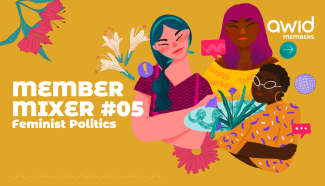
21 de febrero de 2023, Fiesta Feminista #5, sobre Políticas Feministas con Faye e Inna.
Este año, junto con activistas feministas de todo el mundo, estaremos en la CSW68 en Nueva York .Estaremos presentes para desafiar las narrativas capitalistas y neoliberales y las falsas soluciones en torno a la pobreza, el desarrollo y la financiación. A través de eventos presenciales, transmisiones en vivo en nuestras redes sociales, un stand de exhibición y más. Nos presentamos para convocar, amplificar y apoyar las voces y la participación de nuestra membresía y aliades.
Conoce más sobre nuestro programa para este año a continuación.

![“Asignado Nderentendei Al Nacer” [Assigned Nderentendei at Birth] by Bastión Moral](https://web.archive.org/web/20210928161447/https://www.awid.org/sites/default/files/thumbnails/image/web_bastion-nderentendei.png "“Asignado Nderentendei Al Nacer” [Assigned Nderentendei at Birth] by Bastión Moral")