
Griselda Tirado Evangelio
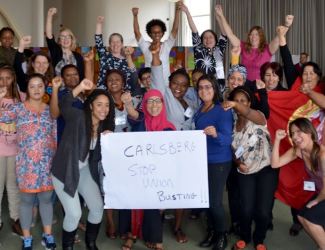
Defensoras de derechos humanos de todo el planeta defienden sus tierras, medios de subsistencia y sus comunidades ante las industrias extractivas y el poder corporativo. Ellas hacen frente a fuertes intereses económicos y políticos que promueven el robo de tierras, el desplazamiento de comunidades, la pérdida de los medios de subsistencia y la degradación del medioambiente.
El extractivismo es un modelo económico y político de desarrollo que mercantiliza la naturaleza y prioriza la ganancia por sobre los derechos humanos y el medioambiente. Arraigado en la historia colonial, refuerza las desigualdades sociales y económicas tanto a nivel local como global. Muchas veces, las mujeres negras, rurales e indígenas son las más afectadas por el extractivismo, y además son notablemente excluidas de la toma de decisiones. Desafiando estas fuerzas patriarcales y neocoloniales, las mujeres se alzan en defensa de los derechos, las tierras, las personas y la naturaleza.
Las defensoras que enfrentan a las industrias extractivas, experimentan una diversidad de riesgos, amenazas y violaciones, incluidas la criminalización, la estigmatización, la violencia y laintimidación. Sus historias dan cuenta de marcados aspectos de violencia sexual y de género. Entre los perpetradores se incluyen autoridades estatales y locales, las corporaciones, la policía, el ejército, las fuerzas paramilitares y de seguridad privada, y en algunos casos, sus propias comunidades.
AWID y la Coalición Internacional de Mujeres Defensoras de Derechos Humanos (WHRDIC por su sigla en inglés) tienen el placer de anunciar «Defensoras de derechos humanos confrontado al extractivismo y al poder corporativo»; un proyecto interregional de investigación que documenta las experiencias vividas por las defensoras de Asia, África y América Latina.
Alentamos a activistas, integrantes de movimientos sociales, la sociedad civil organizada, donantes y responsables de políticas públicas, a leer y utilizar estas producciones para el trabajo de incidencia, con fines educativos y como fuente de inspiración:
«Defensoras de derechos humanos confrontando a las industrias extractivas: un panorama de los riesgos críticos y las obligaciones en materia de derechos humanos» es un informe sobre políticas desde la perspectiva de género (en inglés, pronto disponible en español). Analiza las formas de violaciones y los tipos de perpetradores, hace referencia a las obligaciones relevantes en derechos humanos e incluye recomendaciones de políticas para los estados, corporaciones, la sociedad civil y donantes.
«Tejiendo la Resistencia a través de la Acción: Las Estrategias de las Defensoras de Derechos Humanos contra a las Industrias Extractivas» es una guía práctica que expone formas creativas y deliberadas de acción, tácticas exitosas e inspiradoras historias de resistencias.
El video «Defendiendo a las Personas y al Planeta: Mujeres Confrontando a las Industrias Extractivas» está protagonizado por defensoras de derechos humanos de África, Asia y América Latina, que comparten sus luchas por la tierra y la vida, y hablan de los riesgos y desafíos que enfrentan en su activismo.
«Desafiar al poder corporativo: Las luchas por los derechos de las mujeres, la justicia económica y de género» es un informe de investigación que explica los impactos del poder corporativo y ofrece ideas sobre estrategias de resistencia.
AWID reconoce con gratitud las invaluables contribuciones de cada Defensora de Derechos Humanos que ha sido parte de este proyecto. Esta guía ha sido posible gracias su generosidad y apertura al compartir sobre sus experiencias y lecciones. Su coraje, creatividad y resiliencia son una inspiración para todxs nosotrxs. ¡Muchas gracias!
We have been contacted by global and regional partners about some ideas for pre-Forum convenings and we will share more information about these ideas soon.
Many beautiful things emerged from the 2016 Black Feminisms Forum (BFF) that was organized by an Advisory Group and funded by AWID. Some of the independent organizing that arose from the BFF include Black feminist organizing in Brazil. While we won’t have another BFF this year, we remain committed to sharing some key learnings with anyone interested in continuing work around Black feminist organizing.


Les groupes, organisations et mouvements qui travaillent spécifiquement, ou principalement, à la défense des droits des femmes et des filles, pour la justice de genre, pour la défense des droits des personnes LBTQI+ et des allié·es dans toutes les régions et à tous les niveaux, que ces structures soient récentes ou non.
The 14th AWID International Forum will take place 20-23 September 2021 in Taipei, Taiwan.
Las Mujeres Sostienen el Cuidado | El Cuidado Sostiene la Vida | La vida Sostiene la Economía | ¿Quién Cuida a las Mujeres? | Ni Una Menos1 | Juntas, Juntos, Juntes | Almuerzo de Domingo
1Ni una menos es un eslogan feminista famoso en América Latina que surgió en Argentina como respuesta a la creciente violencia de género.


External funding includes grants and other forms of funding from philanthropic foundations, governments, bilateral, multilateral or corporate funders and individual donors – from both within your country or abroad. It excludes resources that groups, organizations and/or movements generate autonomously such as, for example, membership fees, the voluntary contributions of staff, members and/or supporters, community fundraisers, venue hires or sale of services. For ease and clarity, definitions of the different types of funding as well as short descriptions of different donors are included in the survey.
Last Updated Date: 25 April 2023
PLEASE READ THIS TERMS OF USE AGREEMENT (THE “TERMS OF USE”) CAREFULLY. THIS WEBSITE AND ITS SUBDOMAINS (COLLECTIVELY, THE “WEBSITE”), THE INFORMATION ON THE WEBSITE, AND THE SERVICES AND RESOURCES AVAILABLE OR ENABLED VIA THE WEBSITE (EACH A “SERVICE” AND COLLECTIVELY, THE “SERVICES”), ARE CONTROLLED BY ASSOCIATION FOR WOMEN’S RIGHTS IN DEVELOPMENT (“AWID”). THESE TERMS OF USE ALONG WITH ALL SUPPLEMENTAL TERMS THAT MAY BE PRESENTED TO YOU FOR YOUR REVIEW AND ACCEPTANCE (COLLECTIVELY, THE “AGREEMENT”), GOVERN YOUR ACCESS TO AND USE OF THE SERVICES. BY COMPLETING THE REGISTRATION PROCESS, BROWSING THE WEBSITE, OR OTHERWISE ACCESSING OR USING ANY OF THE SERVICES, YOU REPRESENT THAT (1) YOU HAVE READ, UNDERSTAND, AND AGREE TO BE BOUND BY THE AGREEMENT, (2) YOU ARE OF LEGAL AGE TO FORM A BINDING CONTRACT WITH AWID, AND (3) YOU HAVE THE AUTHORITY TO ENTER INTO THE AGREEMENT PERSONALLY OR ON BEHALF OF THE LEGAL ENTITY IDENTIFIED DURING THE ACCOUNT REGISTRATION PROCESS, AND TO BIND THAT LEGAL ENTITY TO THE AGREEMENT. THE TERM “YOU” REFERS TO THE INDIVIDUAL OR SUCH LEGAL ENTITY, AS APPLICABLE. IF YOU, OR IF APPLICABLE, SUCH LEGAL ENTITY, DO NOT AGREE TO BE BOUND BY THE AGREEMENT, YOU, AND IF APPLICABLE, SUCH LEGAL ENTITY, MAY NOT ACCESS OR USE ANY OF THE SERVICES.
PLEASE BE AWARE THAT SECTION 1.4 (AWID COMMUNICATIONS) OF THE AGREEMENT BELOW CONTAINS YOUR OPT-IN CONSENT TO RECEIVE COMMUNICATIONS FROM US.
PLEASE NOTE THAT THE AGREEMENT IS SUBJECT TO CHANGE BY AWID IN ITS SOLE DISCRETION AT ANY TIME. WHEN CHANGES ARE MADE, AWID WILL MAKE A COPY OF THE UPDATED AGREEMENT AVAILABLE AT THE WEBSITE AND UPDATE THE “LAST UPDATED DATE” AT THE TOP OF THESE TERMS OF USE. IF WE MAKE ANY MATERIAL CHANGES TO THE AGREEMENT, WE WILL PROVIDE NOTICE OF SUCH MATERIAL CHANGES ON THE WEBSITE AND ATTEMPT TO NOTIFY YOU BY SENDING AN E-MAIL TO THE E-MAIL ADDRESS PROVIDED IN YOUR ACCOUNT REGISTRATION (IF WE HAVE ONE ON FILE). ANY CHANGES TO THE AGREEMENT WILL BE EFFECTIVE IMMEDIATELY FOR NEW USERS OF THE SERVICES AND WILL BE EFFECTIVE FOR EXISTING REGISTERED USERS UPON THE EARLIER OF (A) THIRTY (30) DAYS AFTER THE “LAST UPDATED DATE” AT THE TOP OF THESE TERMS OF USE, OR (B) YOUR CONSENT TO AND ACCEPTANCE OF THE UPDATED AGREEMENT IF AWID PROVIDES A MECHANISM FOR YOUR IMMEDIATE ACCEPTANCE IN A SPECIFIED MANNER (SUCH AS A CLICK-THROUGH ACCEPTANCE), WHICH AWID MAY REQUIRE BEFORE FURTHER USE OF THE SERVICES IS PERMITTED. IF YOU DO NOT AGREE TO THE UPDATED AGREEMENT, YOU MUST STOP USING ALL SERVICES UPON THE EFFECTIVE DATE OF THE UPDATED AGREEMENT. OTHERWISE, YOUR CONTINUED USE OF ANY OF THE SERVICES AFTER THE EFFECTIVE DATE OF THE UPDATED AGREEMENT CONSTITUTES YOUR ACCEPTANCE OF THE UPDATED AGREEMENT. PLEASE REGULARLY CHECK THE WEBSITE TO VIEW THE THEN-CURRENT AGREEMENT. YOU AGREE THAT AWID’S CONTINUED PROVISION OF THE SERVICES IS ADEQUATE CONSIDERATION FOR THE CHANGES IN THE UPDATED AGREEMENT.
If AWID becomes aware of any possible violations by you of the Agreement, AWID reserves the right to investigate such violations. If, as a result of the investigation, AWID believes that criminal activity has occurred, AWID reserves the right to refer the matter to, and to cooperate with, any and all applicable legal authorities. AWID is entitled, except to the extent prohibited by applicable law, to disclose any information or materials on or in the Services, in AWID’s possession in connection with your use of the Services, to (i) comply with applicable laws, legal process or governmental request; (iii) enforce the Agreement, (iv) respond to your requests for customer service, or (vi) protect the rights, property or personal safety of AWID, its Registered Users or the public, and all enforcement or other government officials, as AWID in its sole discretion believes to be necessary or appropriate.
You may choose to have the arbitration conducted by telephone, based on written submissions, or in person at a mutually agreed location. Any judgment on the award rendered by the arbitrator may be entered in any court of competent jurisdiction.
Entire Agreement. The Agreement is the final, complete and exclusive agreement of the parties with respect to the subject matter hereof and supersedes and merges all prior discussions between the parties with respect to such subject matter.
1.1 License to the Services. Subject to your compliance with the Agreement, AWID grants you a non-assignable, non-transferable, non-sublicensable, revocable, non-exclusive license to use the Services in the manner permitted by the Agreement.
1.2 Updates. You understand that the Services are evolving. You acknowledge and agree that AWID may update the Services with or without notifying you.
1.3 Certain Restrictions. The rights granted to you in the Agreement are subject to the following restrictions: (a) you shall not license, sell, rent, lease, transfer, assign, reproduce, distribute, host or otherwise commercially exploit any of the Services; (b) you shall not frame or utilize framing techniques to enclose any trademark, logo, or other parts of the Services (including images, text, page layout or form); (c) you shall not use any metatags or other “hidden text” using AWID’s name or trademarks; (d) you shall not modify, translate, adapt, merge, make derivative works of, disassemble, decompile, reverse compile or reverse engineer any part of the Services except to the extent the foregoing restrictions are expressly prohibited by applicable law; (e) you shall not use any manual or automated software, devices or other processes (including but not limited to spiders, robots, scrapers, crawlers, avatars, data mining tools or the like) to “scrape” or download data from any web pages contained in the Services (except that we grant the operators of public search engines revocable permission to use spiders to copy materials from the Website for the sole purpose of and solely to the extent necessary for creating publicly available searchable indices of the materials, but not caches or archives of such materials); (f) except as expressly stated herein, no part of the Services may be copied, reproduced, distributed, republished, downloaded, displayed, posted or transmitted in any form or by any means; and (h) you shall not remove or destroy any copyright notices or other proprietary markings contained on or in the Services. Any future release, update or other addition to the Services shall be subject to the Agreement. AWID, its suppliers and service providers reserve all rights not granted in the Agreement.
1.4 AWID Communications. By entering into the Agreement or using the Services, you agree to receive communications from us, including via e-mail. Communications from us and our affiliated companies may include but are not limited to operational communications concerning your use of the Services and promotional emails. IF YOU WISH TO OPT OUT OF ANY PROMOTIONAL EMAILS, YOU CAN UNSUBSCRIBE FROM OUR PROMOTIONAL EMAIL LIST BY FOLLOWING THE UNSUBSCRIBE OPTIONS IN THE PROMOTIONAL EMAIL ITSELF.
2.1 Registering Your Account. In order to access certain features of the Services you may be required to become a Registered User. For purposes of the Agreement, a “Registered User” is a user who has registered an account with AWID through the Services (“Account”).
2.2 Registration Data. In registering an Account, you agree to (a) provide true, accurate, current and complete information about yourself as prompted by the registration form (the “Registration Data”); and (b) maintain and promptly update the Registration Data to keep it true, accurate, current and complete. You represent that you are (i) at least eighteen (18) years old; (ii) of legal age to form a binding contract; and (iii) not a person barred from using the Services under the laws of the United States, Canada, your place of residence or any other applicable jurisdiction. You are responsible for all activities that occur under your Account. You agree that you shall monitor your Account to restrict use by any other persons, including minors, and you will accept full responsibility for any such unauthorized use. You may not share your Account login or password with anyone, and you agree to (y) notify AWID immediately of any unauthorized use of your password or any other breach of security; and (z) exit from your Account at the end of each session. If you provide any information that is untrue, inaccurate, not current or incomplete, or AWID has reasonable grounds to suspect that any information you provide is untrue, inaccurate, not current or incomplete, AWID has the right to suspend or terminate your Account and refuse any and all current or future use of the Services (or any portion thereof). You agree not to create an Account using a false identity or information, or on behalf of someone other than yourself. You agree not to create an Account or use the Services if you have been previously removed by AWID, or if you have been previously banned from any of the Services.
2.3 Your Account. Notwithstanding anything to the contrary herein, you acknowledge and agree that you shall have no ownership or other property interest in your Account, and you further acknowledge and agree that all rights in and to your Account are and shall forever be owned by and inure to the benefit of AWID.
2.4 Necessary Equipment and Software. You must provide all equipment and software necessary to connect to the Services. You are solely responsible for any fees, including Internet connection or mobile fees, that you incur when accessing the Services.
3.1 Services. AWID and its suppliers own all rights, title and interest in the Services, and that the Services are protected by intellectual property rights throughout the world. You agree not to remove, alter or obscure any copyright, trademark, service mark or other proprietary rights notices incorporated in or accompanying any Services.
3.2 Trademarks. AWID’s name and all related stylizations, graphics, logos, service marks and trade names used on or in connection with any Services are the trademarks of AWID and may not be used without permission in connection with your, or any third-party, products or services. Third party trademarks, service marks and trade names that may appear on or in the Services are the property of their respective owners.
3.3 Feedback. You agree that submission of any ideas, suggestions, documents, and/or proposals to AWID (“Feedback”) is at your own risk and that AWID has no obligations (including without limitation obligations of confidentiality) with respect to such Feedback. You represent and warrant that you have all rights necessary to submit the Feedback. You hereby grant to AWID a fully paid, royalty-free, perpetual, irrevocable, worldwide, and non-exclusive right and license to use, reproduce, perform, display, distribute, adapt, modify, re-format, create derivative works of, and otherwise commercially or non-commercially exploit in any manner, any and all Feedback, and to sublicense the foregoing rights, in connection with the operation and maintenance of the Services and/or AWID’s business.
7.1 As Is. YOU EXPRESSLY UNDERSTAND AND AGREE THAT TO THE EXTENT PERMITTED BY APPLICABLE LAW, YOUR USE OF THE SERVICES IS AT YOUR SOLE RISK, AND THE SERVICES ARE PROVIDED ON AN “AS IS” AND “AS AVAILABLE” BASIS, WITH ALL FAULTS. AWID EXPRESSLY DISCLAIMS ALL WARRANTIES, REPRESENTATIONS, AND CONDITIONS OF ANY KIND, WHETHER EXPRESS OR IMPLIED, INCLUDING, BUT NOT LIMITED TO, THE IMPLIED WARRANTIES OR CONDITIONS OF MERCHANTABILITY, FITNESS FOR A PARTICULAR PURPOSE AND NON-INFRINGEMENT ARISING FROM USE OF THE SERVICES.
7.2 No Liability for Conduct of Third Parties. YOU ACKNOWLEDGE AND AGREE THAT AWID PARTIES ARE NOT LIABLE, AND YOU AGREE NOT TO SEEK TO HOLD AWID PARTIES LIABLE, FOR THE CONDUCT OF THIRD PARTIES, INCLUDING OPERATORS OF EXTERNAL SITES AND OTHER USERS OF THE SERVICES.
7.3 Third-Party Materials. As a part of the Services, you may have access to materials that are hosted by another party. You agree that it is impossible for AWID to monitor such materials and that you access these materials at your own risk.
8. LIMITATION OF LIABILITY.
8.1 Disclaimer of Certain Damages. YOU UNDERSTAND AND AGREE THAT, TO THE FULLEST EXTENT PROVIDED BY LAW, IN NO EVENT SHALL AWID PARTIES BE LIABLE FOR ANY LOSS OF PROFITS, REVENUE OR DATA, INDIRECT, INCIDENTAL, SPECIAL, OR CONSEQUENTIAL DAMAGES, OR DAMAGES OR COSTS DUE TO LOSS OF PRODUCTION OR USE, BUSINESS INTERRUPTION, OR PROCUREMENT OF SUBSTITUTE GOODS OR SERVICES, IN EACH CASE WHETHER OR NOT AWID HAS BEEN ADVISED OF THE POSSIBILITY OF SUCH DAMAGES, ARISING OUT OF OR IN CONNECTION WITH THE AGREEMENT OR ANY COMMUNICATIONS, INTERACTIONS OR MEETINGS WITH OTHER USERS OF THE SERVICES, ON ANY THEORY OF LIABILITY. THE FOREGOING LIMITATION OF LIABILITY SHALL NOT APPLY TO LIABILITY OF AN AWID PARTY FOR (i) DEATH OR PERSONAL INJURY CAUSED BY AN AWID PARTY’S NEGLIGENCE; OR FOR (ii) ANY INJURY CAUSED BY AN AWID PARTY’S FRAUD OR FRAUDULENT MISREPRESENTATION.
8.2 Cap on Liability. TO THE FULLEST EXTENT PROVIDED BY LAW, AWID PARTIES WILL NOT BE LIABLE TO YOU FOR MORE THAN $100. THE FOREGOING CAP ON LIABILITY SHALL NOT APPLY TO LIABILITY OF AN AWID PARTY FOR (i) DEATH OR PERSONAL INJURY CAUSED BY AN AWID PARTY’S NEGLIGENCE; OR FOR (ii) ANY INJURY CAUSED BY AN AWID PARTY’S FRAUD OR FRAUDULENT MISREPRESENTATION.
8.3 Exclusion of Damages. CERTAIN JURISDICTIONS DO NOT ALLOW THE EXCLUSION OR LIMITATION OF CERTAIN DAMAGES. IF THESE LAWS APPLY TO YOU, SOME OR ALL OF THE ABOVE EXCLUSIONS OR LIMITATIONS MAY NOT APPLY TO YOU, AND YOU MIGHT HAVE ADDITIONAL RIGHTS.
8.4 Basis of the Bargain. THE LIMITATIONS OF DAMAGES SET FORTH ABOVE ARE FUNDAMENTAL ELEMENTS OF THE BASIS OF THE BARGAIN BETWEEN AWID AND YOU.
9. PROCEDURE FOR MAKING CLAIMS OF COPYRIGHT INFRINGEMENT. It is AWID’s policy to terminate membership privileges of any Registered User who repeatedly infringes copyright upon prompt notification to AWID by the copyright owner or the copyright owner’s legal agent. Without limiting the foregoing, if you believe that your work has been copied and posted on the Services in a way that constitutes copyright infringement, please provide our Copyright Agent with the following information: (a) an electronic or physical signature of the person authorized to act on behalf of the owner of the copyright interest; (b) a description of the copyrighted work that you claim has been infringed; (c) a description of the location on the Services of the material that you claim is infringing; (d) your address, telephone number and e-mail address; (e) a written statement by you that you have a good faith belief that the disputed use is not authorized by the copyright owner, its agent or the law; and (f) a statement by you, made under penalty of perjury, that the above information in your notice is accurate and that you are the copyright owner or authorized to act on the copyright owner’s behalf. Contact information for AWID’s Copyright Agent for notice of claims of copyright infringement is as follows: Director of Operations, AWID, 192 Spadina Avenue #300, Toronto, Ontario, M5T 2C2, Canada, dosr@awid.org.
10. MONITORING AND ENFORCEMENT. AWID reserves the right to: (a) take appropriate legal action, including without limitation, referral to law enforcement, for any illegal or unauthorized use of the Services; and/or (b) terminate or suspend your access to all or part of the Services for any or no reason, including without limitation, any violation of this Agreement.
11. TERM AND TERMINATION.
11.1 Term. The Agreement commences on the date when you accept them (as described in the preamble above) and remain in full force and effect while you use the Services, unless terminated earlier in accordance with the Agreement.
11.2 Prior Use. Notwithstanding the foregoing, you hereby acknowledge and agree that the Agreement commenced on the earlier to occur of (a) the date you first used the Services or (b) the date you accepted the Agreement, and will remain in full force and effect while you use any Services, unless earlier terminated in accordance with the Agreement.
11.3 Termination of Services by AWID. If you have materially breached any provision of the Agreement, or if AWID is required to do so by law (e.g., where the provision of the Services is, or becomes, unlawful), AWID has the right to, immediately and without notice, suspend or terminate any Services provided to you. You agree that all terminations for cause shall be made in AWID’s sole discretion and that AWID shall not be liable to you or any third party for any termination of your Account.
11.4 Termination of Services by You. If you want to terminate the Services provided by AWID, you may do so by (a) notifying AWID at any time and (b) closing your Account for all of the Services that you use. Your notice should be sent, in writing, to AWID’s address set forth below.
11.5 Effect of Termination. Termination of any Service includes removal of access to such Service and barring of further use of the Service. Upon termination of any Service, your right to use such Service will automatically terminate immediately. All provisions of the Agreement which by their nature should survive, shall survive termination of Services, including without limitation, ownership provisions, warranty disclaimers, and limitation of liability.
11.6 No Subsequent Registration. If your registration(s) with, or ability to access, the Services or any other AWID community, is discontinued by AWID due to your violation of any portion of the Agreement or for conduct otherwise inappropriate for the community, then you agree that you shall not attempt to re-register with or access the Services or any AWID community through use of a different member name or otherwise, and you acknowledge that you will not be entitled to receive a refund for fees related to those Services to which your access has been terminated. In the event that you violate the immediately preceding sentence, AWID reserves the right, in its sole discretion, to immediately take any or all of the actions set forth herein without any notice or warning to you.
12. INTERNATIONAL USERS. The Services can be accessed from countries around the world and may contain references to Services that are not available in your country. These references do not imply that AWID intends to announce such Services in your country. The Services are controlled and offered by AWID from its facilities in Canada. AWID makes no representations that the Services are appropriate or available for use in other locations. Those who access or use the Services from other countries do so at their own volition and are responsible for compliance with local law.
13. THIRD-PARTY SERVICES. The Services may contain links to third-party websites (“Third-Party Websites”), applications (“Third-Party Applications”) and advertisements for third parties (“Third-Party Ads”). When you click on a link to a Third-Party Website, Third-Party Application or Third-Party Ad, we will not warn you that you have left the Services and are subject to the terms and conditions (including privacy policies) of another website or destination. Such Third-Party Websites, Third-Party Applications and Third-Party Ads are not under the control of AWID. AWID is not responsible for any Third-Party Websites, Third-Party Applications or Third-Party Ads. AWID provides these Third-Party Websites, Third-Party Applications and Third-Party Ads only as a convenience and does not review, approve, monitor, endorse, warrant, or make any representations with respect to Third-Party Websites, Third-Party Applications or Third-Party Ads, or any product or service provided in connection therewith. You use all links in Third-Party Websites, Third-Party Applications and Third-Party Ads at your own risk. When you leave our Website, the Agreement and our policies no longer govern. You should review applicable terms and policies, including privacy and data gathering practices, of any Third-Party Websites, Third-Party Applications, or Third-Party Ads, and make whatever investigation you feel necessary or appropriate before proceeding with any transaction with any third party.
14. DISPUTE RESOLUTION.
14.1 Applicability of Arbitration Agreement. You agree that any dispute between you and us relating in any way to the Agreement, will be resolved by binding arbitration, rather than in court, except that (1) you and AWID may assert claims in small claims court if the claims qualify; and (2) you or AWID may seek equitable relief in court for infringement or other misuse of intellectual property rights (such as trademarks, trade dress, domain names, trade secrets, copyrights, and patents). This Arbitration Agreement shall apply, without limitation, to all claims that arose or were asserted before the Effective Date of this Agreement or any prior version of this Agreement.
14.2 Arbitration Rules and Forum. The Federal Arbitration Act governs the interpretation and enforcement of this Arbitration Agreement. To begin an arbitration proceeding, you must send a letter requesting arbitration and describing your claim to us in writing in writing at 192 Spadina Avenue #300, Toronto, Ontario, M5T 2C2, Canada. The arbitration will be conducted by JAMS, an established alternative dispute resolution provider. Disputes involving claims and counterclaims with an amount in controversy under $250,000, not inclusive of attorneys’ fees and interest, shall be subject to JAMS’ most current version of the Streamlined Arbitration Rules and procedures available at http://www.jamsadr.com/rules-streamlined-arbitration/; all other claims shall be subject to JAMS’s most current version of the Comprehensive Arbitration Rules and Procedures, available at http://www.jamsadr.com/rules-comprehensive-arbitration/. JAMS’s rules are also available at www.jamsadr.comor by calling JAMS at 800-352-5267. If JAMS is not available to arbitrate, the parties will select an alternative arbitral forum. If the arbitrator finds that you cannot afford to pay JAMS’s filing, administrative, hearing and/or other fees and you cannot obtain a waiver from JAMS, AWID will pay them for you.
14.3 Authority of Arbitrator. Without limiting the scope of Section 14.1, the arbitrator shall have exclusive authority to resolve any dispute related to the interpretation, applicability, enforceability or formation of this Arbitration Agreement including, but not limited to any claim that all or any part of this Arbitration Agreement is void or voidable. The arbitrator will decide the rights and liabilities, if any, of you and AWID. The arbitration proceeding will not be consolidated with any other matters or joined with any other proceedings or parties. The arbitrator shall have the authority to grant motions dispositive of all or part of any claim or dispute. The arbitrator shall have the authority to award monetary damages and to grant any non-monetary remedy or relief available to an individual party under applicable law, the arbitral forum’s rules, and this Agreement (including the Arbitration Agreement). The arbitrator shall issue a written award and statement of decision describing the essential findings and conclusions on which any award (or decision not to render an award) is based, including the calculation of any damages awarded. The arbitrator shall follow the applicable law. The arbitrator has the same authority to award relief on an individual basis that a judge in a court of law would have. The award of the arbitrator is final and binding upon you and us.
14.4 Waiver of Jury Trial. YOU AND AWID HEREBY WAIVE ANY CONSTITUTIONAL AND STATUTORY RIGHTS TO SUE IN COURT (OTHER THAN SMALL CLAIMS COURT AS PERMITTED HEREIN) AND HAVE A TRIAL IN FRONT OF A JUDGE OR A JURY. You and AWID are instead electing that all covered claims and disputes shall be resolved by arbitration under this Arbitration Agreement, except as specified in Section 14.1 above. An arbitrator can award on an individual basis the same damages and relief as a court and must follow this Agreement as a court would. However, there is no judge or jury in arbitration, and court review of an arbitration award is subject to very limited review.
14.5 Waiver of Class or Other Non-Individualized Relief. ALL CLAIMS AND DISPUTES WITHIN THE SCOPE OF THIS ARBITRATION AGREEMENT MUST BE ARBITRATED ON AN INDIVIDUAL BASIS AND NOT ON A CLASS OR COLLECTIVE BASIS, ONLY INDIVIDUAL RELIEF IS AVAILABLE FOR CLAIMS COVERED BY THIS ARBITRATION AGREEMENT, AND CLAIMS BY OR AGAINST ONE USER CANNOT BE ARBITRATED OR CONSOLIDATED WITH THOSE OF OR AGAINST ANY OTHER USER OR PERSON. If a decision is issued stating that applicable law precludes enforcement of any of this Section 14.5’s limitations as to a given claim for relief, then the applicable claim, and only that applicable claim, must be severed from the arbitration and brought into the courts in the Province of Ontario or the federal courts of Canada (as applicable) in accordance with Section 15.1. All other claims shall be arbitrated.
14.6 30-Day Right to Opt Out. You have the right to opt out of the provisions of this Arbitration Agreement by sending a timely written notice of your decision to opt out via email to info@awid.org or in writing to 192 Spadina Avenue #300, Toronto, Ontario, M5T 2C2, Canada, within 30 days after first becoming subject to this Arbitration Agreement. Your notice must include your name and address and a clear statement that you want to opt out of this Arbitration Agreement. If you opt out of this Arbitration Agreement, all other parts of this Agreement will continue to apply to you. Opting out of this Arbitration Agreement has no effect on any other arbitration agreements that you may currently have with us, or may enter into in the future with us.
14.7 Severability. Except as provided in Section 14.5, if any part or parts of this Arbitration Agreement are found under the law to be invalid or unenforceable, then such specific part or parts shall be of no force and effect and shall be severed and the remainder of the Arbitration Agreement shall continue in full force and effect.
14.8 Survival of Agreement. This Arbitration Agreement will survive the termination or expiration of the Terms or your relationship with AWID.
14.9 Modification. Notwithstanding any provision in this Agreement to the contrary, we agree that if AWID makes any future material change to this Arbitration Agreement, you may reject that change within thirty (30) days of such change becoming effective by e-mailing AWID at the following address: info@awid.org or writing to AWID at 192 Spadina Avenue #300, Toronto, Ontario, M5T 2C2, Canada.
15. GENERAL PROVISIONS.
15.1 Governing Law; Venue. ANY DISPUTE, CLAIM OR REQUEST FOR RELIEF RELATING IN ANY WAY TO YOUR USE OF THE SERVICES WILL BE GOVERNED AND INTERPRETED BY AND UNDER THE LAWS OF THE PROVINCE OF ONTARIO OR THE FEDERAL LAWS OF CANADA (AS APPLICABLE), WITHOUT GIVING EFFECT TO ANY PRINCIPLES THAT PROVIDE FOR THE APPLICATION OF THE LAW OF ANY OTHER JURISDICTION. To the extent permitted under this Agreement, both you and AWID agree that all claims and disputes arising out of or relating to the Agreement will be litigated exclusively in the courts of the Province of Ontario or the federal courts of Canada (as applicable), and the parties hereby expressly submit to the exclusive personal jurisdiction of such courts.
15.2 Electronic Communications. The communications between you and AWID may take place via electronic means, whether you visit the Services or send AWID e-mails, or whether AWID posts notices on the Services or communicates with you via e-mail. For contractual purposes, you (a) consent to receive communications from AWID in an electronic form; and (b) agree that all terms and conditions, agreements, notices, disclosures, and other communications that AWID provides to you electronically satisfy any legal requirement that such communications would satisfy if it were to be in writing. The foregoing does not affect your statutory rights, including but not limited to the Electronic Signatures in Global and National Commerce Act at 15 U.S.C. §7001 et seq. (“E-Sign”).
15.3 Assignment. The Agreement, and your rights and obligations hereunder, may not be assigned, subcontracted, delegated or otherwise transferred by you without AWID’s prior written consent, and any attempted assignment, subcontract, delegation, or transfer in violation of the foregoing will be null and void.
15.4 Force Majeure. AWID shall not be liable for any delay or failure to perform resulting from causes outside its reasonable control, including, but not limited to, acts of God, pandemics, war, terrorism, riots, embargos, acts of civil or military authorities, fire, floods, accidents, strikes or shortages of transportation facilities, fuel, energy, labor or materials.
15.5 Questions, Complaints, Claims. If you have any questions, complaints or claims with respect to the Services, please contact us via e-mail at info@awid.org or in writing at 192 Spadina Avenue #300, Toronto, Ontario, M5T 2C2, Canada. We will do our best to address your concerns. If you feel that your concerns have been addressed incompletely, we invite you to let us know for further investigation.
15.6 Choice of Language. It is the express wish of the parties that the Agreement and all related documents have been drawn up in English.
15.7 Notice. Where AWID requires that you provide an e-mail address, you are responsible for providing AWID with your most current e-mail address. In the event that the last e-mail address you provided to AWID is not valid, or for any reason is not capable of delivering to you any notices required/ permitted by the Agreement, AWID’s dispatch of the e-mail containing such notice will nonetheless constitute effective notice. You may give notice to AWID at the following address via e-mail at info@awid.org or in writing at 192 Spadina Avenue #300, Toronto, Ontario, M5T 2C2, Canada. Such notice shall be deemed given when received by AWID via e-mail, or by letter delivered by nationally recognized overnight delivery service or first class postage prepaid mail at the above address.
15.8 Waiver. Any waiver or failure to enforce any provision of the Agreement on one occasion will not be deemed a waiver of any other provision or of such provision on any other occasion.
15.9 Severability. If any portion of the Agreement is held invalid or unenforceable, that portion shall be construed in a manner to reflect, as nearly as possible, the original intention of the parties, and the remaining portions shall remain in full force and effect.
15.10 Export Control. You may not use, export, import, or transfer any Services except as authorized by U.S. law, the laws of the jurisdiction in which you obtained the Services, and any other applicable laws. In particular, but without limitation, the Services may not be exported or re-exported (a) into any United States embargoed countries, or (b) to anyone on the U.S. Treasury Department’s list of Specially Designated Nationals or the U.S. Department of Commerce’s Denied Person’s List or Entity List. By using the Services, you represent and warrant that (i) you are not located in a country that is subject to a U.S. Government embargo, or that has been designated by the U.S. Government as a “terrorist supporting” country and (ii) you are not listed on any U.S. Government list of prohibited or restricted parties. You also will not use the Services for any purpose prohibited by U.S. law, including the development, design, manufacture or production of missiles, nuclear, chemical or biological weapons. You acknowledge and agree that products, services or technology provided by AWID are subject to the export control laws and regulations of the United States. You shall comply with these laws and regulations and shall not, without prior U.S. government authorization, export, re-export, or transfer AWID products, services or technology, either directly or indirectly, to any country in violation of such laws and regulations.
15.11 Consumer Complaints. In accordance with California Civil Code §1789.3, you may report complaints to the Complaint Assistance Unit of the Division of Consumer Services of the California Department of Consumer Affairs by contacting them in writing at 1625 North Market Blvd., Suite N 112, Sacramento, CA 95834, or by telephone at (800) 952-5210.
15.12 Entire Agreement. The Agreement is the final, complete and exclusive agreement of the parties with respect to the subject matter hereof and supersedes and merges all prior discussions between the parties with respect to such subject matter.



AWID tiene un compromiso con la justicia lingüística y, en este punto, lamentamos no poder contar con más idiomas para la encuesta ¿Dónde está el dinero? Sin embargo, en caso de que necesites asistencia con la traducción o desees responder la encuesta en otro idioma, te pedimos que nos contactes al email witm@awid.org.
French body
- Entered French content first (within the English site)
- Translated to English from French article (within the English site)
Nous vivons dans un monde où la destruction de la Nature alimente notre économie mondiale actuelle. |
Même en période de crise climatique, les gouvernements continuent d'encourager les industries agricoles à grande échelle à se développer. Ces activités empoisonnent la terre, menacent la biodiversité et détruisent la production alimentaire et les moyens de subsistance locaux. Pendant ce temps, alors que les femmes produisent la majorité de la nourriture dans le monde, elles ne possèdent presque aucune terre. |
|
Et si nous percevions la terre et la Nature non pas comme une propriété privée à exploiter, mais comme une totalité avec laquelle vivre, apprendre et coexister harmonieusement ? Et si nous réparions nos relations avec la terre et adoptions des alternatives plus durables qui nourrissent à la fois la planète et ses communautés? Nous Sommes la Solution (NSS) est l'un des nombreux mouvements dirigés par des femmes qui s'efforcent d'atteindre cet objectif. Voici leur histoire. |
|