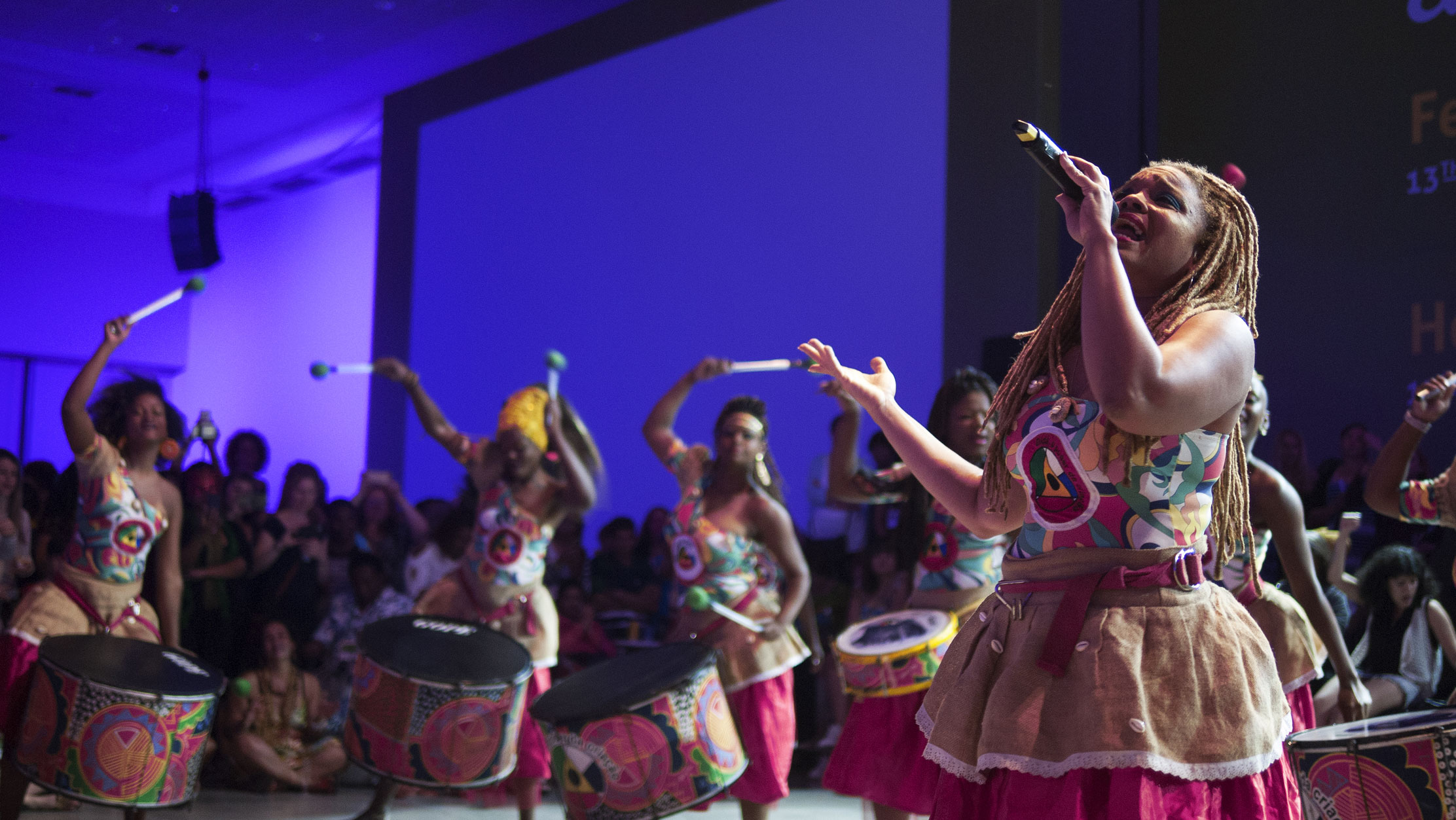
Carving A Space: Reflections On The 2nd MenEngage Symposium


Anne Schoenstein from the Association for Women’s Rights in Development (AWID) spoke as member of the Women’s Working Group on Financing for Development (WWG on FfD) at the Informal Interactive Hearing for Civil Society in preparation for the Third International Conference on Financing for Development July 2015. Input to Roundtable Discussion 3: Systemic issues, including global economic governance and external debt.
When you are faced with the task of moving an object but find it is too heavy to lift, what is your immediate and most natural response? You ask someone to help you lift it. And it makes all the difference.
And so in the face of unprecedented economic, ecological and human rights crises, we should not hunker down in our silos, but rather join together and use our collective power to overcome the challenges.
Her name is Suhair al-Bata’a. The 13-year-old Egyptian girl dreamt of one day becoming a journalist. In 2013, she was taken by her father to Dr Raslan Fadl Halawa’s clinic to undergo female genital mutilation, also known as FGM. She senselessly died at the hands of Halawa.
"I would like to focus my speech on five key messages, which have been shaped by hundreds of women from around the world."
A joint call from the leaders of ActionAid, AWID, Civicus, Greenpeace and Oxfam on the eve of the World Social Forum in Tunis
FRIDAY FILE: Tens of thousands from around the world[1] gathered in Tunis, Tunisia from March 24th to 28th for the World Social Forum. It brought together social movements, civil society organizations, formal and informal networks and activists to oppose neo-liberalism, capitalism and imperialism, debating, exchanging, sharing experiences and developing proposals.
FRIDAY FILE: AWID spoke with Lucinda O’Hanlon, Adviser on Women's Rights from the Women's Rights and Gender Section of the Office of the United Nations High Commissioner for Human Rights (OHCHR) about the office’s current Campaign “Beijing + 20: Women Human Rights Defenders Campaign”.
In the global North, news headlines frequently play on deeply-rooted prejudices. For example, following the Oklahoma bombing in the US in 1995 or, more recently, the post-9-11 Washington sniper attacks, the media were quick to blame Muslim "terrorists." In both cases, the perpetrators turned out to be disaffected US nationals with no links to the Islamic world or faith. In Britain, and in Europe more generally, the media most often portray minorities as homogeneous groups, frequently represented by religious 'leaders'.
AWID spoke to Musawah, the global movement for equality and justice in the Muslim family, to learn more about their new publication which is based on groundbreaking feminist research: Men in Charge? Rethinking Authority in Muslim Legal Tradition.