Protection of the Family
The Issue
Over the past few years, a troubling new trend at the international human rights level is being observed, where discourses on ‘protecting the family’ are being employed to defend violations committed against family members, to bolster and justify impunity, and to restrict equal rights within and to family life.
The campaign to "Protect the Family" is driven by ultra-conservative efforts to impose "traditional" and patriarchal interpretations of the family, and to move rights out of the hands of family members and into the institution of ‘the family’.
“Protection of the Family” efforts stem from:
- rising traditionalism,
- rising cultural, social and religious conservatism and
- sentiment hostile to women’s human rights, sexual rights, child rights and the rights of persons with non-normative gender identities and sexual orientations.
Since 2014, a group of states have been operating as a bloc in human rights spaces under the name “Group of Friends of the Family”, and resolutions on “Protection of the Family” have been successfully passed every year since 2014.
This agenda has spread beyond the Human Rights Council. We have seen regressive language on “the family” being introduced at the Commission on the Status of Women, and attempts made to introduce it in negotiations on the Sustainable Development Goals.
Our Approach
AWID works with partners and allies to jointly resist “Protection of the Family” and other regressive agendas, and to uphold the universality of human rights.
In response to the increased influence of regressive actors in human rights spaces, AWID joined allies to form the Observatory on the Universality of Rights (OURs). OURs is a collaborative project that monitors, analyzes, and shares information on anti-rights initiatives like “Protection of the Family”.
Rights at Risk, the first OURs report, charts a map of the actors making up the global anti-rights lobby, identifies their key discourses and strategies, and the effect they are having on our human rights.
The report outlines “Protection of the Family” as an agenda that has fostered collaboration across a broad range of regressive actors at the UN. It describes it as: “a strategic framework that houses “multiple patriarchal and anti-rights positions, where the framework, in turn, aims to justify and institutionalize these positions.”

Related Content
Who should participate in the survey?
Groups, organizations and/or movements working specifically or primarily for women, girls, gender justice, LBTQI+ and allied people’s rights in all regions and at all levels, both newly formed and long-standing.
Snippet FEA Environments Of Shelter (FR)
Metzineres fournit les types de soutien suivants, connus sous le nom de
Environnements d'abri :
Miriam Mũmbi Nyoike
2007: la participation de la société civile est renforcée par la création du WWG sur le FdD
Le Groupe de travail des femmes sur le financement du développement (Women's Working Group on Financing for Development – WWG on FfD) , une alliance composée d’organisations et de réseaux de défense des droits des femmes, a été créée en octobre 2007 pour mener, dans le cadre des processus des Nations Unies sur le FdD, des activités de plaidoyer en faveur de l’égalité de genre, de l’autonomisation des femmes et des droits humains.
Troisième Dialogue de haut niveau sur le financement du développement, 23-25 octobre 2007
- Le troisième Dialogue de haut niveau sur le financement du développement a été l’occasion d’un regain de participation de la société civile. En plus des six tables rondes, des audiences ont été consacrées à la société civile et au secteur privé.
- Lors de la séance plénière, l’AWID a prononcé une déclaration au nom de la société civile appelant les gouvernements à accorder une attention plus soutenue au rôle important en tant qu’agentes de développement que jouent les organisations de défense des droits des femmes et à la nécessité de favoriser la mise en œuvre de nouveaux mécanismes de financement destinés aux femmes dans les pays en développement et dans les pays les moins avancés. Cette déclaration exhortait les gouvernements à apporter un soutien plus important à l’architecture de genre des Nations Unies, de façon à ce que le système, dans son ensemble, puisse progresser dans son engagement en faveur de l’égalité des genres, de l’autonomisation des femmes et des droits humains, en ce qui concerne notamment les droits économiques, sociaux, culturels et environnementaux de toutes les personnes.
Widad Mitri
Nuestra agrupación, organización o movimiento no ha tomado ni movilizado financiamiento de donantes externos, ¿deberíamos responder la encuesta?
¡Sí! Reconocemos y valoramos las distintas razones por las que los feminismos en sus contextos respectivos no cuentan con financiamiento externo, ya sea por no reunir los requisitos para solicitar donaciones o para recibir dinero del exterior, o bien porque se financian con recursos generados de manera autónoma como estrategia política en sí misma. Deseamos saber de ustedes con independencia de su experiencia de financiamiento externo.
Snippet FEA Clemencia Video (EN)
Teresa Scalzo, Esq.
2014: Intergovernmental preparatory process for the 3rd FfD Conference is launched
Launch of the Intergovernmental preparatory process for the 3rd Financing for Development Conference, October 2014
- A preparatory process, co-facilitated by Ambassador George Wilfred Talbot of Guyana and Ambassador Geir O. Pedersen of Norway, was put in place to lead discussions ahead of the 3rd FfD conference to be held in Addis Ababa, Ethiopia in July 2015.
- As part of the preparations, two rounds of substantive informal sessions were held at the UN headquarters in New York to provide input to the drafting sessions of the outcome document.
- The WWG on FfD was re-activated with the aim of bringing feminist and women’s rights perspectives to the discussions and deliberations ahead of and during the 3rd International FfD Conference. AWID, Development Alternatives with Women for a New Era (DAWN) and the Feminist Task Force (FTF) are currently acting as co-facilitators of the group.
- The WWG on FfD’s submitted two oral statements during the first round, and written input to the second round of substantive informal sessions, which highlighted that gender inequality was not visible, nor was the inclusion of other types of discrimination and inequalities. The WWG’s submission highlights gender power relations and the intersections with other categories such as race, disability, ethnicity, age, wealth and sexual identity, which underpin the unequal distribution of opportunities and resources in societies around the world.
- Civil society organizations raised concerns about the space for their engagement in the two substantive informal sessions, including the risk that civil society space to engage in negotiations on the outcome document in January 2015 might be constricted.
Cecilia Loria
Quelles sont les langues officielles de l’enquête WITM?
À l’heure actuelle, l’enquête est disponible sur KOBO en français, anglais, arabe, espagnol, portugais et russe. Vous pouvez choisir votre langue au début du questionnaire.
Snippet FEA EoS The Bold (EN)

The Bold
Production and entrepreneurship
Abby Lippman
Abby fue una feminista y activista por los derechos humanos pionera, y antes epidemióloga de McGill University.
Abby era conocida por defender causas sociales, y por sus lúcidas críticas a las tecnologías reproductivas y otros temas médicos. En particular, hizo campaña contra lo que ella denominó la «genetización» de las tecnologías reproductivas, contra la terapia de reemplazo hormonal, y a favor de más y mejor investigación antes de la aprobación de descubrimientos tales como las vacunas contra el virus del papiloma humano.
Cuando falleció, sus amigxs y colegas la describieron afectuosamente como una «ardiente defensora» de la salud de las mujeres.
Who we are & what we do
We are excited to share our new Strategic Plan (2023-2027) with the world. AWID will make an announcement to inform our community and members very soon.
The Association for Women's Rights in Development (AWID) is a global, feminist, membership, movement-support organization.
For 40 years, AWID has been a part of an incredible ecosystem of feminist movements working to achieve gender justice and women’s human rights worldwide.
Our vision

AWID envisions a world where feminist realities flourish, where resources and power are shared in ways that enable everyone, and future generations, to thrive and realize their full potential with dignity, love and respect, and where Earth nurtures life in all its diversity.
Our mission
Our mission is to support feminist, women’s rights and gender justice movements to thrive, to be a driving force in challenging systems of oppression, and to co-create feminist realities.
Our tactics
We advance our work through these tactics:
Influencing, advocacy and campaigning
We collaboratively leverage our access, power, resources and relationships to strategically influence policy and practice. We aim to advance feminist agendas through our work with policy makers, funders and activists in regional and global spaces. We also work to influence feminist and women’s rights movements to centre historically oppressed movements as part of efforts to strengthen our collective power and influence.
Convening and connecting
We use our convening power to facilitate dialogue and strategize on key issues. We connect our members and allies with one another, sharing and exchanging resources, ideas and action across relevant issues. We organize and facilitate spaces to strengthen and engage across movements, to imagine and envisage new futures, to develop effective influencing tactics and to co-create powerful agendas and processes.
Solidarity and bridge-building
We work to mobilize our members and the movements we support to strengthen collective action in solidarity with feminist causes and defenders at risk. We build partnerships, engage in active listening and ongoing, long-term, solidarity. We work with defenders to build a body of knowledge and support networks of solidarity on protection and wellbeing.
Arts and creative expression
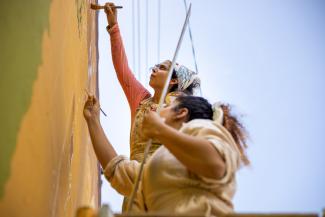
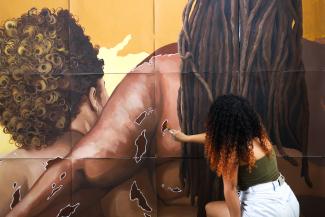
We recognize the unique and strategic value of cultural and creative strategies in the struggle against oppression and injustice. We work with artists who centre feminist voices and the narratives of historically oppressed communities. In this emerging tactic, we see art and creative expression helping us envision a world where feminist realities continue to flourish and be celebrated.

Our initiatives
Our initiatives work at the intersections of the sites of change we work to address, the movements we prioritize, and the tactics we use:
Advancing Universal Rights and Justice
We monitor, document and make visible how anti-rights actors are operating and colluding in multilateral spaces and support feminist, women’s rights and gender justice movements and allies to counter their influence and impact.
Building Feminist Economies
Working on extractivism, tax justice and corporate accountability, we build knowledge on corporate power and influence; advocate for corporate accountability and equitable distribution of wealth; and amplify feminist proposals for just economies.
Resourcing Feminist Movements
We develop accessible, action-oriented analysis on the state of resourcing for feminist movements. We aim to influence funders’ policies and practices, deepen and sustain funding for feminist social change, and support movements’ needs and strategies.
In addition to the impact we aim to have in the world, AWID is expressly committed to strengthening our own organizational learning and resilience in order to further strengthen global feminist movements.
Our donors
Thank you!
Without the generous funding and support from our donors, our work would not be possible
Junio 2015
Sesiones adicionales para redactar el Documento Final de Adís Abeba
- Del 1 al 5 de junio de 2015 se realizaron sesiones adicionales para continuar avanzando en la redacción del Documento Final.
- Del 15 al 19 de junio, en la sede de la ONU tuvo lugar la ya planificada Tercera Sesión Redactora del Documento Final de la Conferencia.
Para saber más sobre este proceso, puedes consultar la CSO Hitchhiker’s Guide (en inglés).
Digna Ochoa
Our group did not receive external funding between 2021 and 2023, should we still fill out the survey?
Yes, we still want to hear from you regardless of whether you received funding in all three, two or only one of the years between 2021 and 2023.
Snippet FEA Nous Sommes la Solution (EN)

Nous Sommes la Solution is a rural women 's movement for food sovereignty in West Africa. Founded originally as a campaign against hyper-industrialized agriculture, Nous Sommes la Solution has grown into a movement of more than 500 rural women’s associations from Burkina Faso, Senegal, Ghana, Gambia, Guinea Bissau, Mali and Guinea.
Together, this women-led movement is building and strengthening food and seed sovereignty across West Africa. They feed communities, strengthen local economies, amplify the knowledge of women farmers and mitigate the devastating effects of climate change through agroecological practices. They also organize workshops, forums and community radio broadcasts to share their messages, their traditional knowledges and agroecological practices across rural communities.
In collaboration with universities and public research centers, Nous Sommes la Solution works towards restoring traditional Indigenous varieties of rice (a staple food in West Africa) and promoting local food economies based on agroecological principles, influencing national policy-making, all the while supporting women in creating farming associations and collectively owning and managing farmland.
Marielle Franco
Marielle était une femme politique brésilienne, féministe lesbienne et militante des droits humains.
Marielle était une critique virulente de la brutalité policière et des exécutions extrajudiciaires. Sa politique, ouvertement féministe, centrée sur les personnes noires et les favelas était une source d’espoir pour les groupes marginalisés de Rio de Janeiro, actuellement gouvernée par un gouvernement conservateur et un maire évangélique.
Le 14 mars 2018, après avoir prononcé un discours à Rio de Janeiro, Marielle Franco et son chauffeur ont été assassinés, abattus par balles. Suite à la nouvelle de leur mort, les foules sont descendues dans les rues en criant « Marielle presente! » (Marielle est ici !) et ont exigé que justice soit faite.
En savoir plus sur Marielle et la situation au Brésil