Left
Half
Left

Special Focus

AWID is an international, feminist, membership organisation committed to achieving gender equality, sustainable development and women’s human rights

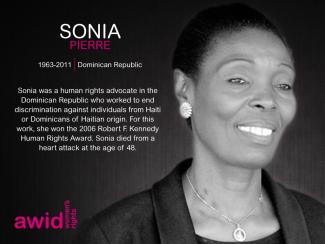
Memory as Resistance: A Tribute to WHRDs no longer with us

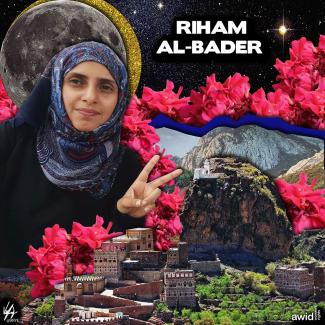
AWID’s Tribute is an art exhibition honouring feminists, women’s rights and social justice activists from around the world who are no longer with us. 


In 2020, we are taking a turn

This year’s tribute tells stories and shares narratives about those who co-created feminist realities, have offered visions of alternatives to systems and actors that oppress us, and have proposed new ways of organising, mobilising, fighting, working, living, and learning.

49 new portraits of feminists and Women Human Rights Defenders (WHRDs) are added to the gallery. While many of those we honour have passed away due to old age or illness, too many have been killed as a result of their work and who they are.

This increasing violence (by states, corporations, organized crime, unknown gunmen...) is not only aimed at individual activists but at our joint work and feminist realities.

The stories of activists we honour keep their legacy alive and carry their inspiration forward into our movements’ future work.

Visit the online exhibit

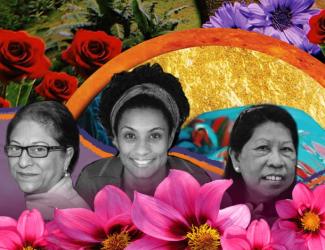
The portraits of the 2020 edition are designed by award winning illustrator and animator, Louisa Bertman

AWID would like to thank the families and organizations who shared their personal stories and contributed to this memorial. We join them in continuing the remarkable work of these activists and WHRDs and forging efforts to ensure justice is achieved in cases that remain in impunity.

“They tried to bury us. They didn’t know we were seeds.” - Mexican Proverb 


The Tribute was first launched in 2012

It took shape with a physical exhibit of portraits and biographies of feminists and activists who passed away at AWID’s 12th International Forum, in Turkey. It now lives as an online gallery, updated every year.

To date, 467 feminists and WHRDs are featured.

Visit the online exhibit
Related Content

Pleasure Garden Exhibition

The artwork is a photography and illustration collaboration between Siphumeze and Katia during lockdown. The work looks at black queer sex and plesure narratives, bondage, safe sex, toys, mental health and sex and many more. It was created to accompany the Anthology Touch.

Mental Health
Mental Health
Sex and Spirtuality
Sex and Spirtuality
Orgasm
Orgasm

About the Artists:

Siphumeze Khundayi portrait
Siphumeze Khundayi is an art-maker, photographer and facilitator interested in creative ways of bringing together dialogue and artistic practice in relation to African Queer identity.

She is creative director of HOLAAfrica! a pan-Africanist womanist online collective.

Her solo and collaborative performance work has been featured in a number of festivals and theatre spaces such as Ricca Ricca Festival in Japan

She directed two Naledi nominated productions in 2017 and 2018. She directed a show that won a Standard Bank Ovation award in 2020.

As a photographer she was part of a group exhibition titled Flowers of my Soul in Italy organised by the Misfit Project. Produced three publications for HOLAAfrica and was published in and provided the cover for volume two: As You Like of the Gerald Kraak Anthologies.
katia portrait
Katia Herrera is a 21-year-old  Digital visual artist from the noisy city of  Santo Domingo in the Dominican Republic. Despite Herrera being a self-proclaimed introvert, her artwork is remarkably loud in a world trying to quiet black voices. With titles like Black Woman, You Own the Moon, Earth Goddess, Forever,  and Universe Protector, Herrera’s legacy will be marked by her passion for highlighting the endurance and perseverance of black folks of old and present to contrast the narrative that black skin should only be associated with slavery.

One of her most lovely and vivaciously titled works, Universe Protector, portrays the black soul as a divine entity full of strength, power, and greatness. In her youth, her love of graphic design was stimulated by her parents’ artistry and the Photoshop they had downloaded on their computer for their professional photography.

Snippet FEA Otras Union meetings and demonstrations (FR)

Réunions et manifestations du Syndicat OTRAS

Our values - esponsibility, Accountability, and Integrity

Responsabilité, responsabilisation et intégrité

Nous nous attachons à faire preuve de transparence, à utiliser nos ressources de manière responsable, à être équitables dans nos collaborations et à faire preuve de responsabilité et d'intégrité envers nos membres, nos partenaires, nos bailleurs de fonds et les mouvements avec lesquels nous travaillons. Nous nous engageons à réfléchir sur nos expériences, à partager ouvertement nos connaissances et à nous efforcer de modifier nos pratiques en conséquence.

Doris Valenzuela Angulo

Doris Valenzuela Angulo fue una activista social afrodescendiente, líder y defensora de los derechos humanos, de Buenaventura, Colombia. Fue parte de Comunidades Construyendo Paz en los Territorios (CONPAZ), una red nacional de organizaciones de comunidades afectadas por el conflicto armado que propugnan la no violencia y la justicia socioambiental.

Doris desafiaba la constante violencia paramilitar y las presiones de los megaproyectos para desplazar a su comunidad, así como la complicidad del Estado. Enfrentando uno de los contextos más difíciles de su país, tuvo un rol de liderazgo en una iniciativa de resistencia no violenta sin precedentes llamado «Espacio Humanitario Puente Nayero», una zona urbana para la cohesión comunitaria, la seguridad, la creatividad y la acción colectiva.

Esta singular lucha no violenta de las familias que pertenecían al «Espacio Humanitario Puente Nayero» atrajo la atención y el apoyo de organismos locales e internacionales. Hacia septiembre de 2014, la Comisión Interamericana de Derechos Humanos había establecido medidas cautelares de protección para la comunidad, y había ordenado al Estado colombiano hacer lo necesario para preservar sus vidas y su integridad personal. Sin embargo, las amenazas y la violencia de los paramilitares continuaron. Doris centró sus energías en evitar el reclutamiento forzoso de niñxs y jóvenes por parte de los neo-paramilitares, y siguió haciéndolo a pesar del asesinato de su hijo Cristian Dainer Aragón Valenzuela en julio de 2015. Doris también se convirtió en blanco de ataques, y recibía amenazas por su activismo y el trabajo que realizaba continuamente.

Las persistentes agresiones y amenazas contra su vida forzaron a Doris a abandonar Colombia. Residió en España desde febrero de 2017 hasta febrero de 2018, e integró el Programa de Protección Temporal de Defensores y Defensoras de los Derechos Humanos de Amnistía Internacional para activistas cuyas vidas están en riesgo.

En abril de 2018, Doris fue asesinada por su ex-marido en Murcia, España. Tenía solamente 39 años.


Tributos:

«Doris, pasar un año entero contigo nos ha enseñado cómo una persona puede tener la capacidad de transformar y generar esperanza ante hechos profundamente negativos y devastadores sucedidos durante tu vida...Seguimos con nuestro compromiso en la defensa de todos los derechos humanos. Siempre nos guiará tu valentía y tu luz.» Montserrat Román, Amnistía Internacional Grupo La Palma

Fragmento de «Palabras para Doris Valenzuela Angulo» por Elsa López

«Tú lo sabías. Siempre lo supiste. Y a pesar de todo te levantaste firme contra tantas injusticias, tantas miserias, tanta persecución.Te alzaste, altiva y feroz, contra aquellos que querían hacerte de nuevo abandonar tus esperanzas, humillarte y rendirte. Puesta en pie clamaste por tu libertad y la nuestra que era la tuya. Nada ni nadie paralizó tus esfuerzos por cambiar el mundo y hacerlo más generoso y habitable. Tú, viva entre nosotras, más viva hoy que nunca entre nosotras a pesar de la muerte. Viva siempre por tus gestos, tu valor, tu grandeza al clamar por una tierra prometida que llegaste a invocar con cada uno de tus gritos por todos los desiertos que habitaste. Tú. Siempre viva. Doris Valenzuela Angulo. 
Son sólo palabras. Lo sé. Yo también lo sé. Pero las palabras nos unen, nos protegen, nos dan fuerza y aliento para seguir caminando hacia la luz que tanto defendías.»

Não me sinto à vontade para partilhar o nome do meu grupo e as nossas informações de contacto com a AWID. Devo preencher o inquérito ainda assim?

Absolutamente, estas perguntas são opcionais, e valorizamos o seu direito de permanecer anónimo. Queira preencher o inquérito independentemente da sua decisão de partilhar o nome do seu grupo, organização e/ou movimento e as respetivas informações de contacto connosco.

Seismic shifts: A year of completion, transition and reflection | Annual report 2017

The past five years have been huge for AWID.

We have contributed to some major victories, like expanding the women’s rights funding landscape with ground-breaking, far-reaching research and advocacy. At the same time, we have experienced some devastating setbacks, including the assassination of Women Human Rights Defenders (WHRDs) like Berta Cacares of Honduras, Gauri Lankesh of India and Marielle Franco of Brazil, as well as the rise of anti-rights mobilizing in human rights spaces.

Five years ago, we committed to our movement-building role by producing knowledge on anti-rights movement trends, as well as on issues that feminists often engage with less, like illicit financial flows. We advocated side by side with our movement partners, strengthening young feminist and inter-generational activism, and expanding the holistic protection of WHRDs. As we close out the strategic plan, we are proud of our accomplishments and our growth as an organization. We end 2017 with renewed commitment, insights and learning for the continued struggle ahead!


Colectivo Morivivi

El Colectivo Moriviví es una colectiva de solo mujeres. Nuestra producción artística consiste en muralismo, muralismo comunitario y acciones/performances de protesta. Nuestro trabajo tiene como objetivo democratizar el arte y llevar a la esfera pública las narrativas de las comunidades de Puerto Rico, para generar espacios en donde sean validadas. Creemos que, a través del artivismo, podemos promover conciencia sobre temas sociales y fortalecer nuestra memoria colectiva.

“Cacibajagua” 2017, Mural Project. Jiangxi, China
“Cacibajagua” 2017, proyecto de mural, Jiangxi, China
“Cacibajagua” 2017, Mural Project. Jiangxi, China
“Cacibajagua” 2017, proyecto de mural, Jiangxi, China
“Paz para la Mujer” 2015, collaboration with Coordinadora Paz para la Mujer Organization. Santurce,
“Paz para la Mujer” 2015, colaboración con la organización Coordinadora Paz para la Mujer, Santurce, Puerto Rico


“Paz para la Mujer” 2015, collaboration with Coordinadora Paz para la Mujer Organization. Santurce, Puerto Rico
“Paz para la Mujer” 2015, colaboración con la organización Coordinadora Paz para la Mujer, Santurce, Puerto Rico
Collectivo Moriri Artwork

En el marco de su participación en el Grupo de Trabajo Artístico de AWID, el Colectivo Moriviví convocó a un grupo diverso de afiliadxs, asociadxs y personal de AWID y facilitó un proceso colaborativo de imaginación, configuración y decisión sobre el contenido para la creación de un mural comunitario, a través de un proceso de creación conjunta en múltiples etapas. El proyecto comenzó con una conceptualización remota con feministas de diferentes zonas del planeta reunidxs por AWID, y luego evolucionó hacia su recontextualización y realización en Puerto Rico. Nos honra haber contado con la contribución de las artistas locales Las Nietas de Nonó (@lasnietasdenono), la participación de mujeres locales en la Sesión de Pintura Comunitaria, el apoyo logístico de la Municipalidad de Caguas, y el apoyo adicional al colectivo, brindado por FRIDA Young Feminist Fund.
 
El mural explora la trascendencia de las fronteras, al presentar cuerpos como un mapa en un abrazo que realza la intersección de las distintas manifestaciones, prácticas y realidades feministas.
 
Agradecemos también a Kelvin Rodríguez, quien documentó y captó las diferentes etapas de este proyecto en Puerto Rico:

Collectivo Moriri Artwork

Sobre el Colectivo Moriviví

Colectivo Morivivi portrait

Moriviví es un colectivo de jóvenes artistas mujeres que trabajan en arte público desde abril de 2013. Con sede en Puerto Rico, hemos obtenido reconocimiento por la creación de murales y de arte comunitario.
 
El grupo se inició en festivales locales de arte urbano. A medida que nuestro trabajo se fue haciendo más conocido, algunas organizaciones y líderes comunitarias comenzaron a contactarnos. Al principio éramos solo ocho estudiantes de secundaria que querían pintar juntas un mural. Y en estos ocho años de duro trabajo hemos enfrentado muchos desafíos. Ahora estamos en un período de transición. Queremos reestructurar internamente el colectivo durante el próximo año. Nuestro objetivo es abrir nuevas oportunidades de colaboración y respaldar nuestro proceso de toma de decisiones con un nuevo sistema de evaluación. Aspiramos, en el largo plazo, a convertirnos en una escuela alternativa para la práctica artística, destinada a  aquellas personas interesadas en sumergirse en la producción de arte comunitario.

Snippet FEA Union Otras Photo Panel (EN)

A panel of 13 people standing behind a conference chair. On the table there are sheets of papers, microphones and bottles of water. Behind them you can see a white wall and black courtains.

Members of the OTRAS union

Join the Feminist Realities journey (Forum page)

Join the Feminist Realities journey

The AWID Forum is just one stop in the Feminist Realities journey. Let’s travel this path together and explore our power in action!

Join us now

Mena Mangal

Mena Mangal était une éminente journaliste de télévision, défenseure des droits des femmes et conseillère culturelle du Wolesi Jirga, la chambre basse du parlement national afghan.

Pendant plus d’une décennie, Mena a travaillé pour Ariana TC, la chaîne en pashto Lamar de Tolo TV et la chaîne de télévision nationale privée Shamshad TV. Mena était principalement présentatrice d’émissions sur les droits des femmes et la culture.

« La défenseure des droits des femmes Wazhma Frogh a dit que Mangal « se faisait entendre » et s’exprimait ouvertement en faveur de la défense de son peuple. »

Loin des écrans, elle dirigeait également des plateformes sur les réseaux sociaux, promouvant les droits à l’éducation et au travail des filles et femmes afghanes. Sur le plan de sa vie privée, Mena a longuement écrit sur le mariage arrangé qu’elle a été forcée d’accepter en 2017, et le long processus qui s’en est suivi pour finalement obtenir le divorce.

Dans un post sur Facebook, Mena avait écrit qu’elle recevait des menaces de mort de sources inconnues, mais qu’elle continuerait néanmoins son travail.

Elle a été attaquée le 11 mai 2019 par des hommes armés inconnus et tuée en plein jour et dans un espace public, dans le sud-est de Kaboul.

« La situation nous inquiète, car elle a un impact direct sur les femmes qui travaillent en dehors de la maison... Les femmes journalistes changent de profession du fait de l’augmentation des risques auxquels elles sont confrontées. » - Robina Hamdard, défenseure des droits des femmes à Kaboul

متى ستكون نتائج الاستطلاع جاهزة؟

سنقوم بتحليل الردود على الاستطلاع للوصول للاستنتاجات الأساسية والنتائج خلال المنتدى العالمي ل AWID في بانكوك، وعن طريق الانترنت في ديسمبر (كانون الأول) 2024. الرجاء التسجيل هنا لحضور المنتدى.

2020: Annual Report

For many of us, 2020 was an especially challenging year due to the global health pandemic. Feminists and activists rose to the new challenges meeting community needs in innovative ways. Here are 5 highlights of how AWID contributed to feminist co-creation and resistance.


Watch our Annual Report Video below

Tactiques, stratégies et impacts des antidroits

Chapitre 5

Les antidroits ont adopté une double stratégie : outre leurs attaques ouvertes sur le système multilatéral, ils et elles sapent les droits humains depuis l’intérieur. Leur implication vise à prendre le contrôle des processus, instaurer des normes régressives et fragiliser la redevabilité.

Photo-OP // the first anniversary of the EU signature to the Council of Europe Convention to prevent and combat gender-based violence and domestic violence, the so-called Istanbul Convention
© ALDE Group/Flickr
Photo-OP // Le premier anniversaire de la signature par l'UE de la Convention du Conseil de l'Europe pour prévenir et combattre la violence basée sur le genre et la violence domestique, dite Convention d'Istanbul

Leur implication dans les sphères des droits humains a un but essentiel : saper le système et sa capacité à respecter, protéger et assurer les droits humains de tout un chacun, et à tenir les États membres pour responsables de leurs enfreintes. Certaines tactiques antidroits en dehors de l’ONU visent à la délégitimer, exercer des pressions politiques pour limiter son financement ou se retirer d’accords internationaux sur les droits humains. Les acteur·rice·s antidroits gagnent cependant en influence au sein même de l’ONU. Leurs tactiques de l’intérieur incluent la formation de délégué·e·s, la dénaturation de cadres relatifs aux droits humains, la dilution de la substance d’accords sur les droits humains, l’infiltration de comités d’ONG, la demande du statut ECOSOC sous un nom neutre, l’infiltration des espaces des jeunes et la pression pour que des acteur·rice·s antidroits occupent des postes clés.

Sommaire

  • L’institutionnalisation des antidroits dans les mécanismes de l’ONU
  • Le retrait et la délégitimation
  • L’appauvrissement des standards relatifs aux droits humains
  • La prise de contrôle : création d’un cadre des droits humains parallèle
  • Exercice : Oui, ils et elles sont fort·e·s, mais nous aussi!
  • Exercice : Tenir les gouvernements pour responsables

Lire le chapitre complet

Snippet FEA Principles of work Transparency (ES)

Un paraguas rosa

TRANSPARENCIA

Contributors of toolkit (WITM landing page)

Deseamos agradecer a las personas que hicieron aportes y fueron consultadas para la elaboración de este Manual:

  • Angelika Arutyunova
  • Cindy Clark
  • Kamardip Singh
  • Martin Redfern
  • Pei Yao Chen
  • Srilatha Batliwala
  • Veronica Vidal

    Descargar el manual en PDF

Jaitun

Jaitun, commonly referred to as ‘Amma’, was committed to ensuring the reproductive rights of women and girls in India. She was particularly dedicated to advocating for those living in poverty and who are most marginalized, including Dalit and Muslim women and girls.

Jaitun was the vital force behind the case Jaitun v Janpura Maternity Home & Ors. Her perseverance for justice led to a ground-breaking judgment issued by the High Court of Delhi, holding the Indian government accountable for failing to deliver a number of its legally-binding obligations such as reproductive health care and the right to food.

Her daughter Fatema who was living under the poverty line was denied reproductive services and had to deliver her child in public, under a tree. At the time, both Jaitun and Fatema were homeless as a result of their home being demolished by the government as part of redevelopment and gentrification in New Delhi.

“The judgment has since been used by countless lawyers and activists globally, including the Former United Nations Special Rapporteur on the Right to Health, not only as a source of inspiration but as a solid springboard to further justice.” - Jameen Kaur

Jaitun has inspired many other women living in poverty to claim their rights. She passed away in 2017.

“In Jaitun’s death, we have now lost an inimitable warrior for justice, but her spirit of defiance lives on.” - Jameen Kaur

“In my 18 years as a human rights advocate, I have not met a woman that has inspired and moved my spirit in the same way Amma did. Her roaring courage; her imitable humour - we used to compare her to the Bollywood actress Hema Melini - as she would be upset we had spent so much time away from her - she would say, with a twinkle in her eye, ‘You have forgotten Amma, Amma is not speaking to you’ and then with great dramatics turn her back, only to turn around laughing and stretching her arms out for a hug. Her kindness and ultimately her love and joy for love and the right for all of us to live with dignity. I miss her terribly.” - Jameen Kaur
 

Membership why page - Paz Romero

Cette communauté est un endroit de connexions, où l’on comprend nos combats individuels comme faisant partie de luttes mondiales, et où l’on peut même parfois danser ! Il n’existe aucun endroit de la sorte en ligne, où être en contact avec des activistes de terrain, qui viennent du monde entier, et forger de la solidarité et de la sororité..- Paz Romero, Argentina