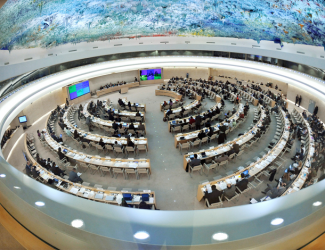
The Human Rights Council (HRC) is the key intergovernmental body within the United Nations system responsible for the promotion and protection of all human rights around the globe. It holds three regular sessions a year: in March, June and September. The Office of the UN High Commissioner for Human Rights (OHCHR) is the secretariat for the HRC.
The HRC works by:
Debating and passing resolutions on global human rights issues and human rights situations in particular countries
Examining complaints from victims of human rights violations or activist organizations on behalf of victims of human rights violations
Appointing independent experts (known as “Special Procedures”) to review human rights violations in specific countries and examine and further global human rights issues
Engaging in discussions with experts and governments on human rights issues
Assessing the human rights records of all UN Member States every four and a half years through the Universal Periodic Review
AWID works with feminist, progressive and human rights partners to share key knowledge, convene civil society dialogues and events, and influence negotiations and outcomes of the session.
With our partners, our work will:
◾️ Monitor, track and analyze anti-rights actors, discourses and strategies and their impact on resolutions
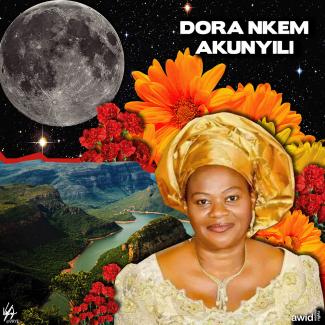
Dora nació en el estado de Benue, Nigeria. Fue una farmacéutica, tecnócrata, investigadora erudita y líder comunitaria reconocida mundialmente.
El trabajo revolucionario de Dora produjo un cambio de paradigma en el servicio público nigeriano cuando se desempeñó como Directora General de la Agencia Nacional para la Administración y Control de Alimentos y Medicamentos, entre 2001 y 2008. Encabezó reformas en la aplicación de políticas y regulaciones que redujeron drásticamente la cantidad de drogas falsas que asolaban el sector farmacéutico nigeriano cuando asumió su cargo.
Se convirtió en un ícono del empoderamiento de las mujeres, porque fue un ejemplo real de mujer valiente y competente que desafió los males de una sociedad predominantemente patriarcal. Fue nombrada Ministra de Información y Comunicación entre 2008 y 2010.
Murió luego de una batalla contra el cáncer, y le sobreviven su esposo, seis hijxs y tres nietxs.
Devenir membre
Devenir membre
En rejoignant l’AWID, vous intégrez l’organisation féministe mondiale, un pouvoir collectif qui se fonde sur la solidarité et puise ses racines dans le travail entre les mouvements.
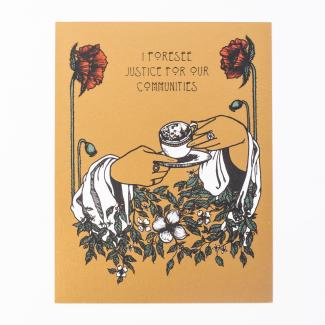
Impresión de pantalla en papel a 4 colores (8,5 x 11 pulgadas), 2016
“Tasseography” [«Taseografía»]
La taseografía es el estudio de los posos de café y/o de las hojas de té para la adivinación. Es una práctica que ha sido transmitida por las mujeres del lado armenio de mi familia, y me fue enseñada por mi madre, que a su vez la aprendió de su madre y así sucesivamente. Cuando miraba a mi Nana leer los posos del café armenio preparado para la familia y lxs amigxs, veía muchas veces como ella veía lo que quería decir. Estas impresiones dicen algunas de las cosas que quiero ver en el mundo: espero que sean las mismas cosas que ustedes quieren ver.
Impresiones en relieve en papel (11 x 14 pulgadas), 2021
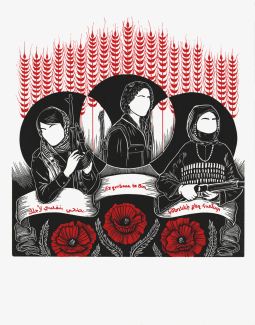
“Our Promise” [«Nuestra promesa»]
Esta impresión celebra la resiliencia, el sacrificio y la fortaleza de lxs luchadorxs por la libertad de SWANA, a través de la historia y la solidaridad existente. La inspiración original provino de un artículo que leí sobre una exposición en Tatvan, un distrito de Bitlis, que mostraba la presencia armenia en la región. Mis antepasadxs eran de Bitlis, que ahora se encuentra dentro de las fronteras de la Turquía moderna.
Impresiones en relieve en papel (8,5 x 11 pulgadas), 2020
“Looking at the Cup” [«Mirando la taza»]
La taseografía (el estudio de la lectura de los posos de café) es una práctica cultural que las mujeres armenias han utilizado durante cientos de años para hablar entre sí. Es un lenguaje codificado para iniciar conversaciones, construir conexiones interrelacionadas y entretejidas.
Sobre Ali Chavez Leeds
Ali Cat Leeds (ella/ellx) es una artista y estampadora que vive en las tierras no cedidas de los pueblos Cowlitz y Multnomah y de las tribus confederadas de la comunidad de Grand Ronde en la confluencia de dos ríos, conocida como Portland, Oregón. Produce su trabajo bajo el nombre de Entangled Roots Press. Sus estampas mezclan lo literal y lo metafórico,para iluminar y comentar el mundo que nos rodea. Las impresiones en relieve, de pantalla y tipográficas abarcan desde las masacres de las deforestaciones hasta la belleza de los movimientos populares. Las estampas de Ali se nutren de herstorias [historias de ellas] ancestrales y empujan hacia futuros liberadores, enredando en la hoja de papel impresa los aprendizajes de jardines, los símbolos en las tazas de café y los hilos entretejidos de Armenia y Euskal Herria.
Я не хочу делиться названием организации и контактной информацией с AWID – могу ли я пройти опрос?
Безусловно, эти вопросы являются необязательными, мы ценим ваше право сохранять конфиденциальность. Пожалуйста, заполните опрос независимо от того, указываете вы название вашей группы, организации и/или движения и контактные данные или нет.
Snippet FEA Sopo Japaridze Quote (EN)
"We know everything is against us and there is very little chance to change that. But we believe in intervention and I do think we have a chance and should use it. That’s why we're doing everything we're doing. We're willing to push for things that are unheard of."
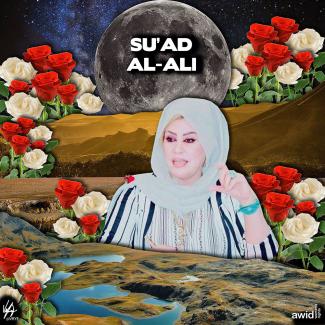
Ardente défenseure des droits des femmes et des enfants, Su’ad dirigeait Al-Weed Al-Alaiami, une organisation irakienne de défense des droits humains.
Elle a participé aux manifestations de juillet 2018 qui ont eu lieu à Bassorah et dans plusieurs autres villes irakiennes pour protester contre le chômage, réclamer des emplois et des services publics appropriés pour les citoyen-ne-s, ainsi que pour exiger l'élimination de la corruption endémique. Le 25 septembre 2018, Su’ad a été assassinée dans le quartier d’Al-Abbasiyah, dans le centre-ville de Bassorah.
Une vidéo de l’incident a montré une personne qui s'est approchée d'elle alors qu'elle montait dans sa voiture, et lui a tiré une balle dans la tête avant de pointer son arme sur son chauffeur, Hussain Hassan, qui a été blessé à l'épaule. Su’ad Al-Ali avait 46 ans et était mère de quatre enfants.
Reason to join 6
Engage with the AWID International Forum - a major global feminist gathering - and have access to special AWID member discounts and enty points for virtual dialogue. Co-created by feminist movements, the Forum is a unique space for deep discussion and imagination where we challenge and strengthen our organizing, where we connect our struggles and feminist realities together.
Une série de films sur les Réalités féministes dans la région Asie/Pacifique
Préparée par Jess X. Snow
avec l’aide de Kamee Abrahamian et Zoraida Ingles
Révisée par Kamee Abrahamian
Dans toute l’Asie et le Pacifique, et dans sa diaspora tout entière, des femmes et des trans farouches se battent pour un avenir où iels pourraient être libres. Alors que l’élévation du niveau des mers menace les îles du Pacifique et les côtes de l’Asie continentale, la lutte pour protéger la Terre et les océans s’intensifie dans le monde entier. La mémoire géologique de notre planète enregistre toutes les expériences qu’elle a vécues : la montée des colonisations, de l’industrialisation et de la destruction de l’environnement est liée à la montée de l’État-nation patriarcal binaire. Le pouvoir au sein de la Terre de se réincarner et d’éclore face à la violence doit alors être mis en lien avec les femmes, la maternité, l’indigénéité et toutes les forces expansives, sacrées et queer. Les Réalités féministes unissent la lutte pour la protection des droits des femmes, des trans et des personnes LGBTQ+ avec celle pour la protection de la Terre, et ce n’est pas une coïncidence. Des mères et filles protégeant le Mauna Kea au Royaume de Hawai’i aux relations complexes entre mères et enfants chez les réfugié·e·s du Vietnam, en passant par les réveils sexuels de personnes queer dans l’Inde conservatrice, la réclamation de la construction de maisons en Mongolie intérieure et la lutte pour la libération des personnes LGBTQ aux Philippines, cet ensemble de films est une constellation des manières selon lesquelles les femmes, personnes queer et trans en Asie-Pacifique défendent de nos jours les multiples voies vers notre libération collective, au-delà des océans et des frontières.
Tous ces films témoignent du sens fort accordé aux lieux : des activistes autochtones protègent leurs terres sacrées, des jeunes déconstruisent les récits coloniaux sur leurs terres et découvrent des vérités cachées, les liens complexes de maternité et de soins sont examinés, et des personnages se tournent vers leur propre corps et leur sexualité comme autant de sanctuaires, lorsque la famille et la ville qui les entourent menacent leur sécurité.
AFTEREARTH
De Jess X. Snow
« Un film envoûtant avec des plans époustouflants qui invoquent la résistance écologique féministe et comment elle prend directement source dans l'histoire culturelle et la terre… »
- Jessica Horn, stratège féministe panafricain·e, écrivain·e et cocréateur·rice de The temple of her skin (Le temple de sa peau)
Dans le documentaire expérimental Afterearth, quatre femmes se battent pour protéger les volcans, les océans, la terre et l’air pour les générations futures. En s’appuyant sur de la musique, de la poésie et le témoignage poignant qui rend honneur aux lieux qu’atteint l’océan Pacifique – Hawai’i, les Philippines, la Chine et l’Amérique du Nord, Afterearth est une méditation poétique sur la relation intergénérationnelle et féministe de quatre femmes avec les terres et les plantes dont elles sont issues.
STANDING ABOVE THE CLOUDS
De Jalena Keane Lee
Dans Standing Above the Clouds, des mères et filles activistes indigènes de Hawai’i se tiennent côte à côte pour protéger leur montagne sacrée, Mauna Kea, contre sa transformation en un site de construction des plus grands télescopes au monde. En tant que protectrices de Mauna Kea, ce film souligne l’interconnexion entre Aloha ʻĀina (l’amour de la terre) et l’amour pour ses aîné·e·s et les générations à venir.
NƯỚC (EAU/TERRE NATALE)
De Quyên Nguyen-Le
Dans ce court-métrage narratif expérimental, Nước (Eau/Terre natale) un·e ado genderqueer vietnamo-américain·e questionne les récits dominants sur la guerre du Vietnam à Los Angeles, Californie. Par le jeu de séquences oniriques fortes et d’intrusions de la réalité, ce film suit le parcours qui lui permet de recomposer et de comprendre l’expérience de sa mère, réfugiée de la guerre du Vietnam.
KAMA’ĀINA
De Kimi Lee
Dans Kama’āina, une jeune queer de seize ans doit se débrouiller pour vivre dans les rues de Oahu, jusqu’à ce qu’elle finisse par pouvoir se réfugier, sur les conseils d’une tata, à Pu’uhonua o Wai’anae, le plus gros camp organisé de sans-abris de Hawai’i.
DEVI
By Karishma Dev Dube
Dans Devi (« déesse » en hindi), Tara, une jeune lesbienne « dans le placard », s’oppose à la fois à sa famille et à la tradition pour vivre son attirance pour la servante de la maison. Située à New Delhi, Devi est une histoire de révélation tout autant qu’un commentaire sur les lignes sociales et de classe qui divisent les femmes de l’Inde contemporaine.
HEADING SOUTH
De Yuan Yuan
Dans Heading South, Chasuna, une fillette de 8 ans élevée par sa mère sur le Plateau de la Mongolie intérieure, rend visite à son père abusif à la grande ville. Pendant qu’elle est chez son père, on lui présente une nouvelle venue dans la famille. Elle doit alors reconnaître et accepter que sa véritable maison est inséparable de sa mère et de la terre.
Outrun
De Johnny Symons & S. Leo Chiang
Dans le long métrage Outrun, nous suivons le parcours de la première femme transgenre au Congrès des Philippines. Face à l’oppression d’une nation majoritairement catholique, son parcours victorieux devient un cri de victoire pour les droits des personnes LGBTQ+ du monde entier.
Alliant le documentaire, le récit et des formes expérimentales, ces films illustrent que l’attention de la communauté, l’amour de soi et une écoute profondément transformatrice entre celleux que nous aimons sont une entrée dans les Réalités féministes auxquelles nous donnons vie aujourd’hui. De toute l’Asie Pacifique et sa diaspora, ces histoires nous montrent que, face à la violence, la tendresse est la plus féroce des résistances.
Jess X. Snow est réalisateur·rice de films, artiste, poète nominé·e au Pushcart, auteur·e de livres pour enfants et éducateur·rice artistique communautaire qui crée des histoires d'immigrant·e·s asiatiques queers qui transcendent les frontières, les binarités et le temps
Suivez-nous sur les réseaux sociaux pour recevoir des informations sur les prochains événements et projections :
Quando é que os resultados do inquérito estarão disponíveis?
Iremos analisar as respostas ao inquérito para obter informações e tendências, e iremos apresentar os resultados durante o 15.º Fórum Internacional da AWID em Bangkok, e online em dezembro de 2024. Registe-se para participar no Fórum aqui!
Snippet FEA Otras Union meetings and demonstrations (ES)
« Après
Après l’amour la première fois,
Nos corps et nos esprits nus
Une galerie des glaces,
Complètement désarmés, absolument fragiles,
Nous nous couchons dans les bras de l’autre
Respirant attentivement,
Avec la crainte de briser
Ces figurines en cristal. » - Fahmida Riaz
Fahmida Riaz a brisé les tabous sociaux en écrivant sur le désir des femmes dans ses poèmes, créant des récits alternatifs à propos du corps des femmes et de leur sexualité, et établissant de nouveaux standards dans la littérature urdu.
Son travail s’est confronté à de sévères critiques de la part des conservateurs, qui l’ont accusée d’utiliser des expressions érotiques et « pornographiques » dans son langage poétique.
Fahmida a finalement été mise sur liste noire et accusée de sédition en vertu de l’article 124A du Code pénal pakistanais sous la dictature de Zia-ul-Haq. Forcée à l’exil en 1981, elle a passé presque sept ans en Inde avant de retourner au Pakistan.
Dans la préface de « Badan Dareeda » (Un corps ravagé), un recueil de poèmes publié en 1974, elle écrit :
Si, en effet, je suis forcée à me tenir aujourd’hui devant ce maqtal et me confronte à la potence, je dois y faire face, la tête haute. Mes poèmes sont la trace d’une tête mutilée : des sons émanant même lorsque suspendue par des cordes… Un corps ravagé a pris la forme de razmia, ou d’un son de rupture. Et si cette rupture est effectivement choquante pour les gens, c’est que la poète a atteint son intention : elle a réussi à la perturber. (traduction de l’urdu vers l’anglais par Asad Alvi)
La splendeur de Fahmida résidait dans sa défiance de toute logique ou toute catégorie particulière de genre, nation, religion ou culture. Elle refusait d’être mise dans le rôle d’une « femme poète », brisant les définitions traditionnelles de la poésie féminine, des concepts et des thématiques (variant entre conscience politique, corps, culture, désir, religion, foyer), et renversant les inhibitions assignées à son genre.
« Il faut que vous compreniez que la culture ne peut avoir d’essence. Les cultures changent, circulent entre elles, formant de nouvelles cultures. La culture est née de cette façon. Il n’y a pas de conflits de cultures. »
Fahmida a écrit plus de 15 livres de poésie et de fiction, dont son poème ‘Taaziyati Qaraardaaden’ («Résolutions de condoléances» en anglais) qui pourrait servir d'hommage approprié à sa vie et à son héritage et de collection de poèmes (Apna Jurm To Saabit He «Mon crime est prouvé») publié en 1988 durant son exil.
Fahmida Riaz est née à Meerut, en Inde, le 28 juillet 1946 et est décédée le 21 novembre 2018 à Lahore, au Pakistan.
Our values - esponsibility, Accountability, and Integrity
Responsabilidad, rendición de cuentas e integridad
Nos esforzamos por ser transparentes, por utilizar nuestros recursos en forma responsable, por ser equitativxs en nuestras colaboraciones, y por ser responsables e íntegrxs con nuestrxs afiliadxs, contrapartes y donantes, y con los movimientos con los que trabajamos y en los que participamos. Estamos comprometidxs a reflejar nuestras experiencias, a compartir abiertamente nuestrxs aprendizajes, y a esforzarnos por cambiar nuestras prácticas en consecuencia.
Anti-rights discourses continue to evolve. As well as using arguments related to religion, culture, and tradition, anti-rights actors co-opt the language of social justice and human rights to conceal their true agendas and gain legitimacy.
Three decades ago, a US television evangelist and Republican candidate famously said that feminism is an “anti-family political movement that encourages women to leave their husbands, kill their children, practice witchcraft, destroy capitalism and become lesbians.” Today, this conspirative notion gains unprecedented grasp and legitimacy in the form of “gender ideology” discourse, a catch-all bogey-man created by anti-rights actors for them to oppose.
Across a range of discourses employed by anti-rights actors - including notions of “cultural imperialism” and “ideological colonization”, appeals to “conscientious objection” and the idea of a “pre-natal genocide” - a key theme is co-optation. Anti-rights actors take legitimate issues, or select parts of them, and twist them in service of their oppressive agenda.
Table of Contents
Gender Ideology
Cultural Imperialism and Ideological Colonization
Abortion: Conscientious Objection
Abortion: Prenatal Genocide
Exercise: Let’s Take Back the Narrative
Movement Resistance Story: The Nairobi Principles: Cross-Movement Commitments on Disability and SRHR

![]Ali Chavez Leeds portrait](/sites/default/files/styles/max_325x325/public/2021-10/portrait.jpeg?itok=0yU3PqLe)