
Advancing Universal Rights and Justice
Uprooting Fascisms and Fundamentalisms
Across the globe, feminist, women’s rights and gender justice defenders are challenging the agendas of fascist and fundamentalist actors. These oppressive forces target women, persons who are non-conforming in their gender identity, expression and/or sexual orientation, and other oppressed communities.
Discriminatory ideologies are undermining and co-opting our human rights systems and standards, with the aim of making rights the preserve of only certain groups. In the face of this, the Advancing Universal Rights and Justice (AURJ) initiative promotes the universality of rights - the foundational principle that human rights belong to everyone, no matter who they are, without exception.
We create space for feminist, women’s rights and gender justice movements and allies to recognize, strategize and take collective action to counter the influence and impact of anti-rights actors. We also seek to advance women’s rights and feminist frameworks, norms and proposals, and to protect and promote the universality of rights.
Our actions
Through this initiative, we:
- Build knowledge: We support feminist, women’s rights and gender justice movements by disseminating and popularizing knowledge and key messages about anti-rights actors, their strategies, and impact in the international human rights systems through AWID’s leadership role in the collaborative platform, the Observatory on the Universality of Rights (OURs)*.
- Advance feminist agendas: We ally ourselves with partners in international human rights spaces including, the Human Rights Council, the Commission on Population and Development, the Commission on the Status of Women and the UN General Assembly.
- Create and amplify alternatives: We engage with our members to ensure that international commitments, resolutions and norms reflect and are fed back into organizing in other spaces locally, nationally and regionally.
- Mobilize solidarity action: We take action alongside women human rights defenders (WHRDs) including trans and intersex defenders and young feminists, working to challenge fundamentalisms and fascisms and call attention to situations of risk.
Related Content
Snippet - WITM About the survey - AR
عن الاستطلاع
- عالمي ومتنوع يعكس وقائع التمويل للتنظيم النسوي على المستوى العالمي ومقسّم حسب المناطق
- مقسم حسب النطاق يضع أصوات، وجهات النظر والتجارب المعاشة للحركات النسوية في المركز ويسلط الضوء على ثروتها، شجاعتها وتنوّعها، كل واحدة في نطاقها
- مشترك: تم تطوير وتجربة الاستطلاع باستشارة أعضاء/ عضوات جمعية حقوق المرأة في التنمية والشركاء/ الشريكات في الحركة
- تكميلي يساهم ويعزّز الأدلة المتواجدة عن وضع التمويل للحركات النسوية والنسائية وحركات العدالة الجندرية من النشطاء/ الناشطات، الممولين/ات النسويين/ات والحلفاء/ الحليفا
- متعدد اللغات متاح باللغة العربية، الانجليزية، الفرنسية، البرتغالية، الروسية والاسبانية
- إعطاء الأولوية للخصوصية والأمان نحن ملتزمون/ات بالحفاظ على سرية وسلامة بياناتك. اقرأ/ي سياسة الخصوصية الخاصة بنا لمعرفة المزيد حول التدابير التي نتخذها لضمان حماية معلوماتك.
- متاح متاح لأشخاص مع درجات سمع، حركة، رؤية، وقدرات فكرية مختلفة، ويحتاج تقريباً 30 دقيقة لإتمامه.
- قابل للنسخ يمكن للحركات نسخ الاستطلاع لما يتناسب مع نطاقاتها. ستكون أدوات الاستطلاع متاحة لإجراء أبحاث إضافية ومناصرة مشتركة.
Love letter to Feminist Movements #4
To my beloved feminists living with HIV,

We’ve been together for over 20 years and how deeply I’ve treasured your love and support. It is interesting to think that you too are a similar age to AWID - both trying to figure out how to engage and support the community on a similar timeline. To the mothers in the movement, your leadership and guidance has been unmatched. I think of Prudence Mabele, Kate Thompson, Darien Taylor, Patricia Perez, Martha Tholanah, Deloris Dockery, Iris De La Cruise, Doris Peltier, Cecilia Chung and so many more. While not perfect (as none of us are), you always put your community first and champion the inclusion of ALL women living with HIV in feminist spaces.
I love the way you have held me when no one else has been able to, but more importantly how we hold each other. While you understand stigma, discrimination, violence and pain, you also understand joy, love and forgiveness. As feminists living with HIV, we are glorious and powerful in our intersectionality. We understand that feminism includes and is led by communities - our Black, Brown and Indigenous sisters, communities who are trans and gender diverse, sex workers, queer/lesbian, those who have been incarcerated, and those who use drugs - as set out in the GIPA (Greater Involvement of People Living with HIV) principles. Your feminism is all encompassing. We talk about the hard issues and about criminalized communities, because as people living with HIV, we ourselves are criminalized.
I would be remiss if I didn’t send special love to the young women living with HIV, the heartbeat of the movement. I see you Kia Lebejia, Keren Dunaway, Liz Onyango, Faith Ona, Sara Thapa Maga, Doreen Moraa, Yana Panfilova and millions of others incredible activists living with HIV. You are the power that will continue to propel us forward and allow us to be seen as important in mainstream feminst movements. Thank you for taking our movement further to ALWAYS include trans and gender diverse folks, to talk about the links between climate change and sexual and reproductive health and rights.
I love, love, love, love you so much. For better or for worse, let’s move forward together because this is our community - this is my community.
With love,
Jessica Whitbread


Qual é o objetivo do inquérito WITM?
O objetivo principal do inquérito WITM é chamar a atenção para o estado financeiro dos diversos movimentos feministas, de direitos das mulheres, de justiça de género, de LBTQI+ e de aliados globalmente, e com base nisto, fortalecer ainda mais o argumento para transferir mais recursos de melhor qualidade e poder para os movimentos feministas.
Three Boats, a Horse and a Taxi: Pacific Feminists at the AWID Forums
Three Boats, a Horse and a Taxi: Pacific Feminists at the AWID Forums
This story is about how an increasingly diverse group of feminists from the Pacific organized through the years to attend the AWID Forums and how that process changed them personally, as organizations, and as a movement through what they learned, discovered and experienced. It illustrates the importance of the Forums as a space through which a region that tends to be marginalized or ignored at the global level can build a strong presence in the feminist movement that is then replicated at other international women’s rights spaces.
In their own voice: watch the interview with Virisila Buadromo & Michelle Reddy
É possível existir várias respostas para o inquérito WITM em nome de um grupo específico?
Não, solicitamos apenas um inquérito completo por grupo.
2025 AWID Feminist Calendar
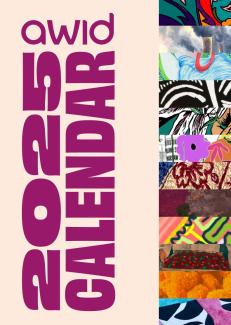
This calendar is a gift to our global feminist community. It is our promise of future connection and movement moments in the year to come. This past year has seen unspeakable injustices. We welcome a new year full of powerful movement spirit, of hopeful solutions and strategies. For a more just world for all.
As you flip through the pages note the diversity of art from our artist members who use their work to amplify and interlink our different movements under the feminist umbrella. Do you see yourself, your movement, your communities in these pages? We encourage you to use this calendar as a practical tool to mark time and space, but also to pencil in occasions to connect with feminists and activists.
This calendar invites us to immerse ourselves in the inspiring world of feminist artistry. Each month, as it gently unfolds, brings forth the vivid artwork of feminist and queer artists from our communities. Their creations are not mere images; they are profound narratives that resonate with the experiences of struggle, triumph, and undying courage that define our collective quest. These visual stories, bursting with color and emotion, serve to bridge distances and weave together our diverse experiences, bringing us closer in our shared missions.
Get it in your preferred language!

هل استطيع تعبئة الاستطلاع خارج KOBO ومشاركتكم/ن الأجوبة عن طريق البريد الالكتروني؟
ما لم تكن هناك مشكلات في إمكانية الوصول و/أو إذا كنت تملأ/ئي الاستبيان بلغات أخرى، فإننا نشجعك بشدة على استخدام KOBO لجمع وتحليل البيانات الموحدة للاستطلاع.
Будет ли у меня возможность поделиться мыслями по вопросам, которые не учтены в опросе?
Да, в конце опроса мы попросим вас поделиться более подробной информацией по важным для вас аспектам, ответив на открытые вопросы.
Como é que os dados recolhidos através do questionário serão divulgados e processados?
Os dados serão processados para fins estatísticos para esclarecer o estado de financiamento dos movimentos feministas globalmente e serão divulgados apenas em forma agregada. A AWID não divulgará informações sobre uma organização específica ou informações que permitam identificar uma organização através da respetiva localização ou características sem o respetivo consentimento comprovado.
حالة التمويل للحركات النسوية ووقائعها تتغير بسرعة. هل هذا الاستطلاع لمرة واحدة؟
كلا. يبني هذا الاستطلاع على المعلومات التي حشدتها جمعية حقوق المرأة في التنمية حول كيفية الحصول على تمويل أكبر وأفضل للحركات النسوية وحركات التغيير الاجتماعي وهذه الدورة الثالثة لاستطلاع "أين التمويل للتنظيمات النسوية". نهدف للقيام بالاستطلاع مرة كل ثلاثة أعوام.
Snippet - WITM Who should - PT
Quem deve realizar este inquérito?
O inquérito destina-se a grupos, organizações e movimentos que trabalham especificamente ou principalmente pelos direitos das mulheres, pessoas LBTQI+ e pela justiça de género, em todos os contextos, em todos os níveis e em todas as regiões. Se este for um dos pilares principais do seu grupo, da sua comunidade, da sua rede ou de qualquer outro tipo de organização, quer esteja registada ou não, seja nova ou já estabelecida, convidamo-lo a participar neste inquérito.

* De momento, não solicitamos respostas de indivídues ou de fundos feministas e de mulheres.
Snippet - CSW69 - Feminist Solidarity Space - EN
Feminist Solidarity Space
✉️ By registration for larger groups. Drop-ins for smaller groups. Register here
📅 Tuesday, March 11, 2025
🕒 12.00-2.00pm and 4.00-6.00pm EST
🏢 Chef's Kitchen Loft with Terrace, 216 East 45th St 13th Floor New York
Organizer: AWID
Snippet - CSW69 - Challenging the Status Quo - EN
Challenging the Status Quo
A Critical Dialogue on Gender Equality and Human Rights
✉️ Online registration available. Register here
📅 Friday, March 21, 2025
🕒 2.30pm EST
🏢 Church Center of the United Nations, 11th Floor. 777 United Nations Plaza, New York, NY 10017
🎙️AWID speaker: Anissa Daboussi, Manager, Advancing Universal Rights and Justice team
Organizer: IWRAW AP, OURs, AWID, SRI
Snippet - WCFM type of funding- EN

Type of funding:
Be it core funding, programmes & projects or rapid response/ emergency grants.
Snippet WITM survey result - EN
DATA SNAPSHOTS
Where is the money for feminist organizing?
1,174 feminist, women's rights & LGBTQI+ organizations
from 129 countries participated in AWID's 2024 survey.
The data reveals the state of resourcing for feminist movements between 2021-2023, amid current major defunding trends in aid and philanthropy.
Our collective power knows no boundaries, but our bank accounts do.
Snippet - COP30 - The People's Summit
The People's Summit
The climate summit by movements, for movements.
📅 November 12 - November 16, 2025
📍 Universidade Federal do Pará, Belém
Snippet - COP30 - Ecozine card - EN
📰 Feminist Transnational Solidarity: an Antidote to Ecocide
This collaborative zine originated from a series of sharing circles that brought together feminists from around the world throughout 2022. The purpose was to exchange ideas and mutually learn how communities are responding to the climate crisis in various local contexts.
Snippet 8 - What's happening at HRC61 Intro
- Independent Expert on foreign debt
Report on International assistance and cooperation - Special Rapporteur on food
Report on land and the right to food - Special Rapporteur on persons with disabilities
Report on equal participation of persons with disabilities in political life - Special Rapporteur on privacy
International collection of personal data
Protection of the Family
The Issue
Over the past few years, a troubling new trend at the international human rights level is being observed, where discourses on ‘protecting the family’ are being employed to defend violations committed against family members, to bolster and justify impunity, and to restrict equal rights within and to family life.
The campaign to "Protect the Family" is driven by ultra-conservative efforts to impose "traditional" and patriarchal interpretations of the family, and to move rights out of the hands of family members and into the institution of ‘the family’.
“Protection of the Family” efforts stem from:
- rising traditionalism,
- rising cultural, social and religious conservatism and
- sentiment hostile to women’s human rights, sexual rights, child rights and the rights of persons with non-normative gender identities and sexual orientations.
Since 2014, a group of states have been operating as a bloc in human rights spaces under the name “Group of Friends of the Family”, and resolutions on “Protection of the Family” have been successfully passed every year since 2014.
This agenda has spread beyond the Human Rights Council. We have seen regressive language on “the family” being introduced at the Commission on the Status of Women, and attempts made to introduce it in negotiations on the Sustainable Development Goals.
Our Approach
AWID works with partners and allies to jointly resist “Protection of the Family” and other regressive agendas, and to uphold the universality of human rights.
In response to the increased influence of regressive actors in human rights spaces, AWID joined allies to form the Observatory on the Universality of Rights (OURs). OURs is a collaborative project that monitors, analyzes, and shares information on anti-rights initiatives like “Protection of the Family”.
Rights at Risk, the first OURs report, charts a map of the actors making up the global anti-rights lobby, identifies their key discourses and strategies, and the effect they are having on our human rights.
The report outlines “Protection of the Family” as an agenda that has fostered collaboration across a broad range of regressive actors at the UN. It describes it as: “a strategic framework that houses “multiple patriarchal and anti-rights positions, where the framework, in turn, aims to justify and institutionalize these positions.”
Related Content
The Feminist Realities Magazine
The Feminist Realities Magazine
We bring you an inspiring curated collection of powerful stories and images of transformation and resistance created by feminist activists, writers and artists from all over the world.