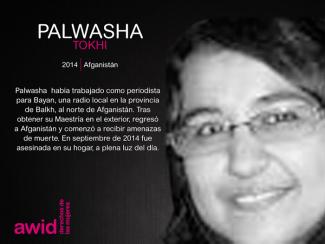
Palwasha Tokhi

Au cours des dernières années, nous avons observé une nouvelle tendance inquiétante dans les espaces internationaux consacrés aux droits humains. Les discours axés sur « la protection de la famille » sont en effet utilisés pour défendre des violations des droits de membres de la famille, pour renforcer et justifier l’impunité des auteurs de ces violations et pour restreindre l’égalité des droits au niveau de la vie familiale.
La campagne en faveur de la « Protection de la famille » est motivée par une volonté conservatrice d’imposer des conceptions « traditionnelles » et patriarcales de la famille et de priver les membres de la famille de leurs droits pour les transférer à « l’institution familiale ».
Depuis 2014, un groupe d’Etats travaille de front dans les espaces dédiés aux droits humains sous le nom de « Group of Friends of the Family » (Groupe des ami-e-s de la famille) ; des résolutions sur la « Protection de la famille » ont été adoptées chaque année depuis 2014.
Ce programme s’est propagé au-delà du Conseil des droits humains. Nous avons observé l’introduction d’un discours régressif autour de la « famille » à la Commission sur la condition de la femme, ainsi que des tentatives d’introduction dans les négociations sur les Objectifs de développement durable.
L’AWID travaille avec des partenaires et des allié-e-s pour s’opposer ensemble à la « Protection de la famille » et à d’autres programmes régressifs et défendre l’universalité des droits humains.
En réponse à l’influence croissante d’acteurs régressifs au sein des espaces dédiés aux droits humains, l’AWID a rejoint des allié-e-s afin de créer l’Observatoire sur l'Universalité des droits (OURs) (site en anglais). L’OURs est un projet de collaboration qui surveille, analyse et diffuse les informations concernant les initiatives anti-droits telles que la « Protection de la famille ».
Le premier rapport de l’OURs, Nos droits en danger, trace une cartographie des acteurs et actrices qui constituent le lobby mondial anti-droits et identifie leur réthorique et stratégies clés ainsi que leur impact sur les droits humains.
Le rapport précise que le programme de « Protection de la famille » a développé une collaboration entre un large éventail d’acteurs régressifs aux Nations Unies, qu’il décrit comme « un cadre stratégique abritant des positions anti-droits et patriarcales multiples, où le cadre vise entre autres à légitimer et institutionnaliser ces positions. »
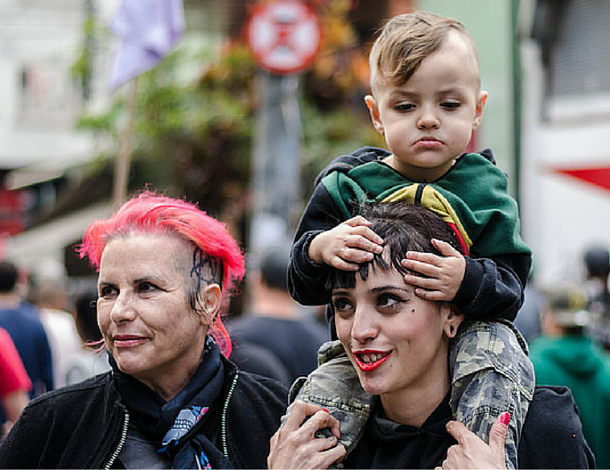
Most Member States of the European Union have laws and practices that either criminalize or control sex workers in ways unacceptable to them. Criminalization of sex workers and/or their clients only contributes to increase the vulnerability of sex workers, who are already facing stigma, discrimination and exclusion from society on a daily basis. In Spain for example, the government is currently trying to pass an Organic Law for the Abolition of Prostitution, which will result in more clandestiny and violence. Let’s dive into the stories of sex workers and union organizers fighting to decriminilaze sex work and advance their labor rights.
1 |
Fornecer a membres da AWID, parceires do movimento e financiadores uma análise atualizada, robusta, baseada em fatos e orientada para a ação das realidades do financiamento de movimentos feministas e do estado atual do ecossistema do financiamento feminista. |
2 |
Identificar e demonstrar oportunidades para transferir mais recursos de maior qualidade para a organização feminista, expor soluções falsas e interromper tendências que fazem com que o financiamento não seja bem-sucedido e/ou se mova contra a justiça de género e objetivos feministas interseccionais. |
3 |
Articular visões, propostas e objetivos feministas para a justiça no financiamento. |
We believe in a full application of the principle of rights including those enshrined in international laws and affirm the belief that all human rights are interrelated, interdependent and indivisible. We are committed to working towards the eradication of all discriminations based on gender, sexuality, religion, age, ability, ethnicity, race, nationality, class or other factors.


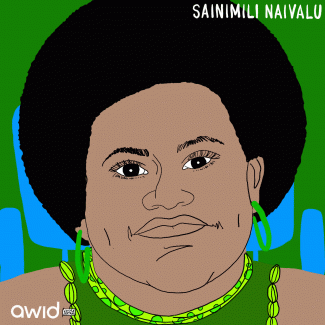
“I’ve witnessed discrimination on the streets, being teased on the streets and verbally abused on the streets. I have also made numerous friends and have met a lot of people. There may be dangers out there but I am a survivor and this is where I will be for now.”
- Sainimili Naivalu
She demanded policy makers and stakeholders provide disability friendly policies and services such as the construction of ramps in towns and cities to increase accessibility. Physical barriers were not the only ones she strived to change. From her own experience, she knew that more difficult changes need to take place in social and economic spheres. Many of the challenges disabled people face are rooted in attitudes that carry discrimination and stigma.
A survivor and a fighter, Sainimili contributed to co-creating feminist realities that foster inclusion and shift attitudes towards disabled people. As a member of the Spinal Injury Association of Fiji (SIA) and through Pacific Disability Forum’s Pacific Enable project she attended the International Labour Organisation “Start Your Business” training in Suva, enabling her to transform her ideas into her own business. She was an entrepreneur at the Suva Market Stall 7, offering manicure services, as well as running SIA’s women’s market stall selling handicrafts, sulus and artifacts. Sainimili’s plan was to expand her business and become a major employer of disabled people.
In addition to her activism, she was also a table tennis medalist and youth champion.
A vivacious personality, Sainimili was one of a kind. You would always know that Sainimili is in a room because her laughter and her stories would be the first thing that you would notice.
- Michelle Reddy
Sainmili passed away in 2019.
Êtes-vous à la recherche d'un emploi? L'un des avantages de rejoindre la Communauté de l'AWID est d'avoir accès à notre tableau d'offres d'emploi organisé par la communauté. Vous aurez l'occasion d'explorer de nouvelles opportunités et vous aurez également la possibilité de partager des postes vacants et des appels à propositions avec tous les membres.
Participé en una actividad solo para afiliadxs, y lo que me conmovió en particular fue ver cómo había espacio para que todas compartieran, y que no había ningún juicio al respecto. Toda la sesión fue enérgica y vibrante.- Kirthi Jayakumar, fundadora de The Gender Security Project, India
El creciente poder de los actores anti-derechos no se está desarrollando en un vacío. Entender el auge del ultranacionalismo, del poder corporativo irrestricto, del incremento de la represión y de la disminución del espacio cívico resulta clave para contextualizar las amenazas anti-derechos que enfrentamos actualmente.
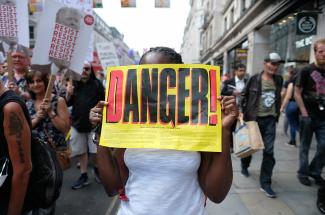
Hoy en día, una cantidad considerablemente mayor a la mitad de la población mundial está gobernada por líderes de extrema derecha. En este escenario, lxs defensorxs de derechos humanos y lxs feministas están trabajando arduamente para «mantenerse firmes» y proteger el multilateralismo y el sistema internacional de derechos humanos. También enfrentan el riesgo de que su compromiso acarree represalias violentas. Al mismo tiempo, estas instituciones están cada vez más sujetas a los intereses del sector privado. Las grandes empresas (en particular, las corporaciones transnacionales) están ocupando asientos en la mesa de negociación y posiciones de liderazgo en una gran cantidad de instituciones multilaterales, incluida la ONU. Este nexo de ultranacionalismo, espacio cívico restringido y captura corporativa está teniendo un tremendo impacto sobre la posibilidad de que, alguna vez, logremos obtener derechos humanos para todxs.
Conocida como la Drag Queen de color de Nueva York, Sylvia fue feroz e incansable en su voluntad por cambiar las cosas, y en su defensa de quienes quedaron marginadxs y excluidxs cuando el movimiento por los "derechos de la comunidad gay" se volvió predominante en los Estados Unidos, a principios de los 70.
En 1973, durante un conocido discurso por el día de Christopher Street, Sylvia gritó en medio de la multitud de integrantes de la comunidad LGBT:
"Todos ustedes me dicen, anda y esconde la cola entre las patas.
No voy a seguir aguantando esta mierda.
Me han golpeado.
Me han roto la nariz.
Me han metido en la cárcel.
He perdido mi trabajo.
He perdido mi departamento
por la liberación gay, ¿y todos ustedes me tratan así?
¿Qué carajo les pasa a todos ustedes?
¡Piensen en eso!"
En 1969, a la edad de 17 años, Sylvia participó en los emblemáticos disturbios de Stonewall, al lanzar, presuntamente, el segundo cóctel molotov para protestar por la redada policial en este bar gay de Manhattan. Siguió siendo una figura central en los levantamientos posteriores, organizando mítines y luchando contra la brutalidad policial.
En 1970, Sylvia trabajó junto con Marsha P. Johnson para establecer Street Transvestite Action Revolutionaries [Acción Travesti Callejera Revolucionaria] (S.T.A.R., por sus siglas en inglés), un colectivo político y una organización que establecería proyectos de apoyo mutuo para las personas trans que vivían en la calle, aquellxs que luchaban contra la drogadicción, las que estaban encarceladas y, en particular, para las personas trans de color que vivían en la pobreza.
Desafiante de las etiquetas, Silvia vivió la vida de una manera que retaba a las personas del movimiento de liberación gay a pensar de manera diferente. Ella dijo:
"Me fui de casa a los 10 años, en 1961. Hice la calle en la 42. El inicio de los años 60 no era un buen momento para lxs drag queens, los chicos afeminados o los chicos que usaban maquillaje como nosotrxs. En ese entonces nos golpeaba la policía, y todo el mundo. Yo no salí realmente como drag queen hasta finales de los 60, cuando se arrestaba a lxs drag queens, qué degradación había. Recuerdo que la primera vez que me arrestaron, ni siquiera estaba vestida totalmente en drag. Estaba caminando y los policías me arrebataron de la calle. La gente ahora quiere llamarme lesbiana porque estoy con Julia, y yo digo: "No. Soy sólo yo. No soy lesbiana". Estoy cansada de que me etiqueten. Ni siquiera me gusta la etiqueta transgénero. Estoy cansada de vivir con etiquetas. Sólo quiero ser quien soy. Soy Sylvia Rivera.
A través de su activismo y su coraje, Sylvia ofreció un espejo que reflejaba todo lo que estaba mal en la sociedad, pero también la posibilidad de transformación. Sylvia nació en 1951 y falleció en 2002.
Linda Porn est une autre héroïne de l'organisation syndicale féministe et de l'activisme des travailleur·euses du sexe au niveau national (en Espagne) et transnational.
Originaire du Mexique, elle vit en Espagne depuis les années 2000. Elle est travailleuse du sexe, militante, mère célibataire et artiste multidisciplinaire.
Puisant dans ces différentes identités, elle utilise la performance, l'art vidéo et le théâtre pour rendre visibles les luttes aux intersections du transféminisme, du travail du sexe, de la migration, du colonialisme et de la maternité. Elle combine l'art et le travail du sexe tout en prenant soin de sa fille en tant que mère célibataire.
Linda appartient également à des groupes de travailleur·euses du sexe qui luttent pour leurs droits, comme le syndicat OTRAS et CATS Murcia. Elle a également cofondé le groupe 'Madrecitas' - qui rend visible et dénonce la violence institutionnelle raciste contre les familles migrantes. Violence à laquelle elle et sa fille ont été soumises en tant que travailleuse du sexe et mère célibataire migrante.
Ne ratez pas son travail artistique ici!
Le Forum de l’AWID s’articulera autour de 6 sujets interconnectés. Ces ‘points d’ancrage’ sont centrés sur les réalités féministes.
Alors que les fondamentalismes, les fascismes et autres systèmes d’oppression se métamorphosent et trouvent de nouvelles tactiques et stratégies pour consolider leur pouvoir et influence, les mouvements féministes persévèrent et célèbrent leurs victoires nationales, régionales et internationales.
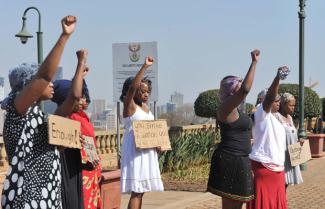
La [MB1] reconnaissance en 2019 par le Conseil des droits de l’Homme du droit à l’intégrité et à l’autonomie corporelles, par exemple, a marqué une étape cruciale. Des résolutions du Conseil sur la discrimination envers les femmes et les filles admettent cependant un recul lié à des groupes de pression rétrogrades, des conceptions idéologiques ou un détournement de la culture ou la religion pour s’opposer à l’égalité de leurs droits. Des avancées féministes sont aussi notées dans le travail des Procédures spéciales, qui soulignent notamment l’obligation des États de contrer les doctrines de l’idéologie du genre, rappellent à l’ordre les antidroits qui détournent des références à la « culture », et signalent que les convictions religieuses ne peuvent pas servir à justifier la violence ou la discrimination.
Cynthia Cockburn était une sociologue, écrivaine, universitaire, photographe et militante pour la paix féministe.
Elle a étudié les aspects genrés de la violence et du conflit et fait d’importantes contributions au mouvement pacifiste en explorant les thèmes de la masculinité et de la violence, ainsi que par son activisme local et international.
Ayant introduit une analyse féministe aux questions de militarisation et de guerre, Cynthia figurait parmi les universitaires dont les écrits et analyses illustraient la manière dont la violence basée sur le genre joue un rôle essentiel dans la perpétuation de la guerre. Travaillant en étroite collaboration avec des activistes pacifistes dans des pays en conflit, ses conclusions portaient sur des contextes aussi divers que l’Irlande du Nord, la Bosnie-Herzégovine, Israël et la Palestine, la Corée du Sud, le Japon, l’Espagne et le Royaume-Uni. Sa recherche et ses écrits universitaires ont permis d’éclairer le fait que la violence soit vécue selon un continuum de temps et d’échelle, et perçue très différemment lorsque l’on y applique le prisme du genre.
Elle disait que « [l]e genre nous aide à voir la continuité, la connexion entre les évènements de violence ».
Cynthia a pu mettre ses recherches en pratique grâce à son activisme local et international auprès de mouvements pour la démilitarisation, le désarmement et la paix. Elle a aidé à lancer le camp de femmes pour la paix de Greenham Common, qui prônait le désarmement nucléaire universel en Grande-Bretagne, ainsi que participé à la mise en place de la branche londonienne des Women in Black. Au fil des ans, Cynthia a organisé et participé à des veillées hebdomadaires locales et à la chorale politique Raised Voices, interprétant et écrivant certaines des paroles des chansons. Elle fut également active au sein du groupe Women’s International League for Peace and Freedom (WILPF), du Forum des socialistes féministes européennes et de Women Against Fundamentalism.
« Cynthia émettait une lumière féministe, tissait les communautés féministes entre elles, entonnait des chants de paix, écoutait, écoutait, écoutait, observait les oiseaux – et suspendait le flot de circulation. Je lui serai toujours reconnaissante et redevable, l’« autre » Cynthia. » – Cynthia Enloe
Cynthia est née en juillet 1934 et s’est éteinte en septembre 2019, à l’âge de 85 ans.