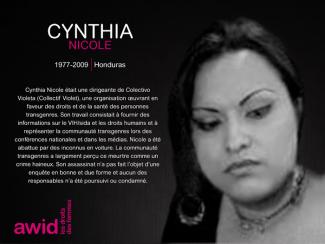
Cynthia Nicole

Les défenseuses des droits humains s’auto-identifient comme des femmes ou des personnes lesbiennes, bisexuelles, transgenres, queer, intersexes (LBT*QI) ou autres qui défendent les droits. Elles sont exposées à des risques et à des menaces de nature genrée à cause du travail qu’elles accomplissent en faveur des droits humains et/ou en conséquence directe de leur identité de genre ou de leur orientation sexuelle.
Les défenseuses des droits humains subissent une violence et une discrimination systématique du fait de leur identité, mais aussi à cause de la lutte indéfectible qu’elles mènent en faveur des droits, de l’égalité et de la justice.
Le programme Défenseuses des droits humains collabore avec des partenaires internationaux et régionaux ainsi qu’avec les membres de l’AWID pour éveiller les consciences à propos de ces risques et menaces, pour plaider en faveur de mesures féministes et holistiques de protection et de sécurité et enfin pour promouvoir activement une culture du souci de soi et du bien-être collectif au sein de nos mouvements.
Les défenseuses des droits humains sont exposées aux mêmes types de risques que toutes les autres personnes qui défendent les droits humains, les communautés et l’environnement. Mais elles se heurtent également à des violences fondées sur le genre et à des risques spécifiques de nature genrée parce qu’elles remettent en cause les normes de genre en vigueur au sein de leur culture et de leur société.
En défendant les droits, les défenseuses des droits humains sont exposées aux risques suivants :
Nous travaillons en collaboration avec des réseaux internationaux et régionaux ainsi qu’avec nos membres pour :
Nous travaillons à la promotion d’une approche holistique de la protection des défenseuses, qui suppose notamment :
Nous souhaitons contribuer à l’avènement d’un monde plus sûr pour les défenseuses des droits humains, leurs familles et leurs communautés. Nous pensons que le fait que les défenseuses œuvrent en faveur des droits et de la justice ne devrait pas leur faire courir de risques ; leur action devrait être appréciée et célébrée.
Promouvoir la collaboration et la coordination entre organisations de défense des droits humains et des droits des femmes au niveau international, et ce dans le but de d’apporter des réponses plus efficaces dans le domaine de la sureté et du bien-être des défenseuses des droits humains ;
Soutenir les réseaux régionaux de défenseur-es et les organisations, parmi lesquels l’Initiative mésoaméricaine des défenseuses des droits humains et la Coalition des défenseuses des droits humains du Moyen-Orient et d’Afrique du Nord, dans leur travail de promotion et de renforcement de l’action collective en faveur de la protection des défenseuses – en mettant en avant l’importance de la création de réseaux de solidarité et de protection, de la promotion du souci de soi ainsi que du plaidoyer et de la mobilisation en faveur de la sécurité des défenseuses ;
Faire en sorte que les défenseur-e-s des droits humains et les risques qui les menacent soient plus visibles et mieux reconnus, en rassemblant des informations sur les agressions dont elles sont victimes et en produisant et diffusant des documents sur leurs luttes, leurs stratégies et les difficultés qu’elles rencontrent ;
Organiser des réponses urgentes fondées sur la solidarité internationale dès que des défenseuses des droits humains sont en danger, par le biais de nos réseaux internationaux et régionaux mais aussi grâce à nos membres.
Mientras el capitalismo heteropatriarcal continúa forzándonos al consumismo y el acatamiento, observamos que nuestras luchas están siendo compartimentadas y separadas por fronteras tanto físicas como virtuales.
Y con los desafíos adicionales presentados por una pandemia global que todavía deben ser superados, esta estrategia de «divide y vencerás» ha sido favorable para la proliferación de la explotación en muchas áreas.
No obstante esto, desde el 1° hasta el 30 de septiembre de 2021, un festival para movimientos feministas! de AWID nos llevó a un viaje sobre lo que significa encarnar nuestras realidades en espacios virtuales. En el Festival se reunieron activistas feministas de todo el mundo, no solo para compartir experiencias de libertades duramente conquistadas, de resistencias y de solidaridades más allá de las fronteras, sino para articular lo que podría ser una forma transnacional de compañerismo.
Esta solidaridad tiene el potencial de desafiar las fronteras, tejiendo una visión del futuro que es transformadora, porque es abolicionista [del complejo industrial carcelario] y anticapitalista. A lo largo de un mes, a través de las infraestructuras digitales que ocupamos con nuestra cuiridad / queeridad, nuestra resistencia y nuestros imaginarios, el Festival nos mostró una forma de desviarnos de los sistemas que nos hacen cómplices de la opresión de otras personas y de nosotrxs mismxs.
Si bien Audre Lorde nos enseñó que las herramientas del amo nunca desarmarán la casa del amo, Sara Ahmed nos demostró que podemos utilizarlas en forma indebida. Dado que teníamos que dar espacio a la asamblea, y a pesar de todas las otras demandas sobre nuestro tiempo, fue posible imaginar una disrupción de la realidad del capitalismo heteropatriarcal.
Ahora bien, si entendemos la asamblea como una forma de placer, entonces, se hace posible establecer el vínculo entre el placer transgresor y la resistencia transnacional/transdigital: entre las clases de placer que desafían las fronteras por un lado, y la cuiridad / queeridad, lo camp, las luchas por la tierra y los movimientos indigenistas, el anticapitalismo y la organización política anticolonial por el otro.
Esta edición intentó captar un sentido de cómo el ejercicio de la asamblea en el Festival adoptó múltiples formas e imaginaciones. Además de contar con las colaboraciones directas de algunxs de sus conferencistas y soñadorxs, trajimos a una plétora de otras voces del Sur global para que conversaran sobre muchos de sus temas y sujetxs. Lo que sigue es una muestra de algunos de los paneles del Festival que más nos inspiraron.
Nuestros pensamientos acompañan a las numerosas personas de todo el mundo que se ven más afectadas por las repercusiones de la pandemia global del COVID-19, en especial, en las comunidades marginalizadas que han sido oprimidas históricamente.
Esta es una invitación destinada a artistas y activistas creativxs que quieran reunirse en un espacio virtual para conectarse, construir comunidad y apoyarse mutuamente en estos tiempos difíciles. Con este objetivo, hemos creado una comunidad de Slack nueva, para compartir en forma segura pensamientos, aprendizajes, trucos de vida, recursos, consejos, temores y ansiedades, recordatorios esperanzadores y alegres, y para charlar en general sobre cómo estamos.
Después de completar el formulario, le enviaremos una invitación personal a la comunidad.

Para quienes Slack es una herramienta nueva, y después de que se inscriban, les daremos sesiones y materiales de orientación.
Dado que aquí estamos trabajando en tres idiomas (inglés, español y francés), te pedimos que escribas en el idioma que te resulte más cómodo y utilices herramientas de traducción en línea (Google Translate u otras) para participar de las conversaciones.
La creación conjunta de nuestras realidades feministas comienza con nosotrxs mismxs y con cómo nos tratamos mutuamente. Nos esforzamos por crear y proteger espacios seguros para nuestras comunidades, tanto en línea como en forma presencial. También creemos que los espacios seguros y amigables son de propiedad y creación conjuntas. Esperamos que nuestrxs integrantes actúen de manera ética, responsable y consistente con los valores de AWID, y asuman la responsabilidad colectiva de garantizar una atmósfera de respeto y solidaridad recíprocos.
Como parte de nuestras conversaciones en curso, en Slack ofreceremos disparadores semanales, para facilitar el diálogo e inspirar los procesos artísticos en forma amable. Este puede ser un proceso introspectivo, pero para aprovechar al máximo esta comunidad, lxs invitamos a interactuar con lxs demás integrantes y compartir ideas, como parte de nuestras discusiones . La intención es invitar a la gente a responder de manera libre y gradual, escribiendo o produciendo arte como mejor lo sientan.
Esperamos mantener conversaciones relevantes y oportunas con ustedes, y, por lo tanto, apreciaremos tus sugerencias y comentarios. En general, los temas estarán centrados en las experiencias y perspectivas de artistas, escritorxs y creadorxs,que generarán un espacio donde lxs integrantes puedan describir e imaginar el clima global actual (y el que vendrá) a través de la lente de las realidades feministas.

Создать ориентированную на феминистские реалии доказательную базу движения денег их получателей
Alexandra es una feminista anglo-colombiana con más de 20 años de experiencia en programas locales, nacionales e internacionales sobre VIH y salud y derechos sexuales y reproductivos. Posee amplia experiencia en movilización de recursos y en relaciones con los donantes con fundaciones filantrópicas privadas y organismos multilaterales en nombre de ONG internacionales, nacionales y locales, sobre todo en América Latina y el Caribe. Antes de AWID, Alexandra trabajó en la Fundación Si Mujer, que presta servicios de aborto feminista, y como educadora en Colombia, RedTraSex y la International HIV/AIDS Alliance.
Es Licenciada en Relaciones Internacionales y Estudios para el Desarrollo de la Universidad de Sussex y posee un Máster en Salud Pública de la Escuela de Higiene y Medicina Tropical de Londres. En los pocos momentos en que no está trabajando o maternando, adora practicar natación, comer y, recientemente, comenzó a jugar al Zelda: Breath of the Wild con su hijo.
.
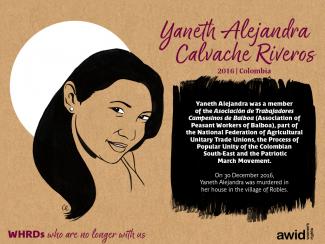
avec Nazik Abylgaziva, Amaranta Gomez Regalado, Cindy Weisner et Lucineia Freitas.
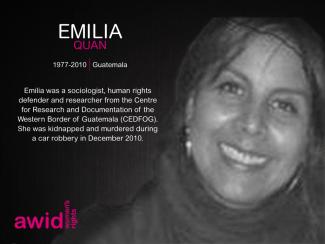
par Gabrielle Tesfaye
Quand j’ai créé mon court-métrage d’animation The Water Will Carry Us Home, mon esprit était branché sur un monde magique de résilience téméraire et de sirènes ancestrales transformant leurs cicatrices/plaies les plus profondes en une nouvelle vie. Le film se déroulant à l’époque du commerce transatlantique de l’esclavage, j’ai eu envie de montrer l’histoire de l’esclavage américain, telle qu’elle n’a jamais été racontée précédemment. Je voulais offrir à mes ancêtres la commémoration qu’iels n’ont jamais reçue, et j’avais comme motivation de m’approprier l’histoire qui continue à nous dépeindre comme des victimes désemparées. Je voulais simplement raconter la vérité. En me réappropriant et en réimaginant notre histoire et notre point de vue, je guérissais en même temps les traumatismes générationnels dont nous souffrons aujourd’hui. C’est cet important travail que font de très nombreuses femmes du continent africain et de la diaspora africaine, donnant vie à nos Réalités féministes collectives.
J’ai mené des recherches très systématiques pour la réalisation de ce film, et en consultant ce qui avait été écrit, j’ai vu ce qui ne l’avait pas été. À plusieurs reprises, j’ai eu l’impression d’être confrontée à un mur en essayant de trouver quelque chose qui n’y était pas, et c’est dans ces lacunes que j’ai pris conscience que les conteuses d’aujourd’hui comblent les vides. Les histoires les plus utiles se cachent dans l’art contemporain, dans les films et dans le folklore de la diaspora africaine.
The Water Will Carry Us Home s’est ainsi déplacé dans le monde entier, dans les cœurs de la diaspora. Le film m’a également menée ici, en tant que commissaire des projections de films africains et de la diaspora pour l’initiative de cocréation de Réalités féministes de l’AWID. En sélectionnant ces films, j’étais à la recherche d’histoires totalement uniques, crues et représentatives du pouvoir féministe en action. Avec les trois courts-métrages et le long, ces films révèlent des histoires parmi des communautés d’Afrique et de la diaspora, notamment en Éthiopie, en Ouganda, en République démocratique du Congo, en Afrique du Sud et au Kenya. Ces films présentent les femmes africaines comme elles sont réellement : autogouvernées et autonomisées par l’objectif sans filtre de leur travail.
The Water Will Carry Us Home carried itself around the world into the hearts of the Diaspora. It also led me here, as the curator of the African and Diaspora film screenings of AWID’s Co-Creating Feminist Realities initiative. Whilst curating this collection of films, I looked for stories that were completely unique, raw and representational of feminist power in action. Consisting of three shorts and one feature, they reveal stories through many communities in Africa and the diaspora, including Ethiopia, Uganda, The Democratic Republic of Congo, South Africa and Kenya. These films reposition African women as what they truly are- self governing and empowered through the unfiltered lens of their work.
« Un récit incroyablement beau, attentif et finement observateur de la connexion entre l'Afrique et sa diaspora formée par la traite transatlantique d’esclaves. L'univers visuel qu'il crée est tout simplement magnifique... un écho de la fusion des traditions spirituelles et du temps non linéaire qui montre comment nous vivons encore les moments du passé qui ont formé de « nouveaux » mondes de négritudes pour la diaspora. »
- Jessica Horn, stratège féministe panafricain·e, écrivain·e et cocréateur·rice de The temple of her skin (Le temple de sa peau)
«...vraiment unique, brut et représentatif du pouvoir féministe en action. »
- Collectif Hers is Ours (La sienne est nôtre), organisateur du Festival Outsider Moving Art & Film
Notre documentaire Women Hold Up the Sky, créé par la WoMin African Alliance, raconte l’histoire de femmes activistes en Ouganda et en République démocratique du Congo qui réclament activement leurs droits fonciers menacés localement par les mines et autres activités d’extraction. Le film expose certes la corruption liée à l’extractivisme, mais partage enfin ce qui fait tant défaut sur les écrans : la manière dont les femmes africaines de la base s’organisent activement, créent des stratégies et mènent des analyses au sein de leur communauté, pour créer des alternatives axées sur les femmes et menées par la communauté. Margaret Mapondera, de WoMin, l’explique de manière très poétique : ce sont les « gardiennes des terres, des forêts, des eaux, des rivières et des territoires; les façons selon lesquelles les femmes détiennent et transmettent leurs histoires/les histoires des femmes de notre passé et de nos avenirs; les manières à la fois puissantes et transformatrices d’être femme s’incarnent dans leurs relations entre elles, avec l’environnement et avec elles-mêmes ».
« Une œuvre cinématographique rafraîchissante et indispensable qui met en évidence les nombreuses façons dont les femmes africaines se rassemblent pour créer des alternatives dirigées par les femmes et axées sur la communauté… Le combat est engagé et les femmes en détiennent la clé. »
- Collectif Hers is Ours (La sienne est nôtre), organisateur du Festival Outsider Moving Art & Film
Pumzi, de la réalisatrice Wanuri Kahiu acclamée par la critique, établit un pont entre l’Afrique et la science-fiction en se centrant sur le climat et l’environnementalisme. Pumzi imagine un monde futuriste où l’humanité aura été contrainte de s’installer sur une autre planète. Si Pumzi semble afro-futuriste et nouveau pour l’Afrique en surface, Kahiu révèle que la science-fiction et le fantastique ont toujours existé dans les récits africains, mais qu’ils n’ont simplement jamais été reconnus. Kahiu crée un monde où les femmes cherchent les vérités et sont les héroïnes qui nous guident dans un monde nouveau, soit à l’opposé des images qui placent les femmes en tant que victimes de la guerre et de la destruction. À l’inverse, Pumzi rédige le récit de femmes africaines qui se sauvent elles-mêmes et résolvent leurs propres problèmes, qui ne s’arrêtent à aucun prix dans la poursuite des visions énigmatiques qu’elles insufflent dans leurs rêves.
« Un film de science-fiction africain pionnier, situant les femmes comme scribes du futur et ouvrant nos visions vers d'autres mondes, d'autres univers que nous pourrions occuper en tant qu'Africain·e·s - un exercice toujours important à réaliser lorsqu’on envisage les modes de sortie de crises actuelles. »
- Jessica Horn, stratège féministe panafricain·e, écrivain·e et cocréateur·rice de The temple of her skin (Le temple de sa peau)
Le seul long métrage du programme, Finding Sally, se déroule dans l’Éthiopie des années 1970, à l’époque de la Terreur rouge. Il documente l’étonnante histoire de la tante de la réalisatrice Tamara Mariam Dawit, l’activiste Sally Dawit. Le film nous raconte l’incroyable aventure de Sally, jeune et courageuse activiste qui évolue dans les années les plus violentes de l’histoire de l’Éthiopie. L’histoire de Sally révèle non seulement la gravité de l’époque, mais ses réflexions sur sa propre évolution en tant que jeune femme. Dawit a intentionnellement fait abstraction des voix d’hommes dans son film, pour se centrer sur le point de vue et le regard des femmes. L’histoire de l’Éthiopie a si souvent, et si longtemps, été racontée par des hommes que la réalisation de cette puissante histoire protège la réalité en rendant honneur au point de vue féministe. Dawit explique que « [l]es femmes pendant la révolution et la guerre ne sont souvent mentionnées qu’en tant qu’épouse de quelqu’un, ou que cuisinière ou secrétaire. Je voulais observer et montrer l’activisme autour de la révolution, uniquement à travers les mémoires et les voix des femmes ». Finding Sally démontre la réappropriation de l’histoire que réclament les cinéastes actuelles. C’est un embrasement de pouvoir féministe et de nos réalités connectées, à travers l’histoire.
« La responsabilité nous incombe, de nous souvenir de ces femmes qui nous ont précédé·e·s et de leur brillant travail, pour ne pas être oubliées comme les milliers de femmes qui l’ont déjà été en menant le bon combat. Sally est une sacrée femme, pourvu qu’elle ne soit jamais oubliée. »
- Collectif Hers is Ours (La sienne est nôtre), organisateur du Festival Outsider Moving Art & Film
Inscrivez-vous ici pour regarder ce film du 18 au 22 juin
Ces films constituent maintenant une partie importante de ma psyché. Ils me poussent à continuer à créer des alternatives puissantes vers la justice depuis l’intérieur. Ils affirment que je suis une femme dans un monde de femmes, tenant les cieux à bout de bras et construisant activement des Réalités féministes indestructibles. Ces films sont davantage que des histoires d’Africaines. Tout le monde peut s’y référer, ils sont source d’inspiration et donnent l’exemple de Réalités féministes pour nous toustes dans le monde entier.
Facebook: @AWIDWomensRights
Instagram: @awidwomensrights
Twitter ENG: @awid
Twitter ES: @awid_es
Twitter FR: @awid_fr
LinkedIn: Association for Women's Rights in Development (AWID)
Os movimentos feministas, de direitos das mulheres, de justiça de género, de LBTQI+ e de aliados em todo do mundo encontram-se num momento crítico, e enfrentam uma forte retaliação contra direitos e liberdades conquistados anteriormente. Os últimos anos trouxeram o crescimento rápido do autoritarismo, a violenta repressão da sociedade civil e a criminalização dos defensores dos direitos humanos das mulheres e de pessoas de género diverso, o aumento da guerra e do conflito em várias partes do nosso mundo, a perpetuação contínua de injustiças económicas e crises de saúde, da ecologia e do clima interligadas.
Jemutai es una apasionada amante de las plantas que encuentra inspiración en el mundo natural y su intrincada red de interconexiones. Esta fascinación con las interrelaciones del universo se refleja en su abordaje del trabajo, la construcción de comunidad, el cuidado y el apoyo. Cree en la vibrante presencia de sus ancestres dentro de sí misme, y vive para experimentar, recordar, sostener, apreciar y celebrar sus luchas, triunfos y valores.
Como activista queer, interseccional, feminista y por los derechos humanos, Jemutai ha dedicado su carrera a abogar por la equidad y la inclusividad. Es une apasionade del desarrollo organizacional, con formación en otorgamiento de subvenciones y administración, y ahora está dedicade a crear experiencias de impacto para encuentros y a brindar liderazgo y apoyo operacionales, garantizando que los espacios sean inclusivos, seguros y organizados con precisión y cuidado.
Jemutai también es une firme creyente en la filosofía de Ubuntu: la idea de que «yo soy porque nosotres somos». Esta creencia en nuestra humanidad compartida y en nuestra mutua interdependencia configura su enfoque colaborativo y su compromiso con la promoción de un ambiente inclusivo y que fomenta el apoyo para todes y, en especial, para gente silenciada y marginada.
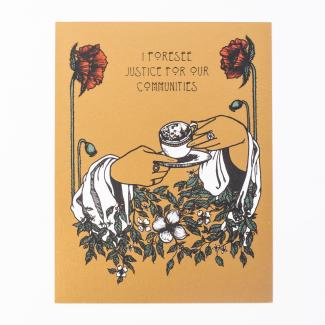
Tasseography is the study of coffee grounds and/or tea leaves for the act of divination. It is a practice that has been passed down through the women on my Armenian side of the family and was taught to me by my mother, she from her mother, and so on. As I would watch my Nana read the coffee grounds from the Armenian coffee prepared for family and friends, I would notice how often times she would see what she would want to say. These prints say some of the things I want to see in the world; I hope you do too.
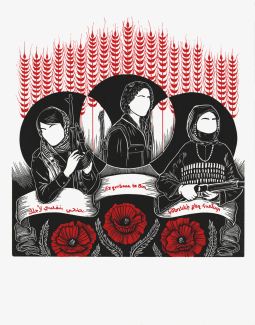
This print celebrates the resilience, sacrifice and strength of SWANA freedom fighters throughout history and the solidarity that exists. It was originally inspired by an article I read about an exhibition held in Tatvan, a district of Bitlis that was highlighting the Armenian presence in the region. My ancestors are from Bitlis, now within the borders of modern day Turkey.

Tasseography (the study of reading coffee grounds) is a cultural practice that Armenian women have used for hundreds of years to speak among and to each other, a coded language to open up conversations, to build inter-relatedness and weave connections.
![]Ali Chavez Leeds portrait](/sites/default/files/styles/max_325x325/public/2021-10/portrait.jpeg?itok=0yU3PqLe)
(Доступно на английском языке)
Nos membres forment un réseau dynamique de personnes dans le monde entier. Ce sont des chercheur-euse-s, des universitaires, étudiant-e-s, éducateur-trice-s, militant-e-s, femmes et hommes d’affaires, des responsables politiques, des praticien-ne-s du développement, des bailleurs de fonds. Nos membres, de tous âges, font de l’AWID une association féministe mondiale unique.
Nous proposons divers types d’adhésions en fonction du niveau de revenus et selon que vous êtes une personne ou une organisation. À l’heure actuelle, nous comptons plus de 5 000 membres, individuel-lle-s et institutionel-lle-s, issu-e-s de 164 pays.
Nous collaborons aux plaidoyers sur des problématiques spécifiques ; nos membres votent à l’élection des membres de notre conseil d’administration et peuvent également participer à nos actions prioritaires par le truchement de webinaires, d’enquêtes, d’actions urgentes, pour ne citer que quelques exemples.
Nos membres institutionnel-le-s représentent des organisations qui souhaitent faire progresser la justice de genre et les droits humains des femmes. Il s’agit d’organisations de droits des femmes, de l’échelle locale à la scène mondiale, de réseaux communautaires, de grandes institutions internationales, de ministères gouvernementaux, de programmes universitaires, et bien plus encore. Quelque 63 % de nos membres proviennent des pays du Sud et 38 % ont moins de 30 ans.