
Activisme des jeunes féministes
S'organiser de manière créative face à des menaces croissantes
Les jeunes activistes féministes jouent un rôle crucial au sein des organisations et des mouvements pour les droits des femmes à travers le monde. Ce sont elles qui soulèvent les nouveaux problèmes auxquels les féministes sont confrontées aujourd'hui. Leur force, leur créativité et leur adaptabilité sont vitales pour assurer la viabilité des organisations féministes.
Pourtant, elles sont confrontées à toute une série d’obstacles particuliers, notamment l'accès limité au financement et au soutien, le manque de possibilités de renforcement des capacités et une augmentation considérable des agressions sur les jeunes défenseuses des droits humains. Ces obstacles entraînent un manque de visibilité qui rend leur intégration et leur participation effective au sein des mouvements pour les droits des femmes encore plus difficiles.
Une approche multigénérationnelle
Le Programme d’activisme des jeunes féministes de l'AWID a été mis en place pour veiller à ce que les voix des jeunes femmes soient entendues et représentées dans le discours féministe. Nous voulons faire en sorte que les jeunes féministes aient un meilleur accès à du financement, à des opportunités de renforcer leurs capacités et aux processus internationaux.
En plus de soutenir directement les jeunes féministes, nous travaillons également avec des activistes des droits des femmes de tout âge pour élaborer des modèles et des stratégies d’organisation multigénérationnelles plus efficaces.
Nos actions
Nous souhaitons que les jeunes féministes puissent jouer un rôle actif dans les prises de décisions qui concernent leurs droits. Nos actions incluent :
-
Favoriser la mise en commun et le partage d'informations par la Plateforme de jeunes féministes. Étant donné l'importance des médias en ligne pour le travail des jeunes féministes, notre équipe a lancé la Plateforme de jeunes féministes en mai 2010. Elle a pour objectifs d’échanger des renseignements, de renforcer les capacités des membres par le truchement de webinaires et de discussions en ligne, et d'encourager la consolidation d’une communauté de jeunes féministes.
-
Soutenir la recherche et le renforcement des connaissances sur l'activisme des jeunes féministes, pour accroître la visibilité et l'influence de leur activisme au sein et entre les mouvements pour les droits des femmes et auprès d'autres acteurs-trices clés, tels les donateurs.
-
Faire la promotion de la collaboration multigénérationnelle, en explorant de meilleures façons de travailler ensemble.
-
Inciter les jeunes féministes à s’engager dans les processus internationaux relatifs au programme de développement, notamment ceux des Nations Unies.
-
S’assurer leur collaboration dans tous les domaines prioritaires de l'AWID, y compris le Forum, pour faire en sorte que leurs contributions, leurs perspectives, leurs besoins et leur activisme se traduisent dans les débats, les politiques et les programmes qui les concernent.
Contenu lié
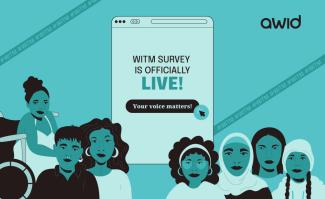
Quel est l’objet de l’enquête WITM?
Le principal objectif de l’enquête WITM est de faire la lumière sur la situation financière de divers mouvements féministes, de défense des droits des femmes, pour la justice de genre, de défense des personnes LBTQI+ et des mouvements alliés dans le monde entier. Sur cette base, nous souhaitons démontrer l’importance d’orienter davantage de fonds, de meilleure qualité, et de transférer le pouvoir vers les mouvements féministes.
這次論壇會召開會前會嗎?
全球和區域的合作夥伴已就論壇會前會的一些想法與我們聯繫,我們將很快分享有關這些想法的更多信息。
如果您打算在論壇之前組織會前會,請告訴我們!
由諮詢小組組織,AWID資助的2016年黑人女權主義論壇(BFF)湧現出許多美好的事物。BFF產生了一些獨立組織包括巴西的黑人女權組織。儘管今年我們不會再舉辦BFF,但我們仍致力於與有興趣繼續圍繞黑人女權主義組織開展工作的任何人分享一些重要的經驗。
WHRDs from the Pacific Region
The 3 Women Human Rights Defenders (WHRDs) from the Pacific we are featuring in this year's Online Tribute have worked in the media, campaigned for disability rights and advocated for women’s rights. Their contributions are missed and we honor them in this Tribute. Please join AWID in commemorating these WHRDs, their work and legacy by sharing the memes below with your colleagues, networks and friends and by using the hashtags #WHRDTribute.
Please click on each image below to see a larger version and download as a file


Snippet FEA We are living in a world (EN)
We are living in a world where the destruction of Nature fuels our current global economy. |
Even in times of climate crisis, governments continue to encourage large-scale agriculture industries to expand. These activities poison the land, threaten biodiversity, and destroy local food production and livelihoods. Meanwhile, while women produce the majority of our food in the world, they own almost none of the land. |
|
What if we perceived land and Nature not as private property to exploit, but as a whole to live in, learn from, and harmoniously coexist with? What if we repaired our relationships with the land and embraced more sustainable alternatives that nurture both the planet and its communities? Nous Sommes la Solution (We Are the Solution, NSS) is one of many women-led movements striving to do this. This is their story. |
|
Marielle Franco
Marielle était une femme politique brésilienne, féministe lesbienne et militante des droits humains.
Marielle était une critique virulente de la brutalité policière et des exécutions extrajudiciaires. Sa politique, ouvertement féministe, centrée sur les personnes noires et les favelas était une source d’espoir pour les groupes marginalisés de Rio de Janeiro, actuellement gouvernée par un gouvernement conservateur et un maire évangélique.
Le 14 mars 2018, après avoir prononcé un discours à Rio de Janeiro, Marielle Franco et son chauffeur ont été assassinés, abattus par balles. Suite à la nouvelle de leur mort, les foules sont descendues dans les rues en criant « Marielle presente! » (Marielle est ici !) et ont exigé que justice soit faite.
En savoir plus sur Marielle et la situation au Brésil
We re-grant money to grantee partners and identify as a feminist and/or women’s fund, should we take the survey?
No, we very much appreciate your work but are not asking for responses from women’s and feminist funds at this time. We do encourage you to share the survey with your grantee partners and feminist networks.
下一屆AWID國際論壇於何時何地舉辦?
第十四屆AWID國際論壇將於西元2021年9月20日至23日在台北举行。
Foro de AWID 2016: Kit para redes sociales

¡Ayúdanos a difundir el Foro de AWID 2016!
Este kit incluye ejemplos de mensajes para ser utilizados en Twitter, Facebook y LinkedIn, como así también imágenes que puedes usar para acompañar a estos mensajes.
La utilización de este kit es muy simple. Solo tienes que seguir estos pasos:
-
Descarga aquí tus imágenes favoritas:
Twitter
Facebook
Instagram - Combina los mensajes con las imágenes de la forma que desees.
- Compártelos a través de tu cuenta personal y/o profesional de las redes sociales
Combina estos mensajes con las imágenes para Twitter
Tweets utilizando tu nombre de usuarix (handle)
Yo voy al #AWIDForum. Es EL lugar para conectar con los movimientos por los derechos de las mujeres y la justicia social ¡Únete a mi!: http://forum.awid.org/forum16/es
¡Ya quiero re-imaginar los #FuturosFeministas c/ otrxs activistas x los DD. de las mujeres y la justicia social en el #AWIDForum! Únete: http://forum.awid.org/forum16/es
Me entusiasma poder asistir al Foro de AWID el próximo mes de mayo ¡Ahora ya podemos registrarnos! ¡Únete a mi! http://forum.awid.org/forum16/es
Tweets para utilizar con tu nombre de usuarix institucional
Se encuentra abierta la inscripción para participar del #AWIDForum! en Costa do Sauípe, Brasil, 8-11 de sept 2016: http://forum.awid.org/forum16/es
Únete al #AWIDForum, un encuentro histórico global de activistas x los derechos de las mujeres y la justicia social: http://forum.awid.org/forum16/es
Únete al #AWIDForum para celebrar los logros de nuestros movimientos y las lecciones aprendidas para seguir avanzando http://forum.awid.org/forum16/es
El #AWIDForum, no es solo un evento sino una oportunidad para confrontar la opresión y promover el avance de la justicia: http://forum.awid.org/forum16/es
Únete al #AWIDForum para celebrar, pensar estrategias y renovar nuestros movimientos y a nosotrxs mismxs: http://forum.awid.org/forum16/es
Futuros Feministas
Construyamos juntxs los #FuturosFeministas. Inscríbete al #AWIDForum. Costa do Sauípe, Brasil: http://forum.awid.org/forum16/es
Únete a nosotrxs para re-imaginar y crear juntxs los #FuturosFeministas en el #AWIDForum. Inscríbete: http://forum.awid.org/forum16/es
#FuturosFeministas: aprovecha el momento en el #AWIDForum para promover nuestras visiones de un mundo mejor: http://forum.awid.org/forum16/es
Seremos 2000 activistas de movimientos sociales en el #AWIDForum, pensando estrategias para nuestros #FuturosFeministas http://forum.awid.org/forum16/es
Construcción entre movimientos
Somos mucho más que una sola lucha. Únete a nosotrxs en el #AWIDForum: http://forum.awid.org/forum16/es
Únete al #AWIDForum, un espacio para pensar estrategias entre movimientos y hacer uso de nuestro poder colectivo: http://forum.awid.org/forum16/es
Movilicemos la solidaridad y el poder colectivo entre movimientos sociales en el #AWIDForum: http://forum.awid.org/forum16/es
Rompamos el aislamiento entre nuestros movimientos. Re-imaginemos y creemos juntxs nuestros futuros en el #AWIDForum: http://forum.awid.org/forum16/es
Solidaridad es un verbo. Pongámosla en acción en el #AWIDForum: http://forum.awid.org/forum16/es
Mensajes especiales
Donantes se comprometen con los derechos de las mujeres y los movimientos sociales en el #AWIDForum: http://forum.awid.org/forum16/es
Los medios de comunicación y los movimientos amplifican los #FuturosFeministas en el #AWIDForum: http://forum.awid.org/forum16/es
Combina estos mensajes con las imágenes para Facebook
Estos mensajes pueden ser usados en Twitter también vía mensaje privado directo, ya que allí no hay límites de carácteres.
Mensajes para tu perfil personal
Me entusiasma poder asistir al Foro de AWID el próximo mes de mayo ¡Ahora ya podemos registrarnos! ¡Únete a mi! http://forum.awid.org/forum16/es
Me encanta la idea de re-imaginar futuros feministas en el Foro de AWID, con 2.000 personas maravillosas pertenecientes a una gran cantidad de movimientos por los derechos de las mujeres y la justicia social ¡Regístrate y reúnete conmigo en Brasil! http://forum.awid.org/forum16/es
Mensajes para la página de tu organización
La inscripción al Foro de AWID 2016 ya se encuentra abierta. El mismo se realizará en Costa do Sauípe, Brasil! Este no es solo un evento, es un espacio clave para que activistas por los derechos de las mujeres y la justicia nos reunamos y juntxs volvamos a imaginar nuestros futuros feministas ¡No vas a querer perdértelo! http://forum.awid.org/forum16/es
¡Únete a nosotrxs en el Foro de AWID 2016 en Brasil! Activistas y movimientos de todo el mundo nos reuniremos allí para celebrar, pensar estrategias, inspirarnos y renovar nuestras luchas colectivas y a nosotrxs mismxs ¡Regístrate ahora! http://forum.awid.org/forum16/es
El Foro de AWID 2016 será un encuentro histórico de activistas por los derechos de las mujeres y movimientos por la justicia social de todo el mundo. Únete a nosotrxs allí para romper el aislamiento, reforzar la solidaridad y hacer uso nuestro poder colectivo ¡Regístrate ahora! http://forum.awid.org/forum16/es
Descarga tus imágenes favoritas para usar en Instagram
Snippet FEA Agroecology And Food (EN)
AGROECOLOGY AND FOOD SOVEREIGNTY AS RESISTANCE |
Today, large-scale industrial food production uses single-crop plantations, genetically modified organisms and other pesticides that destroy the land and knowledge of local communities. |
Agroecology is a resistance to corporate-driven agriculture. It prioritizes smaller scale agriculture, multiple crops and diversified food production, and the centering of local knowledge and practices. Agroecology goes hand-in-hand with demands for food sovereignty, or the “right of peoples to healthy and culturally appropriate food produced through ecologically sound and sustainable methods, and their right to define their own food and agriculture systems”(Via Campesina, Declaration of Nyéléni).
The role of women, indigenous and rural communities and people of color from the Global South is absolutely essential when it comes to food systems. Feminist agroecologists are working to dismantle oppressive gender roles and systems of patriarchy embedded within food production. As shown by the heroines of NSS, they are generating a liberatory agroecology by strengthening community resilience, empowering women peasants and farmers, and preserving local traditions, territories, and knowledge of food-producing communities.
Ana Fabricia Cordóba Cabrera
Barin Kobane
Barin was a member of the all-women fighting unit of the Kurdish People’s Protection Unit (YPG)
She was killed while on active duty.
Lebanese journalist Hifaa Zuaiter wrote: “Barin represents everything we have heard about the courage of the Kurdish female fighters, and her death is far more than the killing of a rival, or the result of a political or ethnic struggle. The horror of displaying her body only because she is a woman stems from the fact that she dared to threaten male hegemony by becoming a female fighter on a battlefield meant for men”.
¿Puedo acceder a la encuesta y responderla desde el teléfono?
Sí, es posible acceder a la encuesta mediante un teléfono inteligente.
3. Design your survey
After assessing your organization’s capacity and research goals, you may choose to conduct a survey as one of the methods of data collection for your research analysis.
In this section:
- Why conduct a survey?
- Identify your survey population 1. Online survey 2. Paper survey
- Create your questions 1. Short and clear questions 2. Simple and universal language 3. "Closed" and "open" questions 4. Logical organization 5. Less than 20 mins 6. Simple and exciting
- Test and translate 1. Your advisors 2. Draft and test 3. Translation
- Target the right population 1. Sample size 2. Degree of participation 3. Database and contact list
Why conduct a survey?
A survey is an excellent way to gather information on individual organizations to capture trends at a collective level.
For example, one organization’s budget size does not tell you much about a trend in women’s rights funding, but if you know the budgets of 1,000 women’s rights organizations or even 100, you can start to form a picture of the collective state of women’s rights funding.
As you develop your survey questions, keep in mind the research framing that you developed in the previous section.
Remember: Your framing helps you determine what information you are trying to procure through your survey. The data collected from this survey should allow you to accomplish your goals, answer your key questions, and create your final products.
See examples of survey questions in AWID’s Sample WITM Global Survey
Identify your survey population
This is an important step – the clearer you are about which populations you want to survey, the more refined your questions will be.
Depending on your research goals, you may want to create separate surveys for women’s rights organizations, women’s funds and donors. Or you may want to focus your survey on women’s groups and collect interviews for women’s funds and donors, as a survey for each population can be resource-intensive.
The questions you ask women’s groups may be different than ones you would ask women’s funds. If you plan on surveying more than one population, we encourage you to tailor your data collection to each population.
At the same time, some key questions for each population can and should overlap in order to draw comparative analysis from the answers.
Online survey
If you can reach your survey population online, it is useful and efficient to create an online survey.
We recommend two online tools, both which offer free versions:
Survey Gizmo allows you to convert your data for SPSS, a statistical software useful for advanced data analysis
Your data analyst person(s) will be the best person(s) to determine which tool is best for your survey based on staff capacity and analysis plans.
For accessibility, consider making a PDF form version of your survey that you can attach via email. This ensures organizations that have sporadic internet connections or those that pay for it by the minute can download the survey and complete it without requiring a constant online connection.
Paper survey
You may decide that an online approach is not sufficiently accessible or inclusive enough for your popuation.
In this case, you will need to create a paper survey and methods to reach offline populations (through popular events or through post, with pre-stamped envelopes for returning).
Create your questions
Make it easy for participants to complete your survey.
1. Short and clear questions
If the questions are confusing or require complex answers, you risk having participants leave the survey unfinished or providing answers that are unusable for your analysis.
Ensure your questions only ask for one item of information at a time.
For example:
- What is your organization’s budget this year?
Easy to answer: participant can easily locate this information for their organization, and it is only asking for one item of information.- What percentage of your budget have you identified as likely sources for funding for your organization, but are still unconfirmed?
Confusing and difficult to answer: are you asking for a list of unconfirmed funding sources or percentage of funding that is likely but unconfirmed?
This information is difficult to obtain: the respondent will have to calculate percentages, which they may not have on hand. This increases the risk that they will not complete the survey.
2. Simple and universal language
Many words and acronyms that are familiar to you may be unknown to survey participants, such as “resource mobilization”, “WHRD”, and “M&E”, so be sure to choose more universal language to express your questions.
If you must use industry lingo – phrases and words common to your colleagues but not widely known – then providing a definition will make your survey questions easier to understand.
Be sure to spell out any acronyms you use. For example, if you use WHRD, spell it out as “Women’s Human Rights Defenders".
3. "Closed” and "Open" questions
Closed questions:
Only one response is possible (such as “yes,” “no” or a number). Survey participants cannot answer in their own words and they typically have to choose from predetermined categories that you created or enter in a specific number. Responses to closed questions are easier to measure collectively and are often quantitative.
Example of a closed question: What is your organization’s budget?
Open-ended questions:
These are qualitative questions that are often descriptive. Respondents answer these questions entirely in their own words. These are more suitable for interviews than surveys.
They are harder to analyze at a collective level as compared to closed-end questions, especially if your survey sample is large. However, by making open-ended questions very specific, you will make it easier to analyze the responses.
Whenever possible, design your survey questions so that participants must select from a list of options instead of offering open-ended questions. This will save a lot of data cleaning and analysis time.
Example of open-ended question: What specific challenges did you face in fundraising this year?
Familiarize yourself with different types of questions
There are several ways to ask closed-ended questions. Here are some examples you can review and determine what fits best for the type of data you want to collect:
- Multiple choice questions: the participant can select one or several options you pre-entered
- Rating scales: the participant gives a note on a scale you pre-determine.
For this type of questions, make sure to clearly state what the bottom and the top of your scale mean - Ranking: the participant will choose and organize a certain number of answers you pre-determine.
4. Logical organization
If you plan to conduct this research at regular intervals (such as every two years), we recommend developing a baseline survey that you can repeat in order to track trends over time.
Set 1: Screening questions
Screening questions will determine the participant’s eligibility for the survey.
The online survey options we provided allow you to end the survey if respondents do not meet your eligibility criteria. Instead of completing the survey, they will be directed to a page that thanks them for their interest but explains that this survey is intended for a different type of respondent.
For example, you only want women’s rights groups in a given location to take this survey. The screening questions can determine the location of the participant and prevent respondents from other locations from continuing the survey.
Set 2: Standardized, basic demographic questions
These questions would collect data specific to the respondent, such as name and location of organization. These may overlap with your screening questions.
If resources permit, you can store these answers on a database and only ask these questions the first year an organization participates in your survey.
This way when the survey is repeated in future years, it is faster for organizations to complete the entire survey, increasing chances of completion.
Set 3: Standardized and mandatory funding questions
These questions will allow you to track income and funding sustainability. Conducted every year or every other year, this allows you to capture trends across time.
Set 4: Special issues questions
These questions account for current context. They can refer to a changing political or economic climate. They can be non-mandatory funding questions, such as attitudes towards fundraising.
For example, AWID’s 2011 WITM Global Survey asked questions on the new “women & girls” investment trend from the private sector.
5. Less than 20 mins
The shorter, the better: your survey shouldn’t exceed 20 minutes to ensure completion and respect respondents’ time.
It is natural to get excited and carried away by all the types of questions that could be asked and all the information that could be obtained. However, long surveys will lead to fatigue and abandonment from participants or loss of connection between participants and your organization.
Every additional question in your survey will add to your analytical burden once the survey is complete.
6. Simple and exciting
- Let participants know the estimated time to complete the survey before they begin
- Specify what information they will need to complete it so they have it on hand (for example, if you are asking for financial data, say it at the outset so they can prepare)
- Request information that organizations can easily access and provide – for example, requesting financial information from 20 years ago may be difficult (or impossible) for organizations to provide.
- Create an incentive to convince your survey population to complete the survey, such as a prize raffle. For example, AWID held a raffle draw for a round-trip flight to the AWID Forum as a prize for completing our 2011 WITM Global Survey.
General tips
- Ask for exact budgets instead of offering a range (in our experience, specific amounts are more useful in analysis).
- Specify currency! If necessary, ask everyone to convert their answers to the same currency or ask survey takers to clearly state the currency they are using in their financial answers.
- Ensure you collect enough demographic information on each organization to contextualize results and draw out nuanced trends.
For example, if you are analyzing WITM for a particular country, it will be useful to know what region each organization is from or at what level (rural, urban, national, local) they work in order to capture important trends such as the availability of greater funding for urban groups or specific issues.
Test and translate
1. Your advisors
Involving your partners from the start will allow you to build deeper relationships and ensure more inclusive, higher quality research.
They will provide feedback on your draft survey, pilot test the survey, and review your draft research analysis drawn from your survey results and other data collection.
These advisors will also publicize the survey to their audiences once it is ready for release. If you plan on having the survey in multiple languages, ensure you have partners who use those languages.
If you decide to do both survey and interviews for your data collection, your advisor-partners on your survey design can also double as interviewees for your interview data collection process.
2. Draft and test
After your survey draft is complete, test it with your partners before opening it up to your respondents. This will allow you to catch and adjust any technical glitches or confusing questions in the survey.
It will also give you a realistic idea of the time it takes to take the survey.
3. Translation
Once the survey is finalized and tested in your native language, it can be translated.
Be sure to test the translated versions of your survey as well. At least some of your pilot testers should be native speakers of the translated languages to ensure clarity.
Target the right population
1. Sample size
Your survey sample size is the number of participants that complete your survey.
Your survey sample should reflect the qualities of the larger population you intend to analyze.
For example: you would like to analyze the millions of women’s rights groups in Valyria but you lack the time and resources to survey every single one.
Instead, you can survey only 500 of the Valyrian women’s rights groups – a sample size - to represent the qualities of all the women’s groups in the region.
Recommended sample size
- 100 survey participants or less tend to be unreliable
- 250 to 400 will yield results of reasonable accuracy
- over 400 are fully adequate and will also allow accurate analysis of subgroups (for example, age groups).
Although it is not necessary to determine your exact sample size before you launch your survey, having a size in mind will allow you to determine when you have reached enough participants or whether you should extend the dates that the survey is available, in case you feel that you have not reached enough people.
2. Degree of participation
Even more important than size of a sample is the degree to which all members of the target population are able to participate in a survey.
If large or important segments of the population are systematically excluded (whether due to language, accessibility, timing, database problems, internet access or another factor) it becomes impossible to accurately assess the statistical reliability of the survey data.
In our example: you need to ensure all women’s groups in Valyria had the opportunity to participate in the survey.
If a segment of women’s groups in Valyria do not use internet, and you only pull participants for your sample through online methods, then you are missing an important segment when you have your final sample, thus it is not representative of all women’s groups in Valyria.
You cannot accurately draw conclusions on your data if segments of the population are missing in your sample size; and ensuring a representative sample allows you to avoid this mistake.
3. Database and contact list
To gain an idea of what the makeup of women’s groups for your area of research (region, population, issue, etc) looks like, it may be useful to look at databases.
- Some countries may have databases of all registered nonprofits, which will allow you to know your full population.
- If databases are not available or useful, you can generate your own list of groups in your area of research. Start with networks and coalitions, ask them to refer you to additional groups not in the membership lists.
By understanding the overall makeup of women’s groups that you plan to target, you can have an idea of what you want your sample to look like - it should be like a mini-version of the larger population.
After participants have taken your survey, you can then gauge if the resulting population you reached (your sample size) matches the makeup of the larger population. If it doesn’t match, you may then decide to do outreach to segments you believe are missing or extend the window period that your survey is open.
Do not be paralyzed if you are unsure of how representative your sample size is – do your best to spread your survey as far and wide as possible.
Previous step
Next step

Estimated time:
• 2 - 3 monthsPeople needed:
• 1 or more Research person(s) • Translator(s), if offering survey in multiple languages • 1 or more Person(s) to assist with publicizing survey to target population • 1 or more Data analysis person(s)Resources needed:
• List of desired advisors: organizations, donors and activists • Optional: an incentive prize to persuade people to complete your survey • Optional: an incentive for your advisorsResources available:
• Survey Monkey or Survey Gizmo • Sample of WITM Global SurveyPrevious step
Next step
4. Collect and analyze your data
Ready to Go? Worksheet
Snippet FEA Bio fertilizer and Sum-Pack (ES)

Denis Ramirez Meza
Jacqueline Coulibaly Ki-Zerbo
Jacqueline fue una feminista pionera malí-burkinesa, nacionalista y educadora.
Enseñó inglés en Senegal antes de ser convocada en 1961 como maestra de inglés en el Lycée Philippe Zinda Kaboré en Ouagadougou, Burkina Faso. Debido a su activismo, estuvo involucrada en el alzamiento popular del 3 de enero de 1966. Entre 1961 y 1966 fue responsable de la prensa del sindicato docente, Voces de lxs Maestrxs. Fue nombrada directora del Curso Normal para Niñas Jóvenes (ahora conocida como Escuela Secundaria Nelson Mandela), cargo que ocupó hasta 1974, dedicándose a la educación de las niñas y a la promoción de los derechos de las mujeres.
En 1984 recibió el Premio Paul G. Hoffmann por su destacado trabajo para el desarrollo nacional e internacional.
Aurai-je l’occasion de faire part de mon opinion sur des questions qui ne sont pas incluses dans l’enquête?
Oui, nous vous invitons à détailler des points importants pour vous en répondant à la ou aux questions ouvertes à la fin de l’enquête.