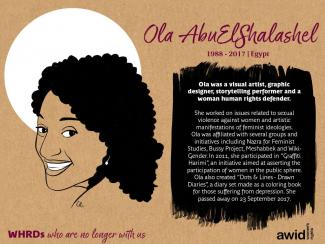
Ola AbuElShalashel
- Category
- Civil & Political Rights
- Date of death / disappearance

Les jeunes activistes féministes jouent un rôle crucial au sein des organisations et des mouvements pour les droits des femmes à travers le monde. Ce sont elles qui soulèvent les nouveaux problèmes auxquels les féministes sont confrontées aujourd'hui. Leur force, leur créativité et leur adaptabilité sont vitales pour assurer la viabilité des organisations féministes.
Pourtant, elles sont confrontées à toute une série d’obstacles particuliers, notamment l'accès limité au financement et au soutien, le manque de possibilités de renforcement des capacités et une augmentation considérable des agressions sur les jeunes défenseuses des droits humains. Ces obstacles entraînent un manque de visibilité qui rend leur intégration et leur participation effective au sein des mouvements pour les droits des femmes encore plus difficiles.
Le Programme d’activisme des jeunes féministes de l'AWID a été mis en place pour veiller à ce que les voix des jeunes femmes soient entendues et représentées dans le discours féministe. Nous voulons faire en sorte que les jeunes féministes aient un meilleur accès à du financement, à des opportunités de renforcer leurs capacités et aux processus internationaux.
En plus de soutenir directement les jeunes féministes, nous travaillons également avec des activistes des droits des femmes de tout âge pour élaborer des modèles et des stratégies d’organisation multigénérationnelles plus efficaces.
Nous souhaitons que les jeunes féministes puissent jouer un rôle actif dans les prises de décisions qui concernent leurs droits. Nos actions incluent :
Favoriser la mise en commun et le partage d'informations par la Plateforme de jeunes féministes. Étant donné l'importance des médias en ligne pour le travail des jeunes féministes, notre équipe a lancé la Plateforme de jeunes féministes en mai 2010. Elle a pour objectifs d’échanger des renseignements, de renforcer les capacités des membres par le truchement de webinaires et de discussions en ligne, et d'encourager la consolidation d’une communauté de jeunes féministes.
Soutenir la recherche et le renforcement des connaissances sur l'activisme des jeunes féministes, pour accroître la visibilité et l'influence de leur activisme au sein et entre les mouvements pour les droits des femmes et auprès d'autres acteurs-trices clés, tels les donateurs.
Faire la promotion de la collaboration multigénérationnelle, en explorant de meilleures façons de travailler ensemble.
Inciter les jeunes féministes à s’engager dans les processus internationaux relatifs au programme de développement, notamment ceux des Nations Unies.
S’assurer leur collaboration dans tous les domaines prioritaires de l'AWID, y compris le Forum, pour faire en sorte que leurs contributions, leurs perspectives, leurs besoins et leur activisme se traduisent dans les débats, les politiques et les programmes qui les concernent.
NOUS SOMMES LA SOLUTION
Somos la Solución

Les antidroits ont adopté une double stratégie : outre leurs attaques ouvertes sur le système multilatéral, ils et elles sapent les droits humains depuis l’intérieur. Leur implication vise à prendre le contrôle des processus, instaurer des normes régressives et fragiliser la redevabilité.

Leur implication dans les sphères des droits humains a un but essentiel : saper le système et sa capacité à respecter, protéger et assurer les droits humains de tout un chacun, et à tenir les États membres pour responsables de leurs enfreintes. Certaines tactiques antidroits en dehors de l’ONU visent à la délégitimer, exercer des pressions politiques pour limiter son financement ou se retirer d’accords internationaux sur les droits humains. Les acteur·rice·s antidroits gagnent cependant en influence au sein même de l’ONU. Leurs tactiques de l’intérieur incluent la formation de délégué·e·s, la dénaturation de cadres relatifs aux droits humains, la dilution de la substance d’accords sur les droits humains, l’infiltration de comités d’ONG, la demande du statut ECOSOC sous un nom neutre, l’infiltration des espaces des jeunes et la pression pour que des acteur·rice·s antidroits occupent des postes clés.
Sauf si vous avez des problèmes d’accessibilité et/ou que vous répondez aux questions de l’enquête dans une autre langue, nous vous encourageons fortement à utiliser KOBO pour une collecte et une analyse standardisées des données WITM.
Tenemos el placer de presentarte a Mariama Sonko, inspiradora ecofeminista, campesina y defensora de los derechos humanos y de las mujeres, que vive actualmente en Niaguis, en el suroeste de Senegal.
Al crecer en una familia y comunidad campesina rural, fue testigo del papel esencial de la mujer en la producción de alimentos y el almacenamiento de semillas desde la infancia, mientras estaba inmersa en el trabajo y ritmos de la tierra.
Mariama ha defendido el conocimiento agrícola local y las prácticas campesinas desde los años 1990. Como madre de 5 hijos, los alimentos que ella misma cultiva son la principal fuente de sustento de su familia.
Actualmente es presidenta de Nous Sommes la Solution y está comprometida con la promoción de las prácticas agroecológicas y la agricultura familiar, con el fomento de la soberanía alimentaria, la biodiversidad y la preservación de las semillas campesinas, y con la exigencia del acceso equitativo a los recursos y a la tierra en África Occidenta para las mujeres.
Fuente: AWID’s Feminist Realities Festival Crear | Résister | Transform - 2º día
Yes, we invite you to share more on issues that are important to you by responding to the open question(s) at the end of the survey.

 |
Jurema Araújo est une enseignante-poète originaire de Rio de Janeiro. Elle a contribué au magazine Urbana, édité par les poètes Brasil Barreto et Samaral (paix à son âme) et au livre Amor e outras revoluções (L’amour et autres révolutions) avec plusieurs autres écrivain·e·s. En collaboration avec Angélica Ferrarez et Fabiana Pereira, elle a coédité O livro negro dos sentidos (Le livre noir des sens), une anthologie créative sur la sexualité des femmes noires au Brésil. Jurema a 54 ans ; elle a une fille, trois chiens, un chat et beaucoup d’ami·e·s. |
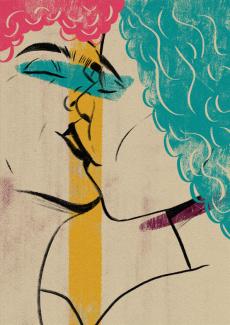
Tu la suces avec moi?La mangue est mon fruit préféré. |
Je vais être honnête : lorsque Angélica et Fabi m’ont proposé de créer une collection de textes érotiques écrits par des femmes noires, j’ignorais ce que c’était que de produire un recueil. Je maîtrisais le thème de l’érotisme, mais créer un recueil… J’ai souri, timide et flattée. Je crois que je les ai remerciées – du moins je l’espère! – et je me suis dit : mais qu’est-ce que c’est que ce truc, putain?! C’est quoi ce mot pompeux que je vais devoir intégrer tout en le mettant en pratique?
Aujourd’hui, je sais ce que c’est que de créer un recueil : c’est faire l’amour avec les écrits de quelqu’un d’autre, avec l’art de quelqu’un d’autre dans le but d’en faire un livre. Et c’est exactement ce que j’ai fait. J’ai dévêtu le texte de chaque autrice avec une lascivité littéraire. J’ai eu un rapport avec les mots et les sens d’autres personnes. J’ai été pénétrée par des poèmes que je n’avais pas écrits; des contes que je n’aurais jamais osé imaginer m’ont retournée, ont chamboulé mes sentiments, ma libido. Et c’était un orgasme inhabituel et merveilleux : éthéré, corporel, sublime, à la fois intellectuel et sensitif.
Ces textes pulsaient comme un clito durci par le désir, trempé, dégoulinant de joie à chaque lecture. Des mots dont la grivoiserie m’aspirait, me faisant plonger plus profondément dans cet univers humide.
Ces femmes noires sont allées au fond de leur excitation et ont transformé leurs fantasmes érotiques les plus profonds en art. Ces œuvres sont imprégnées de la manière dont chaque autrice vit la sexualité : libre, noire, individuelle, la sienne, son pouvoir retrouvé.
J’ai choisi de classer les textes en différentes parties dans le livre, chacune étant organisée en fonction du contenu le plus délicat, explosif, évident ou implicite qu’elle renfermait.
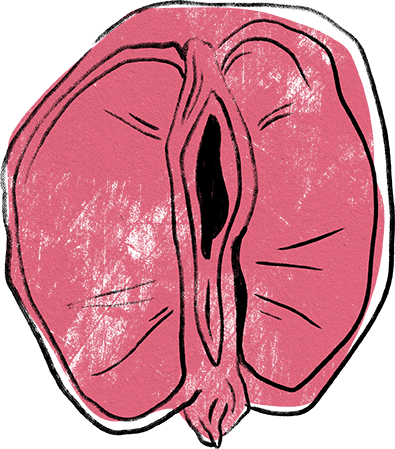
Pour ouvrir la porte à cette « envulvée noiressence », nous proposons la section Préliminaires, avec des textes qui introduisent le lecteur dans ce monde de délices. Il s’agit d’une caresse plus générale et délicate afin d’accueillir les sujets que les textes aborderont dans le reste du livre.
Puis vient la chaleur du Toucher, qui évoque les ressentis de la peau. Cette énergie qui brûle ou transite nos corps, fait bouillir nos hormones et éveille à leur tour nos autres sens. Et même si nous sommes nombreux·ses à être voyeurs·euses, le contact de la peau sur une bouche humide et chaude est excitant, comme si vous naviguiez dans la douceur de la personne qui se trouve avec vous. On est séduit par le contact ferme ou doux qui nous fait frissonner et ce picotement délicieux qui nous traverse du cou au bas du dos et qui ne disparaît que le lendemain. Et la chaleur des lèvres, la bouche, la langue humide sur la peau – ah! la langue dans l’oreille, mmmm – ou peau contre peau, les vêtements glissant sur les corps, comme s’ils se voulaient une extension de la main de l’autre. S’il n’y a pas d’urgence, l’excitation absolument sauvage d’une étreinte ferme, un peu de douleur – ou pourquoi pas, beaucoup?
La section Son – ou mélodie? – nous montre que l’attirance pour une personne passe également par l’ouïe : c’est la voix, les chuchotements, cette musique qui permet la connexion des corps et peut constituer la trame même du désir. Pour certain·e·s d’entre nous, la seule voix d’une personne ayant un joli timbre, qu’il soit rauque, traînant ou mélodieux, suffirait à nous donner un orgasme auditif. Elle n’aurait qu’à jurer grossièrement ou nous murmurer des mots doux à l’oreille pour nous faire frissonner du cou au coccyx.
Dans Saveur, nous confirmons que la langue est imbattable lorsqu’il s’agit d’aller goûter les endroits les plus enfouis et parcourir les corps pour se faire plaisir. Parfois, on l’utilise audacieusement pour goûter le nectar de l’autre. L’idée d’offrir sa fraise ou sa mangue délicieuse et juteuse à des morsures ou des coups de langue – ou des coups de langue et des morsures – nous désarme. Mais rien n’est plus délicieux que de goûter aux grottes et collines de la personne avec laquelle on est. Enfoncez votre langue bien profond pour goûter à ce bout de fruit… ou passez des heures à goûter le gland d’une queue dans votre bouche, passez votre langue sur des seins gourmands pour en goûter leurs tétons. Il s’agit de se souvenir d’une personne par la Saveur qu’elle nous a laissée.
Il y a aussi les textes où c’est le nez qui déclenche le désir. L’Odeur, mes chers·ères lecteurs·trices, est capable de nous éveiller aux délices du désir. Parfois, nous rencontrons des gens qui sentent si bon que nous voudrions les aspirer par le nez. Lorsque vous sillonnez le corps de l’autre avec le nez en commençant par le cou, sentez ce frisson délicieusement inconfortable qui parcourt votre colonne vertébrale et déshabille votre âme! Ce nez impudent se déplace ensuite vers la nuque où il capture le parfum de l’autre de telle sorte qu’en l’absence de cette personne, ce même parfum évoque, voire se répand en nous dans des souvenirs olfactifs qui ressuscitent l’odeur affolante de cette dernière.
Nous en venons au Regard – le plus traître des sens selon moi – où nous percevons le désir à partir d’un point de « vue ». Les textes présentent le désir et l’excitation par le biais de la vue, qui à son tour provoque les autres sens. Il suffit parfois d’un sourire pour nous rendre dingues. L’échange de regards? Celui qui dit : « J’ai envie de toi, là, maintenant ». Ce regard possédé qui s’éteint quand vous avez fini de baiser, ou pas. Celui-là est très particulier; il attire à lui l’autre qui ne pourra en détourner ses yeux très longtemps. Ou les regards du coin de l’œil – quand on détourne le regard au moment où l’autre va tourner la tête, comme un jeu du chat et de la souris? Pris·e·s en flagrant délit, il ne nous reste plus qu’à lui décocher un large sourire.
Pour finir, l’explosion. En se promenant à travers Tous les sens, les textes mêlent des sentiments qui prennent des allures d’alarme et nous entraînent vers le plaisir suprême : l’orgasme.
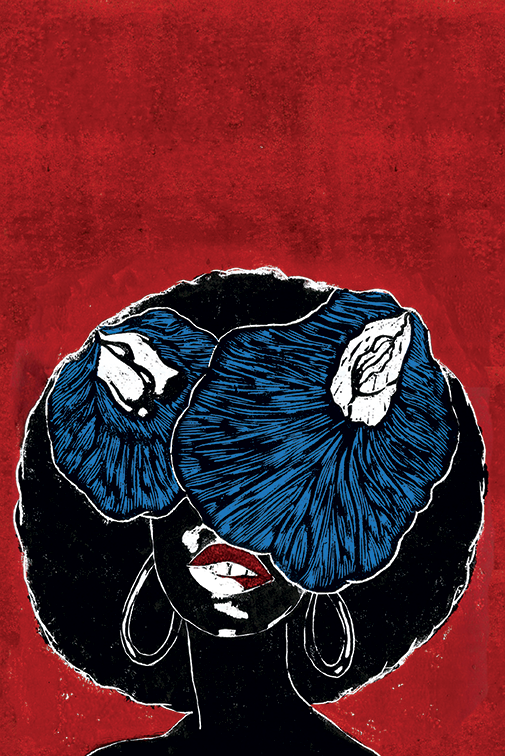
Bien sûr, ces différents contes et poèmes ne diffèrent d’aucune façon explicite. Certains sont subtils. L’excitation fait appel à tous nos sens et, plus fondamentalement, à notre tête. C’est là que ça se passe, c’est là que se fait la connexion à tout notre corps. J’ai organisé les poèmes selon la façon dont je les sentais à chaque lecture. Libre à vous de ne pas être d’accord! Mais pour moi, il existe un sens particulier par lequel le désir passe et puis explose. Et il y a quelque chose de délicieux à découvrir duquel il s’agit.
Pour pouvoir transformer l’excitation en art, nous devons nous libérer de tous nos préjugés, de nos prisons et des stigmates dans lesquels cette société centrée sur les Blancs nous a enfermé·e·s.
Chaque fois qu’une autrice noire transforme l’érotique en art, elle brise ces chaînes racistes et néfastes qui paralysent son corps, répriment sa sexualité et nous transforment en objet de convoitise d’un autre. Écrire de la poésie érotique, c’est reprendre le pouvoir sur son propre corps et parcourir sans crainte les délices du désir pour soi-même, pour les autres, pour la vie.
L’érotisme littéraire reflète ce que nous sommes lorsque nous en faisons de l’art. Nous montrons ici le meilleur de nous-mêmes, nos visions de l’amour trempées de plaisir, assaisonnées d’érogénéité, répandues dans nos corps et traduites par notre conscience artistique. Nous sommes multiples et nous partageons cette multiplicité de sensations dans des mots dégoulinants d’excitation. Oui, même nos mots dégoulinent de notre désir sexuel, mouillant nos vers, transformant nos pulsions sexuelles en paragraphes. Pour nous, jouir est révolutionnaire.
Nous devons noircir nos esprits, nos corps et notre sexualité, renouer avec notre plaisir et nous réapproprier nos orgasmes. Ce n’est qu’alors que nous serons libres. Tout ce processus est une révolution et il se fait dans la douleur. Mais il y a du bonheur à se découvrir très différent·e·s de ce que l’on attendait de nous.
Je sens que je suis à vous, je suis à nous. Goûtez, prenez plaisir, régalez-vous de ces mots merveilleux avec nous.
Ce texte est une adaptation des introductions de “O Livro Negro Dos Sentidos” [Le livre noir des sens], un recueil érotique de poèmes composés par 23 autrices noires.

Cette édition du journal, en partenariat avec Kohl : a Journal for Body and Gender Research (Kohl : une revue pour la recherche sur le corps et le genre) explorera les solutions, propositions et réalités féministes afin de transformer notre monde actuel, nos corps et nos sexualités.
نصدر النسخة هذه من المجلة بالشراكة مع «كحل: مجلة لأبحاث الجسد والجندر»، وسنستكشف عبرها الحلول والاقتراحات وأنواع الواقع النسوية لتغيير عالمنا الحالي وكذلك أجسادنا وجنسانياتنا.
Los datos se procesarán para fines estadísticos y así arrojar luz sobre el estado de la dotación de recursos para los movimientos feministas de todo el mundo, y solo se exhibirán de forma desglosada. AWID no divulgará información acerca de ninguna organización en particular ni publicará información que permita identificar a una organización por su ubicación o características sin el consentimiento acreditado de dicha organización.

La conspiration du cercle des écrivain·e·s | Wazina Zondon
 |
 |
 |
| Également connue sous le nom de Réseau de recherche Teta, la conspiration des écrivain·e·s a été fondée en 2021 dans le cadre des cercles d’écriture hebdomadaires de Kohl. Le Réseau est un groupe transnational d’écrivain·e·s queer et féministes qui se consacrent à l’écriture, à la réflexion et à la création de monde collectifs. | Wazina Zondon est une Afghane élevée à New York. Elle centre son travail de recueil d’histoires et de narration sur les souvenirs collectifs et les rites de passage dans la diaspora. Elle travaille actuellement sur Faith : in Love/faith in love (Foi : en amour / Foi en l’amour), travail qui (re)retrace l’histoire d’amour de ses parents et l’empreinte d’amour héritée de sa famille. |
L’amour est sur le marché noir en enfer
car l’amour est un acide
qui ronge nos barres de fer.
Mais toi, moi et demain,
on jure en se tenant la main
que les luttes se multiplieront.
La scie à métaux a deux lames.
Le fusil a deux canons.
Nous portons la liberté en notre sein.
Nous sommes un complot.
Il est de notre devoir de lutter pour la liberté.
Il est de notre devoir de vaincre.
Nous devons nous aimer et nous soutenir mutuellement.
Nous n’avons rien d’autre à perdre que nos chaînes.
« Love » d’Assata Shakur
Voilà la question que pose Wazina Zondon dans son récit de souvenir collectif Loveprint. Loveprint est une déambulation, un chevauchement, un détour qui (re)crée, là où se rejoignent les entrevues et les essais personnels, nos histoires de famille et nos connaissances sur l’amour, les relations de couple et les aventures amoureuses. Sur les conseils de Wazina, la conspiration du cercle des écrivain·e·s s’est retrouvée autour d’une tentative de reproduction de cette épreuve littérale, sous la forme d’une écriture collective dans laquelle nos différentes histoires, nos genres et nos identités sexuelles se complètent et se contredisent. Nos voix empiètent les unes sur les autres, les unes complètent les phrases des autres et nous créons une conversation, un mémorial, des morceaux de nous qui parlent à un « nous ».
Je suis ce que l’on appelle un « joyeux accident ». Il y aurait beaucoup à dire à ce propos – une vie accidentelle, mais dans le même temps totalement voulue. Je sens que cela a façonné ma manière d’aimer. Je ne tombe pas simplement amoureuse, je prends le risque de la glissade qui me fera tomber. Ça a peut-être fait de moi une amor fati.
On m’a dit que je n’étais pas une enfant voulue. Donc, j’ai grandi et je suis devenue une adulte non voulue. Les origines de mon impression d’amour viennent d’avoir été éternellement non bienvenue. Je ne suis pas le fruit d’un amour ou d’une quelconque émotion joyeuse, mais bien plutôt de douleur et de fardeau. Je n’ai pas d’impression d’amour – du moins pas dans ce sens-là.
Je sais avec certitude que mes parents se sont aimés à un moment, mais la santé mentale est un tel démon – si personne ne lui tient tête, il n’y a pas de gagnant.
Je n’associerai jamais « l’amour » à mes parents ou à la famille normative. En grandissant, l’amour était accompagné de tant de violence et de responsabilités que je n’avais pas demandées, et pour lesquelles je n’étais pas prête. Alors que mes parents « s’aimaient », c’était un éthos toxique de violence, de jalousie et d’insécurité dans lequel grandir. J’ai grandi avec une immense faim de stabilité, et c’est ce que je suis aujourd’hui. Je prends des risques, mais jamais dans mon « espace d’amour ».
Je ne sais pas pourquoi ma mère a choisi d’accueillir une enfant
(moi) en son sein. Elle ne m’aime pas sous cette forme.
Ma mère me dit que si je dois penser à « trouver » l’amour, je ne devrais jamais prendre son mariage en exemple. Mon impression d’amour vient au contraire des chiens que j’élève depuis deux décennies (18 ans précisément). Le contraire est également vrai – ils m’ont élevée. Je comprends de mieux en mieux cet amour et ses différents niveaux, en leur compagnie.
Je n’ai pas découvert l’amour avec une « impression ». Dans notre maison, nous ne parlons pas d’amour. J’ai dû m’enseigner à aimer. J’ai dû y travailler dur. Malgré cela, j’échoue et malgré cela, je continue d’essayer et d’échouer tous les jours. L’échec est peut-être mon impression d’amour.
Mon impression d’amour est l’attention, la chaleur et la compréhension
que je donne aux personnes qui m’entourent, qu’il s’agisse d’un inconnu,
d’une amie, d’une proche ou d’une amante.
Mon impression d’amour est politique – sans calcul et sans réflexion.
Je suis né·e sous une pluie de bombes.
Mon impression d’amour est le négatif
de ce moment-là.
J’en sais plus sur ce que l’amour n’est pas que je n’en sais sur ce qu’est l’amour.
L’amour, ce n’est ni l’anxiété ni la panique.
L’amour, ce n’est pas de demander la permission de vivre ou de respirer. C’est toujours à propos de l’amour et il n’y a pas d’amour sans liberté.
Tout ce que l’on fait, on le fait avec le cœur, sauf l’amour. L’amour, c’est se servir de son esprit.
Je crains parfois que le langage de mon amour ne se perde dans la traduction.
--- Il y a de nombreuses manières
de cartographier les origines
de
la manière de ne pas
aimer
aimer juste assez
aimer beaucoup trop
aimer un peu
perdre un peu
à l’amour
à l’amour perdu ---
Je ne supporte pas l’idée du couple. Je ne supporte pas l’idée de vivre seule en vieillissant non plus. Je suis fatiguée de tout faire toute seule, de déménager seule, de payer le loyer et les factures toute seule… Je m’imagine avoir un arrêt cardiaque toute seule, et ça m’effraie. Je n’ai absolument pas envie de « me mettre en couple ». Je veux un monde où je peux épouser une amie, acheter une maison avec une amie, ne pas avoir de rapports sexuels.
Aimer plusieurs personnes ne corrompt
absolument pas l’amour partagé à deux, et que l’amour
soit romantique ou non n’est vraiment pas si
important que cela.
Lorsque je réfléchis à l’état déplorable de mes relations, je me rends compte que je suis dans le type de relation auquel on m’a formée. Malgré toute ma « radicalité », je n’ai toujours pas désappris les foutues normes de genre.
Mon besoin de stabilité ne me semble pas « assez radical ». Je veux sortir de cette catégorisation. Je veux quelque chose que je n’ai jamais eu. Je veux le rendre beau. Je veux me sentir belle et en sécurité – et seule la stabilité me procure ces sensations. Sûre, hors de danger, savoir que le foyer n’a rien à voir avec la violence ni les tensions.
--- Impression d’amour – j’aime sentir les livres pour voir où ils
ont été imprimés
Je tente de réfléchir à l’origine de ma compréhension et de ma
pratique de l’amour
A-t-on besoin d’origine, n’est-ce pas pareil à la pureté? Pas de
pureté ni d’origine de l’amour.
Pourquoi est-ce la compréhension et la pratique, et non
« l’émotion » qui vient à l’esprit? ---
Lorsque j’appelle mes parents, je ne raccroche pas après que l’on se soit dit au revoir, pour pouvoir entendre les bruits de la maison.
Lors de mon enterrement sunni, je veux que toutes les femmes et tous les hommes se rassemblent pour mon enterrement. Qu’est-ce que c’est que cette histoire de ne pas pouvoir dire au revoir à des morts d’un autre sexe? Il sera sunni parce que ma mère voudrait qu’il le soit. Il sera écologique – pas besoin de pierre tombale. J’adore tous les rituels funéraires. Le Coran c’est bien, mais je veux aussi de la musique. J’aime vraiment Asmahan, Oum Koulthoum et The Stones Roses.
J’ai une liste de musiques pour la semaine, du lundi au vendredi. Et deux autres pour la fin de semaine : une pour les samedis et une pour les dimanches. Je voudrais que celles et ceux qui m’ont aimée mettent la musique que j’écoutais, en respectant les jours – avec une légère tolérance tant que l’on respecte les listes de musiques.
Je veux être entourée par la ou les personnes qui m’auront aimée, même pour un bref instant. En musique et entourée de bouquets de fleurs coupées. Je ne veux pas qu’on me trouve morte; je veux mourir en riant avec des êtres aimés.
Je veux que l’on se rappelle de moi comme de quelqu’un qui aimait.
I don’t need to feel loved in death. I need the people around me to feel I loved them, even after I die. Being loved in death is about those who are alive. So I think more about how we come together as a living and loving community in the death of those we love and live with. How we take their memories with us. How we become archives of their lives.
--- Parfois, on ne peut aimer les gens que dans leur mort ---
Je dois revenir en arrière à l’idée du corps connecté à un espace. Ma famille est très réduite et, bien que ne venions pas de différents endroits, c’est comme si chaque génération était partie dans un nouveau lieu. C’est peut-être la raison pour laquelle la mort n’est pas reliée à un endroit spécial, à un cimetière. Il est courant dans notre famille d’enterrer les morts sans nom ou pierre tombale, ou de disperser les cendres dans le vent. Je me sens apaisée par ce genre de commémoration sans lieu fixe. L’idée que mes cendres puissent fertiliser une nouvelle vie me donne le sentiment d’être aimée, d’être remémorée par la re-création. Ma grand-mère est décédée en début d’année du fait de complications suite à la vaccination. Deux heures après son décès, ma famille riait aux larmes en repensant aux blagues qu’elle faisait, à sa manière hilarante de raconter des histoires. Nous avons ri et l’avons aimée, et c’était comme si elle était à nouveau assise avec nous. Voilà ce qui me ferait me sentir bien – pouvoir fertiliser les sols, fertiliser les conversations et une commémoration collective.
--- Il y avait
Deux rues dans lesquelles
Je marchais
Je courais
Je jouais
Je demeurais
Il y avait
Cinq heures pendant lesquelles
Le soleil était chaud
Le ciel était bleu
La terre était verte
Il y avait
Une fleur que je pouvais
Sentir
Toucher
Pincer
Écraser
Il y avait
Les amies que je pouvais
Caresser
La nourriture
Que je pouvais
inhaler
La langue
Qui me glissait des
lèvres
Il pourrait toujours y avoir
Tous ces nombreux lieux
Et des choses
Et des gens
Après moi ---
Peut-être qu’une promesse que je serai « spatialement commémorée » en tant que plante et soignée à tour de rôle, jusqu’à ce qu’elle devienne un arbre, serait suffisante. Pas de nom, pas de plaque – juste la plante/l’arbre, et savoir qu’on en prendra soin. Quant à mon corps, je veux qu’il soit incinéré sans aucune forme de rituel et que les cendres de mes os soient libérées dans la mer d’Arabie.
J’ai besoin que l’on traite mon corps aussi subversivement qu’il a vécu.
Je ne veux pas être enterrée à côté de ma famille. Dans ce petit tiroir à côté de toutes les personnes qui ne m’ont jamais connue. Coincée dans la mort comme je l’ai été dans la vie. Je veux être incinérée, et que mes cendres soient finalement libres.
Je veux être autorisé·e à passer, pas pendre dans l’entre-deux, pour être une présence, un processus actif, un trépas.
Je vous demanderai de :
Je veux que l’on se souvienne de moi pour l’amour que j’ai mis dans ce monde. Je veux que
mon corps soit donné, et que mes organes continuent d’alimenter
l’amour d’une ou d’autres vies.
--- L’odeur du jasmin ---
Cette édition du journal, en partenariat avec Kohl : a Journal for Body and Gender Research (Kohl : une revue pour la recherche sur le corps et le genre) explorera les solutions, propositions et réalités féministes afin de transformer notre monde actuel, nos corps et nos sexualités.
نصدر النسخة هذه من المجلة بالشراكة مع «كحل: مجلة لأبحاث الجسد والجندر»، وسنستكشف عبرها الحلول والاقتراحات وأنواع الواقع النسوية لتغيير عالمنا الحالي وكذلك أجسادنا وجنسانياتنا.
Non. L’enquête s’appuie sur les 20 années de mobilisation de l’AWID dans l’objectif d’obtenir davantage de financement de meilleure qualité pour des changements sociaux menés par des féministes. Cette enquête est la troisième édition de la recherche Où est l’argent pour l’organisation des mouvements féministes? Notre objectif est de mener une enquête WITM tous les 3 ans.