AWID es un organización feminista internacional de membresía, que brinda apoyo a los movimientos que trabajan para lograr la justicia de género y los derechos de las mujeres en todo el mundo.
Esta sección de análisis especial ofrece un análisis feminista crítico y acceso a los recursos clave relacionados con la «protección de la familia» en los espacios internacionales de derechos humanos.
Durante los últimos años, venimos observando una nueva y preocupante tendencia en el ámbito internacional de derechos humanos, donde se están empleando discursos sobre la «protección de la familia» para defender violaciones cometidas contra miembros de la familia, de modo de reforzar y justificar la impunidad y para coartar la igualdad de derechos en el seno de la familia y la vida familiar.
La campaña para «proteger a la familia» es impulsada por proyectos conservadores que tienen como fin imponer interpretaciones «tradicionales» y patriarcales de familia; quitando los derechos de las manos de sus miembros para ponerlos en las de la institución «familia».
Los proyectos de «protección de la familia» tienen su origen en los siguientes fenómenos:
el auge del tradicionalismo,
el auge del conservadurismo cultural, social y religioso, y
posturas hostiles a los derechos humanos de las mujeres, los derechos sexuales, los derechos de las niñas y los niños y los derechos de las personas con identidades de género y orientaciones sexuales no normativas.
Desde 2014 un grupo de estados opera como bloque en espacios de derechos humanos, bajo el nombre «Group of Friends of the Family» [Grupo de amigos de la familia], y a partir de entonces se han aprobado resoluciones sobre la «Protección de la familia» todos los años.
Esta agenda se ha extendido más allá del Consejo de Derechos Humanos (HRC, por sus siglas en inglés). Hemos visto cómo el lenguaje regresivo sobre «la familia» se ha introducido en la Comisión de la Condición Jurídica y Social de las Mujeres (CSW, por sus siglas en inglés), y hemos asistido a intentos por incluir este lenguaje en las negociaciones sobre los Objetivos de Desarrollo Sostenible.
Nuestro enfoque
AWID trabaja con asociadxs y aliadxs para resistir conjuntamente las agendas regresivas de «Protección de la familia» y otras, y para defender la universalidad de los derechos humanos.
En respuesta a la creciente influencia de actores regresivos en los espacios de derechos humanos, AWID se ha unido con aliadxs para formar el Observatorio de la Universalidad de los Derechos (OURs, por sus siglas en inglés). OURs es un proyecto colaborativo que monitorea, analiza y comparte información sobre iniciativas anti-derechos tales como la «Protección de la familia».
Derechos en Riesgo, el primer informe de OURs, traza un mapa de los actores que conforman el cabildeo global anti-derechos e identifica sus discursos y estrategias principales, señalando los efectos que estos discursos y estrategias están teniendo sobre nuestros derechos humanos.
El informe expone a la «Protección de la familia» como una agenda que ha promovido la colaboración entre una amplia gama de actores regresivos en las Naciones Unidas. La describe como un marco estratégico que aloja «múltiples posiciones patriarcales y anti-derechos, cuyo marco, a su vez, apunta a justificar e institucionalizar estas posiciones».
Contenido relacionado
FRMag - Let the invisible be visible
Let the invisible be visible: A Genderfluid Bodybuilder’s Manifesto in Hong Kong
by Siufung Law
“97..! 98.. where is 98? 98! Please come back to the lineup!... 99! 100!...” The backstage lady relentlessly asked each athlete to queue up at the humid, sweaty, overcrowded backstage. (...)
Philosophe féministe radicale, Peni était aussi poète, écrivaine, dramaturge et compositrice.
Première coordinatrice du Fiji Women’s Rights Movement (Mouvement pour les droits des femmes aux Fidji), elle a laissé un héritage empreint de sa profonde préoccupation pour les droits fondamentaux des femmes, la justice et la paix. L’engagement de Peni en faveur de la justice sociale, économique et écologique et son travail remarquable lui a valu le respect de la communauté locale et internationale. Au sein des mouvements féministes traditionnels des Fidji, elle a été l’une des premières à travailler avec et aux côtés des personnes LGBTQI et a fourni une assistance concrète au mouvement des travailleurs et des travailleuses du sexe lorsqu’il s’est constitué aux Fidji.
Ses collègues l'ont décrite comme une personne formidable et une leader visionnaire du changement. Elle a inspiré beaucoup de personnes par sa créativité et son courage. Son travail a permis à de nombreuses personnes de se faire entendre, d’acquérir de nouvelles compétences et d’ouvrir de nouvelles voies, tant au niveau personnel que communautaire.
40 Años de AWID: El Álbum
Reunir, sembrar, irrumpir
En 2022, en AWID celebramos los 40 años de nuestra fundación. Estamos aprovechando este momento para reflexionar sobre nuestro pasado y aprender sobre el camino transitado, como preparación para poner nuestra mira al futuro y construir trayecto de ahora en adelante. A medida que avanzamos a través de ciclos de crecimiento y retroceso, comprendemos que las luchas por los derechos de las mujeres y la justicia de género son iterativas y nunca lineales.
En colaboración con la artista Naadira Patel, creamos un álbum que resalta algunos momentos de las últimas cuatro décadas de apoyo a los movimientos feministas por parte de AWID. No hicimos todo eso solxs. Lo compartimos con profunda apreciación por la constelación de activistas y grupos feministas que hicieron posible ese trabajo. En este contexto de tantas crisis convergentes, escogimos esta oportunidad para celebrar el poder y la resiliencia de los movimientos feministas en el mundo.
Delante mío hay una foto vieja, borrosa. En ella, estoy toda vestida de blanco, desde las perlas sujetas en mi cabello y apretadas contra mis orejas, hasta las que rodean holgadamente mis pequeñas muñecas. (...)
arte: «Cultura Negra», Astrid Milena González Quintero >
Snippet - COP30 - Deckgame card - FR
🎯 Jeu de cartes : S’organiser. Créer des stratégies. Se mobiliser.
Un jeu de cartes pratique destiné aux collectives, qui permet d’explorer les alternatives économiques féministes et les systèmes de soins comme réponse aux crises. Pensé pour tous les mouvements qui évoluent au sein des crises climatiques mondiales, ce jeu de cartes propose de jouer et d’élaborer des stratégies en s’appuyant sur des scénarios de la vie réelle. Un moyen créatif de réfléchir aux stratégies lors de réunions, d’ateliers et de rassemblements de la communauté !
Samira was a Syrian activist under Bashar al-Asad's regime.
From a young age Samira opposed all forms of despotism, particularly vis-a-vis the authoritarian regime in which she lived.
Samira was kidnapped in 2013 along with three other prominent activists. She is believed to have been taken from the Center for the Documentation of Violations in Duma, in rural Damascus.
The main suspect associated with her disappearance is the Army of Islam (which denies its involvement). There has been no formal investigation of Samira’s disappearance and she has not been heard from since. Samira was committed to her country and refused to leave Syria until she felt her role in empowering women and documenting crimes was no longer necessary.
Le(s) plaisir(s) comme clé de liberté personnelle
Par Nkhensani Manabe
Le titre de la conversation « Pansexuel, Gynasexuel ou Abrosexuel ? Une plongée dans la queerness, le plaisir et la positivité sexuelle » donne matière à réflexion. Tiffany Kagure Mugo, auteure, éducatrice et programmatrice de HOLAAfrica, commence la discussion par une lecture de Touch, une collection récemment publiée d'essais de fiction et de non-fiction sur le sexe, la sexualité et le plaisir. Dans cet extrait, l'auteure avance l'idée que le plaisir est constant et continu, qu'il se retrouve dans les activités quotidiennes et ne se limite pas aux relations sexuelles.
Cette idée, du plaisir faisant autant partie de la vie quotidienne qu'autre chose, guide la discussion, couvrant également les thèmes du désir, de l'attirance et de l'orientation sexuelle.
Dès le départ , il y a ce sentiment d'espoir et de possibilité. Tiffany présente des options et explique les alternatives, nous donnant un nouveau langage pour parler de qui nous sommes, de ce que nous aimons et de comment nous le voulons. Il est question de désir et de sexe, mais surtout de connaissance de soi et d'autonomisation. Tiffany parle avec passion du fait de prendre des décisions à partir d'un lieu de pouvoir : apprendre de sa propre identité afin de pouvoir faire les meilleurs choix pour soi-même.
Dans une discussion ouverte et libre, représentant l'attitude que Tiffany voudrait que nous adoptions tou·te·s, nous apprenons que les savoirs sur le sexe et la sexualité sont en constante évolution, et que leurs limites se déplacent. Ce qu’on a peut-être appris ou, plus important encore, ce dont nous avons été tenus à l'écart en tant qu'enfants ou adultes, est précisément le point de départ pour désapprendre et se déprogrammer. Tiffany souligne que les jeunes de nos jours ont besoin d'outils pour comprendre les expériences qu'iels vivent déjà, un rappel sur le fait de ne jamais sous-estimer ce que les enfants et les adolescent·e·s savent sur le type de plaisir(s) qu’iels poursuivent dans la vie.
La conversation m’a ouvert l’esprit sur un point : me connaître m'aidera à prendre confiance en moi ; je pourrai aborder les relations en prenant soin non seulement de moi-même mais des autres. Apprendre le langage de l'orientation, de l'attirance, du désir et du plaisir contribuera à approfondir mes relations futures. J'ai apprécié le fait d'avoir un espace pour réfléchir à cet aspect de ma vie - ces parties privées et intimes auxquelles je n'accède pas souvent. L'enthousiasme de Tiffany pour le plaisir et l'identité a repoussé mes propres limites et m’a permis d'ouvrir de nouvelles possibilités personnelles.
L'idée d'apprendre à établir des liens holistiques n'est pas encore courante. Globalement, nous vivons dans une culture de connexions instantanées et éphémères. Il n'y a pratiquement jamais de temps pour réfléchir réellement à la raison et au type de relation ou de partenariat que nous recherchons - du moins, pas avant une période de crise.
Bien sûr, il existe des espaces dédiés à accueillir les questions et les discussions, tels que le festival AWID Crear Résister Transform et d'autres plateformes ou publications en ligne de pensée libre - mais l'accès à l'information à partir d'une source utile et sans jugement est toujours laborieux . Cela peut être dû en partie au fait que les gens ne font pas confiance au langage de la sexualité et du plaisir.
La notion de langage et d'outils se répète tout au long de la présentation. Tiffany et ses collègues assurent la fonction de parler, d'enseigner et d’alimenter. Voir ce dont les personnes ont besoin, où elles se trouvent, ce qu'elles veulent pour elles-mêmes et marcher à leurs côtés pendant qu'elles construisent leurs mondes idéaux. Leur donner de nouveaux mots et définitions pour les aider à façonner leurs identités à différentes étapes de leur vie.
Les conversations de ce type sont nécessaires, même dans une société qui diffuse à tout moment une myriade de messages sur la santé, plus ou moins détaillés. Les gens ont parfois besoin d’être tirés à l'écart pendant les grands moments collectifs et encouragés à connaître leurs opinions et leurs désirs individuels. C'est ce que fait le discours de Tiffany : il donne aux gens un espace au sein du plus grand puzzle.
Un des points phares de l’intervention de Tiffany était la partie sur les différents types d'attractions.
Sexuel - signifie le désir exprimé d'avoir des relations avec une ou plusieurs personnes Sensuel - le désir de toucher une ou plusieurs personnes, d'être physiquement proche sans nécessairement avoir des rapports sexuels Romantique - le désir de sortir ou d'être en relation avec une ou plusieurs personnes Platonique - le désir de nouer des amitiés étroites Esthétique - le désir de regarder et d'apprécier l'apparence d'une ou de plusieurs personnes
Ces cinq types ou niveaux d'attraction offrent un raccourci du désir et du plaisir, et aident à contextualiser les différents types de plaisir que les gens peuvent éprouver.
Penser l'attirance au-delà du physique ou du sexuel offre une nouvelle perspective sur les liens. C'est une chance de relâcher la pression sur les relations, ouvrant des opportunités pour des partenariats différents, plus éclairés et épanouissants.
Cette liberté et ces connaissances soulignées par Tiffany constituent une feuille de route pour l'avenir. La présentation a ainsi offert une perspective nouvelle sur ce qui est possible.
Comme le soulignait l'extrait d'ouverture, le plaisir est continu. À la lumière de la discussion de Tiffany, il devient clair que le plaisir est également dynamique et excitant. Il y a toujours plus à apprendre.
Cela peut être intimidant au début, mais de l'autre côté de l'hésitation, il y a de l'espoir, du potentiel et de la liberté.
No hay nada como estar en un espacio compartido, intercambiar energías corporales, mirar a alguien a los ojos y establecer conexiones, ver el mundo y hacer algo juntxs. Eventos como el Foro se encuentran entre los más fuertes del movimiento feminista mundial... - Jac s m Kee, Malasia
Out Run (2016) Anglais | Tagalog avec sous-titres anglais
Mobilisant des coiffeurs·ses transgenres de la classe ouvrière et des reines de beauté, les leaders dynamiques du seul parti politique LGBT au monde mènent une quête historique pour élire une femme trans au Congrès philippin.
Clone of Clone of Clone of Clone of Clone of Snippet - Intro WITM - ES
«¿Dónde está el dinero para las organizaciones feministas?»
¿Cuánto sabes sobre financiamiento feminista? 📊 Pon a prueba tu conocimiento sobre la movilización de recursos para el financiamiento de la organización feminista, respondiendo al cuestionario "¿Dónde está el dinero?":
Queremos expresar nuestro más sincero agradecimiento a todos los diversos grupos, colectivos y organizaciones feministas de todo el mundo que respondieron a la encuesta WITM. Su participación y sus puntos de vista han sido inestimables y enriquecerán enormemente nuestra comprensión colectiva de los recursos feministas a nivel mundial.
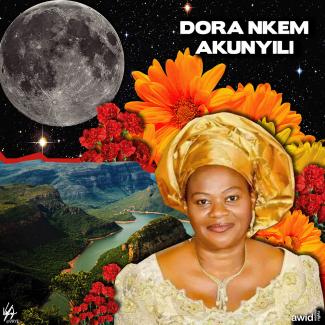
Dora nació en el estado de Benue, Nigeria. Fue una farmacéutica, tecnócrata, investigadora erudita y líder comunitaria reconocida mundialmente.
El trabajo revolucionario de Dora produjo un cambio de paradigma en el servicio público nigeriano cuando se desempeñó como Directora General de la Agencia Nacional para la Administración y Control de Alimentos y Medicamentos, entre 2001 y 2008. Encabezó reformas en la aplicación de políticas y regulaciones que redujeron drásticamente la cantidad de drogas falsas que asolaban el sector farmacéutico nigeriano cuando asumió su cargo.
Se convirtió en un ícono del empoderamiento de las mujeres, porque fue un ejemplo real de mujer valiente y competente que desafió los males de una sociedad predominantemente patriarcal. Fue nombrada Ministra de Información y Comunicación entre 2008 y 2010.
Murió luego de una batalla contra el cáncer, y le sobreviven su esposo, seis hijxs y tres nietxs.
Love letter to Feminist Movements #2
To my beloved Feminist collective,
I have belonged to you for as long as I can remember. As a young girl, I did not know there was a word -feminist- for us people, who aspire to overcome and dismantle the patriarchy, who seek refuge in the arms of inclusion and intersectionality, who treat people as equals regardless of their gender, race, sexuality, religion, and ethnicity, who are constantly learning to do better, to be better and to use their privilege to uplift others.
When I was 14, my middle school French teacher, a 6ft tall thirty-year-old man, assaulted a female student in my class in front of all of us. The student, who was a childhood friend of mine, and several girls in my class went to the headmaster to report him, parents got involved, and the entire class of 30 students vouched for the girl. But all our attempts to hold him accountable failed and the administration covered up the girl’s story and he never got fired or persecuted. The girls in my class and I were outraged so we did what every young raging feminist would do. WE EGGED HIS CAR! and though the eggs get washed off easier and the paint we used to write “Pig” and “Khamaj '' -scumbag- needed to get scrubbed off. I will never forget how that made us girls feel. Liberated, enraged, happy, close-knit, and in power. The same feeling replicates in every feminist setting I have been in ever since. The teen feminist in me grew up to join Women Deliver, AWID, Unootha, facilitate feminist workshops at university, and even get persecuted for my feminist affiliation at 19, but that’s another story for another letter.
Feminist movements and spaces offer me safety and empowerment. They are the mothers we wished we had and the link we needed to connect and organize ourselves despite our differences against a common enemy that has been undermining everyone, patriarchy. It is through you that I learned to be resilient and to gather my strengths and skills and direct them towards uplifting others and bringing to light the marginalized and giving a voice to the voiceless.
What I love most about you, feminist movements is that you mess up sometimes, you disregard and marginalize as well, you have bias as does every other movement but what makes you different is that you always strive to be better. Accountability is not something you’re afraid of and you are an ever-changing collective that reflects how altruism and philanthropy in the effort of gender equity change as time passes.
May you always grow, may you do better, may you always rage, may you always roar, may you always love, may you always speak different tongues, and may you always be in power.
Du 2 au 5 décembre 2024, à Bangkok, en Thaïlande ! Nous nous rassemblerons au Centre national de convention de la Reine Sirikit (QSNCC) et aussi virtuellement en ligne.
Lisez nos recherches sur le financement, sur les défenseuses des droits humains, sur la création de mouvements, sur les fondamentalismes, la justice économique et beaucoup plus