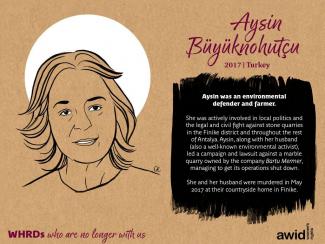
Aysin Büyüknohutçu
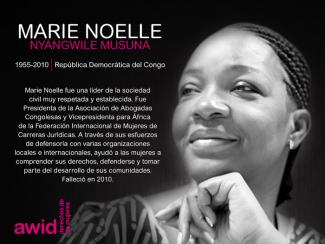
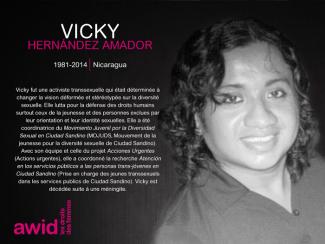
El Tributo de AWID es una exhibición de arte que honra a feministas, a activistas por los derechos de las mujeres y de la justicia social de todo el mundo que ya no están con nosotrxs.
El Tributo de este año cuenta y comparte las historias y narraciones de quienes crearon conjuntamente realidades feministas, ofrecieron visiones de alternativas a los sistemas y actores que nos oprimen, y propusieron nuevas formas de organizarnos, de movilizarnos, de luchar, de trabajar, de vivir y de aprender.
Se agregan a la galería 49 retratos nuevos de feministas y defensorxs de derechos humanos. Aunque muchxs feministas y defensorxs han fallecido debido a edad avanzada o enfermedad, muchísimxs han sido asesinadxs debido a su trabajo y por ser quienes eran.
Esta violencia creciente (de parte de Estados, empresas transnacionales, crimen organizado, sicarios no identificados, etc.) no se dirige solo a activistas individuales sino a nuestro trabajo común y a las realidades feministas.
Visita nuestra exhibición en línea
Lors retratos de 2020 fueron diseñados por la ilustradora y animadora galardonada, Louisa Bertman.
En AWID nos gustaría agradecer a las familias y organizaciones que nos compartieron sus historias personales, y así haber contribuido a este memorial. Nos unimos a ellxs para continuar el extraordinario trabajo de estxs activistas y defensorxs, y en el esfuerzo para asegurarnos de que se logre justicia en los casos que permanecen en la impunidad
"Ellos trataron de enterrarnos pero no sabían que éramos semillas."‐ Proverbio Mexicano
Primero tomó forma como una exposición física de retratos y biografías de feministas y activistas que habían fallecido, en el 12º Foro Internacional de AWID, en Turquía. Ahora vive como una galería en línea, que actualizamos cada año.
Desde 2012 hemos presentado más de 467 feministas y defensorxs.
AWID agradece a las numerosas personas cuyos análisis, ideas y contribuciones han dado forma a la investigación y las acciones de promoción de "¿Dónde está el dinero para las organizaciones feministas?" a lo largo de los años.
Ante todo, vaya nuestro agradecimiento más profundo a lxs afiliadxs y activistas de AWID que participaron en las consultas de ¿Dónde está el dinero? y ensayaron esta encuesta con nosotrxs, y que compartieron su tiempo, sus análisis y el corazón con tanta generosidad.
Expresamos nuestra gratitud a los movimientos, aliados y fondos feministas, entre otros, a Black Feminist Fund, Pacific Feminist Fund, ASTRAEA Lesbian Foundation for Justice, FRIDA Young Feminist Fund, Purposeful, Kosovo Women’s Network, Human Rights Funders Network, Dalan Fund y PROSPERA por su rigurosa investigación sobre el estado de la dotación de recursos, sus agudos análisis y promoción sostenida para más y mejor financiamiento y poder para las organizaciones feministas y por la justicia de género en todos los contextos.
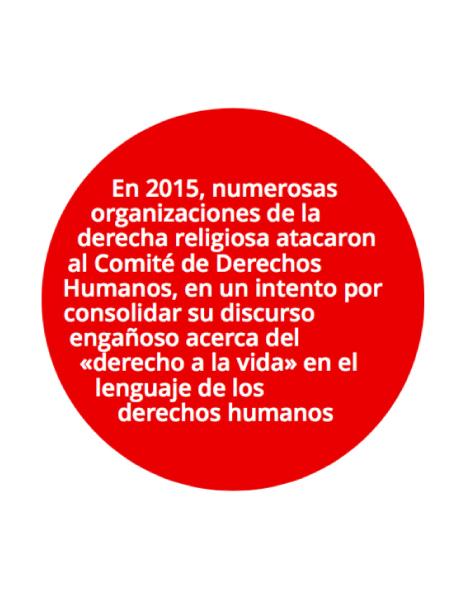
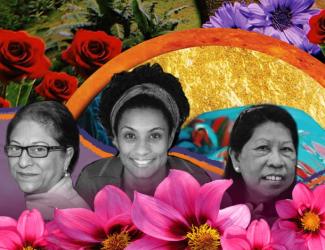
Lxs fundamentalistas religiosos están cada vez más presentes y coordinados en políticas locales, nacionales y regionales. Su incursión arremete contra la vida y la salud de niñas, adolescentes y mujeres, los derechos de la niñez, la libertad de religión y los derechos de las personas LGBTI entre otros.
Lxs fundamentalistas buscan posicionar sus intereses. En el informe Derechos en riesgo puedes comprobar cómo actúan y cómo identificarlos
Este informe es el primero de una serie sobre las tendencias en derechos humanos, producido por la iniciativa Observatorio sobre la Universalidad de los Derechos (OURs en inglés), un proyecto colaborativo que reúne a varias organizaciones y tiene como objetivo monitorear, analizar y compartir información sobre iniciativas anti-derechos.
“Nous Sommes la Solution tiene una visión de una África donde, en solidaridad, las mujeres rurales involucradas en la toma de decisiones puedan cultivar, procesar, vender y consumir productos de la agricultura familiar preservando el medio ambiente, para un desarrollo sostenible, armonioso y duradero”.
Absolutamente; deseamos saber de ustedes y su experiencia con la obtención de recursos.
Queremos que hagan de este Foro su realidad feminista: un lugar donde puedan habitar un mundo diferente, al que traigan sus victorias, las soluciones que han creado, lo que lxs hace más fuertes, les da esperanza y les permite seguir adelante. Será una reunión diferente de otras a las que hayan asistido antes.
Lxs invitamos a sumarse a nosotrxs para crear juntxs este mundo. Valdrá la pena hacerlo.
Cada Foro tiene un tema que refleja las necesidades de nuestra membresía y movimientos, y que responde a cómo analizamos el contexto del momento.
Hoy en día los fascismos, fundamentalismos, autoritarismos y el poder empresarial sin restricciones están cobrando cada vez más impulso en el mundo. Vemos cómo estas amenazas convergen con los estados para determinar normas, narrativas y políticas públicas, haciendo que se arraigue una cultura de miedo, odio e incitación a la violencia en el discurso público. Los estados en quienes centrábamos nuestra incidencia y nuestras demandas de derechos, muchas veces ya no se sienten responsables y a veces ni siquiera cuentan con el poder necesario para afirmar derechos.
El Foro AWID 2016 estuvo centrado en los Futuros Feministas y en las condiciones necesarias para hacerlos realidad. En ese momento nos resultó claro que para muchos movimientos por la justicia social pensar soluciones estructurales por fuera del sistema actual constituía un verdadero desafío. Una larga experiencia de desigualdad y opresión puede limitar las posibilidades de la imaginación. Pero lo que también escuchamos en aquel momento y continuamos viendo a nuestro alrededor es que los movimientos feministas ya están viviendo y promoviendo realidades y soluciones centradas en los derechos y la justicia a todos los niveles.
Percibimos la urgencia de movilizarnos desde la esperanza y no en búsqueda de un mínimo común denominador - desde una esperanza apoyada en la certeza de que en todo el mundo, aun con sus imperfecciones, hay experiencias y prácticas que personifican formas más justas de existir y que compartiéndolas, fortaleciéndolas y profundizándolas podemos lograr que alcancen una mayor influencia.
No son sueños imposibles sino realidades que ya estamos viviendo. Esta sensación de posibilidad es una chispa que nos lleva a revisar y volver a valorar las dimensiones transformadoras del trabajo que hacemos.
En AWID entendemos las realidades feministas como ejemplos vivientes de los mundos que sabemos que son posibles. Para nosotrxs, estas realidades feministas proclaman y personifican la esperanza y el poder. Las encontramos en todo lo que nos muestra que existen otras formas de vivir, de pensar y de hacer, desde las expresiones cotidianas que se evidencian en cómo nos relacionamos con otrxs hasta los sistemas alternativos de gobernanza y de justicia. Las realidades feministas son formas de resistencia a sistemas de poder como el patriarcado, el capitalismo y la supremacía blanca.
Son propuestas poderosas que nos orientan hacia la idea de lo que es posible y nos muestran cómo los procesos de organización feminista están abriendo caminos hacia la justicia en movimientos y comunidades de todo el mundo.
En una comunidad negra profundamente marginada de Jackson, Mississippi, Cooperation Jackson lleva adelante un experimento de solidaridad y economía cooperativa. Es un plan ambicioso para desarrollar la propiedad comunitaria por fuera de los modos de producción capitalistas
En África Occidental, mujeres campesinas se están resistiendo a la apropiación de tierras y se niegan a aceptar proyectos de industrialización agrícola, afirmando con orgullo que Nosotras Somos la Solución en una campaña que desarrolla soluciones agroecológicas desde las campesinas y sus conocimientos para alimentar a las comunidades y mitigar el cambio climático
En la India, 5000 mujeres se han unido para desarrollar sistemas de soberanía alimentaria desde las comunidades, basados en los conocimientos locales y que incluyen bancos de cereales y semillas
En México, hay mujeres que han creado un sistema económico sin dinero. En El Cambalache todo tiene el mismo valor: las personas intercambian lo que ya no necesitan por objetos que quieren pero también por conocimientos, habilidades y ayuda mutua. El Cambalache está pensado desde los valores antisistema y anticapitalistas de los movimientos sociales locales
En Rojava, el pueblo kurdo está construyendo una democracia sin estado y las mujeres kurdas ofrecen la Ginología como marco de referencia para cuestionar el patriarcado, el capitalismo y el estado, creando sistemas e instituciones para ponerlo en práctica
En el Reino Unido, las Tías de la Agonía Anarca ofrecen un espectáculo con consejos sobre sexo y citas desde una perspectiva feminista, antifascista y anarquista. Rowan y Marijam están recuperando espacios ganados por la derecha ofreciéndole a un público sobre todo masculino la posibilidad de hacer preguntas difíciles sin ser juzgadxs
El Proyecto Veredictos Africanos Feministas redacta y difunde fallos alternativos en casos africanos decisivos sobre una variedad de temas. Este proyecto nace de una práctica jurídica feminista y propositiva para generar veredictos alternativos y feministas como aporte a la jurisprudencia, la práctica jurídica y la toma de decisiones judiciales de la región.
La Cooperativa Usha, también en India, se creó cuando los bancos tradicionales se negaban a atender a las trabajadoras sexuales en Sonagachi. Ellas se organizaron para crear su propia institución financiera que sirviera a sus intereses. La Cooperativa Usha es un banco cooperativo con más de 20 000 trabajadoras sexuales como socias que en solo un año dio préstamos a 7231 trabajadoras sexuales por valor de USD 4.7 millones. Todas las socias son trabajadoras sexuales. Verdaderamente les pertenece a ellas que son quienes toman decisiones sobre la gestión y dirección de la cooperativa, en un ejemplo pionero de cómo personas y comunidades marginalizadas pueden construir poder econòmico en sus propios términos.
En Puerto Rico, un fideicomiso sobre terrenos comunitarios está transformando un asentamiento en un canal contaminado e inundable en una comunidad sostenible. Constituye un nuevo modelo para urbanizar asentamientos sin que se tornen imposible seguir viviendo allí para sus residentes originales.
En muchos países latinoamericanos hay activistas que ofrecen asesoramiento y acompañamiento entre pares para la realización de abortos con pastillas, reivindicando el derecho de las personas gestantes a decidir sobre sus cuerpos y también al conocimiento médico (por razones de seguridad no incluimos vínculos)
Más sobre estos ejes temáticos
Esperamos que el Foro 2020:
Acentúe el poder de las Realidades Feministas, nombrando, celebrando, difundiendo y entusiasmando con experiencias y propuestas que muestran lo que es posible que ocurra y nutren nuestra imaginación colectiva
Llene nuestros reservorios de esperanza y energía que son tan necesarios para el activismo y la resiliencia por los derechos y la justicia
Fortalezca los vínculos, la reciprocidad y la solidaridad entre los diversos movimientos feministas y con otros movimientos por los derechos y la justicia.
El Foro es más que una reunión de cuatro días. Es una estación en un recorrido más largo para fortalecer nuestros movimientos en torno a la noción de Realidades Feministas que ya ha comenzado y que continuará más allá de las fechas del Foro.

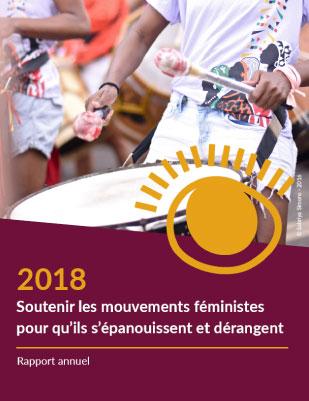
Ce rapport retrace et célèbre la première année du nouveau plan stratégique de l'AWID, et fait un retour en arrière sur nos premiers pas vers les objectifs visés, à savoir soutenir les mouvements féministes pour qu'ils prospèrent, remettent en question les programmes anti-droits et co-créent des réalités féministes.
Télécharger le rapport annuel 2018
Nous avons travaillé avec les féministes pour bousculer les programmes anti-droits et avons remporté d'importantes victoires au sein du système des Nations Unies avec l’inclusion, dans un certain nombre de résolutions, de termes novateurs sur la discrimination structurelle, les droits sexuels et les obligations des États. Oui, le système multilatéral est en crise et a besoin d'être sérieusement renforcé, mais ces victoires sont importantes car elles contribuent à la légitimité des revendications féministes et fournissent aux mouvements féministes davantage de points de pression et d'élan pour faire avancer nos programmes.
Nous avons essayé et testé différentes façons d’acquérir des connaissances avec les mouvements féministes à travers des webinaires, des podcasts et des discussions ‘en direct’. Nous avons développé des guides d’animation avec des éducateurs et éducatrices populaires pour récupérer des connaissances dans l'intérêt de la justice sociale et la justice de genre, même sur un sujet aussi opaque en apparence que les flux financiers illicites. Nous avons sollicité des blogs et des opinions sur la façon dont les groupes féministes se financent et se ressourcent, ainsi que fait la lumière sur les menaces qui pèsent sur nos systèmes de droits humains.
Au sein de l’AWID, nous avons pratiqué le leadership partagé et tiré des leçons de cette approche, et narré le récit des épreuves et des tribulations propres à la codirection d’une organisation mondiale virtuelle. Nous n’avons pas de réponse définitive quant à la forme que revêt le leadership féministe, mais un an plus tard, nous avons conscience que cet engagement continu envers l’apprentissage et l’expérimentation nous a permis de continuer à bâtir une organisation à laquelle nous sommes tou-te-s ravi-e-s de contribuer.
À l’heure où nous revenons sur l’année qui vient de s’écouler, nous souhaitons remercier tou-te-s nos ami-e-s et allié-e-s, collègues et camarades qui ont donné de leur temps et partagé avec nous leur richesse de savoir et de sagesse. Nous souhaitons remercier nos membres qui ont contribué à l’élaboration de notre plan stratégique et se sont joint-e-s à nous pour formuler des revendications féministes. Ce travail ne pourrait être réalisé sans vous.
Le financement extérieur inclut les subventions et autres formes de financement de la part de fondations philanthropiques, de gouvernements, de financeurs bilatéraux, multilatéraux ou d’entreprise et de donateur·rices individuel·les, qu’elles et ils soient de votre pays ou de l’étranger. Il exclut les ressources que les groupes, organisations et/ou mouvements génèrent de manière autonome (ressource en anglais), telles que les cotisations d’adhésion, contributions volontaires du personnel, de membres et/ou de soutiens, les collectes de fonds communautaires, les locations de salles et ventes de services. Les définitions des différents types de financement, ainsi que de courtes descriptions des différents bailleurs de fonds, sont incluses dans l’enquête pour une meilleure compréhension.
Nous aspirons à faire du Forum de l’AWID un réel rassemblement mondial, où participeront une gamme diverse de mouvements, de régions et de générations. Dans ce but, l’AWID mobilise des ressources pour un Fonds d’accès limité, qui soutiendra les coûts liés à la participation de certaines personnes au Forum.
Le 14ème Forum international de l’AWID se tiendra du 11 au 14 janvier 2020 à Taipei, à Taïwan.
Pour ce Forum de l’AWID, il n’y aura pas de processus de candidature.

En supplément, l’AWID financera la participation d’environ 100 personnes de la région d’accueil du Forum. Les membres des comités du Forum (Contenu et méthodologie, Accès et Accueil) ainsi que les membres du Groupe de travail des artistes recevront aussi un soutien du Fonds d'accès.
Nous avons listé d’autres options pour financer votre participation au Forum de l’AWID sur cette page qui contient des idées de financement.
.


Notre plan stratégique, intitulé “ Les réalités féministes ”, est arrivé à son terme à la fin de l’année 2022. Au cours des cinq dernières années, ce cadre audacieux nous a incité·es à aller au-delà des avenirs féministes et à reconnaître les solutions féministes et les modes de vie qui existent déjà, ici et maintenant. Des réalités qu’il convient de mettre en avant, de célébrer et de populariser. Le projet de récits multimédias Les économies féministes que nous adorons et la plateforme de connaissances Our:Resource sur les modalités autonomes d’obtention de ressources pour l’activisme féministe sont deux exemples de ce travail visionnaire, toujours profondément collectif avec une grande diversité de mouvements féministes.
Téléchargez le rapport annuel 2022
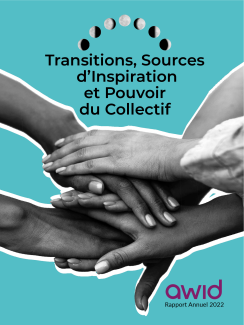
En faisant le bilan de ces derniers mois, nous vous invitons à célébrer avec nous des aboutissements heureux et des débuts prometteurs. Les changements et les transitions sont parties prenantes de la vie et des mouvements, que nous voulons accueillir avec intention et soins.
Yes, the survey is accessible to people with a diverse range of hearing, movement, sight, and cognitive abilities.
La cocréation de nos réalités féministes commence par nous-mêmes, et nos façons de nous traiter les un·e·s les autres. Nous nous efforçons de créer et de protéger des espaces qui sécurisent et soutiennent nos communautés, à la fois en ligne et en personne.
Nous envisageons aussi les espaces sécurisés et accueillants, tout comme cocréés, et dont la possession est partagée. Nous attendons de nos membres qu'iels agissent de façon éthique, responsable et cohérente vis-à-vis des valeurs de l’AWID, et qu'iels assument une responsabilité collective pour garantir un environnement de respect mutuel et de solidarité.
Remarque :
L’AWID se réserve le droit de supprimer des commentaires, suspendre ou révoquer l’adhésion de membres en cas de violation des règles de la communauté. Les membres de l’AWID ne sont pas autorisés à représenter l’AWID à titre officiel, sauf mention écrite contraire. Les membres ne peuvent pas utiliser les espaces de l’AWID à des fins de prosélytisme ou de recrutement de membres pour rejoindre une organisation ou une croyance religieuse. Les membres ne peuvent pas utiliser les espaces de l’AWID pour demander des fonds à des fins personnelles, bien que les liens vers des actions de levée de fonds ou des campagnes de mobilisation soit autorisés.