




Maria Auxiliadora Escalante Diaz
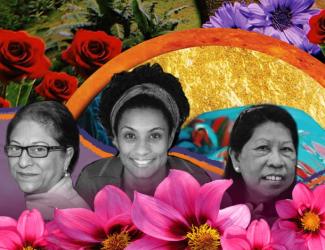
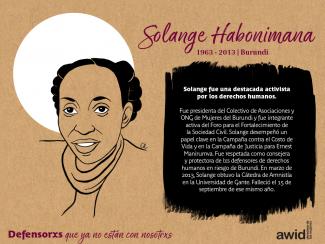
El Tributo de AWID es una exhibición de arte que honra a feministas, a activistas por los derechos de las mujeres y de la justicia social de todo el mundo que ya no están con nosotrxs.
El Tributo de este año cuenta y comparte las historias y narraciones de quienes crearon conjuntamente realidades feministas, ofrecieron visiones de alternativas a los sistemas y actores que nos oprimen, y propusieron nuevas formas de organizarnos, de movilizarnos, de luchar, de trabajar, de vivir y de aprender.
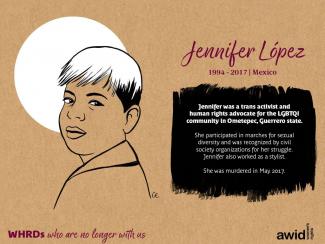
Se agregan a la galería 49 retratos nuevos de feministas y defensorxs de derechos humanos. Aunque muchxs feministas y defensorxs han fallecido debido a edad avanzada o enfermedad, muchísimxs han sido asesinadxs debido a su trabajo y por ser quienes eran.
Esta violencia creciente (de parte de Estados, empresas transnacionales, crimen organizado, sicarios no identificados, etc.) no se dirige solo a activistas individuales sino a nuestro trabajo común y a las realidades feministas.
Visita nuestra exhibición en línea
Lors retratos de 2020 fueron diseñados por la ilustradora y animadora galardonada, Louisa Bertman.
En AWID nos gustaría agradecer a las familias y organizaciones que nos compartieron sus historias personales, y así haber contribuido a este memorial. Nos unimos a ellxs para continuar el extraordinario trabajo de estxs activistas y defensorxs, y en el esfuerzo para asegurarnos de que se logre justicia en los casos que permanecen en la impunidad
"Ellos trataron de enterrarnos pero no sabían que éramos semillas."‐ Proverbio Mexicano
Primero tomó forma como una exposición física de retratos y biografías de feministas y activistas que habían fallecido, en el 12º Foro Internacional de AWID, en Turquía. Ahora vive como una galería en línea, que actualizamos cada año.
Desde 2012 hemos presentado más de 467 feministas y defensorxs.
Nos entusiasma compartir nuestro nuevo Plan Estratégico (2023-2027) con el mundo. Próximamente, AWID anunciará a nuestra comunidad y membresía al respecto.
La Asociación para los Derechos de las Mujeres y el Desarrollo es una organización feminista mundial, de membresía, que se dedica a brindar apoyo a los movimientos.
Por más de 35 años hemos formado parte de un increíble ecosistema de movimientos feministas que trabajan para alcanzar la justicia de género y los derechos humanos de las mujeres de todo el mundo.
AWID imagina un mundo donde las realidades feministas florezcan, donde los recursos y el poder sean compartidos de maneras que permitan a todxs, y a las generaciones futuras, prosperar y concretar plenamente su potencial con dignidad, amor y respeto, y donde la Tierra nutra la vida en toda su diversidad.
Nuestra misión es apoyar a los movimientos feministas, de derechos de las mujeres y por la justicia de género para que progresen y para que sean una fuerza impulsora de retos a los sistemas de opresión y para la creación conjunta de realidades feministas.
Desarrollamos nuestro trabajo a través de estas tácticas:
Hacemos uso colaborativo de nuestro acceso, poder, recursos y relaciones para influir estratégicamente sobre las políticas y las prácticas. Nos proponemos impulsar agendas feministas a través de nuestro trabajo con quienes tienen poder de decisión política, con financiadoras y con activistas en los espacios regionales y mundiales. Para reforzar nuestro poder e influencia colectivos, también procuramos influir sobre los movimientos feministas y de derechos de las mujeres para que pongan en lugar central a los movimientos históricamente oprimidos.
Utilizamos nuestro poder de convocatoria para facilitar el diálogo y pensar estrategias sobre temas clave. Conectamos a nuestra membresía y aliadxs entre sí, para que compartan e intercambien recursos, ideas y acciones sobre temas relevantes. Organizamos y facilitamos espacios en los que participan y se fortalecen diversos movimientos, espacios para imaginar y concebir nuevos futuros, para desarrollar tácticas de influencia efectivas y para crear juntxs agendas y procesos transformadores.
Trabajamos para movilizar a nuestra membresía y a los movimientos que apoyamos para fortalecer la acción colectiva en solidaridad con causas feministas y con lxs defensorxs que están en peligro. Construimos colaboraciones de largo plazo, nos comprometemos en la escucha activa y la solidaridad continua. Trabajamos con defensorxs para construir conocimiento, redes de apoyo y solidaridad para la protección y el bienestar.
Reconocemos el valor único y estratégico de las iniciativas culturales y creativas en la lucha contra la opresión y la injusticia. Trabajamos con artistas que le dan un lugar central a las voces feministas y a las narrativas de la comunidades históricamente oprimidas. En esta táctica emergente, vemos al arte y la expresión creativa como algo que nos ayuda a concebir un mundo donde las realidades feministas siguen floreciendo y sigan siendo celebradas.
Nuestras iniciativas trabajan en las intersecciones de escenarios de cambio que buscamos abordar, de los movimientos que priorizamos y de las tácticas que usamos:
Monitoreamos, documentamos y hacemos visible cómo están operando y aglutinándose lxs actorxs anti-derechos en los espacios multilaterales y apoyamos a los movimientos feministas, de derechos de las mujeres y por la justicia de género y sus aliadxs para contrarrestar esa influencia e impacto.
Desde perspectivas como el extractivismo, la justicia impositiva y la rendición de cuentas corporativa, construimos conocimiento sobre el poder corporativo y su influencia; abogamos por que las empresas asuman sus responsabilidad así como por la distribución equitativa de la riqueza, y amplificamos las propuestas feministas para lograr economías justas.
Desarrollamos análisis accesibles y orientados a la acción acerca del estado del financiamiento para los movimientos feministas. Nos proponemos influir sobre las políticas y prácticas de las financiadoras, incrementar y sostener el financiamiento para el cambio social feminista, y apoyar las necesidades y estrategias de los movimientos.
Además del impacto que pretendemos tener en el mundo, AWID está expresamente comprometida con el fortalecimiento de nuestro propio aprendizaje y resiliencia organizacionales, para poder fortalecer mejor a los movimientos feministas del mundo.
¡Muchas Gracias!
Sin el generoso aporte y apoyo de nuestros donantes, nuestro trabajo no sería posible.
Para preguntas adicionales, por favor escríbenos utilizando nuestro formulario de contacto. Selecciona «14o Foro de AWID» como asunto de mensaje.
Women sustain Care | Care Sustains Life | Life Sustains Economy | Who takes care of women? | Not one less1 | Together | Sunday lunch
1Nenhuna a menos literally translates as “not one woman less” or “ni una menos” in Spanish - a famous feminist slogan in Latin America that emerged in Argentina as a response to increasing gender-based violence.
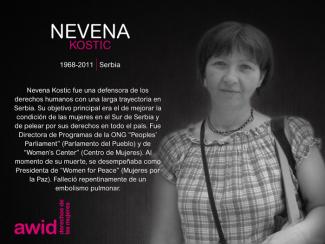
L’AWID rend hommage aux féministes et défenseur-e-s des droits humains qui ne sont plus parmi nous, et dont les contributions à l’avancement des droits humains nous font cruellement défaut.
L’hommage se présente sous forme d’une exposition de portraits d’activistes du monde entier qui ne sont plus parmi nous qui ont lutté pour les droits des femmes et la justice sociale.
Célébré en 2012 à l’occasion du lancement du 12e Forum international de l’AWID en Turquie, le premier hommage aux défenseur-e-s des droits humains a pris la forme d’une exposition de portraits et de biographies de féministes et d’activistes disparu-e-s. Des participant-e-s au Forum ont décrit cette initiative comme « une manière à la fois unique, émouvante et vivifiante de célébrer notre histoire collective ».
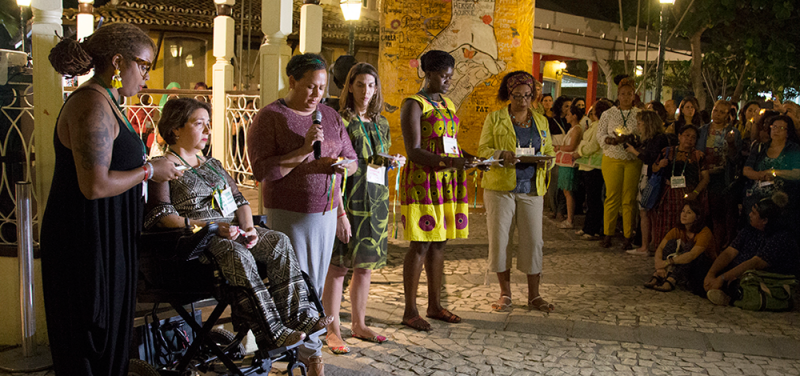
Lors du 13e Forum international au Brésil, nous avons célébré les activistes féministes et les défenseur-e-s des droits humains qui nous ont quitté-e-s ou qui ont été assassiné-e-s avec une cérémonie de dévoilement d’une peinture murale, un spectacle de danse et un rituel brésilien.
Entre la tenue de ces différents événements, l’hommage continue sous forme d’une galerie en ligne, mise à jour chaque année à l’occasion de la campagne de 16 jours d’action contre la violence basée sur le genre (25 novembre-10 décembre).
Depuis 2012, plus de 400 féministes et défenseur-e-s des droits humains issues de 11 régions et 80 pays ont été incluses dans notre Hommage.
L’AWID tient à remercier les familles et les organisations qui ont partagé leurs histoires personnelles et contribué à cette commémoration. Nous nous engageons auprès d’elles à poursuivre le travail remarquable de ces militant-e-s et nous ne ménagerons aucun effort pour que justice soit faite dans les cas qui demeurent impunis.
Visitez l’expo de l’hommage en ligne
Outre l’hommage rendu à ces incroyables activistes, nous souhaitons faire la lumière sur le sort de ces défenseur-e-s des droits humains qui ont disparu ou ont été assassin-é-es.
Un tiers des activistes présenté-e-s dans cet hommage ont été assassiné-e-s ou sont disparu-e-s dans des circonstances obscures. Iels ont été visé-e-s personnellement, en raison du travail qu’iels réalisaient afin de défier :
Ce fut notamment le cas d’Agnes Torres, du Mexique, assassinée en raison de son identité de genre et de son orientation sexuelle, de Cheryl Ananayo, une militante écologiste originaire des Philippines, assassinée alors qu’elle luttait contre une société minière, ou encore de Ruqia Hassan, une journaliste indépendante et bloggeuse syrienne, assassinée pour avoir critiqué l’Etat. Et de très nombreu-x-ses autres.
Avec cet hommage aux défenseur-e-s des droits humains, nous inscrivons tou-s-tes ces activistes dans notre mémoire collective et portons l’héritage de leurs luttes comme le flambeau qui éclaire les actions de nos mouvements féministes et en faveur des droits des femmes. Nous reconnaissons que la sécurité, la sûreté et le souci de soi doivent être des priorités dans l’ensemble de nos programmes politiques, et appelons ainsi tous les gouvernements et les organes internationaux à lutter contre la violence contre les féministes et les défenseur-e-s des droits humains.
Consideramos a Taipéi como el mejor lugar de la región Asia-Pacífico para construir ese espacio seguro y rebelde destinado a nuestra comunidad feminista global.
Taipéi ofrece un cierto grado de estabilidad y seguridad para la diversidad de participantes que convocamos al Foro. Tiene también capacidad logística, y resulta accesible para muchxs viajerxs (con la facilitación de un trámite de visa electrónico para conferencias internacionales).
El Foro es bien recibido por el movimiento feminista local, que está muy interesado en interactuar con feministas de todo el mundo.
Sí, es accesible para personas con diverso grado de discapacidades auditivas, visuales, cognitivas y de movilidad.
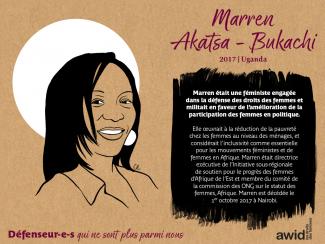
Ces défenseuses ont fait campagne pour les droits fonciers et ont lutté pour les droits des femmes et des peuples autochtones. Elles se sont opposées aux industries extractives, ont écrit de la poésie et se sont battues pour que l'amour prévale. L'une d'entre elles nous a quitté il y a dix-neuf ans. Nous vous invitons à vous joindre à nous pour rendre hommage à ces défenseuses, à leur travail et à l’héritage qu’elles nous ont laissé. Faites circuler ces mèmes auprès de vos collègues et amis ainsi que dans vos réseaux et twittez en utilisant les hashtags #WHRDTribute et #16Jours.
S'il vous plaît cliquez sur chaque image ci-dessous pour voir une version plus grande et pour télécharger comme un fichier


La durée est estimée à 30 minutes.
Vivimos en un mundo donde la destrucción de la naturaleza alimenta nuestra economía global actual. |
Incluso en tiempos de crisis climática, los gobiernos continúan alentando el crecimiento de las industrias agrícolas a gran escala. Estas actividades envenenan la tierra, amenazan la biodiversidad y destruyen la producción de alimentos y los medios de vida locales. Mientras tanto, aunque las mujeres producen la mayoría de nuestros alimentos en el mundo, casi no poseen tierra. |
|
¿Qué pasaría si percibiéramos la tierra y la Naturaleza no como una propiedad privada para ser explotada, sino como una totalidad con la cual aprender y coexistir en armonía? ¿Y si repararíamos nuestras relaciones con la tierra y adoptaríamos alternativas más sostenibles que nutran tanto al planeta como a sus comunidades? Nous Sommes la Solution (Somos la Solución, NSS) es uno de los muchos movimientos liderados por mujeres que se esfuerzan por lograr este objetivo. Esta es su historia. |
|
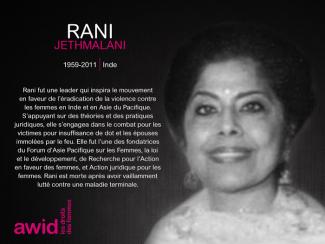
Cette année, notre hommage en ligne met à l’honneur 7 défenseuses des droits humains originaires de différents pays d'Asie du Sud et du Sud-Est. Ces défenseuses ont grandement contribué aux progrès accomplis dans le domaine des droits des peuples autochtones, des droits des femmes et du droit à l'éducation. Ces défenseuses étaient des avocates, des activistes des droits des femmes, des universitaires ou des responsables politiques. Nous vous invitons à vous joindre à nous pour commémorer la vie de ces femmes, leur travail et l’héritage qu’elles nous ont laissé. Faites circuler ces mèmes auprès de vos collègues et amis ainsi que dans vos réseaux et twittez en utilisant les hashtags #WHRDTribute et #16Jours.
S'il vous plaît cliquez sur chaque image ci-dessous pour voir une version plus grande et pour télécharger comme un fichier


