
Clara Luper
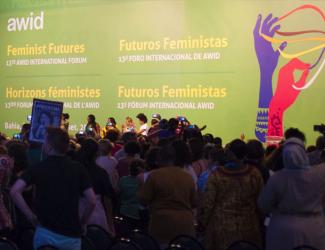
En septiembre de 2016, 1800 feministas y activistas por los derechos de las mujeres de todos los rincones de nuestros movimientos se congregaron en las costas de Bahia, en el 13º Foro Internacional de AWID.
En esta sección se destacan los logros, los aprendizajes y los recursos que surgieron de las ricas conversaciones mantenidas. Te invitamos a analizar, compartir y comentar.
Uno de los aportes más importantes del Foro fue la necesidad de ampliar y profundizar nuestro trabajo entre movimientos, frente a la confluencia de los fascismos en auge, fundamentalismos, codicia corporativa y cambio climático.
Nuestras Iniciativas Semilla han ayudado a 20 ideas que surgieron en el Foro para crecer en forma de acciones concretas
El vídeo «Defendiendo a las Personas y al Planeta» y la guía «Tejiendo la resistencia a través de la acción» estan protagonizados por defensoras de derechos humanos y presentan estrategias concretas para confrontar al poder corporativo
Con nuestras animaciones El estado de nuestros movimientos feministas y Justicia climática y ambiental, los movimientos ahora tienen herramientas creativas para apoyar su trabajo.
La compilación de las expresiones artísticas «Los Movimientos Importan», sigue inspirando una organización más fuerte y creativa en todo el mundo.
Los movimientos también pueden beneficiarse de nuevas metodologías para imaginar nuestros futuros feministas (¡pronto!)
AWID se ha comprometido, mediante su próximo plan estratégico y su proceso del Foro, a continuar y profundizar las relaciones, las lecciones y los procesos iniciados en el Foro 2016 y basándonos en el momento actual.
Los Foros de AWID comenzaron en 1983 en Washington DC. Desde entonces, el evento ha crecido hasta convertirse en muchas cosas para muchas personas: un proceso iterativo para darle forma a nuestros análisis, objetivos y acciones; un hito crucial que fortalece los feminismos de lxs participantes e infunde energías a sus procesos de organización; un hogar político donde lxs defensoras de derechos humanos encuentran un santuario y solidaridad.
As feminist and labour movements, together in solidarity, we articulate the following points as a collective vision for care economies with domestic workers rights at the centre. We call on feminist and social movements to join the call to rethink the economy with care at its centre recognising the rights, agency and leadership of domestic worker movements.
Domestic and care work is in the limelight after the COVID-19 global pandemic as it provided the means to carry the world through multiple intersecting crises at the global scale. The World Bank, the International Monetary Fund, and other multilateral institutions also acknowledge the importance of care and domestic work in sustaining the world’s economy. However, it is our analysis that this recognition most often takes an instrumentalist approach (i.e. care work sustains the ‘productive’ economy) focused on profiteering from care work without recognizing care as a human right and public good, or providing recognition and rights to the workers undertaking the bulk of this labour.
by Chinelo Onwualu
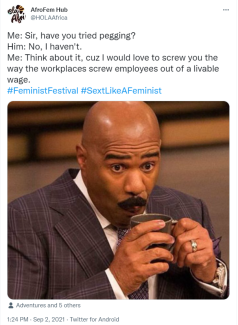
Le 2 septembre 2021, les géniales féministes et activistes pour la justice sociale du festival de l’AWID Crear | Résister | Transform se sont retrouvées, non seulement pour mettre en commun leurs stratégies de résistance, cocréer et transformer le monde, mais également pour parler crûment sur Twitter.
L’AWID a commencé à préparer ce rapport annuel au moment même où la pandémie mondiale commençait à bouleverser nos modes de rassemblement, d’organisation et de vie. Nous ne pouvons donc passer en revue notre travail sans prendre en compte l’influence de la COVID-19 dans notre évaluation.
Téléchargez le rapport annuel 2019 complet (PDF)
Elle est une affirmation urgente de l’existence d’autres façons, plus justes, d’organiser nos vies. En 2019, des centaines de groupes ont partagé avec nous leurs expériences et leurs propositions : des réseaux radicaux de soutien communautaire en Amérique latine, qui facilitent l’avortement autogéré, aux pratiques économiques centrées sur les communautés en Indonésie et aux systèmes alimentaires communautaires en Inde et aux États-Unis, en passant par une réinvention et une nouvelle pratique de rites de passage sans danger en Sierra Leone. Ce sont ces expériences qui traceront la voie d’une « nouvelle norme ».
Pour autant, les historiques d'oppression et de violence peuvent rendre l'imagination des possibles compliquée. Un élément clé de notre travail en 2019 a été d’initier ces pistes via la boîte à outils visant à soutenir les groupes qui cherchent à dénicher des histoires et des aspirations, piliers de propositions féministes.
Au sein de l'Observatoire de l'universalité des droits (OURs), de Feminists for a Bing Treaty (Féministes pour un traité contraignant), de Count Me In ! (Comptez sur moi!) et d’autres alliances, l’AWID n’a pas cessé de contrer le pouvoir débridé des entreprises et les agendas fascistes et fondamentalistes qui mettent à mal les droits des femmes et la justice de genre. Dans un contexte de perspectives sombres pour un changement transformateur par les processus multilatéraux et de capacités limitées à réagir pour la plupart des États, nous redoublons d'efforts pour nous assurer que les mouvements féministes, dans toute leur diversité, soient dotés de ressources adaptées aux rôles majeurs qu'ils jouent – en soutenant leurs communautés, en réclamant des droits et en répondant aux crises. En 2019, nous avons introduit des principes et des approches féministes aux fonds révolutionnaires tels que l'Initiative Spotlight et le Fonds Égalité. Nous avons de plus réussi à mobiliser des ressources via des aides à l’amorçage de réalités féministes, financées par des bailleurs féministes.
À l’heure où nous nous penchons vers l'avenir, le contexte appelle clairement à une transformation de nos stratégies d'organisation :
L’AWID se lance dans un nouveau modèle d'adhésion qui permet un meilleur accès et met l'accent sur les opportunités d'engagement et de connexion entre membres. Nous continuerons d'expérimenter différents outils et processus en ligne pour renforcer notre communauté. Et l'engagement inter-mouvements restera au cœur de notre travail. Nos actions solidaires envers les mouvements et les identités opprimées, même et surtout lorsqu’ils sont marginalisés, sont importantes pour conduire le changement et soutenir des mouvements, inclusifs pour tou·te·s.
Nous sommes résilient·e·s, nous nous adaptons et nous sommes présent·e·s les un·e·s pour les autres. Nous devrons continuer à faire encore mieux. Merci à toutes les personnes qui nous accompagnent dans cette aventure.
Pour la première fois, le Forum de l'AWID propose trois modes de participation :
Les participant.e.s se réuniront à Bangkok, en Thaïlande. Nous sommes impatient.e.s de vous y retrouver!
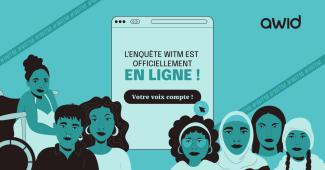
L'enquête "Où est l'argent?" #WITM est maintenant en ligne ! Plongez dans l'enquête et partagez votre expérience du financement de votre organisation avec des féministes du monde entier.
En savoir plus et participer à l’enquête!
Les mouvements féministes, en faveur des droits des femmes et leurs allié-e-s du monde entier s’opposent au pouvoir et imaginent de nouvelles politiques de libération. Des ressources économiques et politiques aux actes quotidiens de résistance et de survie, les contributions qui viennent nourrir ce travail revêtent de nombreuses formes.
L’initiative de l’AWID, Ressources des mouvements féministes (Resourcing Feminist Movements, RFM), met en lumière l’écosystème de financement actuel, qui va des modèles d’attribution des ressources auto-générée aux voies de financement officielles.
A travers nos recherches et analyses, nous examinons de quelles façons les pratiques de financement pourraient mieux servir nos mouvements. Nous faisons une étude critique des contradictions propres au “financement” de la transformation sociale, compte tenu notamment de la répression politique croissante, des programmes anti-droits et du pouvoir grandissant des entreprises. Mais surtout, nous élaborons des stratégies collectives en appui à des mouvements fleurissants, solides et résilients.
Créer et élargir les alternatives : Nous développons les pratiques de financement qui accordent une place prépondérante aux priorités des activistes et impliquons un large éventail de donateurs et d’activistes dans la création de nouveaux modèles dynamiques d’attribution de ressources en faveur des mouvements féministes, en particulier dans un contexte qui voit l’espace de participation de la société civile diminuer considérablement.
Enrichir nos connaissances : Nous explorons, échangeons et consolidons nos connaissances sur la façon dont les mouvements attirent, organisent et utilisent les ressources qui leur sont nécessaires pour entreprendre des changements significatifs.
Plaider : Nous travaillons en partenariat, comme avec le Count Me In! Consortium, afin d’influencer les programmes de financement et permettre aux mouvements féministes d’être en dialogue direct pour déplacer le pouvoir et l’argent.
La montée de la droite dans nombre de pays et le déluge de coupes dans les financements frappent durement la société civile de la Majorité mondiale ; le génocide en cours à Gaza, l’intensification des conflits violents au Soudan, la crise climatique à de nombreux endroits de notre planète : nous faisons face à des fascismes qui reviennent en force et un ordre mondial de l’impunité.
Téléchargez le rapport annuel 2024
Ensemble, nous pouvons construire un monde où la justice, la libération et la bienveillance ne sont pas des aspirations, mais des réalités.
ประเด็นหลักของเวที – ลุกขึ้นพร้อมกัน (Rising Together) เป็นการเชิญชวนให้ทุกคนกลับมาอยู่กับตัวเองเพื่อเชื่อมต่อซึ่งกันและกันอย่างมีสมาธิ เอาใจใส่ และกล้าหาญ เพื่อให้เราสามารถรู้สึกถึงจังหวะการเต้น ของหัวใจของการเคลื่อนไหวทั่วโลก และลุกขึ้นมารับมือกับความท้าทายในยุคนี้ไปด้วยกัน
นักสตรีนิยม นักปกป้องสิทธิสตรี ความยุติธรรมทางเพศ LBTQI+ และขบวนการพันธมิตรทั่วโลกกำลังอยู่ ในช่วงหัวเลี้ยวหัวต่อที่สำคัญ คือเผชิญกับแรงตอบโต้สิทธิเสรีภาพที่เคยได้รับก่อนหน้านี้ ช่วงไม่กี่ปีที่ผ่านมา ลัทธิอำนาจนิยมเติบโตอย่างรวดเร็ว การปราบปรามภาคประชาสังคมอย่างรุนแรง และการทำให้สตรีและ นักปกป้องสิทธิมนุษยชนที่มีความหลากหลายทางเพศกลายเป็นอาชญากร สงครามและความขัดแย้งที่ ทวีความรุนแรงขึ้นในหลายส่วนของโลก ความอยุติธรรมทางเศรษฐกิจยังคงดำเนินต่อไป รวมทั้งวิกฤตการณ์ ด้านสุขภาพ นิเวศวิทยาและสภาพภูมิอากาศ
การเคลื่อนไหวของเรากำลังสั่นคลอน และในขณะเดียวกันเราก็พยายามสร้างและดำรงความเข้มแข็งและ อดทนเพื่องานข้างหน้า เราไม่สามารถทำงานนี้โดยลำพังในห้องเล็กๆของเราได้ การเชื่อมต่อและ การเยียวยาจึงเป็นสิ่งสำคัญในการปรับเปลี่ยนความไม่สมดุลของพลังงานและข้อบกพร่องภายในการเคลื่อน ไหวของเราเอง เราต้องทำงานและวางยุทธศาสตร์ในลักษณะที่เชื่อมโยงกัน เพื่อที่เราจะสามารถเติบโต ไปด้วยกันได้ เวที AWID จะส่งเสริมองค์ประกอบสำคัญของการเชื่อมโยงถึงกันกับพลังความสามารถ การเติบโต และการสร้างความเปลี่ยนแปลงของนักสตรีนิยมทั่วโลก
The AWID Forum has always been a space that doesn’t shy away from much needed and difficult conversations. We welcome these submissions when the organizers can carefully hold a respectful and safer space for the participants.
Inna es una activista y socióloga feminista queer. Posee muchos años de profundo compromiso con las luchas feministas y LGBTQI+, la educación en política y en procesos de organización de y para las mujeres migrantes, así como por la liberación de y la solidaridad con Palestina. Se incorporó a AWID en 2016 y cumplió diferentes funciones, la más reciente como Directora de Programas. Reside en Berlín (Alemania), creció en Haifa (Palestina/Israel), nació en San Petersburgo (Rusia), y ha puesto todo ese recorrido geográfico político y de resistencia a los colonialismos pasados y presentes al servicio del activismo feminista y la solidaridad transnacional.
Inna es autora de Women's Economic Empowerment: Feminism, Neoliberalism, and the State (Empoderamiento económico de las mujeres: Feminismo, neoliberalismo y Estado. Palgrave Macmillan, 2022), basado en la tesis que le valió un doctorado de la Universidad Humboldt de Berlín. Como académica, impartió cursos sobre globalización, producción de conocimientos, identidad y pertenencia. Inna posee una maestría en Estudios Culturales de la Universidad Hebrea de Jerusalén. Integra la Junta de Jewish Voice for a Just Peace in the Middle East (Voces Judías por una Paz Justa en Medio Oriente, Alemania) y, con anterioridad, fue miembro de la Junta de +972 Advancement of Citizen Journalism (+972 Avance del Periodismo Ciudadano). Antes, Inna trabajó con la Coalición de Mujeres por la Paz y es una apasionada de la movilización de recursos para el activismo de base.
Communiquer le désir
Hôte: On pense souvent que la communication de notre désir se cantonne à l’intimité des quatre murs de nos chambres et à nos relations personnelles. Mais est-il également possible d’envisager ce genre de communication comme étant structurelle, une pratique qui éclairerait notre travail et la manière dont nous sommes, dont nous existons dans le monde?

LindiweJe pense que, malheureusement, l’expression de notre sexualité par le passé était restreinte. On était autorisées à l’exprimer dans le strict cadre du mariage, ce qui était permis, mais il y a toujours eu des tabous et une stigmatisation relative à toute autre forme d’expression. Évidemment, lorsqu’il est question de communication, le fait que certaines stigmatisations sont liées à l’expression de notre sexualité ou de nos désirs complique largement la communication dans la chambre ou de manière intime avec notre partenaire. Mon expérience personnelle me fait croire que si je suis beaucoup plus à l’aise à m’exprimer sur d’autres sujets thématiques ou sujets en dehors de la chambre, il m’est plus facile de construire cette confiance parce que je comprends la modalité de résolution de conflits avec cette personne en particulier, je comprends exactement comment rendre la communication spéciale avec cette personne. Ce n’est pas facile. C’est quelque chose que l’on fait tout au long de notre engagement, quel qu’il soit, qu’il s’agisse d’une relation durable ou que cela soit plus informel et ponctuel. Mais je crois que la confiance à l’extérieur peut assurément traduire la manière dont nous communiquons notre désir.
Manal
Depuis la petite enfance, les femmes sont éduquées à coups de « tu n’es pas autorisée à parler de ton corps, tu n’es pas autorisée à parler de ton désir », qui posent une lourde responsabilité sur leurs épaules, et particulièrement des filles à l’adolescence lorsqu’elles ont besoin de s’exprimer et de parler de ces questions. Donc moi, je pense que c’est un gros problème. Tu sais, je suis mariée depuis plus de 25 ans, mais encore aujourd’hui, je ne peux pas parler de mes désirs. Je ne peux pas dire ce que je veux ou ce que je préfère, parce que c’est comme si je n’étais pas autorisée à franchir cette ligne. C’est comme si c’était péché, bien que ce soit mon droit. Et c’est le cas pour toutes mes amies, elles ne peuvent pas s’exprimer de la bonne manière.
Louise
Personnellement, je trouve que l’expression de nos désirs, de mes désirs, quelle que soit la forme que prend cette expression, a à voir avec l’autre, avec le regard que cet autre poserait sur moi. Donc c’est également quelque chose que l’on peut relier au cinéma. Et sur le regard que je poserais sur moi-même aussi : ce que je pense être en tant que personne, mais également ce que la société attend de moi et de ma sexualité. J’ai, par le passé, en quelque sorte fait l’analogie entre ce qui se passe dans la chambre et ce qui se passe sur le lieu du travail, parce qu’il y a parfois cette dynamique de pouvoir, que je le veuille ou non. Et souvent, la communication verbale est plus difficile qu’on ne le pense. Mais quand il est question de représentation dans les films, c’est alors complètement différent. Lorsqu’il est question de simplement communiquer des désirs sexuels dans la chambre ou en dehors, on est très loin de ce que je suppose que nous toutes ici voudrions voir à l’écran.
Hôte: On peut considérer le monde numérique comme étant incarné : alors qu’il peut être virtuel, il n’en est pas moins réel. Et cela a été clairement démontré dans le contexte du Festival des réalités féministes de l’AWID, qui s’est tenu entièrement en ligne. Qu’est-ce que cela signifie, alors, de parler de sexualité, collectivement, politiquement, dans des espaces en ligne? Est-ce que nous naviguons dans les espaces virtuels avec nos corps et nos affects? Et dans ce cas, quels sont les différents éléments à prendre en compte? Qu’est-ce que cela fait à la communication et à la représentation?

LindiweLes réseaux sociaux nous donnent l’impression d’être dans la communauté. Quand on exprime ce qu’on veut ou ce qu’on aime, il y a toujours une personne qui sera d’accord ou pas d’accord, mais celles qui sont d’accord vous donnent le sentiment d’appartenir à une communauté. Donc, c’est plus facile de lancer ça dans l’univers, ou au vu de tout le monde, et de potentiellement ne pas recevoir autant de jugements. Et je parle là en termes très vagues parce que, selon ce que tu exprimes, tu seras vilipendée ou célébrée. Mais quand on est dans la chambre, il y a une certaine intimité à laquelle s’ajoute presque une vulnérabilité qui t’exposent et qui exposent différentes parties de toi, sur lesquelles il n’est pas aussi facile de donner son avis. Quand il est question d’exprimer ton désir, il est beaucoup plus facile d’en parler, de le dire et peut-être même de faire un tweet ou un billet sur les réseaux sociaux, ou même d’aimer et de lire ce que disent d’autres communautés qui pensent de la même manière, que de dire à ta ou ton partenaire « c’est comme ça que je veux ressentir du plaisir » ou « voilà comment je veux que tu fasses ensuite », à cause de la peur du rejet. Mais ce n’est pas tout, rien que la vulnérabilité – de permettre à l’autre personne de te voir à nu au point de savoir à quoi tu penses, ce que tu ressens et ce que tu veux – je pense que c’est là que la différence se ferait pour moi, personnellement. Je pense que c’est beaucoup plus communautaire sur les réseaux sociaux, et c’est plus facile de se lancer dans le récit. Alors que dans la chambre, tu n’as pas forcément envie de tout gâcher. Mais je pense que ça nous aide aussi, en quelque sorte, à comprendre, selon la relation avec la personne, comment agir par la suite. Donc, je sais toujours que si j’essaie de communiquer quelque chose et que je n’y parviens pas sur le moment, je peux toujours essayer d’en parler plus tard et voir quelle est la réaction, pour savoir comment l’aborder ensuite.
LouiseTu sais, la question dans les films c’est que je ne sais pas si le regard masculin est vraiment intentionnel ou pas. On n’en sait vraiment rien, en fait. Ce qu’on sait, c’est que la raison pour laquelle la sexualité en général a toujours été si hétéronormative et centrée sur la pénétration et qu’elle ne donne pas de place aux femmes pour qu’elles puissent vraiment demander quoi que ce soit dans les films, c’est parce que la plupart des gens qui travaillent dans cette industrie et qui prennent les décisions en matière de, tu sais, le déroulement de l’histoire et du montage, sont des hommes blancs. Donc, la revanche suite au viol, c’est ce genre de film très bizarre qui est apparu dans les années 1970, où pendant la moitié de l’histoire, il y aurait une femme qui est violée par une personne ou par plusieurs personnes, et dans l’autre moitié elle obtiendrait sa revanche. Donc, généralement, elle en viendrait à assassiner et à tuer les personnes qui l’ont violée, et parfois d’autres personnes de proximité. Au début de la naissance de ce genre et pendant une trentaine d’années au moins, ces films étaient produits et réalisés par des hommes. C’est aussi pour ça que nous voulons une telle représentation. Beaucoup de féministes et de pionnières dans la réalisation de films queer se sont également servies du fait de filmer pour y parvenir ainsi que pour réclamer leur propre sexualité. Je pense à Barbara Hammer, qui est une féministe et une pionnière queer du cinéma expérimental aux États-Unis, qui a décidé de filmer des femmes faisant du sexe en 16 mm et, ce faisant, réclamé un espace au sein des récits dans les films à cette époque. Il y a également la question de l’invisibilisation : on sait maintenant, grâce à Internet et au partage des connaissances, que les réalisatrices femmes et queer essaient de faire des films depuis les débuts du cinéma. On ne s’en rend compte que maintenant, parce qu’on a accès aux bases de données d’activistes, de conservatrices et de réalisatrices.
Hôte: Ça nous permet d’ouvrir la discussion sur l’importance de maintenir nos histoires féministes vivantes. Les mondes en ligne ont également joué un rôle essentiel dans la documentation des protestations et de la résistance. Du Soudan à la Palestine et à la Colombie, les féministes ont déferlé sur nos écrans, remettant en question les réalités de l’occupation, du capitalisme et de l’oppression. Pourrions-nous alors parler de communiquer le désir – le désir de quelque chose d’autre – comme d’une décolonisation?
ManalC’est peut-être parce que mon village ne compte que 600 habitantes et habitants et qu’il n’est constitué que d’une seule famille, les Tamimi, mais il n’y a aucun obstacle entre les hommes et les femmes. Nous faisons tout ensemble. Donc, lorsque nous avons commencé notre résistance non violente ou lorsque nous avons rejoint la résistance non violente en Palestine, il n’était nullement question de savoir si les femmes devraient ou non y participer. Nous avons assumé un rôle très important au sein de ce mouvement ici au village. Mais lorsque d’autres villages et d’autres lieux ont commencé à se joindre à nos manifestations hebdomadaires, certains hommes se sont dit que si des femmes participaient ou rejoignaient les mobilisations, elles se battraient alors avec des soldats, signifiant qu’elles seraient des femmes faciles. Il y a eu des hommes qui n’étaient pas du village et qui ont essayé de harceler sexuellement les femmes. Mais une femme forte qui est capable de se tenir face à un soldat peut également se tenir face au harcèlement sexuel. Parfois, lorsque des femmes d’autres lieux se joignent à nos protestations, elles sont tout d’abord timides, elles n’osent pas s’approcher parce qu’il y a de nombreux hommes. Si tu veux rejoindre une manifestation, si tu veux faire partie du mouvement non violent, tu dois éliminer toutes ces restrictions et toutes ces pensées de ton esprit. Tu ne dois te concentrer que sur la lutte pour tes droits. Malheureusement, l’occupation israélienne est consciente de cette question. Par exemple, la première fois où j’ai été arrêtée, comme je porte le hijab, ils ont essayé de me l’enlever; ils ont essayé de m’enlever mes vêtements, devant tout le monde. Il y avait quelque 300 à 400 personnes, et ils ont essayé de me déshabiller. Quand ils m’ont emmenée pour l’interrogatoire, l’interrogateur m’a dit : « On a fait ça parce qu’on veut punir d’autres femmes par ton biais. On connaît ta culture. » Alors je lui ai répondu : « Je m’en fous, j’ai fait quelque chose en quoi je crois. Même si tu enlèves tous mes vêtements, tout le monde sait que Manal est en résistance. »
LindiweJe pense que même d’un point de vue culturel, ce qui est très ironique si on prend en compte la culture en Afrique, montrer sa peau n’était pas un problème avant d’être colonisée. Porter des peaux ou des cuirs d’animaux pour se protéger n’était pas un problème et les gens n’étaient pas aussi sexualisés, sauf dans un contexte approprié. Mais nous, nous sommes conditionnées à dire : « Tu devrais te couvrir », et dès que l’on n’est pas couverte on est exposée, et ça, c’est sexualisé. La nudité est sexualisée, contrairement à juste être nue; ils ne veulent pas qu’une petite fille soit nue. Mais quel genre de société avons-nous conditionnée pour nous-mêmes, si c’est pour sexualiser une personne qui est nue en dehors du contexte d’une relation sexuelle? Mais l’environnement joue un rôle prépondérant, parce que nos parents, nos grands-mères et nos tantes nous disent : « Ne t’habille pas de manière inappropriée » ou « Non, ça c’est trop court ». Donc, on entend ça d’abord à la maison, et ensuite quand on est exposée à l’extérieur, selon l’environnement, qu’il soit eurocentré ou plus occidentalisé que ce à quoi tu es habituée, alors tu es en quelque sorte libre d’être comme tu veux. Et même là, aussi libre que tu sois, il y a quand même beaucoup de choses qui vont avec, entre les remarques dans la rue et les gens qui continuent à sexualiser ton corps. Tu pourrais porter une jupe courte, et quelqu’un se dirait qu’il a le droit de te toucher sans ta permission. Tellement de choses sont associées avec la réglementation et le contrôle des corps des femmes, et cette rhétorique commence à la maison. Et après, quand tu vas dans ta communauté et dans la société, cette rhétorique continue et tu te rends compte que tu es sexualisée par la société dans son ensemble, particulièrement en tant que personne de couleur.

Hôte: Et enfin, de quelle manière notre résistance peut-elle être davantage que ce à quoi nous sommes autorisées? Y a-t-il un endroit pour le plaisir et pour la joie, pour nous et nos communautés?
LouiseTrouver le plaisir en tant que résistance et la résistance dans le plaisir, il y a pour moi tout d’abord cette idée du cinéma comme guérilla, ou l’action de filmer quand on ne devrait pas, ou lorsque quelqu’un t’a dit de ne pas le faire, ce qui est le cas pour de nombreuses réalisatrices femmes et queer dans le monde actuellement. Au Liban, par exemple, qui est une scène du cinéma que je connais très bien, la plupart des histoires lesbiennes que j’ai vues avaient été filmées par des étudiantes en format très court avec « aucune valeur de production » comme on le dit en Occident – ce qui signifie sans argent, à cause de la censure au niveau institutionnel, mais également au sein de la famille et de la sphère privée. À mon avis, filmer quoi que ce soit, mais aussi filmer le plaisir et le plaisir dans les histoires lesbiennes, est un acte de résistance en soi. Très souvent, s’emparer d’une caméra et trouver quelqu’un pour le montage et quelqu’un pour jouer est extrêmement difficile et nécessite un fort positionnement politique.
LindiweJ’ai un groupe de soutien pour les victimes de viol. J’essaie d’aider les femmes à se réintégrer d’un point de vue sexuel : vouloir à nouveau avoir des relations intimes, ne pas laisser leur traumatisme avoir une telle influence sur leur avenir. Ce n’est pas chose facile, mais c’est individuel. Donc, je commence toujours par la compréhension de son corps. Je pense que plus on le comprend et l’aime et plus on en est fière, plus on est capable de permettre quelqu’un d’autre dans cet espace. J’appelle ça « la formation à la sensualité », et je les accompagne pour qu’elles commencent à se voir non pas comme des objets sexuels, mais comme des objets de plaisir et de désir qui peuvent être interchangeables. Donc, on mérite de recevoir et de donner. Mais ce n’est pas simplement d’un point de vue psychologique, c’est aussi physique. Quand tu sors de la douche, quand tu sors du bain, et que tu enduis ton corps avec du lait de toilette, regarde toutes les parties de ton corps, touche toutes les parties de ton corps, découvre là où il y a des changements, apprends à connaître ton corps de telle manière que tu sais quand un nouveau bouton apparaît sur ton genou, tu te connais si bien que tu sais qu’il y a quelques heures, il n’était pas là. Donc, des choses comme ça, où je fais en sorte que les femmes s’aiment de l’intérieur, pour sentir qu’elles méritent d’être aimées dans un lieu sûr, c’est comme ça que je les oriente pour qu’elles réclament leur sexualité et leur désir.
ManalTu sais, nous avons commencé à voir des femmes arriver de Naplouse, de Jérusalem, de Ramallah, même des territoires occupés de 1948, qui ont conduit trois ou quatre heures juste pour venir manifester avec nous. Après ça, nous avons essayé d’aller dans d’autres lieux, de parler avec les femmes, de leur dire qu’elles ne doivent pas être timides, qu’elles doivent simplement croire en elles-mêmes et qu’il n’y a rien de mal à ce qu’elles font. Tu peux te protéger, donc où est le mal à participer ou à nous rejoindre? Un jour, j’ai demandé à des femmes : « Pourquoi vous rejoignez-nous? » Et elles ont répondu : « Si les femmes Tamimi peuvent le faire, nous aussi on peut le faire ». En toute honnêteté, j’étais très contente d’entendre ça, parce qu’on était comme un modèle pour d’autres femmes. Si je dois me battre pour mes droits, ça doit être pour tous mes droits, pas juste un ou deux. Les droits, ça ne se divise pas.

¡Sí! En este momento el formulario requiere que se completen los nombres de lxs presentadorxs aun si no están confirmadxs todavía. Entendemos que es probable que se produzcan cambios durante el año.
Dre. Margo Okazawa-Rey est titulaire de la Chaire Barbara Lee pour le leadership des femmes et professeure invitée en études sur les femmes, le genre et la sexualité et en politique publique au Mills College à Oakland, en Californie. Elle est également professeure émérite à la San Francisco State University.
Ses principaux domaines de recherche et d’activisme au cours des 25 dernières années sont le militarisme, les conflits armés et la violence à l’égard des femmes, analysés de manière intersectionelle. Professeure Okazawa-Rey siège au conseil consultatif international de Du Re Bang à Uijongbu en Corée du Sud, au Conseil international de PeaceWomen Across the Globe à Berne, en Suisse, et est co-présidente du conseil du Highlander Research and Education Centre à New Market, Tennessee aux États-Unis.
Ses publications récentes incluent « Nation-izing » Coalition and Solidarity Politics for US Anti-militarist Feminists (en presse) ; « No Freedom without Connections: Envisioning Sustainable Feminist Solidarities » (2018) dans Feminist Freedom Warriors : Genealogies, Justice, Politics, and Hope, Chandra Talpade Mohanty et Linda Carty (ed.) ; Between a Rock and Hard Place: Southeast Asian Women Confront Extractivism, Militarism, and Religious Fundamentalisms (2018) ; à « Liberal Arts Colleges Partnering with Highlander Research and Education Center : Intergenerational Learning for Student Campus Activism and Personal Transformation, » numéro spéciale de Feminist Formations (Feminist Social Justice Pedagogy, (2018).