None On Record

Análisis Especiales

AWID es un organización feminista internacional de membresía, que brinda apoyo a los movimientos que trabajan para lograr la justicia de género y los derechos de las mujeres en todo el mundo.

Activismo Joven Feminista

Una organización creativa, frente a una creciente amenaza

El activismo joven feminista juega un papel fundamental en las organizaciones y los movimientos por los derechos de las mujeres a nivel mundial, ya que aborda los nuevos problemas a los que las feministas se enfrentan en la actualidad. Esta fuerza, creatividad y adaptabilidad son esenciales para la sostenibilidad de la organización feminista.

A la vez, enfrentan obstáculos específicos para ejercer su activismo, como acceso limitado al financiamiento y al apoyo, falta de oportunidades de capacitación, un incremento considerable de los ataques contra las jóvenes defensoras de los derechos humanos. Esto crea una falta de visibilidad que hace más complicada su inclusión y participación efectiva en los movimientos por los derechos de las mujeres.

Un enfoque multigeneracional

El programa de activismo joven feminista fue creado para garantizar que las voces de las jóvenes sean escuchadas y se vean reflejadas en el discurso feminista. Queremos garantizar que las jóvenes feministas tengan un mejor acceso al financiamiento, a las oportunidades de desarrollo de las capacidades y a los procesos internacionales.

Además de apoyar directamente a las jóvenes feministas, estamos trabajando con activistas por los derechos de las mujeres de todas las edades, con modelos y estrategias prácticas para procesos efectivos de organización intergeneracionales.

Nuestras acciones

Queremos que las activistas jóvenes feministas jueguen un papel en el proceso de toma de decisiones que afectan sus derechos a través de:

  • Fomento de la comunidad e intercambio de información a través de la Conexión Joven Feminista. Dada la importancia de los medios virtuales para el trabajo de las jóvenes feministas, nuestro equipo lanzó la Conexión Joven Feminista en mayo de 2010 para compartir información, construir capacidades a través de seminarios web y discusiones electrónicas y para alentar la construcción de la comunidad.

  • Investigación y generación de conocimientos sobre el activismo joven feminista, que aumenten la visibilidad y el impacto del activismo joven feminista en los movimientos por los derechos de las mujeres y otros actores clave, como los donantes.

  • Promoción de procesos más efectivos de organización intergeneracional, explorando mejores formas de trabajar en conjunto.

  • Apoyo a la participación de las jóvenes feministas en los procesos globales de desarrollo, por ejemplo en los procesos de Naciones Unidas.

  • Colaboración con todas las áreas prioritarias de AWID, incluyendo el Foro, para garantizar así que las contribuciones clave de las jóvenes feministas, así como sus perspectivas, necesidades y activismo se reflejen en los debates, políticas y programas que las afectan.

Contenido relacionado

Advancing Movements

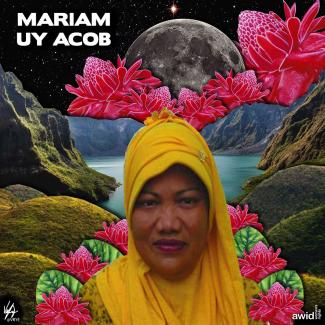
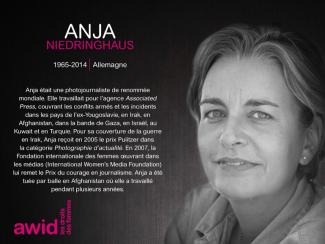
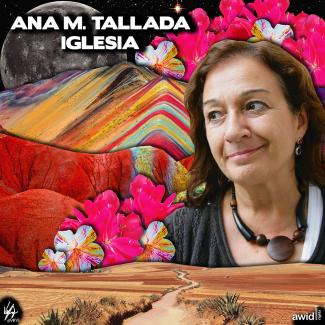
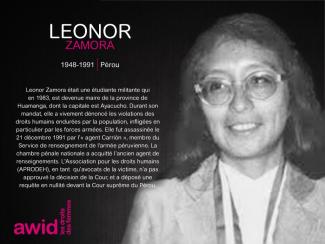
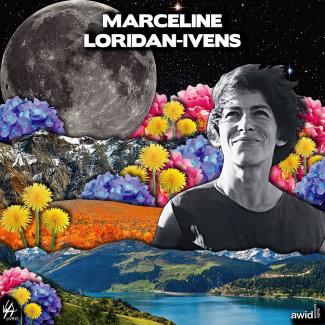
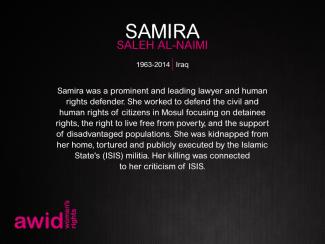
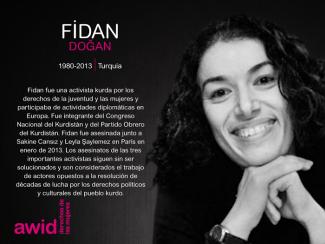
6 Women Human Rights Defenders (WHRDs) across Western and Southeastern Europe have in their lifetime researched, campaigned, participated in and advanced peace and women’s rights movements be it through political and social activism or through dance. We are grateful for the legacy they have left. Please join AWID in honoring these women, their activism and legacy by sharing the memes below with your colleagues, networks and friends and by using the hashtags #WHRDTribute and #16Days.


Please click on each image below to see a larger version and download as a file


Nuestra agrupación no ha recibido financiamiento externo entre 2021 y 2023, ¿a pesar de ello, deberíamos responder la encuesta?

Sí, aún así deseamos saber de ustedes aunque no hayan recibido financiamiento en los tres, dos o cualquiera de los años comprendidos entre 2021 y 2023.

Maria Olivo

Biography

Maria is a graphic designer and visual communicator. Maria has worked with NGOs and Human Rights like Profamilia and OXFAM. As a woman of the Global South, she feels especially called to use her skills to work with organizations that help protect the wellbeing, as well the rights of millions of girls and women in Latin America.

Position
Digital Communications Coordinator
Add to stories
Off

Asma Jahangir

Asma fue una destacada activista pakistaní por los derechos humanos, valiente crítica de la interferencia de los militares en la política, y firme defensora del estado de derecho.

Fue la fundadora y presidenta de la Human Rights Commission of Pakistan [Comisión de Derechos Humanos de Pakistán, un grupo independiente], y una de las administradoras del International Crisis Group. Obtuvo premios internacionales, y fue Relatora Especial de Naciones Unidas sobre derechos humanos y ejecuciones extrajudiciales.

Es recordada con afecto por sus colegas y amigxs de AWID

«Con su vida, Asma reescribió la historia que a muchas nos contaron, como mujeres. Asma cambió el mundo. Lo cambió en Pakistán, y lo cambió en nuestras imaginaciones.»


Asma Jahangir, Pakistan

Snippet FEA NSS has a vision of an Africa (FR)

Nous Sommes la Solution a une vision d'une Afrique où, solidairement, les femmes rurales impliquées dans la prise de décision peuvent cultiver, transformer, vendre et consommer les produits de l'agriculture familiale tout en préservant l'environnement, pour un développement harmonieux et durable”

2. Frame your research

A framework for your research will guide throughout your research process, and the framing document you develop can also serve as a concept note to advisors and partners, and a funding proposal to potential donors.

Before conducting any research:

Your research framing may evolve over time as you refine your questions and gather new information. However, building an initial research framing will allow you to work from a solid foundation.


Goals

To create a strong foundation for your WITM research, it is important to clarify what you hope to accomplish.

For example, one goal of AWID’s WITM global research was to provide rigorous data to prove what we already knew anecdotally: that women’s rights organizations are discrepantly underfunded. With this data, we felt we would be better positioned to influence funders in their decision-making.

Your goals could be to:

  • Generate hard data on funding realities and trends to prove or disprove existing myths.
  • Gain deeper insight into differences between the perspectives of donors and women’s rights organizations.
  • Influence donors in grant-making.
  • Add crucial input to key funding debates.
  • Explore collaboration between donors and women’s rights organizations on issues that emerge from the research.

Back to top


Key questions

Frame your research process with key questions that only your research can answer and limit those questions to a specific time frame (e.g. past five years, past year, etc.).

Consider the following points:

  • What exactly do you want to learn more about and what is the hypothesis you would like to test? Writing this out will assist you in your thought process.
  • Is there existing research on this? If research already exists, it may not make sense to conduct new WITM research unless you feel like the existing research is not extensive or specific enough.  
  • What time frame do you want to cover in your analysis? For example, will your research analyze only the past year, or several previous years, such as the past five years?
  • Are you planning to repeat your survey to collect data in the future?

Choosing a specific timeframe for your research can result in more precise findings than working with an open-ended timeframe. Also, deciding whether you will repeat this research at regular intervals will allow you to set up data collection benchmarks for easy replication and comparison over time.

These were the key questions that guided AWID’s WITM research process:

  • What is the current state of women’s organizations’ financial sustainability across the world?
  • What external and internal trends are impacting donors’ funding decisions to support women’s organizations and movements?

Back to top


Type of data

Now that you determined your key questions, you can determine what kind of data will help you answer your key questions. This will allow you to plan the rest of your schedule for your WITM research.

For example, will you conduct a survey that covers an extensive portion of your priority population? Will you analyze the applications that funders are receiving from a certain region? Will you also conduct interviews (recommended)? By determining the types of data you need, you can reach out to external parties who will provide this data early on, and plot out your full schedule accordingly. Some suggested sources of data could be:

  • Surveys you create for women’s rights organizations and donors
  • Application and grantmaking data from donors funding cycles
  • Interviews of prominent activists, organizations, and donors
  • Donor data from membership organizations and networks, such as  the Foundation Center, regional or national donor affinity groups.

Diverse data sets are a great way to create robust and rich analysis.

The data from AWID’s 2011 Global Survey formed the backbone of our analysis in Watering the Leaves, Starving the Roots report. However, we also collected data from interviews and interactions with several actors in the field, ranging from donors to activists and women’s rights organizations.

Back to top


Final products

In addition to allowing you to set your schedule, creating an initial plan of what products you will develop will also allow you to work out what resources you need.

For example, will you only produce a long research report or will you also create infographics, brochures and presentations? Depending on your products, you may need to hire a design firm, plan events and so on.

These products will also be the tools you use to achieve your goals, so it is important to keep those goals in mind. For example, is your WITM research exclusively intended as an advocacy tool to influence funders? In that case, your products should allow you to engage with funders at a deep level.

 Some sample products:

  • Long report for dissemination with key funders and organizations.
    Historically, AWID WITM research has centered on a long report, from which AWID distilled other smaller products  - see rest of list.
  • Infographic for viral distribution online
  • Short animation demonstrating key findings
  • Short brochure(s) distilling your findings and messages
  • Articles and blog posts on key findings to draw interest to your larger report
  • Seminars or webinars presenting key findings.

Back to top


Conclusion: Framing your research will give you the big picture

Framing your research to cover goals, key questions, types of data, and final products will allow you to create a well-planned schedule, prepare your resources in advance, and plan a realistic budget.

This will make interactions with external partners easier and allow you to be nimble when unexpected setbacks occur.


Previous step

1. Gather your resources

Next step

3. Design your survey


Estimated time:

• 1 month

People needed:

• 1 or more Research person(s)

Resources available:

AWID Research Framing: sample 1
AWID Research Framing: sample 2


Previous step

1. Gather your resources

Next step

3. Design your survey


Ready to Go? Worksheet

Download the toolkit in PDF

Vous demandez le nom du groupe, de l’organisation et/ou du mouvement qui répond aux questions de l’enquête, et ses coordonnées – pour quelle raison?

Nous demandons ces données pour faciliter l’examen des réponses, éviter les doublons et pouvoir vous contacter si votre groupe n’a pas pu terminer le questionnaire et/ou vous répondre si vous avez des doutes ou des questions. Des informations sur la manière dont nous utilisons les informations personnelles collectées lors de notre travail sont disponibles ici.

Snippet FEA Objectives NSS - Traditional Knowledge (EN)

TRADITIONAL KNOWLEDGE

Brown hands with yellow seeds in the palms
To use and promote traditional knowledge and practices transmitted from generation to generation, which supports food sovereignty and the preservation of peasant seed.

5. Conduct interviews

Interviews produce in-depth information that you cannot easily obtain from surveys. While surveys focuses mainly on quantifiable data and closed questions, interviews allow for expert opinions from activists and donors, and open-ended questions which can provide context to survey data results.

In this section

General tips

1. Before conducting your interviews

Send the interviewees a concept note with your objectives for the interview and for your overall research, as well as a list of questions.

This allows them to prepare answers for more complicated questions and look up information that they may not have immediately on hand.

2. During the interviews

  • You can conduct interviews while your survey is running, in order to save time.
  • Try to keep your interviews as consistent as possible in order to facilitate systematic analysis of results. This means asking the same questions. Coding identical responses to each question will allow you to uncover hidden trends.
  • The interviews can also be used to flesh out some of the survey findings

Do not base your questions on assumptions about your interviewees’ knowledge.
Instead, first clarify what they know – this will reveal information as well.

  • DON’T: “Given the current funding trends in Switzerland, do you know of any opportunities for collaboration? This question assumes that the interviewee knows current funding trends and that their understanding of funding trends matches yours.
  • DO: First ask “What is your understanding of current funding trends in Switzerland?”, followed by “Do you know of any opportunities for collaboration?” This will reveal what their understanding is, giving you even more information than the first question.

Back to top


Specialized interviews

1. Donor interviews

Interviews with donors will allow you to build deeper relationships with them, which will be useful when you conduct post-research advocacy. They will also provide you with deeper insight into funders’ decision-making processes.

Suggested topics of focus for donor interviews:

  • What are their funding priorities? Why and how did they select those priorities? For example, why do they choose project-funding over core support or vice versa?
  • What are annual amounts allocated to the advancement of women’s human rights? This will strengthen overall reliability of data collected.
  • Have they noticed any funding trends, and what do they believe are the origins and politics behind these trends?
  • What is their theory of social change and how does that impact their relationships with women’s rights organizations?
View samples of donor interviews

2. Women’s rights organizations and activists interviews

Interviews with women’s rights organizations and activists will provide you with insight into their on-the-ground realities. Again, these interviews will allow you to build deeper relationships that can be incorporated into your advocacy, particularly to encourage collaboration between donors and activists.

Suggested topics of focus for women’s rights organizations and activist interviews:

  • Long-term funding priority trends noted by women’s organizations and their impact.
  • Successful examples of feminist and collaborative resource mobilization strategies that build strong and complementary movements.
  • “Making the case” for why it is important to support women’s organizations and organizing.
  • How different actors understand the social change process and their role in advancing/achieving gender equality and women’s rights.
View samples of women’s organizations and activists interviews

Back to top


Preliminary findings

Through the course of your WITM research, we recommend analyzing your preliminary findings. Presenting your preliminary findings opens up opportunities to conduct more interviews and get feedback on your research process and initial results. This feedback can be incorporated into your final research.

AWID conducts “WITM convenings” to share preliminary results of survey data and interviews. These gatherings allow participants (activists, women’s rights organizations, and donors) to debate and discuss the results, clarifying the context, creating more ownership amongst members of the movement, and providing more input for final research.

For example, the Resource Mobilization Hub for Indigenous Women’s Rights at the World Summit on Indigenous Philanthropy was used as a space to debut preliminary results.

See the presentation given at the RMH

Back to top


Previous step

4. Collect and analyze your data

Next step

6. Conduct desk research


Estimated time:

• 1.5 - 3 months

People needed:

• 1 or more research person(s)

Resources needed:

• List of donors and women’s rights organizations and activists to interview
• Prepared interview questions
• Concept Note (You can use the research framing you created in the “Frame your research” section)

Resources available:

AWID Sample Interview Questions: Donors
AWID Sample Interview Questions: Activists & Women’s Rights Organizations


Previous step

4. Collect and analyze your data

Next step

6. Conduct desk research


Ready to Go? Worksheet

Download the toolkit in PDF

How long is the survey open?

The survey is open until the end of August 2024. Please complete it within this timeframe to ensure your responses are included in the analysis.

Deya Bhattacharya

Biography

Deya is a queer nonbinary trans feminist movement organizer, human rights practitioner, and researcher, whose work is grounded in queer-feminist and participatory methods. They have worked within the feminist funding ecosystem for over seven years, and have been within feminist movement spaces for far longer - for over a decade now, and their work is situated at the intersection of money and movements. Before joining AWID, Deya was an independent consultant with Mama Cash, Kaleidoscope Trust, Comic Relief, Global Fund for Children and others, co-creating movements-centered processes, spaces and mechanisms for resourcing, programmes and research. Deya holds an LLM in International Justice and Human Rights from Central European University.

At AWID, Deya leads RFM’s Movement Support and Engagement Strategy, and supports the centering of key feminist movements in defining and driving feminist resourcing agendas. Outside of work, Deya is a masters swimmer, a lover of contemporary literary fiction, and a dog parent.

Position
Movement Engagement Lead - Resourcing Feminist Movements Initiative
Add to stories
Off

Janette Sunita

From India, Janette was feisty, formidable, compassionate and loving.

Janette’s intolerance of injustice and fierce commitment to standing up for all people’s rights led her to work at TARSHI (an NGO that works on sexuality and sexual and reproductive health and rights) for more than 15 years. Janette ably managed and led the finance, human resources and operations aspects of TARSHI’s work, adeptly navigating the labyrinthine bureaucracy to which Indian NGOs are subjected.

Her team remembers that  “She stood watch so we could steer well in open waters. A woman of many talents, Janette not only helped us procure our own office space but also designed it for optimal usage.She loved travel and animals and was interested in animal assisted therapy."


Janette Sunita, India

Snippet FEA NSS Quote (ES)

“Los saberes y prácticas indígenas siempre han apoyado la soberanía alimentaria, y ese saber está en manos de las mujeres […] El ecofeminismo para mí es el respeto por todo lo que tenemos a nuestro alrededor” -

Mariama Sonko

Gracias por participar en la creación de nuestros Futuros Feministas

¡Gracias por haber sido parte del Foro AWID 2016!

AWID agradece enormemente a todxs ustedes que han compartido con nosotrxs estos últimos cuatro días de aprendizaje, celebraciones, ideaciones, sueños y la construcción conjunta de nuestros futuros feministas en el Foro AWID 2016.

Nos sentimos muy inspiradxs, maravilladxs y llenxs de energía con todo el trabajo colectivo que hemos hecho para crear nuestros diversos futuros feministas.

Para más imagen, blogues y recursos:

Visite el sitio del Foro


Conéctate con #AWIDForum

Snippet - Intro WITM - AR

نكمل مشوار بناء الحشد الذي بدأناه قبل 20 عاماً لموارد أفضل وأكبر لحركات التغيير الاجتماعي بقيادة نسوية، تدعوكم/ن جمعية حقوق المرأة في التنمية لاستكمال استطلاعنا

" "أين التمويل للتنظيمات النسوية" (WITM)

لتعبئة الاستطلاع Tutorial

الرجاء اختيار اللغة المفضلة للإجابة على الاستطلاع في أقصى يمين الصفحة


Khaoula Ksiksi

Biography

Khaoula Ksiksi es una apasionada defensora de la justicia, la equidad y la liberación. Como asesora de género, igualdad, diversidad e inclusión, trabaja en diferentes programas humanitarios y contextos de crisis para que la inclusión sea una realidad, no una mera política. Colabora con diferentes equipos para luchar contra la opresión estructural mediante herramientas audaces y transformadoras basadas en experiencias reales.

Su activismo comenzó al frente del movimiento antirracista de Túnez. Con Mnemty, contribuyó a impulsar la primera ley antidiscriminación del país, lo que forzó un examen de conciencia nacional sobre la injusticia racial. Más tarde fue cofundadora de Voices of Black Tunisian Women (Voces de las Mujeres Negras de Túnez), que tiene por objetivo ampliar el liderazgo de las mujeres negras, construir redes de solidaridad y exigir su visibilidad en una sociedad que a menudo las silencia.

Khaoula es también miembro fundadora de Falgatna, un movimiento queer-feminista radical que lucha por los derechos relativos a la orientación sexual, la identidad y la expresión de género y las características sexuales (SOGIESC, por sus siglas en inglés) y apoya a las comunidades LGBTQI+ mediante acciones directas, la resistencia digital y una militancia enfocada en las personas sobrevivientes.

Anteriormente, lideró proyectos feministas y de justicia climática regionales de la Fundación Rosa Luxemburgo en África del Norte y África occidental.

El corazón de su trabajo abriga una convicción bien arraigada: nadie es libre hasta que todes seamos libres. Su activismo es tanto una lucha como una carta de amor a su gente, a sus comunidades y al mundo que merecemos.

Add to stories
Off