

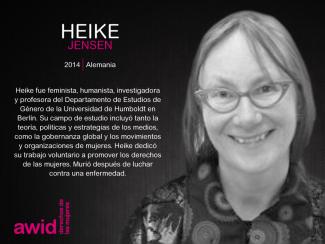
Heike Jensen

Young feminist activists play a critical role in women’s rights organizations and movements worldwide by bringing up new issues that feminists face today. Their strength, creativity and adaptability are vital to the sustainability of feminist organizing.
At the same time, they face specific impediments to their activism such as limited access to funding and support, lack of capacity-building opportunities, and a significant increase of attacks on young women human rights defenders. This creates a lack of visibility that makes more difficult their inclusion and effective participation within women’s rights movements.
AWID’s young feminist activism program was created to make sure the voices of young women are heard and reflected in feminist discourse. We want to ensure that young feminists have better access to funding, capacity-building opportunities and international processes. In addition to supporting young feminists directly, we are also working with women’s rights activists of all ages on practical models and strategies for effective multigenerational organizing.
We want young feminist activists to play a role in decision-making affecting their rights by:
Fostering community and sharing information through the Young Feminist Wire. Recognizing the importance of online media for the work of young feminists, our team launched the Young Feminist Wire in May 2010 to share information, build capacity through online webinars and e-discussions, and encourage community building.
Researching and building knowledge on young feminist activism, to increase the visibility and impact of young feminist activism within and across women’s rights movements and other key actors such as donors.
Promoting more effective multigenerational organizing, exploring better ways to work together.
Supporting young feminists to engage in global development processes such as those within the United Nations
Collaboration across all of AWID’s priority areas, including the Forum, to ensure young feminists’ key contributions, perspectives, needs and activism are reflected in debates, policies and programs affecting them.
Isabel is a feminist from the United Kingdom with over a decade of experience in feminist responses to fascisms, fundamentalisms, and anti-rights trends. At AWID, her work centers on knowledge-building and has included leading the production of the Rights at Risk series in collaboration with the Observatory on the Universality of Rights (OURs). She holds a Master’s degree in Gender Studies from the School of Oriental and African Studies (SOAS) and previously worked with Women Living Under Muslim Laws (WLUML). She is passionate about cross-movement work, movement-centered knowledge-building, and the use of creative expression to disrupt systems of oppression. Outside of work, Isabel is active in various disability justice spaces for collective care, learning, and advocacy.
Je t’appartiens depuis aussi longtemps que je peux me souvenir. Jeune fille, j’ignorais qu’il y avait un mot – féministe – pour nous toustes qui aspirons à vaincre et à démanteler le patriarcat, qui cherchons refuge dans les bras de l’inclusion et de l’intersectionnalité, qui traitons les gens comme des égaux, peu importent leur genre, leur race, leur sexualité, leur religion et leur ethnicité, qui apprenons constamment pour mieux faire, pour mieux être et pour nous servir de nos privilèges pour élever les autres.
Quand j’avais 14 ans, mon professeur de français au Collège, un trentenaire de 1,80 m, a agressé une élève de ma classe devant tout le monde. L’élève, une de mes amies d’enfance, et plusieurs autres filles de la classe sont allées voir la direction pour le dénoncer, les parents s’en sont mêlés et la classe entière, forte de ses trente élèves, a soutenu la fille. Mais toutes nos tentatives pour lui faire porter la responsabilité de son acte ont échoué, l’administration a gardé le silence sur l’histoire de la fille et il n’a jamais été renvoyé ni poursuivi. Les filles de ma classe et moi-même étions outrées, donc nous avons fait ce que toute jeune féministe en rage ferait : nous avons jeté des œufs sur sa voiture! Et bien que les œufs se lavent facilement et que la peinture utilisée pour écrire « Sale porc » et « Khamaj » (ordure) sur sa carrosserie pouvait être grattée, je n’oublierai jamais comment nous nous sentions après cela. [MB1] Libérées, enragées, heureuses, solidaires et puissantes. Ce même sentiment m’envahit à chaque nouvel événement féministe auquel je prends part depuis. L’adolescente féministe en moi a grandi et rejoint Women Deliver, l’AWID, Unootha, animé des ateliers féministes à l’université et même été poursuivie pour son affiliation féministe à 19 ans, mais ça, je le garde pour une autre lettre.
Les mouvements et les espaces féministes m’offrent la sécurité et l’autonomisation. Ce sont les mères que nous aurions aimé avoir et le lien dont nous avions besoin pour nous connecter et nous organiser, malgré nos différences contre un ennemi commun qui mine tout le monde, le patriarcat. C’est grâce à toi que j’ai appris à être résiliente et à mettre toutes mes forces et mes compétences au service des autres en les soutenant, en mettant la lumière sur les marginalisées et en tendant le micro à celles qu’on n’entend jamais.
Ce que j’aime le plus chez vous, les mouvements féministes, c’est que parfois vous merdez, vous négligez et marginalisez aussi, vous avez des biais - comme tout autre mouvement - mais ce qui vous rend différents, c’est que vous vous efforcez toujours de mieux faire. La redevabilité ne vous effraie pas, et vous êtes un collectif en constante évolution qui reflète la manière dont l’altruisme et la philanthropie dans l’effort vers l’équité de genre changent à mesure que le temps passe.
Puissiez-vous continuer à croître, puissiez-vous faire mieux, puissiez-vous être toujours enragés, puissiez-vous continuer à rugir, puissiez-vous toujours aimer, puissiez-vous toujours parler des langues différentes et puissiez-vous toujours avoir le pouvoir.
Avec amour, lumière et rage,
Lina
Cada Foro se lleva a cabo en una región diferente, ¡y es hora de que el Foro de AWID regrese a Asia! Visitamos muchos países de la región, consultamos a los movimientos feministas y realizamos evaluaciones detalladas de logística, accesibilidad, seguridad, visas y más. Finalmente, la Junta Directiva de AWID aprobó con entusiasmo Bangkok, Tailandia, como la mejor opción. Nos sentimos muy emocionadxs de volver a Bangkok, donde celebramos el Foro de AWID en 2005.
Today, a complex and evolving network of anti-rights actors is exerting more influence in international and regional spaces as well as domestic politics. Anti-rights actors are entering multilateral spaces (spaces where multiple countries come together for international collaboration) to transform and undermine them from the inside out. They employ a range of persuasive discourses to gain legitimacy, often co-opting the language of rights and justice to hide their true agendas.
This report is the second in a series on human rights trends reports produced by the Observatory on the Universality of Rights (OURs). As well as analysis of key anti-rights actors, discourses, strategies, and impacts, the report features inspiring short stories of feminist action, and knowledge-building exercises to help strengthen our collective resistance.
The effect on our rights has already been grave, but this is not a done deal. We can all play a part in resisting anti-rights agendas and reclaiming our rights.
Join the collective call-to-action today!

Filter your search by funders’ priority support areas that speak to your organizing efforts
«Quiero transmitir el siguiente mensaje a todos los tunecinos y tunecinas: Tenemos que unirnos para decir no a la censura y a los juicios contra el derecho a opinar.» - Lina Ben Mhenni (entrevista de 2013)
«Es cierto que la información y la Internet son importantes, pero para hacer una revolución es crucial estar en el territorio. Algunas personas aquí en Túnez piensan que el cambio se dará mediante un simple “me gusta” en Internet. Yo creo que hay que estar activxs en el terreno. Y, por supuesto, que hay que combinar las acciones en el terreno con la acción en las redes.» - Lina Ben Mhenni (entrevista en POCIT)
En 2010 co-organizó una protesta que desafió la decisión gubernamental de suprimir medios de comunicación e instalar la censura de Internet. Lina era muy conocida por su blog «A Tunisian Girl», y por su trabajo durante la revolución tunecina de 2011. En su blog, difundió la información sobre el levantamiento, compartió imágenes que documentaban las protestas, y fue una de las pocas voces que hablaron sobre los asesinatos y la represión de lxs manifestantes de Sidi Bouzid. Lina publicaba en su blog utilizando su nombre real en lugar de un seudónimo que protegiera su identidad, y fue una de lxs pocxs bloguerxs en hacerlo.
«Nuestra libertad de expresión corre verdadero peligro. Me temo que estamos perdiendo los extraordinarios frutos de la revolución: la desaparición del miedo y nuestra libertad de expresión. Tenemos que seguir luchando para proteger y preservar este derecho.» - Lina Ben Mhenni (entrevista de 2013)
Lina tenía solamente 36 años cuando falleció, el 27 de enero de 2020, debido a complicaciones derivadas de una enfermedad autoinmune.
«Libertad, mejor educación y mejor salud—eso era lo que todxs queríamos. Cuando fracasábamos, ella nos empujaba.» - Hala, maestra de Lina
Marianne Mesfin Asfaw es una feminista panafricana dedicada a la justicia social y la construcción de comunidad. Es Licenciada en Estudios de Género y Relaciones Internacionales de la Universidad de Columbia Británica (UBC) y posee una maestría en Estudios de Género y Derecho de la Escuela de Estudios Orientales y Africanos de la Universidad de Londres. Anteriormente, trabajó en administración académica y apoyo para estudiantes internacionales. Asimismo, se desempeñó como investigadora y facilitadora en espacios feministas y sin fines de lucro. También ha trabajado como voluntaria en organizaciones no gubernamentales, incluida Plan International, donde cumplió funciones administrativas. Antes de asumir sus funciones actuales, se desempeñó en logística y apoyo administrativo para AWID. Marianne nació en Etiopía, se crió en Ruanda y, actualmente, reside en Tkaronto/Toronto (Canadá). Le encanta leer, viajar y pasar el tiempo con su familia y amistades. En los meses más cálidos, se la puede ver paseando por barrios conocidos y buscando cafés y librerías desconocidas donde pasar el tiempo.
Hola de nuevo, y de nuevo, y de nuevo. Los he conocido y amado durante toda mi vida adulta, desde que los encontré, significativamente, después de graduarme de la universidad. Los había visto una vez antes. Fue cuando ustedes aparecieron como Betty Friedan en un programa de entrevistas de televisión en el Medio Oeste de los Estados Unidos, a finales de la década de 1960. En ese momento, la Sra. Wells (mi otra madre) y yo comentamos las ideas exageradas y disparatadas de las que esta mujer estaba tratando de convencernos. Desde entonces, década tras década, me he enamorado cada vez más profundamente de ustedes, mis amados movimientos, y he entendido y presenciado su genialidad política y teórica, su autoridad ética y moral, su creatividad, su alegría, y su amor, sobre todo. Casi sesenta años después, sé que somos compañerxs para siempre.
Los primeros años de nuestra relación fueron buenos. Yo estaba bastante autoinvolucrada (tratando de entender la identidad racial, de género y sexual; aclarando mis políticas, valores y ética fundamentales; completando mi educación formal), y ustedes me brindaron numerosos escenarios, centros sociales intelectuales y ambientes de contención acogedores donde y a través de los cuales pude elaborar los componentes fundamentales de la feminista y el ser humano en que me convertiría.
Los movimientos de mujeres predominantemente blancas de Cambridge y Boston, incluyendo Daughters of Bilitis [Hijas de Bilitis], fueron mi punto de partida. Eso me vino bien en ese momento, pero pronto me di cuenta de que deseaba algo más. ¡Poof! Mágicamente (descubrimiento casual), me conecté con un pequeño grupo de mujeres radicales, antiimperialistas, negras, socialistas y lesbianas y, pronto, nos convertimos en el Combahee River Collective [Colectivo del Río Combahee].
Esa temprana experiencia de Combahee -combinada con aprendizajes vitales críticos y, en particular, con las políticas raciales inmigrantes afroamericanas y coreanas de principios de la década de 1990 en los Estados Unidos- me prepararon para el viaje que me ha llevado a identificarme y a trabajar como feminista transnacional para enfrentar el militarismo y a dedicarme a imaginar otros mundos donde todos los seres vivos prosperen.
Los dos momentos críticos siguientes del movimiento de mujeres ocurrieron décadas después de los años de Combahee, pero estuvieron profundamente vinculados. Primero, fue conocer y ser invitada al movimiento feminista coreano que se estaba organizando contra las bases militares estadounidenses y apoyaba a las «mujeres kijichon» [«mujeres de confort»], las mujeres coreanas cuyas vidas (que para algunas incluía a sus hijxs mestizxs) giraban alrededor del variado servicio al personal militar estadounidense en las aldeas y los pueblos adyacentes a las bases. Las amadas feministas coreanas, especialmente Kim Yon-Ja y Ahn Il Soon (las primeras hermanas que conocí y con quienes viajé), me hicieron ver y comprender la importancia crítica de la nación como principio analítico y organizativo. El «toque final» fue vivir y trabajar en la Palestina ocupada. La difunta Maha Abu-Dayyeh me introdujo al movimiento de mujeres palestinas, con un comentario profundo: «puedes dejar Palestina, pero Palestina nunca te dejará». Cuánta verdad. Y todo mi trabajo y mis experiencias a través de muchas fronteras me llevaron a AWID, mi segundo hogar.
Como saben, amados movimientos, estar con ustedes no ha sido fácil ni simple. De hecho, son demandantes, están sistemáticamente plagados de contradicciones y, a veces, hasta resultan hirientes. No obstante, continúan creciendo y desarrollándose, a medida que sostienen mi propio crecimiento y desarrollo político, emocional y espiritual. Supongo que nos cultivamos mutuamente: un proceso muy profundo al cual dedicaré el resto de mi tiempo bajo mi forma actual.
El eje de ser/estar con ustedes todas estas décadas es esto:
Feministas que comprometen colectivamente sus cabezas, corazones, manos y espíritus para transformar nuestros mundos

¡Mucho amor, movimientos feministas!
Su Margo
alias DJ MOR Love and Joy
Wellfleet, Massachusetts, Estados Unidos
Merci de calculer le coût de votre voyage à Bangkok, vos frais d'hébergement et vos indemnités journalières, le montant de votre visa, vos besoins en matière d'accessibilité et les frais accessoires, en plus des frais d'inscription qui seront annoncés sous peu. Les hôtels du quartier de Sukhumvit à Bangkok coûtent entre 50 et 200 dollars américains par nuit pour une chambre double. Les membres de l'AWID bénéficient d'une réduction lors de l'inscription. Si ce n’est pas encore fait, nous vous invitons à envisager de devenir membre et à rejoindre notre communauté féministe mondiale.
Los actores anti-derechos adoptan una estrategia doble. Además de atacar abiertamente al sistema multilateral, los actores anti-derechos también socavan los derechos humanos desde adentro. Se involucran con el fin de cooptar procesos, consolidar normativas regresivas, y erosionar responsabilidades.
ÉCONOMIES DES SOINS AGROÉCOLOGIE ET SOUVERAINETÉ ALIMENTAIRECOOPÉRATIVISME FÉMINISTESYNDICALISME FÉMINISTE
Activiste sociale et de l’environnement équatorienne, Gloria Chicaiza était une fervente défenseuse du droit à la terre et à l’eau. Elle s’est opposée au statu quo en luttant contre un modèle de développement fondé sur l’extraction et a oeuvré sans relâche pour la justice écologique et les droits des communautés affectées par l’exploitation minière.
Dans divers endroits de l’Équateur, Gloria a participé à des actions de résistance en faveur de la protection de l’écosystème. Avec passion et dévouement, Goria a apporté son soutien au mouvement autochtone et environnemental, à ces communautés et organisations qui s’opposent aux projets miniers et protègent leurs territoires et leurs projets de vie collectifs. Elle est intervenue au sein de forums locaux et internationaux contre la criminalisation des dissident·e·s et des résistant·e·s, contre les pressions et la violence exercées à l’encontre des activistes communautaires, en particulier des femmes défenseuses des droits humains, et pour soutenir les efforts déployés par les communautés en faveur de la souveraineté alimentaire et de la durabilité.
Elle était la coordonnatrice de la justice minière à Acción Ecológica, membre du Réseau latino-américain des femmes défenseuses des droits sociaux et environnementaux, et membre du conseil d'administration de l'Observatoire latino-américain des conflits miniers.
En octobre 2010, Gloria a été accusée par la société minière Curimining/Salazar Resources S.A. (dont le siège est à Vancouver, au Canada) d’avoir commandité un acte de terrorisme, de sabotage et d’association illégale dans le but de commettre un crime. Acción Ecológica a estimé qu’il s’agissait là de “représailles pour son travail de dénonciation concernant l’impact des activités minières dans le pays”.
En 2015, Gloria a facilité la coordination d’une délégation, composée de 25 femmes autochtones d’Amérique latine, affectée au Dialogue sur le changement climatique de la COP 20 des Nations Unies.
Gloria est décédée le 28 décembre 2019 des suites de complications liées à une transplantation pulmonaire. On se souvient d’elle pour ses actes de résistance et son travail acharné.
"Le moyen le plus rapide de parvenir à la durabilité reste encore la résistance.” - Gloria Chicaiza (2010 interview)
“Pour GLORIA. GLORIA Eau. GLORIA Terre. GLORIA Mère. GLORIA Révolution. GLORIA Soeur. GLORIA Ciel. GLORIAmie. GLORIAstrale. Merci de nous avoir entrelacé·e·s.” -Liliana Gutierrez
“Merci Glorita, d’avoir nourri l'espoir, d’avoir préservé la solidité de la structure, d’avoir tissé des liens avec la communauté, pour les mains unies, pour la solidarité, merci Glorita de t’être tenue à nos côtés dans les moments les plus difficiles. Merci de nous avoir appris que tout au long de la vie, personne ne se fatigue.” (Chakana News)
“Gloria Chicaiza appréciait ne pas sortir du lot et s’y épanouissait. Et aussi humble qu'elle fût, elle avait une capacité inouïe à mener et garder un rythme régulier et étourdissant, un pouls de vie qui guidait, mobilisait et inspirait les communautés et les réseaux dans la protection de la Terre Mère. Elle a dénoncé toutes les formes de violence contre les “cuerpos-territorios” (les corps comme territoires). Elle soutenait le “buen vivir" (“bien vivre”). - Gabriela Jiménez, coordonnatrice des partenariats en Amérique latine, KAIROS
“Merci Gloria Chicaiza, nous sommes sûr·e·s que depuis l’infini, tu continueras à soutenir notre combat. Toi qui as continué de te battre en dépit de ta santé défaillante. Tu continueras de vivre dans les forêts et les eaux que tu as défendues avec tant de courage. Tu vivras dans nos coeurs.” - La communauté d’Intag en Équateur
Umyra Ahmad est une féministe malaisienne expérimentée en plaidoyer international et régional et en éducation aux droits humains. Au sein de l'AWID, elle travaille à la promotion des droits liés au genre et à la sexualité à l'ONU. Avant de nous rejoindre, elle était chargée de programme à IWRAW Asie-Pacifique, où elle a aidé des organisations de terrain régionales, nationales et locales à utiliser les mécanismes des organes conventionnels de l'ONU comme outils de redevabilité des États et d'accès à la justice. En Malaisie, elle travaille avec des collectifs queer et de réfugié·e·s, et soutient la coordination de diverses initiatives d'entraide.
Le corps est une entité puissante. En tant que femmes, notre corps est contrôlé, opprimé et policé depuis l'utérus. Notre apparence, nos mouvements, nos vêtements, notre façon de marcher, de parler, nos gestes et notre rire. Je me suis souvent interrogée sur les raisons des peurs patriarcales liées au pouvoir du corps féminin.
Là d'où je viens, le travail du sexe et les travailleur.se.s du sexe étaient évoqué.e.s avec un mélange de mépris, de dégoût, de fascination, de pitié et de condamnation.
J'ai entré en contact avec le travail du sexe et les travailleur.se.s du sexe pour la première fois à l'âge de 22 ans. À partir de simples conversations, assis.e.s en cercle, autour d'un café ou d'un thé, nous avons exploré la vie, les expériences, les pensées et les sentiments de chacun.e.
Pour les travailleur.se.s du sexe, le travail du sexe était le choix le plus intéressant parmi toutes les autres options : payer les factures, soutenir la famille, bénéficier d’horaires de travail plus flexibles, avoir des relations sexuelles. Tout comme j'ai choisi mon travail comme étant le choix le plus intéressant pour payer les factures, soutenir la famille, avoir des heures de travail plus flexibles.
Ces personnes, femmes et hommes, m'ont appris que je prenais mes propres décisions concernant mon corps... duquel je concentre sa vie et son énergie, si je l'utilise pour le plaisir ou la douleur, si je l'échange ou le donne librement, et comment je veux m’y sentir. Cette prise de conscience était aussi excitante qu’autonomisante.
Crear | Résister | Transform : un festival pour les mouvements féministes - 2021... vous m'avez accompagnée dans une série de moments qui ont changé ma vie (!!!)
Nous appelons cela des « événements », mais en réalité, vos espaces d'apprentissage féministes sont selon moi des lieux où je prends un peu de ce que j'ai en moi, un peu de ce que disent vos intervenants et un peu des discussions pour approfondir notre compréhension.
Partager... Participer... S'immerger...
dans la force, dans la vulnérabilité, dans le plaisir.
Être simplement la féministe transformatrice que je suis, sans prétentions, sans appréhensions...
Accueillir la féministe transformatrice que j'ai toujours été, sans même connaître le terme ou le reconnaître de cette manière ou en ces termes...
Trouver un foyer pour la féministe transformatrice féroce qui vit en moi...
Malgré la colère, la rage et la frustration de ne pas être traitée sur un pied d'égalité et d'être traitée comme « moins __ que ».
Je ne me suis pas toujours considérée comme une féministe ni reconnue dans le mouvement ou le discours féministe... En réalité, j'apprécie que l'on m'ouvre les portes, que l'on me tire les chaises pour m'asseoir, que l'on reconnaisse ma féminité en tant que femme.
Parfois, j'ai rejeté le patriarcat avec agacement, parfois j'ai réagi avec frustration et colère, mais je ne l'ai pas abordé... Je n'ai pas remarqué sa toxicité sinistre et insidieuse... J'étais assez privilégiée de pouvoir travailler à travers lui, d'y survivre, de le surmonter, d'exceller malgré lui... Je n'ai pas suffisamment remis en question, pas suffisamment défié, pas suffisamment repoussé mes limites... Je n'en ai pas fait assez...
se connecter avec les travailleur.se.s du sexe, explorer la sexualité, et les femmes pour la paix et la sécurité....
Jusqu'à ce que je prenne pleinement conscience et comprenne que les implications des privilèges et de l'oppression étaient intersectionnelles.
Jusqu'à ce que je réalise ce que signifie se battre pour la justice de genre et pas seulement pour « l'égalité pour tous ».
Je ne suis plus une praticienne et une animatrice, mais bien une praticienne et une animatrice féministe transformatrice.
Être féministe signifie que je vais agir
Plonger dans un avenir incertain, fragile, complexe (et peut-être assez violent)...
Je vous suis profondément reconnaissante et je promets de rester féroce dans la prise en compte et le redressement des questions problématiques liées au genre, à la race, à l'ethnicité, à la classe sociale, à l'orientation sexuelle et aux capacités, et de rester présente et fidèle à la lutte pour l'inclusion, l'équité et la justice.
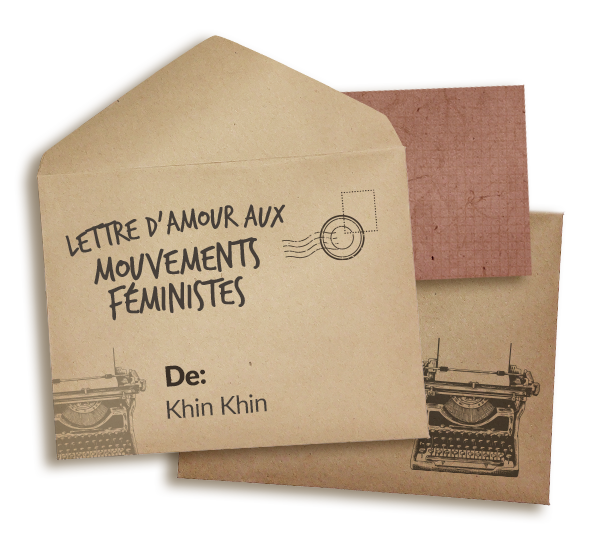
Khin Khin
We know that first time travel can be exciting but also stressful. In recognition of the many challenges involved, we will be providing more information and details about how to get to Bangkok when Registration opens early next year.
Dans cette BD illustrée par Sophia, suivez les aventures de notre super-héroïne féministe qui dément les récits des antidroits dans le monde entier et sauve la mise aux mouvements féministes.
En 2023, le budget annuel médian des organisations féministes et de défense des droits des femmes était de 22 000 USD. Cette médiane masque de profondes inégalités : quelques groupes accèdent à des ressources considérables, tandis que la grande majorité survit avec des budgets très limités.
Un examen plus attentif des budgets réels révèle une immense diversité et une grande disparité dans les revenus.
Explorez les données relatives à la taille des budgets féministes