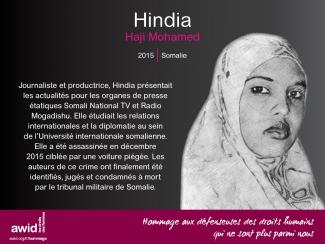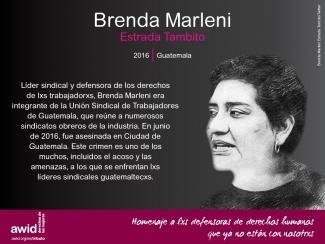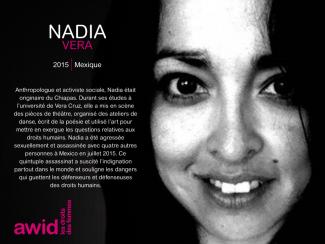
Nadia Vera

WHRDs are self-identified women and lesbian, bisexual, transgender, queer and intersex (LBTQI) people and others who defend rights and are subject to gender-specific risks and threats due to their human rights work and/or as a direct consequence of their gender identity or sexual orientation.
WHRDs are subject to systematic violence and discrimination due to their identities and unyielding struggles for rights, equality and justice.
The WHRD Program collaborates with international and regional partners as well as the AWID membership to raise awareness about these risks and threats, advocate for feminist and holistic measures of protection and safety, and actively promote a culture of self-care and collective well being in our movements.
WHRDs are exposed to the same types of risks that all other defenders who defend human rights, communities, and the environment face. However, they are also exposed to gender-based violence and gender-specific risks because they challenge existing gender norms within their communities and societies.
We work collaboratively with international and regional networks and our membership
We aim to contribute to a safer world for WHRDs, their families and communities. We believe that action for rights and justice should not put WHRDs at risk; it should be appreciated and celebrated.
Promoting collaboration and coordination among human rights and women’s rights organizations at the international level to strengthen responses concerning safety and wellbeing of WHRDs.
Supporting regional networks of WHRDs and their organizations, such as the Mesoamerican Initiative for WHRDs and the WHRD Middle East and North Africa Coalition, in promoting and strengthening collective action for protection - emphasizing the establishment of solidarity and protection networks, the promotion of self-care, and advocacy and mobilization for the safety of WHRDs;
Increasing the visibility and recognition of WHRDs and their struggles, as well as the risks that they encounter by documenting the attacks that they face, and researching, producing, and disseminating information on their struggles, strategies, and challenges:
Mobilizing urgent responses of international solidarity for WHRDs at risk through our international and regional networks, and our active membership.
Leila is a transnational feminist leader, strategist, and advisor with over 25 years of organizing, advocacy and philanthropic experience advancing human rights, gender equality, and sexual and reproductive rights and justice. She was born in Algeria and educated in the U.S., France, and Morocco; over her professional career, she has lived and worked in forty countries across Africa, Europe, Latin America and Asia. Leila currently serves as a Senior International Fellow at the Asfari Institute for Civil Society and Citizenship at the American University of Beirut in Lebanon and as Senior Strategist for various feminist movements and organizations as well as the the Urgent Action Fund-Africa and Trust Africa on an initiative on Reimagining Feminist and Pan-African Philanthropies.
From 2017-2023, Leila held the position as Vice-President of Programs at Global Fund for Women where she oversaw its strategic grantmaking, movement-strengthening, global advocacy and philanthropic collaborations. At GFW, she doubled its grantmaking to over $17 million, launched its feminist and gender-based movements and crises work, created an adolescent girls program led by a girls’ advisory council and led its philanthropic advocacy work. Prior to that she served on the senior leadership team of Ipas from 2002 to 2016 where she published extensively on abortion rights and justice, lead global advocacy efforts and partnered with feminist groups working on self-management, community strategies and stigma reduction around bodily integrity and sexual and reproductive rights.
Leila is currently researching shifts in the philanthropic sector including recognizing non-institutional practices of giving resources in the Global South and efforts to decolonize practices in the Global North. She has written extensively on the political nature of veiling across North Africa and the Middle East, abortion practices in majority Muslim contexts and feminist approaches to sexual and reproductive health, rights and justice.
Leila holds an MPH in public health and a MA in Middle Eastern and North African Studies, studied Islamic law in Morocco and pursued doctoral studies in sociology in France. She studied Arabic and speaks French and English fluently. She is a mother of two feminist young women, an avid scuba diver, mountain bike rider, skier, and outdoor enthusiast.

Panel: In Panel discussions, explore an issue or challenge from different perspectives, or share a learning or experience, followed by audience questions if time allows.
Talk Show: Have a more spontaneous conversation in Talk-Show style. Talk Shows can be a conversation among several people, facilitated by a talk-show host. Audience questions can determine the conversation’s direction.
Discussion: These can take the form of world cafes, fishbowls, and other methodologies that facilitate participants’ active involvement in conversations. Highly participatory.
Workshop: Interactive sessions that invite participants to build new skills in any and all areas of life and activism.
Strategy Session: This is an invitation to think through an issue or strategy, in depth, with others. A space to learn from each other: what works, what doesn’t, and how do we develop new and collective strategies to create the worlds we dream of.
Sharing Circle (also known as “Birds of a Feather”): Ideal for small groups, in a more intimate setting, to hear from each other, spark discussion and carefully address topics that may be specific, sensitive and complex.
Arts – Participatory Workshop: Participatory activities involving arts and creative expression. Whether through visual art, theater, film, mural, dance, music, collective craft or artmaking, etc., we welcome all ideas celebrating feminist art and creativity as forms of social change, healing, expression and transformation.
Arts – Performances, Installations and Exhibitions: We welcome submissions that offer Forum participants new experiences and perspectives, expand our horizons, and challenge and inspire us to think, feel and organize in new ways.
Healing: Diverse activities tailored both for groups and individuals, from learning relaxation techniques to discussing burnout prevention, from trauma-informed practices of care for our body, mind and soul to healing rifts within our movements.
Simone a 20 ans d’expérience dans le soutien à la gestion et l’administration dans des organisations à but non lucratif, en particulier dans l’enseignement médical post universitaire et la formation aux Technologies de l'Information et de la Communication. Elle possède des qualifications en soutien à la gestion et en études parajuridiques. Elle est basée en Afrique du Sud, aime voyager et agit en tant que généalogiste amatrice.
For the first time, the AWID Forum offers three modes of participation
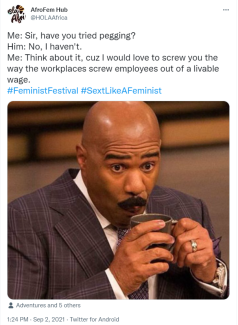
Yo: Señor, ¿probó por el culo?
Él: No, no probé.
Yo: Piénselo, porque me gustaría cogérmelo / joderlo tal como a lxs trabajadorxs nos cogen / joden en los trabajos cuando lo que nos pagan no alcanza para vivir.
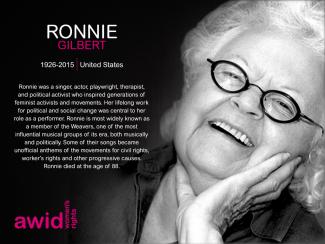
Nana is a feminist organizer and a reproductive rights and population policy researcher based in Egypt. She is a member of Realizing Sexual and Reproductive Justice (RESURJ), a member of the Advisory Board of the A Project in Lebanon, and a member of the Community Committee of Mama Cash. Nana holds an MSc in Public Health from KIT Institute and Vrije University in Amsterdam. In her work, she follows and contextualizes national population policies while building evidence that addresses modern eugenics, regressive international aid, and authoritarianism. Previously, she was part of the Geneva Foundation for Medical Education and Research, the Egyptian Initiative for Personal Rights, and Ikhtyar Feminist Collective in Cairo.
إن موضوع المنتدى – “النهوض معًا” – هو دعوة للتفاعل مع أنفسنا بالكامل، والتواصل مع بعضنا البعض بتركيز واهتمام وبشجاعة، حتى نتمكن من الشعور بنبض الحركات العالمية والنهوض معًا لمواجهة تحديات هذه الأوقات.
تمر الحركات النسوية وحقوق المرأة والعدالة الجندرية ومجتمع الميم عين والحركات الحليفة في جميع أنحاء العالم بمرحلة حرجة، وتواجه ردة فعل قوية على الحقوق والحريات المكتسبة سابقًا. لقد جلبت السنوات الأخيرة صعوداً سريعاً للأنظمة الاستبدادية، والقمع العنيف للمجتمع المدني، وتجريم النساء والمدافعين عن حقوق الإنسان من مختلف الأنواع الاجتماعية، وتصاعد الحروب والصراعات في أجزاء كثيرة من عالمنا، واستمرار الظلم الاقتصادي، والمشاكل الصحية والأزمات البيئية والمناخية المتقاطعة.
إن حركاتنا تترنح، وفي الوقت نفسه، تسعى إلى بناء والحفاظ على القوة والثبات اللازمين للعمل الذي ينتظرنا. لا يمكننا القيام بهذا العمل بمفردنا، في صوامعنا. يعد الاتصال والشفاء ضروريين لتحويل اختلالات القوة المستمرة والتصدعات داخل حركاتنا. ويجب علينا أن نعمل ونضع الاستراتيجيات بطرق مترابطة، حتى نتمكن من تحقيق النجاح معًا. يعزز منتدى جمعية حقوق المرأة في التنمية هذا العنصر الحيوي المتمثل في الترابط في البقاء أقوياء/ قويات وتأثير النمو والتحول للتنظيم النسوي على مستوى العالم.
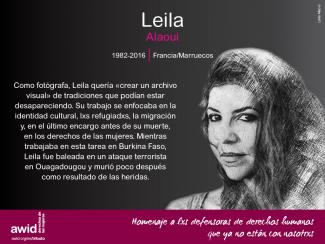
AWID began in 1982 and has grown and transformed since then into a truly global organization.
Read From WID to GAD to Women's Rights: The First 20 Years of AWID
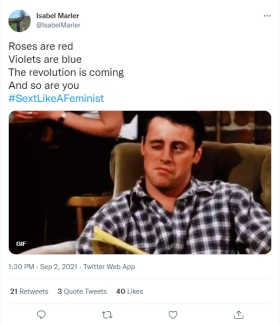
We tend to think about communicating desire as something that is limited to the private intimacy of the bedroom and our personal relationships. But can we also think of this kind of communication as a structure, a praxis that informs our work, and how we are, how we do in the world?