
Fezekile Ntsukela Kuzwayo

WHRDs are self-identified women and lesbian, bisexual, transgender, queer and intersex (LBTQI) people and others who defend rights and are subject to gender-specific risks and threats due to their human rights work and/or as a direct consequence of their gender identity or sexual orientation.
WHRDs are subject to systematic violence and discrimination due to their identities and unyielding struggles for rights, equality and justice.
The WHRD Program collaborates with international and regional partners as well as the AWID membership to raise awareness about these risks and threats, advocate for feminist and holistic measures of protection and safety, and actively promote a culture of self-care and collective well being in our movements.
WHRDs are exposed to the same types of risks that all other defenders who defend human rights, communities, and the environment face. However, they are also exposed to gender-based violence and gender-specific risks because they challenge existing gender norms within their communities and societies.
We work collaboratively with international and regional networks and our membership
We aim to contribute to a safer world for WHRDs, their families and communities. We believe that action for rights and justice should not put WHRDs at risk; it should be appreciated and celebrated.
Promoting collaboration and coordination among human rights and women’s rights organizations at the international level to strengthen responses concerning safety and wellbeing of WHRDs.
Supporting regional networks of WHRDs and their organizations, such as the Mesoamerican Initiative for WHRDs and the WHRD Middle East and North Africa Coalition, in promoting and strengthening collective action for protection - emphasizing the establishment of solidarity and protection networks, the promotion of self-care, and advocacy and mobilization for the safety of WHRDs;
Increasing the visibility and recognition of WHRDs and their struggles, as well as the risks that they encounter by documenting the attacks that they face, and researching, producing, and disseminating information on their struggles, strategies, and challenges:
Mobilizing urgent responses of international solidarity for WHRDs at risk through our international and regional networks, and our active membership.
Ȃurea Mouzinho is a feminist economic justice organizer from Luanda, Angola, with a 10-year career in research, grant-making, advocacy, and movement-building for women's rights and economic justice across Africa and the global south. Currently the Program Manager for Africa at Thousand Currents, she also serves on the Feminist Africa Editorial Board and is a member of Ondjango Feminista, a feminist collective she co-founded in 2016. A new mom to a Gemini boy, Ȃurea enjoys slow days with her young family and taking long strolls by the beach.
She occasionally tweets at @kitondowe.
بالنسبة إليّ، هذه الأنواع من الدردشات كانت ضمن تعابير الحبّ التي أتاحت لي الحياة أن أستمتع بها حديثًا فقط. ما كنت أعرف أن هذه الأشكال الأخرى ممكنة – تلك التي توجَد خارج نطاق ورشات العمل، أو أماكن الناشطين أو غرف الصفّ أو أماكن العمل.
Simone a 20 ans d’expérience dans le soutien à la gestion et l’administration dans des organisations à but non lucratif, en particulier dans l’enseignement médical post universitaire et la formation aux Technologies de l'Information et de la Communication. Elle possède des qualifications en soutien à la gestion et en études parajuridiques. Elle est basée en Afrique du Sud, aime voyager et agit en tant que généalogiste amatrice.
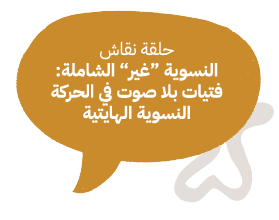
حلقة نقاش | النسوية “غير” الشاملة: فتيات بلا صوت في الحركة النسوية الهايتية
مع نايكي ليدان وفيدورا بيير-لوي
Nana is a feminist organizer and a reproductive rights and population policy researcher based in Egypt. She is a member of Realizing Sexual and Reproductive Justice (RESURJ), a member of the Advisory Board of the A Project in Lebanon, and a member of the Community Committee of Mama Cash. Nana holds an MSc in Public Health from KIT Institute and Vrije University in Amsterdam. In her work, she follows and contextualizes national population policies while building evidence that addresses modern eugenics, regressive international aid, and authoritarianism. Previously, she was part of the Geneva Foundation for Medical Education and Research, the Egyptian Initiative for Personal Rights, and Ikhtyar Feminist Collective in Cairo.
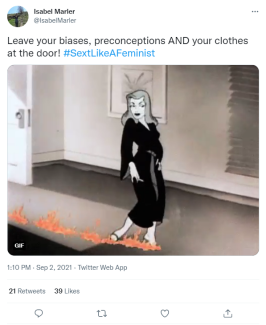
ممنوع الدخول قبل التخلّص من أي شكل من أشكال التحيّز و/أو الأحكام المُسبقة و/أو الاحتشام!
AWID began in 1982 and has grown and transformed since then into a truly global organization.
Read From WID to GAD to Women's Rights: The First 20 Years of AWID
As part of our commitment to engage more deeply with artists and the practice of co-creating Feminist Realities, AWID collaborated with an Artist Working Group to advance and strengthen feminist agendas and realities in their communities and movements through their creative expression. Our intention here is to bring feminist creatives together in a powerful and brave space where they grow and live freely, and where they shatter toxic narratives to replace them with transformative alternatives.
This exhibition gathers the work of artists and collectives from across the globe, those who are actively creating the difference that we want to see in the world. These feminist creatives include Upasana Agarwal, Nicole Barakat, Siphumeze Khundayi, Katia Herrera, Ali Chavez Leeds, Colectivo Morivivi, Ika Vantiani, and the curators behind the #MeToo in China exhibition. Their voices stand strong in their refusal to accept the limitations imposed by patriarchy, and amplify their commitments to the communities they are working in and with. In their own way, each artwork represents daily acts of resistance, untold stories and identities, connections to land and ancestry, and most importantly, the solidarity that exists within and amongst feminist movements and struggles. These artists are both inspired by and inspire creative strategies of feminist resistance and initiatives that show us how we can all live in a more just world - a world that centers care and healing.
En tant qu’organisatrice, une personne ou organisation peut proposer un maximum de 2 (deux) activités. Cela ne vous empêche pas d’être partenaires dans d’autres activités.
Trabajamos para fortalecer las voces y el impacto de lxs activistas, organizaciones y movimientos por los derechos de las mujeres.
Las áreas prioritarias de AWID se relacionan con temas estrechamente vinculados con tendencias globales dominantes. Estos temas reflejan los crecientes desafíos que afectan negativamente a los derechos de las mujeres en todo el mundo.
Esta edición en alianza con Kohl: una publicación para Body and Gender Research analizará soluciones, propuestas y realidades feministas para transformar nuestro mundo actual, nuestros cuerpos y nuestras sexualidades.

Yes please. The world has changed since 2021 and we invite you to submit an activity that reflects your current realities and priorities.
Tous nos rapports annuels sont accessibles sur notre site web.
Merci de bien vouloir parcourir les propositions existantes avant de soumettre vos idées. Quelqu'un pourrait déjà avoir pensé à une proposition similaire! Envoyez votre proposition à contribute@awid.org.
Nous examinerons et inclurons les nouvelles propositions qui nous parviendront au fur et à mesure sur cette page Web.