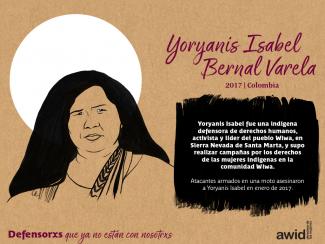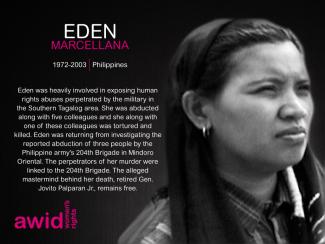
Eden Marcellana

WHRDs are self-identified women and lesbian, bisexual, transgender, queer and intersex (LBTQI) people and others who defend rights and are subject to gender-specific risks and threats due to their human rights work and/or as a direct consequence of their gender identity or sexual orientation.
WHRDs are subject to systematic violence and discrimination due to their identities and unyielding struggles for rights, equality and justice.
The WHRD Program collaborates with international and regional partners as well as the AWID membership to raise awareness about these risks and threats, advocate for feminist and holistic measures of protection and safety, and actively promote a culture of self-care and collective well being in our movements.
WHRDs are exposed to the same types of risks that all other defenders who defend human rights, communities, and the environment face. However, they are also exposed to gender-based violence and gender-specific risks because they challenge existing gender norms within their communities and societies.
We work collaboratively with international and regional networks and our membership
We aim to contribute to a safer world for WHRDs, their families and communities. We believe that action for rights and justice should not put WHRDs at risk; it should be appreciated and celebrated.
Promoting collaboration and coordination among human rights and women’s rights organizations at the international level to strengthen responses concerning safety and wellbeing of WHRDs.
Supporting regional networks of WHRDs and their organizations, such as the Mesoamerican Initiative for WHRDs and the WHRD Middle East and North Africa Coalition, in promoting and strengthening collective action for protection - emphasizing the establishment of solidarity and protection networks, the promotion of self-care, and advocacy and mobilization for the safety of WHRDs;
Increasing the visibility and recognition of WHRDs and their struggles, as well as the risks that they encounter by documenting the attacks that they face, and researching, producing, and disseminating information on their struggles, strategies, and challenges:
Mobilizing urgent responses of international solidarity for WHRDs at risk through our international and regional networks, and our active membership.
Day 1
Lorsque vous arriverez au centre-ville de São Paulo, vous verrez le bâtiment Ocupação 9 de Julho (Occupation de l’Avenue du 9 Juillet), un espace culturel et un site important dans la lutte pour le logement social.
C'est le travail du Mouvement des Travailleur·euses Sans-Abri (Movimento dos Sem-Teto do Centro, MSTC), un mouvement de plus de 2000 personnes qui agit dans le centre-ville et convertit les espaces abandonnés en logements pour les travailleur·euses à faible revenu, les enfants, femmes, adultes, personnes âgées, migrant·e·s et réfugié·e·s. Dans ce bâtiment en particulier, 122 familles sont nourries et logées.
The Fifth High- Level Dialogue on Financing for Development, 7 – 8 December 2011, marked the beginning of the Post 2015 development agenda discussions, and the link to financing for development. The conference gave a special focus to increasing aid to finance the MDG’s. In his closing remarks, the Secretary General called on members to begin to consider the post-2015 development framework.
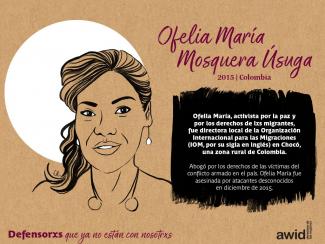
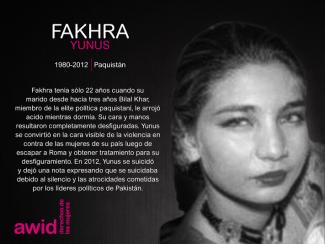
(with special guests!)
📅Tuesday, March 12
🕒6-9.30pm EST
🏢 Blue Gallery, 222 E 46th St, New York
RSVP required
Black women community organizing in the Cauca Valley in Colombia can be traced back to the country's colonial past, which is marked by the racism, patriarchy, and capitalism that sustained slavery as a means to exploit the region’s rich soils. These organizers are the heroines of a broad movement for black autonomy - one that fights for the sustainable use of the region's forests and natural resources as vital to their culture and livelihood.
For 25 years, the Association of Afro-Descendant Women of the Northern Cauca (Asociación de Mujeres Afrodescendientes del Norte del Cauca, ASOM) has been dedicated to bringing power to Afro-Colombian women’s organizing in northern Cauca.
They became established in 1997 as a response to ongoing human rights violations, the absence of public policies, inadequate management of natural resources, and the lack of opportunities for women in the territory.
They have forged the struggle to secure ethnic-territorial rights, to end violence against women, and gain recognition of women’s roles change-making peace-building in Colombia.
La encuesta está orientada a agrupaciones, organizaciones y movimientos que trabajan específica o primordialmente por los derechos de las mujeres, las personas LBTQI+ y la justicia de género, en todos los contextos, en todos los ámbitos y en todas las regiones. Si alguno de estos es el pilar fundamental de tu agrupación, colectivo, red o cualquier otro tipo de organización —ya sea que esté registrada, sea de reciente creación o de larga data—, te invitamos a responder la encuesta.

*En esta oportunidad, no estamos solicitando respuestas de individuos ni de fondos feministas o de mujeres.
Obtén más información sobre la encuesta:
Consultar las preguntas frecuentes
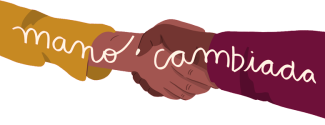
Término de las comunidades negras del Norte del Cauca para la minga, el trabajo colaborativo en fincas, basado en el apoyo mutuo y la solidaridad.
Le financement du développement est, pour les droits des femmes et les droits humains de toutes et tous, un champ qui comporte des menaces et des possibilités spécifiques. Le financement du développement et des politiques à visées transformatrices peut être un facteur déterminant dans la mise en œuvre des changements systémiques nécessaires pour garantir le respect, la protection et la réalisation des droits humains des femmes.
L’année 2015 est une année importante pour le processus sur le FdD. La troisième Conférence internationale sur le FdD (site en anglais) a eu lieu du 13 au 16 juillet à Addis Abeba, en Éthiopie. En outre, les gouvernements mettent actuellement la dernière main au programme de développement pour l'après-2015 et notamment aux accords qui détermineront les modalités de financement des nouveaux objectifs pour le développement durable.
L’étape actuelle du processus sur le FdD est une occasion importante pour définir un cadre de financement susceptible de garantir le financement efficace de la mise en œuvre du programme de développement de l’après-2015 et des Objectifs pour le développement durable (ODD). Elle pourrait également permettre d’aborder les conditions structurelles et les changements systémiques nécessaires à la pleine réalisation d’autres priorités et engagements, tels que les conventions sur les droits humains et le Programme d'action de Beijing.
Au cours de ces treize dernières années, les organisations féministes et de défense des droits des femmes se sont résolument engagées dans le processus sur le FdD.

To claim your power as an expert on the state of resourcing for feminist movements
En caso de tener preguntas relacionadas con el Llamado a Proponer Actividades, por favor escríbenos utilizando nuestro formulario de contacto. Seleccione «llamado de actividad» como asunto de mensaje.
Contenido relacionado
El Heraldo: Mujer asesinada en Valledupar era líder wiwa, defensora de derechos humanos
Survival: Colombia: lideresa indígena de Sierra Nevada asesinada