
Esperanza Brito

Over the past few years, a troubling new trend at the international human rights level is being observed, where discourses on ‘protecting the family’ are being employed to defend violations committed against family members, to bolster and justify impunity, and to restrict equal rights within and to family life.
The campaign to "Protect the Family" is driven by ultra-conservative efforts to impose "traditional" and patriarchal interpretations of the family, and to move rights out of the hands of family members and into the institution of ‘the family’.
Since 2014, a group of states have been operating as a bloc in human rights spaces under the name “Group of Friends of the Family”, and resolutions on “Protection of the Family” have been successfully passed every year since 2014.
This agenda has spread beyond the Human Rights Council. We have seen regressive language on “the family” being introduced at the Commission on the Status of Women, and attempts made to introduce it in negotiations on the Sustainable Development Goals.
AWID works with partners and allies to jointly resist “Protection of the Family” and other regressive agendas, and to uphold the universality of human rights.
In response to the increased influence of regressive actors in human rights spaces, AWID joined allies to form the Observatory on the Universality of Rights (OURs). OURs is a collaborative project that monitors, analyzes, and shares information on anti-rights initiatives like “Protection of the Family”.
Rights at Risk, the first OURs report, charts a map of the actors making up the global anti-rights lobby, identifies their key discourses and strategies, and the effect they are having on our human rights.
The report outlines “Protection of the Family” as an agenda that has fostered collaboration across a broad range of regressive actors at the UN. It describes it as: “a strategic framework that houses “multiple patriarchal and anti-rights positions, where the framework, in turn, aims to justify and institutionalize these positions.”

Чтобы заявить о себе как об эксперте по вопросам ресурсного обеспечения феминистских движений
เรายินดีรับข้อเสนอกิจกรรมจากหลากหลายสาขาที่เชื่อมโยงกับแนวคิดสตรีนิยมและความยุติธรรมทางเพศ ในแบบฟอร์มใบสมัครนั้น ท่านจะสามารถทำเครื่องหมายเลือกประเด็นหลักที่เหมาะกับกิจกรรมของท่านได้ มากกว่าหนึ่งหัวข้อ

Zuhour Mahmoud is the Communication Strategist at Kohl. She is a writer and an editor, and an occasional DJ based in Berlin. Her work focuses on critical approaches to music, technology and politics and their life cycles within the digital sphere.
Asma was a leading Pakistani rights activist, fearless critic of the military’s interference in politics and a staunch defender of the rule of law.
She was the founding chairwoman of the Human Rights Commission of Pakistan, an independent group, and was a trustee of the International Crisis Group. She won international awards and served as the United Nations rapporteur on human rights and extrajudicial killings.
She is remembered fondly by colleagues and friends at AWID
“With her life, Asma rewrote the history that many of us were told as women. Asma changed the world. She changed it in Pakistan, and she changed it in our imaginations."

 За последнее десятилетие спонсоры выделили значительно больше средств на обеспечение гендерного равенства, однако лишь 1% средств, выделенных на благотворительность и развитие был направлен непосредственно на поддержку социальных изменений, проводимых под руководством феминисток.
В солидарности с движениями, которые по-прежнему остаются невидимыми, маргинализированными и не имеют доступа к основному, долгосрочному, гибкому и основанному на доверии финансированию, данный опрос освещает фактическое состояние ресурсного обеспечения, выявляет ошибочные решения и указывает на то, как необходимо изменить модели финансирования, чтобы движения процветали и решали сложные задачи современного мира.
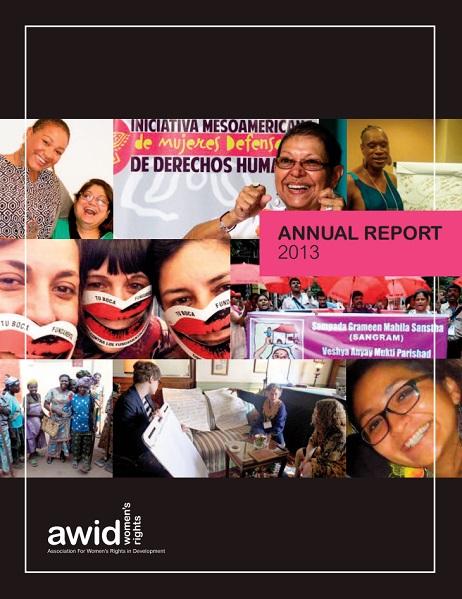
2013 marked the beginning of our 2013-2016 Strategic Plan, developed in response to the current global context. This report provides highlights of our analysis of the global context, how we position ourselves as a global feminist membership organization in this context, the outcomes we seek to achieve, and how our work is organized to achieve these outcomes.
Tendemos a pensar en la comunicación del deseo como algo circunscrito a la intimidad de la alcoba y nuestras relaciones personales. Sin embargo, ¿podemos también pensar este tipo de comunicación como una estructura, una práctica que nutre nuestro trabajo, y cómo somos, y cómo actuamos en el mundo?
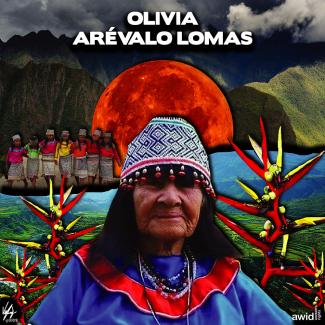
Olivia era la líder espiritual del pueblo indígena Shipibo Konibo.
Sabia mujer indígena y abuela, era conocida por practicar la medicina tradicional y cantar las canciones sagradas de su pueblo (Íkaros). Olivia Arévalo fue una activa defensora de los derechos culturales y ambientales de su pueblo. Su asesinato tuvo lugar en un contexto de conflicto territorial entre la comunidad shipibo y las empresas que quieren apropiarse de sus tierras para cultivar palma aceitera.
Integrantes de su comunidad han dicho: «Su muerte es una agresión contra toda la comunidad shipibo. Ella era la memoria viviente de su pueblo».
AWID выражает признательность всем тем, чьи идеи, аналитические работы и вклад в развитие легли в основу исследования «Где деньги?» и его дальнейшей адвокации.
Прежде всего, мы выражаем глубочайшую благодарность членам AWID и активисткам(-там), которые участвовали в консультациях, и провели этот опрос вместе с нами, щедро поделившись своим временем, аналитикой и теплом.
Мы выражаем признательность феминистским движениям, союзницам(-кам) и феминистским фондам, включая (но не ограничиваясь ими) Black Feminist Fund, Pacific Feminist Fund, ASTRAEA Lesbian Foundation for Justice, FRIDA Young Feminist Fund, Purposeful, Kosovo Women’s Network, Human Rights Funders Network, Dalan Fund and PROSPERA International Network of Women's Funds , за ваше тщательное исследование состояния ресурсного обеспечения, вдумчивый анализ и постоянную адвокацию для достижения более объемного и эффективного финансирования для феминистских организаций и движений за гендерную справедливость во всех контекстах.

Hemos contribuido a algunas victorias importantes, como expandir el panorama de financiamiento para los derechos de las mujeres con investigación e incidencia innovadoras y de gran alcance. Al mismo tiempo, hemos sufrido algunos golpes devastadores, como el asesinato de defensoras de derechos humanos como Berta Cáceres de Honduras, Gauri Lankesh de India y Marielle Franco de Brasil, así como el aumento de la movilización de los sectores antiderechos en los espacios de derechos humanos.
Hace cinco años, nos comprometimos con nuestro papel en la construcción de movimientos al generar conocimiento sobre las tendencias de los movimientos antiderechos, así como sobre temas en los que las feministas tienden a involucrarse menos, como los flujos financieros ilícitos. Activamos junto a los movimientos que son nuestrxs compañerxs, fortaleciendo el activismo feminista joven y el activismo intergeneracional y expandiendo la protección integral de lxs defensorxs de derechos humanos. En el cierre del plan estratégico, estamos orgullosxs de nuestros logros y nuestro crecimiento como organización. ¡Terminamos el 2017 con un compromiso renovado, ideas y aprendizaje para sostener la lucha que tenemos por delante!
Más que una divertida excentricidad para explorar las sensaciones, el BDSM puede ser una forma de abordar el dolor y el trauma emocionales. Ha sido un medio de sanación sexual para mí, pues me ha permitido una forma radical de liberación.

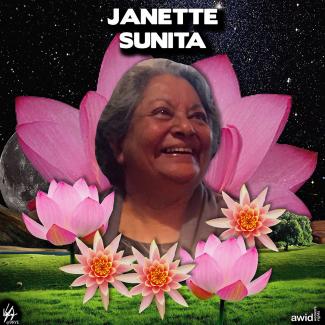
Originaire d'Inde, Janette était une personne formidable, fougueuse, bienveillante et aimante.
Son intolérance à l’égard de l’injustice et sa ferme volonté de défendre les droits de toutes les personnes l’ont amenée à travailler pour TARSHI (une ONG qui travaille sur la sexualité et la santé sexuelle et reproductive) pendant plus de 15 ans. Janette a géré et dirigé avec compétence les aspects financiers, les ressources humaines et les aspects opérationnels de TARSHI, naviguant adroitement dans la bureaucratie labyrinthique à laquelle sont soumises les ONG indiennes.
Son équipe se souvient « elle assurait nos arrières pour que nous puissions naviguer en eaux libres. Femme aux multiples talents, Janette nous a non seulement aidés à acquérir nos propres bureaux, mais elles les a également aménagés pour leur utilisation optimale. Elle aimait les voyages et les animaux et s'intéressait à la thérapie assistée par les animaux ».
É claro que sim, queremos saber mais sobre si e sobre a sua experiência com o financiamento.
En este reporte presentamos aspectos destacados de cómo AWID contribuyó a la cocreación y la resistencia feminista: rescate feminista, contrarrestar a lxs anti-derechos, financiamiento, conversaciones entre movimientos y la revista de las Realidades Feministas
5 pm, tonight.


The handwriting on the invitation—
coily and brusque—
I’ve seen it five times in five years.
My body rouses,
feverish.
I need to fuck myself first.
The tide is high tonight and
I get
off.
I want to slow everything down,
taste time and space, etch them
into memory.
*
I’ve never been to this part of town before.
Unknown places excite me,
the way limbs and veins and bones
resist decay,
their fate uncertain.
At the door, I think twice.
The hallway is pitch black
and it makes me pause.
On the other side,
a portal of smell and color
opens like a curse,
into a sunny afternoon.


The breeze
makes my hair dance,
piques its curiosity,
compels it to move.
I hear the wheelchair whirring,
shaping the shadows.
Then I see them:
a lynx face
and a body like mine
and I find myself desiring both
again.
The creature motions me closer.
Their gestures write a sentence;
as I move toward them,
I notice its details:
wither, flesh, bliss
On their command, the vine that covers the hallway
hugging warm stones,
snakes up the wall.
It becomes a verb,
“to climb,”
and I’m reorientated when their claws point
to the vine-bed in the center.
I hear the wheels behind me,
then that sound.
It reverberates
like no other.
Their long black wings
elevate toward the ceiling
then they lunge forward.
The feline vision scans every detail,
every change,
every longing.
Can desire liquefy your muscles?
Can it act sweeter than the strongest
of tranquilizers?


A lynx sews the world
across our differences,
weaving lace around my knees.
Can desire crush the distance of the world,
compressing the seconds?
They come closer still,
lynx eye meeting human eye,
sniffing the air,
turning body into
urgency.
They beat down their wings.
Stirred,
the vines tangle around my waist/waste.
Their tongue thins time,
shifting grounds,
soothes, with their magic,
what stirs beneath.
I see the world in you, and the
world is exhausted.
Then they plead:
Let me feast on you.