Special Focus

AWID is an international, feminist, membership organisation committed to achieving gender equality, sustainable development and women’s human rights

AWID Forum: Co-creating Feminist Futures

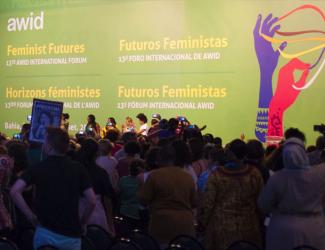
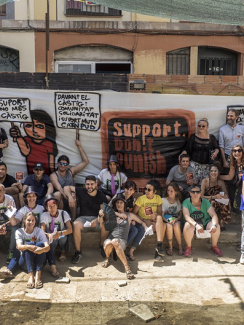
In September 2016, the 13th AWID international Forum brought together in Brazil over 1800 feminists and women’s rights advocates in a spirit of resistance and resilience.

This section highlights the gains, learnings and resources that came out of our rich conversations. We invite you to explore, share and comment!


What has happened since 2016?

One of the key takeaways from the 2016 Forum was the need to broaden and deepen our cross-movement work to address rising fascisms, fundamentalisms, corporate greed and climate change.

With this in mind, we have been working with multiple allies to grow these seeds of resistance:

And through our next strategic plan and Forum process, we are committed to keep developing ideas and deepen the learnings ignited at the 2016 Forum.

What happens now?

The world is a much different place than it was a year ago, and it will continue to change.

The next AWID Forum will take place in the Asia Pacific region (exact location and dates to be announced in 2018).

We look forward to you joining us!

About the AWID Forum

AWID Forums started in 1983, in Washington DC. Since then, the event has grown to become many things to many peoples: an iterative process of sharpening our analyses, vision and actions; a watershed moment that reinvigorates participants’ feminisms and energizes their organizing; and a political home for women human rights defenders to find sanctuary and solidarity.
Learn more about previous Forums

Related Content

40 Years of AWID: The Scrapbook | EN Snippet HOME

40 Years of AWID: The Scrapbook

In collaboration with artist Naadira Patel, we created a scrapbook that highlights a handful of snapshots from AWID’s last four decades of feminist movement support.

2. Frame your research

A framework for your research will guide throughout your research process, and the framing document you develop can also serve as a concept note to advisors and partners, and a funding proposal to potential donors.

Before conducting any research:

Your research framing may evolve over time as you refine your questions and gather new information. However, building an initial research framing will allow you to work from a solid foundation.


Goals

To create a strong foundation for your WITM research, it is important to clarify what you hope to accomplish.

For example, one goal of AWID’s WITM global research was to provide rigorous data to prove what we already knew anecdotally: that women’s rights organizations are discrepantly underfunded. With this data, we felt we would be better positioned to influence funders in their decision-making.

Your goals could be to:

  • Generate hard data on funding realities and trends to prove or disprove existing myths.
  • Gain deeper insight into differences between the perspectives of donors and women’s rights organizations.
  • Influence donors in grant-making.
  • Add crucial input to key funding debates.
  • Explore collaboration between donors and women’s rights organizations on issues that emerge from the research.

Back to top


Key questions

Frame your research process with key questions that only your research can answer and limit those questions to a specific time frame (e.g. past five years, past year, etc.).

Consider the following points:

  • What exactly do you want to learn more about and what is the hypothesis you would like to test? Writing this out will assist you in your thought process.
  • Is there existing research on this? If research already exists, it may not make sense to conduct new WITM research unless you feel like the existing research is not extensive or specific enough.  
  • What time frame do you want to cover in your analysis? For example, will your research analyze only the past year, or several previous years, such as the past five years?
  • Are you planning to repeat your survey to collect data in the future?

Choosing a specific timeframe for your research can result in more precise findings than working with an open-ended timeframe. Also, deciding whether you will repeat this research at regular intervals will allow you to set up data collection benchmarks for easy replication and comparison over time.

These were the key questions that guided AWID’s WITM research process:

  • What is the current state of women’s organizations’ financial sustainability across the world?
  • What external and internal trends are impacting donors’ funding decisions to support women’s organizations and movements?

Back to top


Type of data

Now that you determined your key questions, you can determine what kind of data will help you answer your key questions. This will allow you to plan the rest of your schedule for your WITM research.

For example, will you conduct a survey that covers an extensive portion of your priority population? Will you analyze the applications that funders are receiving from a certain region? Will you also conduct interviews (recommended)? By determining the types of data you need, you can reach out to external parties who will provide this data early on, and plot out your full schedule accordingly. Some suggested sources of data could be:

  • Surveys you create for women’s rights organizations and donors
  • Application and grantmaking data from donors funding cycles
  • Interviews of prominent activists, organizations, and donors
  • Donor data from membership organizations and networks, such as  the Foundation Center, regional or national donor affinity groups.

Diverse data sets are a great way to create robust and rich analysis.

The data from AWID’s 2011 Global Survey formed the backbone of our analysis in Watering the Leaves, Starving the Roots report. However, we also collected data from interviews and interactions with several actors in the field, ranging from donors to activists and women’s rights organizations.

Back to top


Final products

In addition to allowing you to set your schedule, creating an initial plan of what products you will develop will also allow you to work out what resources you need.

For example, will you only produce a long research report or will you also create infographics, brochures and presentations? Depending on your products, you may need to hire a design firm, plan events and so on.

These products will also be the tools you use to achieve your goals, so it is important to keep those goals in mind. For example, is your WITM research exclusively intended as an advocacy tool to influence funders? In that case, your products should allow you to engage with funders at a deep level.

 Some sample products:

  • Long report for dissemination with key funders and organizations.
    Historically, AWID WITM research has centered on a long report, from which AWID distilled other smaller products  - see rest of list.
  • Infographic for viral distribution online
  • Short animation demonstrating key findings
  • Short brochure(s) distilling your findings and messages
  • Articles and blog posts on key findings to draw interest to your larger report
  • Seminars or webinars presenting key findings.

Back to top


Conclusion: Framing your research will give you the big picture

Framing your research to cover goals, key questions, types of data, and final products will allow you to create a well-planned schedule, prepare your resources in advance, and plan a realistic budget.

This will make interactions with external partners easier and allow you to be nimble when unexpected setbacks occur.


Previous step

1. Gather your resources

Next step

3. Design your survey


Estimated time:

• 1 month

People needed:

• 1 or more Research person(s)

Resources available:

AWID Research Framing: sample 1
AWID Research Framing: sample 2


Previous step

1. Gather your resources

Next step

3. Design your survey


Ready to Go? Worksheet

Download the toolkit in PDF

Selena “Rocky” Malone

Engagée auprès de jeunes lesbiennes, gays, bisexuels, transgenres, intersexuels, queers, et transgenres (appelés Brotherboys-BB et Sistergirls-SS dans la communauté aborigène en Australie), Rocky faisait preuve de vision et d'un leadership inspirants.

Rocky avait commencé sa carrière auprès de la police du Queensland en tant qu'agent de liaison. Faire une différence était très important pour elle. Elle a mené un travail de soutien impressionnant auprès de jeunes de cette communauté en tant que responsable du service jeunesse « Open Doors » (portes ouvertes). Rocky a œuvré dans des situations complexes liées spécifiquement aux questions de genre et d'identité sexuelle.Elle avait un don naturel dans ce domaine: c’était une leader communautaire solide, une femme sereine, une amie fidèle, une personne aimante et attentionnée ainsi qu’une actrice du changement. Rocky était membre fondatrice d’IndigiLez Leadership and Support Group. 

En 2016, à la Cour suprême de Brisbane, l'ancien juge de la Haute Cour, Michael Kirby, a cité le nom de Rocky lorsqu'il a loué le travail du service juridique de la communauté LGBTI au fil des années. Rocky s'est engagée très fermement en faveur des droits humains de la communauté « LGBTIQBBSG », elle a repoussé les limites et induits des changements de manière respectueuse et aimante.


Rocky Malone, Australia

Will the AWID Forum still be in Taipei in light of the COVID-19?

AWID is closely monitoring the global COVID 19 situation and for now anticipates continuing with the Forum as planned.

If at any moment the situation demands  something different, we  will let you know right away.

The 14th AWID International Forum is scheduled to take place 20-23 September 2021 in Taipei,.

More information

Snippet Propuestas feministas para una economía justa ES

AWID, el Center for Women’s Global Leadership [CWGL, Centro por el Liderazgo Global de las Mujeres], y la African Women's Development and Communication Network [FEMNET, Red de Desarrollo y Comunicación de las Mujeres Africanas], presentan esta plataforma como aporte para cuestionar las nociones dominantes acerca del desarrollo y poner sobre la mesa propuestas iniciales para una agenda feminista para el desarrollo y la justicia económica y de género.

¿Cómo se originó este proyecto?


Las propuestas

Estas propuestas son exactamente eso: se ideas y experiencias a ser conversadas, debatidas, para que les sumemos elementos, las desmenucemos, las adaptemos, las adoptemos e incluso para que inspiren otras propuestas.

6. Conduct desk research

Desk research can be done throughout your research. It can assist you with framing, help you to choose survey questions and provide insights to your results.

In this section

Giving context

Conducting desk research throughout your research process can assist you with framing, help you to choose survey questions and provide contextual clarity or interesting insights to your survey results, such as comparing similarities and differences between your survey results and information produced by civil society and donors.

Perhaps you notice trends in your survey data and want to understand them.

For example, your survey data may reveal that organization budgets are shrinking, but it cannot tell you why this is happening. Reviewing publications can give you context on potential reasons behind such trends.

Back to top


Building on existing knowledge

Desk research also ensures you are building your research on the existing knowledge regarding your topic, confirming the validity and relevance of your findings.

They may be complimentary or contradictory to existing knowledge, but they must speak to existing data on the topic.

To ensure comprehensive research of the entire funding landscape related to your topic, look at a diverse set of funding sectors.

You can consider:

  • Women’s Funds
  • Private and Public Foundations
  • International Non-Governmental Organizations (INGOs)
  • Bilateral and Multilateral Agencies
  • Private Sector Actors
  • Individual Philanthropists
  • Crowdfunders

Include any other relevant sectors to this research.

For example, you may decide that it is also important to research local non-governmental organizations (NGOs).

Back to top


Potential sources for desk research (non-exhaustive)

1. Donors’ websites and annual reports

These are direct sources of information about what funders are actually doing and generally contain information on policies and budgets. Researching this before interviewing donors can result in more focused questions and a stronger interview.

2. Online sources of information

Back to top


Previous step

5. Conduct interviews

Next step

7. Synthesize your research findings


Estimated time:

• 1-2 months

People needed:

• 1 or more research person(s)


Previous step

5. Conduct interviews

Next step

7. Synthesize your research findings


Ready to Go? Worksheet

Download the toolkit in PDF

Zita Kavungirwa Kayange

Zita was a women’s rights activist who defended the rights of rural women in Greater Kivu.

She was the first Executive Director of UWAKI - a well known women’s organisation. Through her work with Women's Network for Rights and Peace (RFDP), and the Women's Caucus of South Kivu for Peace, she committed her life to helping to restore peace in the Eastern DRC. She spoke out strongly against the use of sexual violence as a weapon of war.

In 2006, she put herself forward as a candidate in the first democratic elections in the DRC. Although she did not win, she continued to advocate for women’s rights and the South Kivu community remembers her fondly. 


Zita Kavungirwa Kayange, Republic Democratic of Congo

Why did AWID decide to change the Forum location from Bali to Taipei?

Events in Indonesia, in late 2019 - in particular, signs of intensifying militarization and backlash against LGBTQ rights - led us to question AWID’s ability to maintain a reasonably safe and welcoming environment for the diversity of participants we aspire to bring together at the Forum.

After careful consideration the AWID Board of Directors decided to change the venue for the 14th International AWID Forum, in November 2019 from Bali to Taipei.

Taipei offers  a strong degree of logistical capacities, and is accessible for many travellers (with a facilitated e-visa process for international conferences).  

For more details:

Snippet From the Heart of the Commune_Fest (FR)

Conte: Du coeur de la commune

par María Bonita 

mariabonita

regarder la narration (espagnol)

¿Cómo se originó este proyecto?

Pensamos que la economía, el mercado, el sistema financiero y las premisas sobre las que se basan son todas áreas fundamentales para la lucha feminista.


Por eso, nuestra visión de una economía justa va más allá de promover los derechos y el empoderamiento de las mujeres en una economía de mercado, sino que busca evaluar el rol que juegan las opresiones de género en dar forma al modelo económico y ver como podemos transformarlo para garantizar la justicia de género y económica.

El proceso

No estamos comenzando de cero ni estamos solas en nuestro intento de presentar propuestas feministas para una economía justa. Muchas de nuestras propuestas ya han sido presentadas o existen en la práctica de las diversas comunidades que confrontan y desafían a los sistemas económicos dominantes basados en el mercado y el  crecimiento.

También somos concientes de las limitaciones que algunas alternativas presentan para abordar las injusticias del actual sistema capitalista a escala global. No siempre las propuestas a nivel micro son la respuesta a los problemas macro, si bien representan espacios importantes de resistencia y construcción de movimientos.  

Metas

Sin embargo, las alternativas feministas para una economía justa son fundamentales para socavar el sistema y para aprender a generar cambios transformadores y sistémicos. No podemos presumir de ofrecer un relato exhaustivo ni completo acerca de cómo crear un modelo económico feminista justo, o varios modelos de esa clase. Lo que sí podemos hacer es recoger elementos de diálogos con otros movimientos (sindicales, ambientales, rurales y de campesinxs) para formular propuestas que nos permitan acercanos a esa visión.

¿Qué queremos cambiar?

El modelo neoliberal que dirige la economía global ha demostrado una y otra vez su incapacidad para hacer frente a las causas estructurales de la pobreza, las desigualdades y la exclusión. Lo que en realidad ha hecho el neoliberalismo ha sido contribuir a crear y exacerbar esas injusticias.

En estas últimas tres décadas, las políticas dominantes para el desarrollo se han caracterizado por la globalización, liberalización, privatizaciones, financialización y ayudas condicionadas, y han destrozado los medios de vida de la población. El recorrido de estas políticas también ha estado marcado por la profundización de desigualdades, las injusticias con marca de género y la destrucción ambiental que el mundo ya no puede continuar soportando.

Hay quienes no dudan en sostener que el crecimiento económico, que debe ser facilitado dando plena libertad a las grandes corporaciones y empresas, puede generar y sostener una una marea alta que (con el tiempo) levante todos los barcos.

Sin embargo, la noción de desarrollo que ha prevalecido durante las últimas décadas, construida sobre la premisa de un crecimiento económico ilimitado, está atravesando una crisis ideológica.

El mito del crecimiento económico como panacea para todos nuestros problemas está perdiendo cada vez más prestigio.


Ver también

5 grandes amenazas

Nuestra visión

Bessy Ferrera

Bessy Ferrera was a lifelong defender of the human rights of trans people, sex workers and HIV positive people in Honduras.

Bessy was also a member of Arcoíris, an organisation which supports the LGBTI+ community. She was also a focal point person for the Right Here, Right Now (Derechos aquí y Ahora) Platform of Honduras, and advocated strongly for full citizenship of trans people, and the passing of a gender identity law that would allow trans people to change their gender identity legally.

"Since the beginning of the year [2019] the trans community has been suffering a series of attacks, for defending, for demanding rights." - Rihanna Ferrera (Bessy’s sister)

Bessy was a sex worker, and in early July 2019, was shot to death by two men while working in the streets of Comayagüela. Her assailants were subsequently arrested. 

Bessy is one of many LGBTI+ rights defenders in Honduras, who were murdered because of their identities and work. Other companeras include: Cynthia Nicole, Angy Ferreira, Estefania "Nia" Zuniga, Gloria Carolina Hernandez Vasquez, Paola Barraza, Violeta Rivas, and Sherly Montoya.

Bessy’s case is emblematic of injustice and a much larger problem of the systematic violence the LGBTI+ community faces in Honduras as the state fails to guarantee rights offer and fails to offer protection. This has created a culture of impunity.

Despite the risks LGBTI+ defenders in Honduras face, they continue their work to challenge and resist violence, and fight stigma and discrimination on a daily basis. 

“If I die, let it be for something good not for something futile. I don’t want to die running away, being a coward. If I die, I want people to say that I died fighting for what is mine.” - member of Arcoíris 

Snippet Day 14_Fest (EN)

The Crear, Résister, Transform Story

Coumba Toure

watch video


Closing Remarks: Where do we go to from here?

Cindy Clark, AWID

watch video


Fem Joy: Closing Party

DJ Miss Ray
DJ Luana Flores
Phoenix Inana

ما هي لغات المنتدى؟

لغات العمل في جمعية حقوق المرأة في التنمية هي الإنجليزية والفرنسية والإسبانية. ستتم إضافة اللغة التايلاندية كلغة محلية، بالإضافة إلى لغة الإشارة وإجراءات الاتصال الأخرى. يمكن إضافة لغات أخرى إذا سمح التمويل بذلك، لذا تحقق/ي مرة أخرى بانتظام للحصول على التحديثات. نحن نهتم بالعدالة اللغوية وسنحاول تضمين أكبر عدد ممكن من اللغات بقدر ما تسمح به مواردنا. نأمل في خلق فرص متعددة للكثيرين/ات منا للتواجد بلغاتنا والتواصل مع بعضنا البعض.

Agroécologie et souveraineté alimentaire

Le contexte

La recherche de moyens alternatifs de production alimentaire fondés sur la durabilité environnementale gagne du terrain dans toutes les régions du monde. Cette quête mondiale présente une caractéristique centrale : la nécessité de mobiliser les populations rurales, en particulier les femmes, tenant compte de leurs priorités et de leurs connaissances locales par le truchement de l’agroécologie.

Définition

L’agroécologie est une façon de pratiquer l'agriculture ou de faire appel aux technologies qui ne nuit pas à l'environnement. Cette approche propose de rompre avec le modèle de développement rural hégémonique reposant sur les grandes exploitations et la monoculture qui profitent essentiellement aux entreprises agricoles et renforcent l'exclusion sociale.

Dans le contexte de l'agriculture familiale, l'agroécologie représente une forme de résistance au modèle de développement actuel et aux problèmes sociaux, culturels, environnementaux et économiques que ce modèle implique. L’agroécologie se pose en alternative face au manque d'autonomie financière des agriculteur-trice-s et symbolise une résistance face au modèle d'agroentreprises actuel.

Perspective féministe

Il se pourrait que les efforts uniquement axés sur l'agroécologie ne suffisent pas à résoudre tous les problèmes de la marginalisation et de l'invisibilité des femmes. Il est alors crucial d’adopter une perspective féministe afin d'analyser les normes associées à la notion de famille telle qu'actuellement constituée en tant qu'institution parfaite, ainsi que les normes relatives à la condition de subordination des femmes.

Plus simplement, il importe d'inclure une réflexion sur les rôles de genre socialement construits pour faire avancer le potentiel émancipateur de l'agroécologie dans ce débat.


Pour en savoir plus sur cette proposition :

Yelena Grigoriyeva

Yelena Grigoriyeva, a menudo conocida entre sus amigxs como Lena, fue una destacada defensora de los derechos LGBT en Rusia.

Formó parte de movimientos democráticos, anti-guerra y LGBT. En su activismo, fue una crítica feroz del Presidente Vladimir Putin y su administración, y expresó su oposición a la anexión por parte de Rusia de la península de Crimea de Ucrania y al maltrato de prisionerxs.

Yelena se declaró bisexual a principios de 2019. "Su salida del armario fue una sorpresa para mí, y no la aprobé. Le dije: ‘Escucha, Lena, ya estás en la mira por tu actividad política. Te acabas de clavar otro blanco en el pecho’". - Olga Smirnova

Yelena, de hecho, recibió múltiples amenazas de muerte y, según algunxs de sus conocidxs, figuraba en un sitio web homofóbico que instaba a sus visitantes a que persiguieran a las personas LGBT. Yelena denunció las amenazas a la policía, pero el Estado ruso no le proporcionó ningún tipo de protección.

Sin embargo, Yelena, a pesar de vivir en una sociedad en la que la oposición política, así como lxs integrantes de la comunidad LGBT y lxs defensores de sus derechos, se enfrentan a una violencia continua y creciente, siguió haciendo campaña por la justicia social y la igualdad.

"No se perdió ni una sola acción. Y la detuvieron tantas veces que hasta perdí la cuenta", Olga Smirnova (compañera activista de la oposición y amiga).

Yelena fue asesinada el 21 de julio de 2019, cerca de su casa. Las autoridades detuvieron a una persona sospechosa pero, según algunas fuentes, muchxs amigxs y compañerxs activistas creen que es un chivo expiatorio y que, en realidad, se trata de un asesinato político deliberado.

Para los familiares y amigxs de Yelena, su caso sigue sin resolverse aunque la persona sospechosa haya confesado.

En 2013, Rusia aprobó una ley que prohíbe la difusión de lo que describió como "propaganda gay". En 2014, Human Rights Watch publicó un informe al respecto.