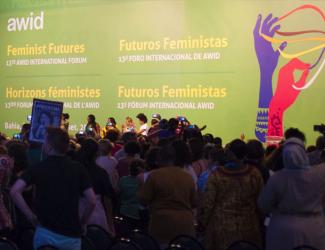
In September 2016, the 13th AWID international Forum brought together in Brazil over 1800 feminists and women’s rights advocates in a spirit of resistance and resilience.
This section highlights the gains, learnings and resources that came out of our rich conversations. We invite you to explore, share and comment!
What has happened since 2016?
One of the key takeaways from the 2016 Forum was the need to broaden and deepen our cross-movement work to address rising fascisms, fundamentalisms, corporate greed and climate change.
With this in mind, we have been working with multiple allies to grow these seeds of resistance:
Movements can also benefit from new methodologies on Visioning Feminist Futures (Coming up soon!)
And through our next strategic plan and Forum process, we are committed to keep developing ideas and deepen the learnings ignited at the 2016 Forum.
What happens now?
The world is a much different place than it was a year ago, and it will continue to change.
The next AWID Forum will take place in the Asia Pacific region (exact location and dates to be announced in 2018).
We look forward to you joining us!
About the AWID Forum
AWID Forums started in 1983, in Washington DC. Since then, the event has grown to become many things to many peoples: an iterative process of sharpening our analyses, vision and actions; a watershed moment that reinvigorates participants’ feminisms and energizes their organizing; and a political home for women human rights defenders to find sanctuary and solidarity.
Se rassembler à l’échelle mondiale, en tant qu’individus et mouvements, nous permet de générer une force considérable. Rejoignez-nous à Bangkok, en Thaïlande et en ligne en décembre 2024.
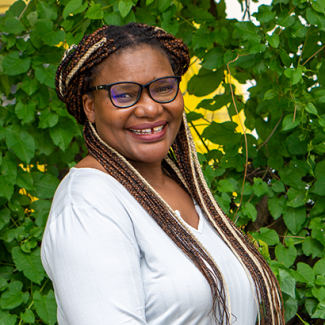
Yannia Sofía Garzón Valencia I am a Black woman and a community weaver. I live in Santander de Quilichao in Cauca, Colombia. I am interested in the creative processes that organize sustainable collective life. I like exchanging thoughts and cooking, investigating and analyzing, planting seeds and learning from plants, reading and playing. I am currently coordinating the observatory of gender-based violence against afro-descendant communities in Colombia (@VigiaAfro).
The three of us were “sharing” the afternoon in a neighborhood south of Bogota.
There was an unusually large green playing area and we sat on little wooden stools under an elderberry tree. We were finally experiencing that other form of love – that pleasure of being together and listening to each other. For me, these kinds of chats are among the expressions of love that life had only recently allowed me to enjoy. I had not known this other form of love – the kinds found outside workshops, activist spaces, classrooms, or workplaces – to be possible. Yet we three friends spent the afternoon amongst ourselves and we did not pretend to be blind to the color of our respective skins. Rather, it was a lived factor that allowed us to intimately discuss the similarities and differences in our childhood and youthful experiences.
Those chats were unrelated to any upcoming activities of the Black movement in Colombia, but they still nourish me and acquire new meanings. Our closeness was woven through coming together, recognizing each other, and identifying the uniqueness of our liberations. And by realizing there is not just one but many paths to liberation – those paths we inhabited every time we said “no” and rebelled. Far from feeling discomfort, we met in an authenticity made of weakness and strength, one which brought us closer instead of separating us.
Our purpose on that beautiful afternoon was to just be – to have an awareness of simply being amongst ourselves. We walked through our pasts so that the memories that stayed with us were those we decided to keep as ours, and not those that fear let through and found a place for. We remembered exact fragments of TV shows, and sang songs written by artists who had taught us about loving well, hating well, cursing like the worst villain, and suffering like the best leading lady.
We told each other about our school pranks, and what remained in our subconscious after being exposed to the many ways the media repeats the same thing – after the teachers and nuns at school overexposed us to stories so that we would identify with and appropriate Cinderella’s aspirations for our own lives. This would set the tone for the rest of our story: the drama of the impoverished and diminished girl who is yet to achieve her full value through an act that redeems her condition. And that act can only be brought about by the gaze of a male who, at the very least, is white, hence deserving of what is between our thighs – his “main aspiration” – and the “perfect realization of our dreams,” which we are told should then be our main aspiration.
There were three of us there that afternoon. Each had been brought up in a different part of the country, but it was fascinating that we could all still quote fragments and situations from songs and soap operas that often – as we realized by getting to know each other – shared codes or symbols that were replicated, with a few variations, in our homes, in our first relationships, and in our neighborhoods and schools. Brought up by “dramas” (is that what that very successful genre is called?) where the more you suffer, the more you deserve, the issue of “how and in which situations it is acceptable and legitimate to suffer” becomes an important mandate on how the person who suffers should be seen, what they should do, and whom they should be. Some of us managed to liberate ourselves and “learn” a definition of love that could only be learnt in adulthood, shattering illusions, and accepting natural sin. And becoming aware of the industrial production of a virgin, which we may refuse to look like as she has no place in our understanding, and the disappointment this alienation brings.
After singing, we reviewed our early sexual explorations. I never thought that most people experienced them before the age of nine and that even in adulthood, those experiences, those memories, remain a heavy burden. Even today, in thousands of places, millions of girls and boys see their innocence curtailed by lack of trust and the ignorance we present them with when they try to explore their bodies. Blaming curiosity is a most efficient control mechanism. We went back to the brief conversations we had when we changed the history of our lives from cursed Black beings to a perspective that rebirthed us. We remembered how many of our aunts and female cousins left their homes, their core, their roots, to seek a future outside, elsewhere.
The future comes with a price: it demands that those relationships that marked our childhood are reshaped and confined to oblivion. They are our foundations, but they are not relevant if we want to move ahead. For us, advancing was to learn by heart what we do to ourselves with the opportunities we find elsewhere. That it is elsewhere, and not within us, that opportunities lie, that we are available, that we need to be outside. However, for many of our aunts and female cousins, the few opportunities to enroll and stay in an evening class or take a sabbatical from domestic work were paid for by becoming the first sexual experience of relatives living in the future. A future for which others before them had also paid for, and whose price they had already forgotten. The demand for this payment arrived with the same inevitability as a public utility service bill. We will not take up that legacy.
In Colombia and Latin America, there was an etiquette manual called La urbanidad de Carreño (Carreño’s Etiquette Manual). It was mandatory reading until the 90s in both public and private schools. The manual conditioned how bodies were perceived and my mother, taken in and brought up by Carmelite nuns, knew it by heart. The first time I read it I had to stop more than once to rub my stomach, which hurt from laughing so much. It has ridiculous instructions such as: take a shower with your eyes closed and turn off the lights to wear your nightclothes. Different chapters address how one is to behave at home, in the street, and during a dinner or lunch party – in short, the norms of good taste and etiquette. The ethical core of good citizens was the urbanity that allowed one to distance oneself from rural life. The same manual indicated that shouting a greeting to an acquaintance on the other side of the street was indecorous; good manners dictate that you must cross the street. By the same token, men must remove their coats and place them over puddles of water if accompanying a woman whose shoes should not get wet. I thought about greeting someone across a river, and how it is so hot where we live that we don’t require coats.
"She learned that to care for her belly, she needed to keep her tissues warm, to avoid the cold that comes through the soft spot on the top of the head, through the feet, the ears, so it would not hurt particularly at moontime. For that, you need to be careful about what you eat and what you don’t eat, how you dress and how you walk, as all that has to do with girls’ health. The woman elder says that, from her devoted grandfather, she learnt that cramps became more common when houses no longer had floors made of mud and/or wood. When concrete and tiles came, when the material making up the house allowed the cold to come in through the feet, tension also grew in the belly tissue."
The manual’s author, Mr. Carreño is the opposite of the grandfather of a woman elder born in Turbo. She told me once that her grandfather was a wise man, that he told her about birthing and how to take care of her body. She learned that to care for her belly, she needed to keep her tissues warm, to avoid the cold that comes through the soft spot on the top of the head, through the feet, the ears, so it would not hurt, particularly at moontime. For that, you need to be careful about what you eat, how you dress, and how you walk, as all that has to do with a girl’s health. The woman elder said that, from her devoted grandfather, she learnt that cramps became more common when houses no longer had floors made of mud and/or wood. When concrete and tiles came, when the material making up the house allowed the cold to come in through the feet, tensions in the belly tissue also grew.
Surprised again. Such a distance between Don Carreño and the wise grandfather in terms of being aware of life – as distant as the mandates of proper behavior that stifle your impulses and senses, even the most common sense that values health. At that moment, I was able to understand one of the many ways that concrete obstructs the earth’s breathing, and our own as part of her. I had not realized there was, and still is, the architecture and materials for taking care of our bodies. In Colombia, as well as in other countries, the materials used to make houses are taken as indicators of multidimensional poverty. A house built with concrete moves the home away from being considered poor. This is just one disappointing example of how progress pushes us to abandon the relationship between our environment and our body. Good taste and urbanity pushes us outside: to move forward, they lie, you have to go out there.
It bothered us to realize that neither our mothers nor fathers had spoken to us about menstruation, except when the brown stain had already smeared our knickers. They failed to preserve us from the shame that was supposed to be a natural feeling once menstruation had come. Along with menstruation came the belly cramps often endured in silence, because there was work to be done; some cramps were due to cysts, hematomas, or fibroids that killed the grandmothers who had discovered and forgotten the healing treatments, and then were forgotten themselves. That our mothers and fathers’ breaths turned colder and colder, but the Outside froze familiarity and, instead of warming our bellies, passed judgment with advice similar to warnings of the only thing men care about. This was applied to all men – legitimizing the plundering role of the phallus, as if its only option was to take what we have between our legs. The multiple versions of that truth were replaced by an unmovable and deeply-set naturalization: telling all women that we must preserve ourselves for one of them, for the one that will first introduce his penis inside us, for the one that will give us something in exchange, and that we are women only because we aspire to and let him put it inside us. As a girl I explored little penises and clitorises and, in between games among girls, the question was whispered: whose turn is it to play man and whose turn is it to play woman? And the answer: the beginnings of little orgasms, regardless of with whom. I guess the same must happen among male bodies.
The experiences and explorations of our aunts, female cousins, and acquaintances focused on the body and its nudity as taboo. They avoided expressing and naming it, to the point of covering it up, assigning new names to its excreting, expelling, procreating, and, just for us women, its receiving functions. Once I heard a woman elder in a workshop say that when she was living with her grandmother, her memory was of this old woman sleeping with one eye open, the other closed, and a rifle by the mattress. The softest night sound was enough for her to grab the rifle and aim. This is a common situation in the Colombian Pacific, where some harmful behaviors are normalized. Married and single men who like a young woman would enter her room at night – we call it gateada. It was a risk: if those with authority in the home realized what was happening, abuse or not, the man could be hurt or even killed.
This practice of taking the law into one’s own hands has failed to put an end to gateadas, even today. In that same workshop – as I kept telling my sisters – other participants said that neither they nor their mothers would leave their daughters alone with their fathers at bath time, unless the girls were wearing underwear. I remembered then my father’s voice saying, when I was seven, your mother never let me bathe you. After sharing this, another woman responded that, in contrast, her father would give her a bath naked in the courtyard of her childhood home until she turned seven, and then her eldest brother did it until she turned nine. She never felt anything strange in the way they looked at her; for them, it was just another task in caring for the most spoiled child in the home. She remembered being seen for what she was: a daughter child, a sister child, who did not like the water.
Once again childhoods, yesterday and today. We were surprised by that story, and it comforted us. Even I had seen things being different elsewhere; my daughter’s father bathed her in the tub until she was almost two. Even before turning two, he would give her a few soft slaps upwards on her bum, to make it bigger, as he said. Here, we could also speak of other dimensions of how we construct our bodies, but that is a different story. For me, it was one care task, among many, that we agreed to divide between ourselves before the baby was born. And the decision to not see every man as a lurking rapist does not mean they are not rapists, but instead that they can stop being so. There are also men and male bodies that have been brought up to never be rapists.
This is still happening. It happened to a friend of ours and to my own daughter. I thought: how can it be that some women are coupled with men they cannot trust to care for their daughters? I am sure that my mum loved my dad. And even though we seldom speak about the woman she was before becoming my mum, I know her experiences of abuse cannot be compared to the brutality and over-tolerance of those of today. But that is still a decision many women in many places make, and that leads to other questions. How often, how repeated were cases of abuse in our extended families to make women openly, or in indiscernible ways, forbid their partners from bathing their daughters? Is it related to the media overexposure we are subject to almost from birth? What makes family ties blur and turn into just bodily-satisfaction exchanges? Is it the proximity to urban values that cares so much about the right shapes of female bodies as objects of desire, and pushes male bodies to behave like owners and conquerors, fulfilling the mandate to mimic media representations so they feel safe in their identity? Is it concrete and other codes, like the Carreño etiquette, that sustain it? Is it encouraged by the need to forget certain relationships as the price of progress, that insistence on “doing for the outside?” What happens to what we learned in our times, those of us who, in secret or not, undertook sexual explorations as children? Were they erased by guilt? Were they the seeds of mistrust and shame in nudity? Were they the seeds of mistrust and shame of being inside oneself? Indeed, aren’t these learnings possibilities to trust in, understand the nudity of bodies as part of respecting oneself and others? These questions emerge in trusted spaces, where the fear to say what one thinks and feels is driven away by the intention of accompaniment. I imagine how many of us there are in all corners of this planet and I am certain these are not new questions, that messages in them are repeated, and that we find ourselves living the answers.
ExploreTransnational Embodiments
This journal edition in partnership with Kohl: a Journal for Body and Gender Research, will explore feminist solutions, proposals and realities for transforming our current world, our bodies and our sexualities.
نصدر النسخة هذه من المجلة بالشراكة مع «كحل: مجلة لأبحاث الجسد والجندر»، وسنستكشف عبرها الحلول والاقتراحات وأنواع الواقع النسوية لتغيير عالمنا الحالي وكذلك أجسادنا وجنسانياتنا.
“But when was the master
ever seduced from power?
When was a system ever broken
by acceptance?
when will the BOSS hand you power with love?
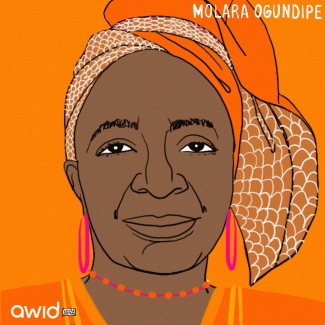
At Jo’Burg, at Cancun or the U.N? – Molara Ogundipe
In an interview at the 2010 Ghana International Book Fair, Molara Ogundipe introduced herself with the words: “...I’m a Nigerian. I’ve lived possibly all over the world except for the Soviet Union and China.”
Across the different continents and countries, Professor Ogundipe taught comparative literature, writing, gender, and English studies using literature as a vehicle for social transformation and re-thinking gender relations.
A feminist thinker, writer, editor, social critic, poet, and activist Molara Ogundipe succeeded in combining theoretical work with creativity and practical action. She is considered to be one of the leading critical voices on African feminism(s), gender studies and literary theory.
Molara famously coined the concept of “stiwanism’ from the acronym STIWA – Social Transformations in Africa Including Women recognizing the need to move “away from defining feminism and feminisms in relation to Euro-America or elsewhere, and from declaiming loyalties or disloyalties.”
In her seminal work ‘Re-creating Ourselves’ in 1994, Molara Ogundipe (published under Molara Ogundipe-Leslie) left behind an immense body of knowledge that decolonized feminist discourse and “re-centered African women in their full, complex narratives...guided by an exploration of economic, political and social liberation of African women and restoration of female agency across different cultures in Africa.”
In speaking about the challenges she faced as a young academic she said:
”When I began talking and writing feminism in the late sixties and seventies, I was seen as a good and admirable girl who had gone astray, a woman whose head has been spoilt by too much learning".
Molara Ogundipe stood out for her leadership in combining activism and academia; in 1977 she was among the founding members of AAWORD, the Association of Women in Research and Development. In 1982 she founded WIN (Women In Nigeria) to advocate for full “economic, social and political rights” for Nigerian women. She then went on to establish and direct the Foundation for International Education and Monitoring and spent many years on the editorial board of The Guardian.
Growing up with the Yoruba people, their traditions, culture, and language she once said :
“I think the celebration of life, of people who pass away after an achieved life is one of the beautiful aspects of Yoruba culture.”
Molara’s Yoruba ‘Oiki’ praise name was Ayike. She was born on 27 December 1940 and at the age of 78, Molara passed away on 18 June 2019 in Ijebu-Igbo, Ogun State, Nigeria.
Snippet - GII Intro (EN)
Gender Impact Investing & The Rise of False Solutions:
An Analysis for Feminist Movements
Gender Impact Investing (GII) is now trending as a solution to gender inequality. Yet, as our report indicates, it is actually part of the problem. Public and private institutions marketing GII equate it with promotion of gender equality and with increased resources for women and girls.
Neither claim is evidence-based.
Rather, GII is another expression of subjecting our lives and societies to the same financial logic that has shaped, and continues shaping, the profound inequalities in our world.
With this report, AWID offers the readers - feminists, gender justice advocates and stakeholders in gender impact investing - a critical analysis and substantiated evidence to understand GII, its narratives, and economic and political implications for feminist movements.
✉️ By registration for larger groups. Drop-ins for smaller groups. Register here
📅 Tuesday, March 11, 2025
🕒 12.00-2.00pm and 4.00-6.00pm EST
🏢 Chef's Kitchen Loft with Terrace, 216 East 45th St 13th Floor New York
Organizer: AWID
Carta de amor a los movimientos feministas: el adiós de Hakima y Cindy
Queridos movimientos feministas:
Ustedes nos recibieron con los brazos abiertos cuando en el Foro de AWID 2016 en Bahía se anunció que íbamos a ser las nuevas codirectoras ejecutivas de AWID. Fue un momento que sentimos lleno de posibilidades: estábamos construyendo un oasis feminista que ayudaría a sostener las luchas colectivas que teníamos por delante. Salimos de Bahía con una sensación muy clara de la responsabilidad que nos cabía: hacer lo mejor que pudiéramos al servicio de ustedes, liderando a AWID de tal manera que les sirviera de apoyo y tuviera impacto para ustedes.
Ahora es el momento de abrir el camino a nuevos liderazgos
Tras cinco años de recorrido, dejamos nuestro rol como codirectoras ejecutivas de AWID. Esta decisión coincide con la finalización de nuestro ciclo estratégico actual. Pensamos que es el momento ideal para hacernos a un costado y apoyar una renovación en el liderazgo. Creemos que los liderazgos feministas transformadores son cíclicos.
Valoramos mucho la oportunidad que tuvimos de desempeñar un rol dentro de los 40 años que abarca la historia de AWID, sosteniendo y guiando a la organización en el contexto difícil de una pandemia global y la agudización de muchas crisis.
Sabemos que ustedes, movimientos feministas, nos van a acompañar en nuestros próximos recorridos, donde sea que transcurran. Una y otra vez nos han enseñado a ser fuertes y resilientes. Tal vez cumplamos roles diferentes, pero en forma colectiva seguiremos avanzando juntxs.
Nuestro recorrido
Tenemos recuerdos vívidos de aquellxs con quienes nos reunimos en Indonesia, Malasia, Nepal, Tailandia, Taiwán y otros lugares para crear juntxs el Foro AWID, de su generosidad y su entusiasmo. Sin duda alguna lo que más lamentamos de estos cinco años pasados es no haber podido ofrecerles un Foro presencial.
Una vez que tomamos la decisión difícil (aunque necesaria) de cancelar el Foro AWID nos concentramos en responder a las preguntas existenciales que tantas organizaciones también estaban enfrentando: ¿cómo podemos cambiar la forma en que trabajamos para seguir siendo relevantes teniendo en cuenta que todxs nosotrxs, cada quien a su manera, estamos afectadxs por el agotamiento, la enfermedad y la pena? ¿Cómo podemos construir relaciones significativas cuando nos vemos limitadxs a encontrarnos solo en forma virtual? Todavía no existen respuestas claras para estas preguntas pero ustedes, movimientos feministas, nos han mostrado el camino.
Con mucho orgullo vimos a feministas liderando las respuestas para mitigar los impactos de COVID-19 en nuestras comunidades. Lxs feministas somos quienes respondemos directamente a las crisis y vamos a continuar exigiendo que se reconozca nuestra labor y se le asignen los recursos que corresponde. Ustedes muchas veces respondieron con entusiasmo a nuestras convocatorias, haciéndose presentes de maneras increíbles en nuestra campaña por un Rescate Feminista y más tarde en el festival Crear Resister Transform. Siempre nos acompañaron en la incidencia colectiva, ya fuera en espacios de derechos humanos, con quienes diseñan políticas o con donantes.
El trabajo que hicimos con ustedes nos inspiró para introducir un cambio importante y ampliar las oportunidades de participación entre nuestrxs afiliadxs sin que todo esté centralizado en AWID. A esto le llamamos «enfoque de membresía basado en la solidaridad» y nos entusiasma anunciar que este año presentaremos la plataforma de la Comunidad de AWID.
Ustedes nos enseñaron que, como no podemos contar con el sistema, lo que más importa es que nos apoyemos unxs a otrxs. Si hay algo que esperamos haber hecho bien en estos años, es crear espacios para desarrollar vínculos nuevos y más profundos así como posibilidades de apoyo y colaboración mutua.
Queremos destacar especialmente con amor y respeto a quienes forman y formaron el equipo de AWID (tanto el personal como lxs integrantes del Consejo Directivo) con quienes tuvimos el honor de trabajar durante estos años. Aprendimos algo de cada unx de ustedes y sentimos una profunda gratitud por todo lo que le han dado a AWID a lo largo de los años.
Entramos a este rol siendo la primera pareja de codirectoras ejecutivas de AWID. Aprendimos de las muchas tradiciones activistas y comunitarias de liderazgo colectivo y de las organizaciones feministas que ya habían implementado esta modalidad antes que nosotras. Sabemos que ninguna de nosotras dos podría haberlo hecho sin la otra. Pudimos aprovechar los puntos fuertes de cada una y apoyarnos mutuamente para cumplir con nuestra tarea lo mejor posible.
Lo que viene
Llegamos juntas a este rol y nos vamos juntas, aun cuando nuestras fechas de partida sean diferentes. Estamos comprometidas a colaborar para que la transición sea fluida y para que durante este año los nuevos liderazgos puedan contar con un proceso deliberado de incorporación a sus roles.
Movimientos feministas: están en muy buenas manos con el equipo de AWID. Ellxs saben lo que tienen que hacer. Y a nosotras nos enorgullece dejar a la organización en una posición de fortaleza y resiliencia. Esperamos ver a muchxs de ustedes en el Foro AWID de 2024. Nos van a reconocer fácilmente: vamos a ser esas que están entre el público relajadas y pasándolo bien.
Vaya nuestro amor y nuestra valoración por todo lo que han hecho con y por nosotras. El impacto que ustedes han tenido en nuestras vidas va mucho más allá de los últimos cinco años y sin duda alguna continuará durante mucho tiempo en el futuro.
Yamile Guerra fue una conocida abogada, líder comunitaria y activista política de la región colombiana de Santander.
Trabajó activamente para resolver las disputas entre comunidades locales y empresas promotoras, y abogó contra la apropiación ilegal de las tierras. Yamile ocupó varios cargos políticos, entre ellos la Secretaría General del Gobierno de Santander en Bogotá, y se presentó también a la Alcaldía de Bucaramanga. En los últimos años de su vida, Yamile se volvió cada vez más activa en las causas medioambientales contra los desarrollos urbanos, particularmente, en la defensa de los humedales biodiversos de Santurbán contra los desarrollos urbanos, una región que abastece de agua dulce a casi 2 millones de personas .
Según su familia y amigxs, Yamile recibía amenazas de muerte a diario y había pedido protección a las autoridades.
"Ella era muy consciente de este problema [litigio de tierras] y manifestó repetidamente que se sentía insegura". - Alixon Navarro Muñoz, periodista y amigo de la familia Guerra.
El 20 de julio de 2019, Yamile fue asesinada a tiros por dos hombres en Floridablanca, Santander. Acababa de terminar de discutir con ellos por una disputa de tierras. Un sospechoso fue arrestado más tarde por su asesinato y admitió haber recibido un pago por llevar a cabo su asesinato. Según varios informes, o Yamile fue la tercera integrante de su familia en ser asesinada a causa de las disputas por tierras. El padre de Yamile, Hernando Guerra, había sido asesinado también varios años antes.
El asesinato de Yamile forma parte de una ola de violencia y asesinatos sistemáticos contra cientos de activistas sociales y defensorxs de los derechos humanos en Colombia. Según el Instituto de Estudios para el Desarrollo y la Paz (INDEPAZ), en el momento de la muerte de Yamile, más de 700 líderes comunitarios y activistas de derechos humanos habían sido asesinadxs desde que el país firmó un acuerdo de paz en agosto de 2016. La mayoría de ellxs fueron asesinadxs por enfrentar el tráfico ilegal de drogas y las operaciones mineras. Las personas indígenas, afrocolombianas y las mujeres defensoras de derechos humanos son lxs activistas que corren mayor riesgo.
Menos de una semana después de la muerte de Yamile, miles de colombianxs marcharon por pueblos y ciudades sosteniendo fotos en blanco y negro de activistas que habían sido asesinadxs, en las pancartas se podía leer: "Sin líderes no puede haber paz" y "No más derramamientos de sangre".
Yamile Guerra tenía solo 42 años en el momento de su asesinato.
There is an old, hazy picture laying in front of me. In it I am dressed in all white, from the pearl beads fastened into my hair and tucked against my ears, to the ones that trail loosely around my tiny wrists. (...)
artwork: “Cultura Negra” [Black Culture] by Astrid Milena González Quintero
Snippet - Resources to rally - EN
Resources to rally through CSW69 with
Nous vous présentons nos prochaines codirectrices exécutives de l'AWID !
Chers mouvements féministes,
C'est avec fierté que je vous présente, au nom du conseil d'administration de l'AWID, les prochaines codirectrices exécutives de l'AWID : Faye Macheke et Inna Michaeli!
Faye Macheke est une féministe panafricaine passionnée, engagée dans les mouvements pour les droits des femmes, la justice raciale, les droits des migrant·e·s et des travailleur·euse·s, et la justice environnementale. Son activisme s'appuie sur l'héritage de la lutte contre l'apartheid en Afrique du Sud et sur les séquelles qu’elle a laissées au Zimbabwe. En 2019, Faye a rejoint l'AWID en tant que directrice des finances, des opérations et du développement. Elle y apporte une grande expérience du leadership féministe, de la stratégie et de tous les aspects du développement organisationnel. Faye est une membre engagée du conseil d'administration d'UAF-Africa et d'autres organisations de défense des droits des femmes. Elle est basée au Cap, en Afrique du Sud.
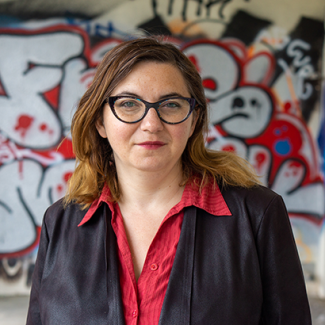
Inna Michaeli est une activiste et sociologue féministe lesbienne queer comptant de nombreuses années d'engagement profond dans les luttes féministes et LGBTQI+, l'éducation politique et l'organisation par et pour les femmes migrantes, ainsi que la libération de la Palestine et la solidarité avec cette dernière. Inna a rejoint l'AWID en 2016 et occupé différents postes, dont celui de directrice des programmes plus récemment. Elle bénéficie d'une grande expérience dans la recherche et le renforcement des connaissances, le plaidoyer politique et le développement organisationnel. Inna fait partie du conseil d'administration de Jewish Voice for Peace - Allemagne. Elle est basée à Berlin, en Allemagne.
Cette décision est le résultat d'un processus rigoureux mené avec la pleine participation du conseil d’administration et du personnel de l'AWID. Le conseil d’administration a reconnu et honoré les compétences et les talents du personnel de l'AWID en ouvrant une recherche d'embauche interne. Deux candidates brillantes, qui incarnent l'intégrité, l'éthique du soin et les valeurs féministes intersectionnelles à la base du travail de l'AWID, ont ainsi postulé ensemble en tant qu'équipe. Faye et Inna ont présenté une vision courageuse et passionnante pour faire face aux défis de notre époque : construire une communauté féministe mondiale, combattre et perturber les systèmes d'oppression, et soutenir les mouvements féministes pour qu'ils prospèrent.
En cette année de célébration des 40 ans de l'AWID, nous sommes ravi·e·s qu'Inna et Faye prennent la direction conjointe de l'AWID de notre prochaine stratégie et d’une nouvelle phase : évoluer, repousser nos limites et soutenir les mouvements féministes dans le monde entier.
La désignation des codirectrices exécutives de l'AWID et le soutien qui leur est apporté pour diriger l'organisation est une responsabilité fiduciaire que nous prenons au sérieux en tant que conseil d’administration. La façon dont nous nous engageons dans ces processus reflète également la diversité et l'excellence des membres de l'AWID, qui élisent le conseil d'administration de l'AWID.
Alors que nous disons au revoir à Cindy et Hakima, nous, le conseil d’administration, accueillons à l'unanimité et avec enthousiasme Faye et Inna en tant que nos nouvelles codirectrices à compter du 5 septembre 2022. Ne manquez pas d'autres mises à jour sur la transition de notre direction dans les mois à venir.
Merci infiniment pour votre soutien indéfectible!
Dans la solidarité et l'amour féministes, Margo Okazawa-Rey
Présidente du conseil d’administration de l’AWID
Binta Sarr était une activiste pour la justice sociale, économique, culturelle et politique, en plus d’avoir occupé le poste d’ingénieure hydraulique au Sénégal. Après 13 années de service, celle-ci a choisi de quitter le fonctionnariat pour travailler auprès de femmes rurales et marginalisées.
Cet engagement a donné lieu à la création de l’Association pour la promotion des femmes sénégalaises (APROFES), un mouvement de base auquel est venu se greffer une organisation fondée par Binta en 1987. L’une de ses approches était la formation au leadership, non seulement dans le cadre d’activités économiques mais également en lien avec les droits des femmes et leur accès à des fonctions décisionnelles.
“« Les populations à la base doivent s’organiser, se mobiliser, assumer le contrôle citoyen et exiger une gouvernance démocratique dans tous les secteurs de l’espace public. La priorité des mouvements sociaux doit aller au-delà de la lutte contre la pauvreté et être axée sur des programmes de développement articulés et cohérents en adéquation avec les principes des droits humains, tout en prenant en compte leurs besoins et leurs préoccupations tant au niveau national, sous régional que dans une perspective d’intégration africaine et mondiale. » – Binta Sarr
Ancrée dans la conviction de Binta, à savoir que les changements essentiels dans le statut des femmes nécessitent la transformation des attitudes masculines, APROFES a adopté une approche interdisciplinaire et s’est appuyée sur la radio, les séminaires et le théâtre populaire, offert une éducation publique innovante et apporté un soutien culturel aux actions de sensibilisation. Sa troupe de théâtre populaire a créé des pièces sur le thème des castes dans la société sénégalaise, de l’alcoolisme et de la violence conjugale. Binta et son équipe ont également pris en compte l’interconnexion essentielle entre la communauté et le monde élargi.
« Pour APROFES, il s’agit d’étudier et de prendre en compte les interactions entre le micro et le macro, le local et le mondial, ainsi que les différentes facettes du développement. De l’esclavage à la colonisation, le néo-colonialisme et la marchandisation du développement humain, qui représentent la majeure partie des ressources d’Afrique et du Tiers-Monde (pétrole, or, minéraux et autres ressources naturelles), demeurent sous le contrôle des cartels financiers et autres multinationales qui dominent ce monde mondialisé. » – Binta Sarr
Binta était également l’une des membres fondatrices de la section féminine de l’Association culturelle et sportive Magg Daan, et a reçu des mentions élogieuses de la part du gouverneur régional et du ministre de l’Hydrologie pour sa « dévotion aux populations rurales ».
Née en 1954 dans la petite ville de Guiguineo, Binta est décédée en septembre 2019.
Hommages:
« La perte est incommensurable, la douleur est lourde et profonde mais nous allons résister pour ne pas pleurer Binta; nous allons garder l’image de son large sourire en toutes circonstances, pour résister et nous inspirer d’elle, maintenir, consolider et développer son œuvre... » – Page Facebook de l’APROFES, 24 septembre 2019
« Adieu, Binta! Nul doute que ton immense héritage sera préservé. » – Elimane FALL, président de l’ACS Magg-Daan
Snippet Forum Quoate Jac s m Kee, Malaysia (EN)
There is nothing like being in a shared space, exchanging body energies,... seeing the world and doing something together. Events like the Forum are among the strongest of the global feminist movement. - Jac s m Kee, Malaysia
Out Run (2016) Inglés | Tagalo con subtítulos en inglés
Mediante la movilización de peluquerxs y reinas de belleza transgénero de clase trabajadora, lxs dinámicxs líderes del único partido político LGBT del mundo libran una cruzada histórica para elegir a una mujer trans al Congreso filipino.
Nuestra presencia colectiva trastorna las prácticas institucionales de exclusión en dichos espacios y, a la vez, apoya los procesos de organización de los movimientos en torno a las alternativas feministas a los sistemas de opresión.
Súmate a las conversaciones desde el 10 al 21 de marzo de 2025, mientras transformamos de forma colectiva la CSW69 en espacios para y sobre la resistencia y la solidaridad.
تحذير: عنف ضد المرأة و البنت (لانو في فرق بيناتهم) ، اعتداء.
لطالما كنت جزء منك. لما كنت صغيرة لم أكن أعرف أن كلمة - نسوية - مقصودة لنا نحن ، الي نطمح إلى التغلب على النظام الأبوي وتفكيكه ، الي نلتمس اللجوء في أحضان الشمول والنسوية التقاطعية ، الي يعاملو الناس على قدم المساواة بغض النظر عن جنسهم ، عرقهم، توجهاتهم الجنسية أو دينهم ، الي يحبو يكونوا أفضل ويستخدموا صلاحياتهم لرفع مستوى الآخرين.
كان عمري 14 سنة ،لما اعتدى مدرس اللغة الفرنسية في المدرسة الإعدادية على طالبة في صفي ، رجل يبلغ طوله ستة أقدام و عمره ثلاثين عامًا. ذهبت مع الطالبة ، التي كانت صديقة طفولتي ، والعديد من الفتيات في صفي إلى مدير المدرسة للإبلاغ عنه ، وشهد الفصل بأكمله المكون من 30 طالبًا عن الاعتداء. لكن كل محاولاتنا لمحاسبته باءت بالفشل ، وغطت الإدارة قصة الفتاة ولم يُطرد مدرس الفرنسية. أنا والفتيات في صفي شعرنا بغضب كبير، لذلك فعلنا ما كانت ستفعله كل ناشطة نسوية في مراهقته:رمينا بيض علي سيارته! وعلى الرغم من أن البيض بيتغسل بسهولة ، إلا أن الطلاء الذي استخدمناه في كتابة "خنزير" و "خماج" بقى. لن أنسى أبدًا كيف شعرنا بهداك الوقت. متحررات ، غاضبات ، سعيدات ، متماسكات ، وجبارات.منذ ذلك الحين، نفس الشعور يتكرر في كل بيئة نسوية كان لي الشرف ان احضر فيها. نشأت الناشطة النسوية في داخلي لتنضم إلى Women Deliver ، و AWID ، و Unootha ، ولتنسق ورش نسوية في الجامعة ، بل وتتعرض للاضطهاد بسبب انتمائي النسوي في سن التاسعة عشرة ، لكن هذه قصة أخرى لرسالة أخرى.
توفر لي المساحات النسوية الأمان والتمكين. تلك المساحات هن الأمهات اللواتي تمنينهم والرابط الذي كنا بحاجة إليه للتواصل مع بعضنا وتنظيم أنفسنا على الرغم من خلافاتنا ضد عدو مشترك، الباترياركية. من خلالك تعلمت أن أجمع نقاط قوتي ومهاراتي وأوجههم نحو النهوض بالآخرين وإبراز المهمشين وإعطاء صوت لمن لا صوت لهم.
أكثر ما أحبه فيك ، هو أنك تخطئين أحيانًا ، وتتجاهلين وتهمشين أيضًا ، ولديك تحيزات كما لدى كل حركة أخرى ، لكن ما يجعلك مختلفًتن هو أنكي تسعين دائمًا إلى أن تكوني أفضل. المساءلة ليست شيئًا يرعبكي وأنت حركة دائمة التغير تعكسين كيف يتغير العالم والعمل الخيري في جهود المساواة مع مرور الوقت.
أتمنى أن تنمي دائمًا ، أن تفعلي ما هو أفضل ، وأن تغضبي دائمًا ، وأن تزأري دائمًا ، وأن تحبي دائمًا ، أن تتحدثي بلغات مختلفة ، وأن تكوني دائمًا في السلطة.