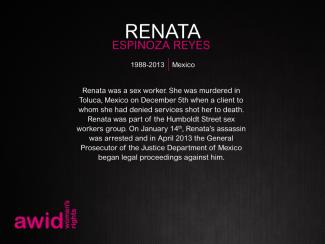
Renata Espinoza Reyes

Feminist Realities are the living, breathing examples of the just world we are co-creating. They exist now, in the many ways we live, struggle and build our lives.
Feminist Realities go beyond resisting oppressive systems to show us what a world without domination, exploitation and supremacy look like.
These are the narratives we want to unearth, share and amplify throughout this Feminist Realities journey.
Create and amplify alternatives: We co-create art and creative expressions that center and celebrate the hope, optimism, healing and radical imagination that feminist realities inspire.
Build knowledge: We document, demonstrate & disseminate methodologies that will help identify the feminist realities in our diverse communities.
Advance feminist agendas: We expand and deepen our collective thinking and organizing to advance just solutions and systems that embody feminist values and visions.
Mobilize solidarity actions: We engage feminist, women’s rights and gender justice movements and allies in sharing, exchanging and jointly creating feminist realities, narratives and proposals at the 14th AWID International Forum.
As much as we emphasize the process leading up to, and beyond, the four-day Forum, the event itself is an important part of where the magic happens, thanks to the unique energy and opportunity that comes with bringing people together.
Build the power of Feminist Realities, by naming, celebrating, amplifying and contributing to build momentum around experiences and propositions that shine light on what is possible and feed our collective imaginations
Replenish wells of hope and energy as much needed fuel for rights and justice activism and resilience
Strengthen connectivity, reciprocity and solidarity across the diversity of feminist movements and with other rights and justice-oriented movements
Learn more about the Forum process
We are sorry to announce that the 14th AWID International Forum is cancelled
Given the current world situation, our Board of Directors has taken the difficult decision to cancel Forum scheduled in 2021 in Taipei.
The Circle’s Conspiracy of Writers | Wazina Zondon
 |
 |
 |
| Also known as the Teta Research Network, The Conspiracy of Writers was founded in 2021 in the context of Kohl’s weekly writing circles. The Network is a transnational group of queer and feminist writers who engage in collective writing, thinking, and world-making. | Wazina Zondon is an Afghan raised in New York City. Her storycollecting and storytelling work centers collective memories and rites of passage in the diaspora. Currently, she is working on Faith: in Love/faith in love which (re)traces her parent’s love story and family’s inherited love print. |
Love is a contraband in Hell,
cause love is acid
that eats away bars.
But you, me, and tomorrow
hold hands and make vows
that struggle will multiply.
The hacksaw has two blades.
The shotgun has two barrels.
We are pregnant with freedom.
We are a conspiracy.
It is our duty to fight for freedom.
It is our duty to win.
We must love each other and support each other.
We have nothing to lose but our chains.
- “Love” by Assata Shakur
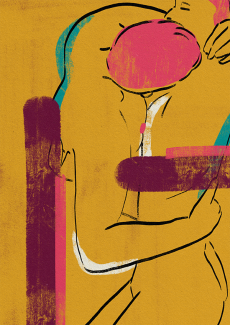
That is the question Wazina Zondon asks in her collective memoir Loveprint. Loveprint is a wandering, an overlap, a deviation that (re)creates, at the intersection of interviews and personal essays, our family’s stories and insights on love, partnership and romance. Under Wazina’s guidance, the circle’s conspiracy of writers came together and attempted to reproduce this literal blueprint in the form of collective writing, where our different stories, our genders and sexual identities complement and contradict each other. With our voices overlapping, we complete each other’s sentences to create a conversation, a memorial, pieces of ourselves that speak to a “we.”
I am a so-called “happy accident.” There is much narration about this – an accidental life, one that is entirely wanted at the same time. I feel this shaped my way of loving, I don’t just fall in love; I risk the slips that lead to the fall. Perhaps it made me an amor fati kind of person.
I was told that I was an unwanted child. So I grew up to become an unwanted adult. The origins of my love print are based on being eternally unwelcomed. I am not a fruit of love or any happy feelings but rather one pain and burden. I don’t have a love print – at least not in this sense.
I know for a fact that both my parents were in love at some point, but mental health is such a demon, and until one confronts their demons, there is no winning.
I will never associate “love” with my parents or normative family. Love growing up was full of violence and responsibilities I didn’t sign up for or was even ready for. For the longest time, it felt like life and love were about carrying a big rock uphill. While my parents “loved each other,” it was a toxic ethos of violence, jealousy, and insecurity to grow up in. I grew up wanting to crave stability, and this is what is me now. I am a risk taker, but never in my “love space.”
I don’t know why my mother chose to host a child (me) within her.
She does not love in this form.
My mother tells me that if I have to think about “finding” love, I should never look at her marriage as a template. My love print comes instead from my raising dogs for the last two decades (18 years to be precise). The other way around is true as well – they raised me. I understand more and more about love and its many layers in their company.
I haven’t known love from a “print.” In our household we don’t talk about love. I had to teach myself how to love. It was hard work. Still, I fail and still, I keep on trying and I fail everyday. Perhaps failure is my love print.
My love print is the care, warmth, and understanding I give to others
surrounding me, whether a stranger, a friend, a relative, a lover.
My love print is political – uncalculated and unthought of.
I was born under heavy shelling.
My love print is the negative
print of that.
I know more about what love is not than I know about what love is.
Love is neither anxiety nor panic.
Love is not asking permission to live or breathe. It is always about love and there is no love without freedom.
Everything you do is about using your heart except love. Love is about using your mind.
Sometimes I fear that my love language is lost in translation.
--- There are many ways
to map the origins
of how to
how not to
love
not love
love just enough
love far too much
some love
some loss
to love
to love lost ---
I cannot stand the idea of the couple. I cannot stand the idea of living alone while aging either. I am tired of doing the chores alone, moving houses alone, paying rent and bills alone... I imagine getting a stroke alone, and it scares me. I have no plan of “partnering up.” I want a world where I can get married to a friend, buy a house with a friend, not have sex.
Loving many does not corrupt a love shared between two, and whether love is romantic or not is really not that important.
When I reflect on the shoddy state of my relationships, I realize that I am in the relationship I was trained to be in. With all my “radicalness” I have not yet unlearned shitty gendered norms.
My need for stability feels “not radical” enough. I want to get out of this labeling. I want something I never had. I want to make it beautiful. I want to feel beautiful and safe – and only stability makes me feel that. Safe, sound, knowing home is neither about violence nor strife.
--- Love print – love to smell the books to see
where they were printed
I try to think of the origin of my
understanding and practice of love
Do we need origin, it is not the same as purity?
No purity or origin of love.
Why is it understanding and practice,
and not “emotion” that comes to mind? ---
When I call my parents, I don’t hang up the phone after we’ve said
goodbye, so I can hear the sounds of home.
During my Sunni burial, I want all the women and men to come together for my burial. What’s with not being able to go say goodbye to dead people from a different sex? It will be Sunni because my mother would want it to be. It will be eco-friendly; no need for the headstone. I love all burial rituals. Quran is good, but I also want music. I really like Asmahan, Um Kulthum, and The Stone Roses.
I have a Monday-Friday playlist and two different ones for the weekend: one for Saturday and one for Sunday playlist. I would like those who loved me to play the music that I used to listen to, respecting the days – with some margin of tolerance as long as they stick to the playlists.
I want to be surrounded by the one(s) who have loved me, even for a moment. And in music and embowered in fresh cut flowers. I don’t want to be discovered dead; I want to pass away mid-laugh with loved ones.
I want to be remembered as someone who loved.
I don’t need to feel loved in death. I need the people around me to feel I loved them, even after I die. Being loved in death is about those who are alive. So I think more about how we come together as a living and loving community in the death of those we love and live with. How we take their memories with us. How we become archives of their lives.
--- Sometimes, you can only love people in their death. ---
I have to think back to the body being connected to a space. My family is very tiny and although we come from different places, it is as if every generation moved somewhere new. Perhaps this is the reason why death is not connected to a special place, a cemetery. It is common in our family to bury the dead without names or gravestones, or to distribute the ashes in the wind. I feel at peace with this kind of spaceless remembrance. The idea that my ashes fertilize new life gives me the sense of being loved, being remembered through recreation. My grandmother died earlier this year due to complications after the vaccination. Two hours after she died, my family sat laughing tears about her jokes, her hilarious way to tell stories. We laughed and loved, and it was as though she sat with us again. This is what would make me feel at peace – fertilizing soil, fertilizing conversations, and collective remembrance.
--- There were
Two streets that I used
To walk
To run
To play
To stay
There were
Five hours when the sun
Was hot
The sky was blue
The earth was green
There was
A flower I could
Smell
Touch
Squeeze
Crush
There were
The friends I could
Caress
The food
I could
inhale
The language
That would roll off my
lips
There might still be
Those many places
And things
And people
After me ---
Perhaps a promise that I will be “spatially commemorated” as a plant and taken care of in turns until it becomes a tree is enough. No name, no plaques – just the plant/tree, and knowing that it will be cared for. As for my body, I want to be cremated without any rituals and my bone ashes set free in the Arabian sea.
I need my body to be treated as subversively as it’s lived.
I do not want to be buried next to my family. In this tiny drawer next to all of the people who never knew me. Trapped in death as I was in life. I want to be cremated, and my ashes finally set free.
I want to be allowed to pass, not hang in the in-between, so it is a presence, an active process, a trespassing.
I will ask of you:
I want to be remembered for the love I put into the world.
I want my body to be given away, and my organs
to further fuel love in (an)other live(s).
--- The smell of jasmine ---

This journal edition in partnership with Kohl: a Journal for Body and Gender Research, will explore feminist solutions, proposals and realities for transforming our current world, our bodies and our sexualities.
نصدر النسخة هذه من المجلة بالشراكة مع «كحل: مجلة لأبحاث الجسد والجندر»، وسنستكشف عبرها الحلول والاقتراحات وأنواع الواقع النسوية لتغيير عالمنا الحالي وكذلك أجسادنا وجنسانياتنا.

تحذير: عنف ضد المرأة و البنت (لانو في فرق بيناتهم) ، اعتداء.
لطالما كنت جزء منك. لما كنت صغيرة لم أكن أعرف أن كلمة - نسوية - مقصودة لنا نحن ، الي نطمح إلى التغلب على النظام الأبوي وتفكيكه ، الي نلتمس اللجوء في أحضان الشمول والنسوية التقاطعية ، الي يعاملو الناس على قدم المساواة بغض النظر عن جنسهم ، عرقهم، توجهاتهم الجنسية أو دينهم ، الي يحبو يكونوا أفضل ويستخدموا صلاحياتهم لرفع مستوى الآخرين.
كان عمري 14 سنة ،لما اعتدى مدرس اللغة الفرنسية في المدرسة الإعدادية على طالبة في صفي ، رجل يبلغ طوله ستة أقدام و عمره ثلاثين عامًا. ذهبت مع الطالبة ، التي كانت صديقة طفولتي ، والعديد من الفتيات في صفي إلى مدير المدرسة للإبلاغ عنه ، وشهد الفصل بأكمله المكون من 30 طالبًا عن الاعتداء. لكن كل محاولاتنا لمحاسبته باءت بالفشل ، وغطت الإدارة قصة الفتاة ولم يُطرد مدرس الفرنسية. أنا والفتيات في صفي شعرنا بغضب كبير، لذلك فعلنا ما كانت ستفعله كل ناشطة نسوية في مراهقته:رمينا بيض علي سيارته! وعلى الرغم من أن البيض بيتغسل بسهولة ، إلا أن الطلاء الذي استخدمناه في كتابة "خنزير" و "خماج" بقى. لن أنسى أبدًا كيف شعرنا بهداك الوقت. متحررات ، غاضبات ، سعيدات ، متماسكات ، وجبارات.منذ ذلك الحين، نفس الشعور يتكرر في كل بيئة نسوية كان لي الشرف ان احضر فيها. نشأت الناشطة النسوية في داخلي لتنضم إلى Women Deliver ، و AWID ، و Unootha ، ولتنسق ورش نسوية في الجامعة ، بل وتتعرض للاضطهاد بسبب انتمائي النسوي في سن التاسعة عشرة ، لكن هذه قصة أخرى لرسالة أخرى.
توفر لي المساحات النسوية الأمان والتمكين. تلك المساحات هن الأمهات اللواتي تمنينهم والرابط الذي كنا بحاجة إليه للتواصل مع بعضنا وتنظيم أنفسنا على الرغم من خلافاتنا ضد عدو مشترك، الباترياركية. من خلالك تعلمت أن أجمع نقاط قوتي ومهاراتي وأوجههم نحو النهوض بالآخرين وإبراز المهمشين وإعطاء صوت لمن لا صوت لهم.
أكثر ما أحبه فيك ، هو أنك تخطئين أحيانًا ، وتتجاهلين وتهمشين أيضًا ، ولديك تحيزات كما لدى كل حركة أخرى ، لكن ما يجعلك مختلفًتن هو أنكي تسعين دائمًا إلى أن تكوني أفضل. المساءلة ليست شيئًا يرعبكي وأنت حركة دائمة التغير تعكسين كيف يتغير العالم والعمل الخيري في جهود المساواة مع مرور الوقت.
أتمنى أن تنمي دائمًا ، أن تفعلي ما هو أفضل ، وأن تغضبي دائمًا ، وأن تزأري دائمًا ، وأن تحبي دائمًا ، أن تتحدثي بلغات مختلفة ، وأن تكوني دائمًا في السلطة.
كل حبي ونوري وغضبي لكي ،
لينة
This story is about how an increasingly diverse group of feminists from the Pacific organized through the years to attend the AWID Forums and how that process changed them personally, as organizations, and as a movement through what they learned, discovered and experienced. It illustrates the importance of the Forums as a space through which a region that tends to be marginalized or ignored at the global level can build a strong presence in the feminist movement that is then replicated at other international women’s rights spaces.

This calendar is a gift to our global feminist community. It is our promise of future connection and movement moments in the year to come. This past year has seen unspeakable injustices. We welcome a new year full of powerful movement spirit, of hopeful solutions and strategies. For a more just world for all.
As you flip through the pages note the diversity of art from our artist members who use their work to amplify and interlink our different movements under the feminist umbrella. Do you see yourself, your movement, your communities in these pages? We encourage you to use this calendar as a practical tool to mark time and space, but also to pencil in occasions to connect with feminists and activists.
This calendar invites us to immerse ourselves in the inspiring world of feminist artistry. Each month, as it gently unfolds, brings forth the vivid artwork of feminist and queer artists from our communities. Their creations are not mere images; they are profound narratives that resonate with the experiences of struggle, triumph, and undying courage that define our collective quest. These visual stories, bursting with color and emotion, serve to bridge distances and weave together our diverse experiences, bringing us closer in our shared missions.

Facebook: @AWIDWomensRights
Instagram: @awidwomensrights
Twitter ENG: @awid
LinkedIn: Association for Women's Rights in Development (AWID)
She was born in Bahia, the Northeastern part of Brazil. She is an immigrant, a social activist and a mother of 8 children.
Carmen experienced homelessness at the age of 35, after migrating to Sao Paulo on her own. This led her to become a fierce advocate for vulnerable, marginalized and invisibilized communities most affected by the housing crisis. She eventually became one of the founders of MSTC in 2000.
As a visionary political organizer and the current leader of the MSTC, Carmen’s work has laid bare the city's housing crisis and provided inspiration to others on different ways to organize and manage occupations. She stood strong on the forefront of several occupations. One of them is the 9 de Julho Occupation, which now serves as a stage for direct democracy, and a space where everyone can be heard, seen, appreciated and work together.
Carmen has been long celebrated for her boldness in giving life back to abandoned buildings in the heart of São Paulo.
To know more about her life, you can follow her on Instagram!
Care as the foundation of economies
The COVID-19 pandemic put the global crisis of care into sharp focus and demonstrated the failures of the dominant economic model that is decimating essential public services, social infrastructures and systems of care around the world.
Cozinha Ocupação 9 Julho, the Association of Afro-Descendant Women of the Northern Cauca (ASOM) and Metzineres are only some examples of caring economies that center the needs of marginalized people and nature, as well as the reproductive, invisibilized, and unpaid care work required to ensure the sustainability of our lives, societies and eco-systems.

Nous Sommes la Solution is a rural women 's movement for food sovereignty in West Africa. Founded originally as a campaign against hyper-industrialized agriculture, Nous Sommes la Solution has grown into a movement of more than 500 rural women’s associations from Burkina Faso, Senegal, Ghana, Gambia, Guinea Bissau, Mali and Guinea.
Together, this women-led movement is building and strengthening food and seed sovereignty across West Africa. They feed communities, strengthen local economies, amplify the knowledge of women farmers and mitigate the devastating effects of climate change through agroecological practices. They also organize workshops, forums and community radio broadcasts to share their messages, their traditional knowledges and agroecological practices across rural communities.
In collaboration with universities and public research centers, Nous Sommes la Solution works towards restoring traditional Indigenous varieties of rice (a staple food in West Africa) and promoting local food economies based on agroecological principles, influencing national policy-making, all the while supporting women in creating farming associations and collectively owning and managing farmland.
A workplace does not have to operate on competition and profit. It does not have to exploit people for the benefit of the owner and a small elite either.
Instead, communities on the margins of formal economies are building cooperative models based on autonomy, cooperation, shared responsibility, self-management and solidarity.
Worker-controlled cooperatives and workplaces have always offered alternative ways of generating employment opportunities, income, social security and savings - while distributing revenues in more communal, sustainable and safer ways.
But it is more than an employment opportunity: it is the making of dreams into a reality, and the building of feminist economies based on solidarity and care for each other. It is about creating a world where our lives, our labor and our communities matter.
This is the story of the Nadia Echazú Textile Cooperative, the first social enterprise managed by and for travesti and trans people in Argentina.