
Co-Creating Feminist Realities
What are Feminist Realities?
Feminist Realities are the living, breathing examples of the just world we are co-creating. They exist now, in the many ways we live, struggle and build our lives.
Feminist Realities go beyond resisting oppressive systems to show us what a world without domination, exploitation and supremacy look like.
These are the narratives we want to unearth, share and amplify throughout this Feminist Realities journey.
Transforming Visions into Lived Experiences
Through this initiative, we:
-
Create and amplify alternatives: We co-create art and creative expressions that center and celebrate the hope, optimism, healing and radical imagination that feminist realities inspire.
-
Build knowledge: We document, demonstrate & disseminate methodologies that will help identify the feminist realities in our diverse communities.
-
Advance feminist agendas: We expand and deepen our collective thinking and organizing to advance just solutions and systems that embody feminist values and visions.
-
Mobilize solidarity actions: We engage feminist, women’s rights and gender justice movements and allies in sharing, exchanging and jointly creating feminist realities, narratives and proposals at the 14th AWID International Forum.
The AWID International Forum
As much as we emphasize the process leading up to, and beyond, the four-day Forum, the event itself is an important part of where the magic happens, thanks to the unique energy and opportunity that comes with bringing people together.
We expect the next Forum to:
-
Build the power of Feminist Realities, by naming, celebrating, amplifying and contributing to build momentum around experiences and propositions that shine light on what is possible and feed our collective imaginations
-
Replenish wells of hope and energy as much needed fuel for rights and justice activism and resilience
-
Strengthen connectivity, reciprocity and solidarity across the diversity of feminist movements and with other rights and justice-oriented movements
Learn more about the Forum process
We are sorry to announce that the 14th AWID International Forum is cancelled
Given the current world situation, our Board of Directors has taken the difficult decision to cancel Forum scheduled in 2021 in Taipei.
Related Content
Nós redistribuímos recursos para os nossos parceires beneficiários e identificamo-nos como um fundo feminista e/ou de mulheres. Devemos participar no inquérito?
Não, apreciamos muito o vosso trabalho, mas atualmente não solicitamos respostas de fundos feministas e de mulheres. Encorajamos-vos a partilhar o inquérito com os vossos parceires beneficiários e as vossas redes feministas.
Animation: Calling all Feminist Superheroes!
Animation:
Calling all Feminist Superheroes!
Follow our Superhero as she embarks on a quest to reclaim the narrative from anti-rights actors across the globe.
هل استطيع الوصول للاستطلاع وتعبئته من هاتفي؟
نعم، يمكن تعبئة الاستطلاع من خلال الهاتف الذكي.
Sexting Like a Feminist: Humor in the Digital Feminist Revolution | Content Snippet
Sexting Like a Feminist: Humor in the Digital Feminist Revolution
On September 2nd, 2021, the amazing feminist and social justice activists of AWID’s Crear | Résister | Transform festival came together not only to share resistance strategies, co-create, and transform the world, but also to talk dirty on Twitter.
The exercise was led by Nana Darkoa Sekyiamah, co-founder of the blog Adventures From The Bedrooms of African Women and author of The Sex Lives of African Women, who paired up with the Pan-Africanist digital queer womanist platform AfroFemHub, to ask the question: How can we safely and consensually explore our pleasure, desires, and fantasies via text?
Basically: How would a feminist sext?
I believe this is a critically important question because it looks at the larger issue of how one navigates the online world with a feminist understanding. Under capitalism, discourse around bodies and sex can be dehumanizing and distorting, and navigating sexual pleasure in virtual spaces can feel performative. So seeking out avenues where we can explore how we share our desire in ways that are affirming and enthusiastic can push back against dominant models of presentation and consumption to reclaim these spaces as sites for authentic engagement, proving that all sexting should be just that: feminist.
Plus, allowing feminist discourse to embody its playful side in online discourse helps reframe a popular narrative that feminist engagement is joyless and dour. But as we know, having fun is part of our politics, and an inherent part of what it means to be feminist.
Using the hashtag #SextLikeAFeminist, scholars and activists from all over the world chimed in with their thirstiest feminist tweets, and here are my top ten.
As these tweets show, it turns out that sexting like a feminist is sexy, funny – and horny. Yet, it never loses sight of its commitment to equity and justice.
Нужно ли мне как-то подготовиться, чтобы пройти опрос?
Поскольку опрос посвящен исследованию реалий обеспечения феминистских организаций ресурсами, большинство вопросов касаются финансирования вашей организации в период с 2021 по 2023 год. Вам необходимо будет иметь при себе данную информацию для заполнения анкеты (например, годовые бюджеты и информацию об основных источниках финансирования).
Lindiwe Rasekoala | Snippet EN

Lindiwe Rasekoala is a life coach who specializes in intimacy and relationship wellness coaching. She is a sexual health enthusiast and online contributor. Through her own experiences and unconventional methods of research, she believes she can bridge the education gap and lack of access to information around sexual wellness. She is a contributor on various radio and television shows, and has completed her coach training with the Certified Coaches Alliance. Lindiwe’s mission is to break down the barriers to conversations around sexual wellness and to empower her clients to achieve greater understanding of themselves so that they can experience a more healthy and holistic lifestyle and relationships.
A minha participação é confidencial?
É claro que sim. As suas respostas serão eliminadas no final do processamento e da análise dos dados, e só serão usadas para fins de investigação. Os dados NUNCA serão divulgados fora da AWID e serão processados apenas por colaboradores e consultores da AWID que trabalham no projeto WITM connosco. Damos prioridade à sua privacidade e ao seu anonimato. Consulte a nossa política de privacidade detalhada aqui.
Ester Lopes | Snippet AR

إيستر لوبيز راقصة وكاتبة تركز أبحاثها على الجسد والنوع والعرق والعلاقات الطبقية. هي مدرّبة بيلاتيس ومعلمة فنون. تخرجت إستر في دراسة المسرح المعاصر – العمليات الإبداعية (في FAINC) وفي الرقص والوعي بالجسم (في USCS). يشمل تخصصها الموسيقي الغناء الشعبي والإيقاع. تلقت تدريبًا في “نوفوس برينكانتس” مع فليرا فيرو وماتيوس برادو وأنطونيو مييرا في معهد Brincante في عامي 2015 و 2016.
ما هو عدد الردود الذي ترغبون بجمعها؟
نهدف للوصول الى 2000 رد، وهذا تقريباً ضعف الردود التي جمعناها من استطلاع "أين المال" الأخير عام 2021.
Embodying Trauma-Informed Pleasure | Small Snippet AR
تَجسُّد اللذة المدرِكة للتروما
الصدمة ليست الحدث؛ إنها أجسادنا التي تستجيب للأحداث التي تشعرنا بخطرها علينا. وفي أغلب الأحوال تبقى عالقة في أجسادنا، إلى أن نتعامل معها. لا يوجد حديث عن أجسادنا خارج هذه الاستجابة – لأنها كذلك.
Snippet - AWID Community - EN
AWID Community
AWID Community is an online social networking platform for specifically for AWID members. It’s a feminist space for connection, resistance and celebration. A space for critical feminist conversations, collective power and solidarity. It is also a space for post-event dialogues, navigating difficult political learnings and community care
Snippet Kohl - Panel: Pleasure Across Borders | AR
حلقة نقاش | التمتّع عبر الحدود
مع لينديوي راسيكوالا وليزي كياما وجوفانا دروديفيتش ومَلَكة جران
Snippet - Feminist Mixer - EN
Feminist Mixer: Speed Dating for Feminists!
✉️ By registration only. Register here
📅 Tuesday, March 11, 2025
🕒 6.00-8.00pm EST
🏢 Chef's Kitchen Loft with Terrace, 216 East 45th St 13th Floor New York
Organizer: AWID
#6 - Sexting like a feminist Tweets Snippet AR
أبقي رغبتك في خوض تجارب جديدة على جمر ملتهب!
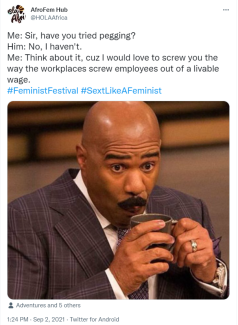
أنا: هل سبق أن ثبتّ شيئاً بقضيب؟
هو: لا، لم أفعل
أنا: تمَعَّن بالعمليّة الآن، لأنني سأُريك شخصيًا، كيف تضع الرأسمالية قضيب
استغلالها في أجساد العمّال
Snippet - AWID Community Jobs Board
AWID Community Jobs Board: Available for all AWID members, upon signing up for the AWID Community access. Whether you're looking for full-time advocacy roles, project-based consulting opportunities, paid internships or volunteer positions, this community-led jobs board is a valuable resource to help you find work that makes change possible.
Interesting References
Explore these projects put together by AWID teams to promote feminist advocacy and perspectives.
Snippet - WCFM Explore and share - EN
Explore and share the databases with your network now!
Snippet - WITM Infographic annual budget 2 in 4- EN
Ever Wondered What Budgets for Feminist Organizations Look Like?
A closer look at actual budgets reveals major income diversity and inequality.
Snippet - COP30 - Global Day of Action - EN
Global Day of Action
Movements marching globally for climate justice.
📅 Saturday, November 15, 2025
📍 Multiple Locations