
Building Feminist Economies
Building Feminist Economies is about creating a world with clean air to breath and water to drink, with meaningful labour and care for ourselves and our communities, where we can all enjoy our economic, sexual and political autonomy.
In the world we live in today, the economy continues to rely on women’s unpaid and undervalued care work for the profit of others. The pursuit of “growth” only expands extractivism - a model of development based on massive extraction and exploitation of natural resources that keeps destroying people and planet while concentrating wealth in the hands of global elites. Meanwhile, access to healthcare, education, a decent wage and social security is becoming a privilege to few. This economic model sits upon white supremacy, colonialism and patriarchy.
Adopting solely a “women’s economic empowerment approach” is merely to integrate women deeper into this system. It may be a temporary means of survival. We need to plant the seeds to make another world possible while we tear down the walls of the existing one.
We believe in the ability of feminist movements to work for change with broad alliances across social movements. By amplifying feminist proposals and visions, we aim to build new paradigms of just economies.
Our approach must be interconnected and intersectional, because sexual and bodily autonomy will not be possible until each and every one of us enjoys economic rights and independence. We aim to work with those who resist and counter the global rise of the conservative right and religious fundamentalisms as no just economy is possible until we shake the foundations of the current system.
Our Actions
Our work challenges the system from within and exposes its fundamental injustices:
-
Advance feminist agendas: We counter corporate power and impunity for human rights abuses by working with allies to ensure that we put forward feminist, women’s rights and gender justice perspectives in policy spaces. For example, learn more about our work on the future international legally binding instrument on “transnational corporations and other business enterprises with respect to human rights” at the United Nations Human Rights Council.
-
Mobilize solidarity actions: We work to strengthen the links between feminist and tax justice movements, including reclaiming the public resources lost through illicit financial flows (IFFs) to ensure social and gender justice.
-
Build knowledge: We provide women human rights defenders (WHRDs) with strategic information vital to challenge corporate power and extractivism. We will contribute to build the knowledge about local and global financing and investment mechanisms fuelling extractivism.
-
Create and amplify alternatives: We engage and mobilize our members and movements in visioning feminist economies and sharing feminist knowledges, practices and agendas for economic justice.
“The corporate revolution will collapse if we refuse to buy what they are selling – their ideas, their version of history, their wars, their weapons, their notion of inevitability. Another world is not only possible, she is on her way. On a quiet day, I can hear her breathing”.
Arundhati Roy, War Talk
Related Content
Crear Resistar Snippet
Crear | Résister | Transform
Crear | Résister | Transform is for you and all the amazing feminist and social justice activists that you know. Let’s come together to share our resistance strategies, co-create some feminist magic, and transform this world together.
Porque é que são necessários o nome e as informações de contacto do grupo/organização e/ou movimento que preencher o inquérito?
Pedimos estes dados para facilitar a revisão das respostas, para evitar respostas duplicadas e para poder entrar em contacto com o seu grupo caso não tenha conseguido completar o inquérito e/ou tenha dúvidas ou perguntas adicionais. Para mais informações sobre como utilizamos as informações pessoais que recolhemos através do nosso trabalho, clique aqui.
Rights at Risk: The Observatory on the Universality of Rights Trends Report 2017
Report:
Rights at Risk - OURs Trends Report 2017
The first report from the Observatory on the Universality of Rights acts as a compendium of information on anti-rights trends in international spaces. Find out about key anti-rights religious actors, discourses, and tactics within the UN.
إلى متى يمكن الإجابة على الاستطلاع؟
وسيكون التحقيق مفتوحًا حتى 31 أغسطس 2024. الرجاء تكملته خلال هذا الوقت للتأكد بأن تشمل ردودكم/ن في التحليل.
Sexting Like a Feminist: Humor in the Digital Feminist Revolution | Title Snippet
Sexting Like a Feminist: Humor in the Digital Feminist Revolution
by Chinelo Onwualu
Membership why page - Loyiso Lindani
I believe empowered women empower women and that is why I’ve had an incredible time being an AWID member. My knowledge and understanding of Feminism and intersectionality has been broadened by the exposure I received being part of the AWID Community Street Team. I hope more women join and share topics and ideas that will help other women.
- Loyiso Lindani, South Africa.
Louise Malherbe | Title Snippet EN
About the authors

Louise Malherbe is a film programmer/curator and a film critic based in Berlin. She worked as a film programmer for the Metropolis Cinema Association in Beirut and is now coordinating the Reel Streams project aiming at supporting the dissemination of independent cinema in the Arab region. She is Head of Programming for Soura Film Festival, a queer film festival focusing on the S.W.A.N.A. region, writes film critics for Manifesto XXI, and recently started curating films and festivals for Cinema Akil.
Snippet - Resources to rally - EN
Resources to rally through CSW69 with
Ester Lopes | Snippet

Ester Lopes is a dancer and writer whose research focuses on the body, gender, race, and class relations. She is a Pilates instructor and art educator. Ester graduated in Contemporary Theater – Creative Processes (at FAINC) and in Dance and Body Consciousness (at USCS). Her musical specialization includes popular singing and percussion. She received training in Novos Brincantes with Flaira Ferro, Mateus Prado, and Antonio Meira at Brincante Institute in 2015 and 2016.
Snippet - WCFM Airtable iFrame - EN
Explore the Database now!
Don't know where to start? Let's try understanding the filters.
Embodying Trauma-Informed Pleasure | Small Snippet EN
Embodying Trauma-Informed Pleasure
Trauma is not the event; it is how our bodies respond to events that feel dangerous to us. It is often left stuck in the body, until we address it. There’s no talking our body out of this response – it just is.
Snippet - WCFM Contact us- En
If your funding institution is already a part of the Database and you would like to contact us to update your record, or if you would like to leave some feedback for us, please use the form above.
Snippet Kohl - Plenary: The revolution will be feminist | AR
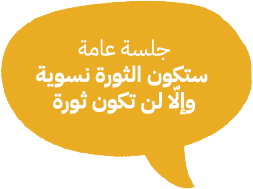
جلسة عامة | ستكون الثورة نسوية وإلّا لن تكون ثورة
مع منال التميمي وبوبولينا مورينو وكارولينا فيكيفيتش وأنووليكا نوجوزي أوكونجو
Clone of Snippet - Intro WITM - EN
Where is the Money for Feminist Organizing? Survey Results
Thanks to our global feminist community! From May to August 2024, nearly 1,200 organizations working for Women's rights, gender justice, and LBTQI+ equality shared their experiences in the WITM survey. The results offer a unique picture of how feminist movements are resourced and where gaps remain.
Stay tuned for the upcoming report for more analysis!
#7 - Sexting like a feminist Tweets Snippet AR
أداؤك في المضاجع مهاراتك في ضبط المراجع…
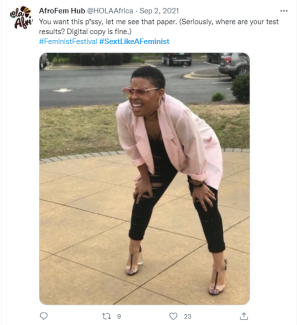
منجزاتك الأكاديمية جسر عبور نحو شهوتك الجنسيّة (جدّيًا، سلِّم الأوراق المطلوبة، الكترونية كانت أم ورقيّة)
Snippet - COP30 - Resistance Hubs Section Column 1 - EN
As world leaders gather in Brazil, it’s vital that feminist movements especially from the Global Majority have autonomous spaces to gather, strategize, and disrupt.
These Hubs challenge the elitism of climate talks, center lived experiences, and aim to build collective power across borders. They offer a critical counterbalance to top-down, often exclusionary international negotiations. The Hubs aim to foster community-driven solutions, amplify feminist demands, and ensure that feminist principles of care and solidarity shape the climate agenda. It’s not just about being present at COP30, it’s about reshaping the conversation on climate justice on feminist terms.
Beijing Unfettered: the Power of Young Feminist Movements
In partnership with young feminist activists and youth-led organizations, AWID co-organized Beijing Unfettered in parallel to and independently from Beijing+25.
WITM - Refreshed Intro Text (FR)
Où est l’argent ? Un plaidoyer documenté pour soutenir les organisations féministe
Ce rapport révèle la réalité du financement des organisations féministes et de défense des droits des femmes dans un contexte de bouleversements politiques et financiers. S’appuyant sur plus de dix ans d’analyse depuis la dernière étude Où est l’argent ? de l’AWID (Arroser les feuilles, affamer les racines), il dresse un bilan des progrès réalisés, des lacunes persistantes et des menaces croissantes dans le domaine du financement féministe.
Le rapport salue le pouvoir des initiatives menées par les mouvements pour façonner le financement selon leurs propres conditions, tout en alertant sur les coupes massives dans l’aide au développement, le recul de la philanthropie et l’escalade des offensives anti-droits.
Il appelle les bailleurs de fonds à investir massivement dans l’organisation féministe, infrastructure essentielle pour la justice et la libération, et invite les mouvements à réimaginer des modèles de financement audacieux et autodéterminés, fondés sur le soin, la solidarité et le pouvoir collectif.
Le rapport sera bientôt disponible
Snippet - WD2026 - Membership Booth_EN
AWID Membership Booth: Resist, Rest, Reimagine
📅 Throughout | April 27 - 30
🏢 Melbourne Convention and Exhibition Centre, Booth B17
Human Rights Council (HRC)
The Human Rights Council (HRC) is the key intergovernmental body within the United Nations system responsible for the promotion and protection of all human rights around the globe. It holds three regular sessions a year: in March, June and September. The Office of the UN High Commissioner for Human Rights (OHCHR) is the secretariat for the HRC.
The HRC works by:
-
Debating and passing resolutions on global human rights issues and human rights situations in particular countries
-
Examining complaints from victims of human rights violations or activist organizations on behalf of victims of human rights violations
-
Appointing independent experts (known as “Special Procedures”) to review human rights violations in specific countries and examine and further global human rights issues
-
Engaging in discussions with experts and governments on human rights issues
-
Assessing the human rights records of all UN Member States every four and a half years through the Universal Periodic Review
AWID works with feminist, progressive and human rights partners to share key knowledge, convene civil society dialogues and events, and influence negotiations and outcomes of the session.
With our partners, our work will:
◾️ Raise awareness of the findings of the 2017 and 2021 OURs Trends Reports.
◾️Support the work of feminist UN experts in the face of backlash and pressure
◾️Advocate for state accountability
◾️ Work with feminist movements and civil society organizations to advance rights related to gender and sexuality.