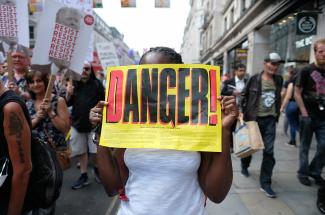
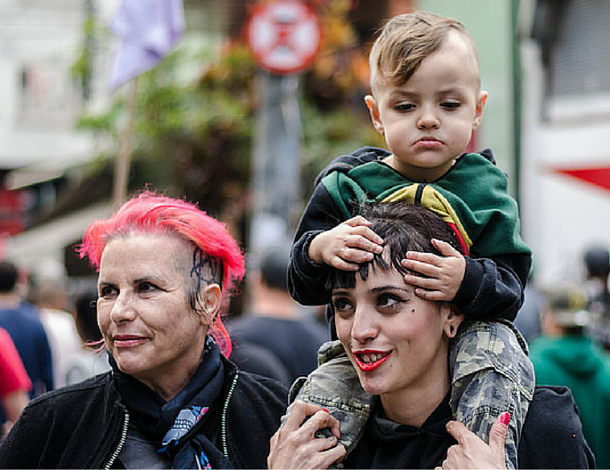
Flickr/Leonardo Veras (CC BY 2.0)

Análisis Especiales

AWID es un organización feminista internacional de membresía, que brinda apoyo a los movimientos que trabajan para lograr la justicia de género y los derechos de las mujeres en todo el mundo.

Protección de la familia

El contexto

Esta sección de análisis especial ofrece un análisis feminista crítico y acceso a los recursos clave relacionados con la «protección de la familia» en los espacios internacionales de derechos humanos.

Durante los últimos años, venimos observando una nueva y preocupante tendencia en el ámbito internacional de derechos humanos, donde se están empleando discursos sobre la «protección de la familia» para defender violaciones cometidas contra miembros de la familia, de modo de reforzar y justificar la impunidad y para coartar la igualdad de derechos en el seno de la familia y la vida familiar. 

La campaña para «proteger a la familia» es impulsada por proyectos conservadores que tienen como fin imponer interpretaciones «tradicionales» y patriarcales de familia; quitando los derechos de las manos de sus miembros para ponerlos en las de la institución «familia».

Los proyectos de «protección de la familia» tienen su origen en los siguientes fenómenos:

  • el auge del tradicionalismo,
  • el auge del conservadurismo cultural, social y religioso, y
  • posturas hostiles a los derechos humanos de las mujeres, los derechos sexuales, los derechos de las niñas y los niños y los derechos de las personas con identidades de género y orientaciones sexuales no normativas.  

Desde 2014 un grupo de estados opera como bloque en espacios de derechos humanos, bajo el nombre «Group of Friends of the Family» [Grupo de amigos de la familia], y a partir de entonces se han aprobado resoluciones sobre la «Protección de la familia» todos los años.

Esta agenda se ha extendido más allá del Consejo de Derechos Humanos (HRC, por sus siglas en inglés).  Hemos visto cómo el lenguaje regresivo sobre «la familia» se ha introducido en la Comisión de la Condición Jurídica y Social de las Mujeres (CSW, por sus siglas en inglés), y hemos asistido a intentos por incluir este lenguaje en las negociaciones sobre los Objetivos de Desarrollo Sostenible.


Nuestro enfoque

AWID trabaja con asociadxs y aliadxs para resistir conjuntamente las agendas regresivas de «Protección de la familia» y otras, y para defender la universalidad de los derechos humanos.

En respuesta a la creciente influencia de actores regresivos en los espacios de derechos humanos, AWID se ha unido con aliadxs para formar el Observatorio de la Universalidad de los Derechos (OURs, por sus siglas en inglés).  OURs es un proyecto colaborativo que monitorea, analiza y comparte información sobre iniciativas anti-derechos tales como la «Protección de la familia».

Derechos en Riesgo, el primer informe de OURs, traza un mapa de los actores que conforman el cabildeo global anti-derechos e identifica sus discursos y estrategias principales, señalando los efectos que estos discursos y estrategias están teniendo sobre nuestros derechos humanos.

El informe expone a la «Protección de la familia» como una agenda que ha promovido la colaboración entre una amplia gama de actores regresivos en las Naciones Unidas. La describe como un marco estratégico que aloja «múltiples posiciones patriarcales y anti-derechos, cuyo marco, a su vez, apunta a justificar e institucionalizar estas posiciones».
Contenido relacionado

Snippet FEA Principles of work Human Rights (FR)

Une personne parlant dans un haut-parleur.

DROITS HUMAINS

Dorothy Masuka

“Je n’avais pas prévu d’être chanteuse; c’est le chant qui avait prévu de m’habiter”  - Dorothy Masuka (interview avec Mail & Guardian)

Dorothy Masuka, née en 1935 à Bulawayo (alors en Rhodésie du Sud, aujourd’hui le Zimbabwe), a grandi en Afrique du Sud. Elle est devenue une auteure, compositrice, chanteuse de jazz et activiste renommée, et fervente partisane de la lutte contre l’apartheid. Qualifiée d’“architecte du discours de la musique populaire de libération africaine”, Dorothy a souvent chanté la politique dans des langues africaines autochtones et tout au long de son oeuvre, et s’est opposée aux politiques racistes du gouvernement sud-africain. 

L’une de ses chansons, intitulée "Dr Malan" (du nom de l'homme politique pro-apartheid D.F. Malan) a été censurée. Elle a poursuivi avec l’enregistrement de "Lumumba" (1961), une chanson sur l'assassinat du leader anticolonialiste Patrice Lumumba. Le travail et l'activisme de Dorothy ont alors attiré l'attention de la section spéciale de la police sud-africaine, ce qui la contraignit à un exil politique qui s’étendit sur plus de 3 décennies. Tout au long de cette période, elle travailla avec des groupes pro-indépendantistes, dont le Congrès national africain. En 1992, alors que l'apartheid commençait à s'effondrer et que Nelson Mandela fut libéré de prison, elle retourna en Afrique du Sud. 

Parmi ses autres œuvres, on peut citer sa première chanson, enregistrée en 1953 et intitulée "Hamba Notsokolo", qui fut un tube des années 1950 et un grand classique. Elle composa également "El Yow Phata Phata", une chanson adaptée par Miriam Makeba qui contribua à offrir une popularité internationale à "Pata, Pata"

Ancrés dans la résistance, la musique et l’activisme de Dorothy étaient entrelacés et laissent un merveilleux héritage inspirant. Elle était également très connue sous le nom de “Auntie Dot”.   

Le 23 février 2019, Dorothy s’est éteinte à Johannesburg à 83 ans des suites d’une maladie.


Regardez l'interview de Dorothy Masuka pour Mail & Guardian (seulement en anglais)

Écoutez sa musique :

Hamba Nontsokolo
El Yow Phata Phata

Anti-Rights Tactics, Strategies, and Impacts

Chapter 5

Anti-rights actors adopt a double strategy. As well as launching outright attacks on the multilateral system, anti-rights actors also undermine human rights from within. Anti-rights actors engage with the aim of co-opting processes, entrenching regressive norms, and undermining accountability.

Photo-OP // the first anniversary of the EU signature to the Council of Europe Convention to prevent and combat gender-based violence and domestic violence, the so-called Istanbul Convention
© ALDE Group/Flickr
Photo-OP // the first anniversary of the EU signature to the Council of Europe Convention to prevent and combat gender-based violence and domestic violence, the so-called Istanbul Convention

Anti-rights actors’ engagement in international human rights spaces has a principal purpose: to undermine the system and its ability to respect, protect and fulfill human rights for all people, and to hold member states accountable for violations. Some anti-rights tactics operate from outside the UN and include delegitimization and political pressure to defund the UN, or to withdraw from international human rights agreements.  In recent years, anti-rights actors have also gained increasing influence inside the UN. Their inside tactics include training of delegates, distortion of human rights frameworks, watering down human rights agreements, infiltrating NGO committees, applying for ECOSOC status under neutral names, infiltrating youth spaces, and lobbying to place anti-rights actors in key positions.

Table of Contents

  • Institutionalization of Anti-rights Actors in UN Mechanisms
  • Opting-out and Delegitimization
  • Lowering HR Standards
  • Co-optation - Building a Parallel HR Framework
  • Exercise: Yes, they are strong, but so are we!
  • Exercise: Holding Governments Accountable
     

Read Full Chapter >

Snippet - Blog post Quote_ES

"Creemos que este es el momento para continuar organizándonos desde la solidaridad, la esperanza y la imaginación radical."

- Beijing+30 & CSW: La construcción de significados feministas en tiempos de policrisis

Lee el artículo aquí

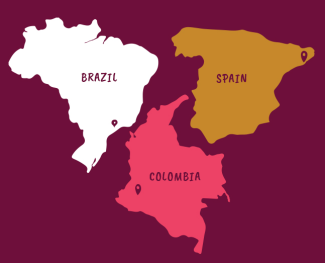
Snippet FEA Story 1 Maps Economies of Care (EN)

Burgundy background with maps of Brazil in white, Spain in mustard yellow, and Colombia in pink

FRMag - My queer Ramadan

My Queer Ramadan 

by Amal Amer

I pray with my family for the first time in six years while wrapped in a keffiyah I scavenged from a dumpster. (...)

Read

artwork: “Angels go out at night too” by Chloé Luu >

Leah Tumbalang

Leah Tumbalang was a Lumad woman of Mindanao in the Philippines. The story of Lumad Indigenous peoples encompasses generations of resistance to large-scale corporate mining, protection of ancestral domains, resources, culture, and the fight for the right to self-determination. 

Leah was a Lumad  leader as well as a leader of Kaugalingong Sistema Igpasasindog to Lumadnong Ogpaan (Kasilo), a Lumad and peasant organization advocating against the arrival of mining corporations in Bukidnon, Mindanao province. She was unwavering in her anti-mining activism, fervently campaigning against the devastating effects of mineral extraction on the environment and Indigenous peoples’ lands. Leah was also an organizer of the Bayan Muna party-list, a member of the leftist political party Makabayan.

For almost a decade, Leah (along with other members of Kasilo) had been receiving threats for co-leading opposition against the deployment of paramilitary groups believed to be supported by mining interests. 

“Being a Lumad leader in their community, she is at the forefront in fighting for their rights to ancestral land and self-determination.” - Kalumbay Regional Lumad Organization

Being at the forefront of resistance also often means being a target of violence and impunity and Leah not only received numerous death threats, but was murdered on 23 August 2019 in Valencia City, Bukidnon. 

According to a Global Witness report, “the Philippines was the worst-affected country in sheer numbers” when it comes to murdered environmental activists in 2018. 


Read the Global Witness report, published July 2019

Find out more about Lumad women in the Philippines and their inter-generational struggle for self-determination
 

La historia de Crear, Résister, Transform por Coumba Toure

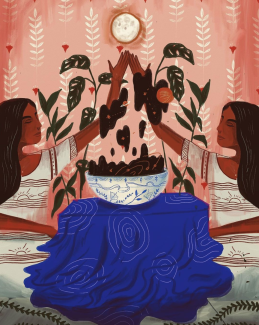
Una experiencia mágica de narración feminista conducida por la feminista panafricana Coumba Toure, quien actuará en la antigua tradición de lxs griots de África Occidental.

Y nos reunimos nuevamente
Juntamos nuestras historias, nuestra fuerza
nuestras canciones
nuestras lágrimas
nuestra ira
nuestros sueños
nuestro éxito
nuestros fracasos
Y lo colocamos todo junto
en un gran cuenco para compartir
durante una luna de pensamientos
Y nos mantenemos en contacto
nos sacudimos las mentes unas a otras
nos acariciamos las almas 
mientras nuestras manos siguen atadas
y nuestros besos y abrazos están prohibidos
Sin embargo, nos hacemos más fuertes cada hora
entretejiendo juntas nuestras voces
cruzando las barreras del sonido
mientras hablamos en lenguas
 
Nuestras voces son cada vez más altas
Sabemos lo que nos diferencia de otras personas
y entre nosotras, de modo que
estamos bordando nuestras bellezas en un mosaico de pensamientos
desde nuestros aprendizajes más profundos, desde nuestros poderes
A veces nos rodea el terror
la confusión, la deshonestidad
pero nos lavamos en el océano de amor
Somos tejedoras de sueños
para vestir nuestro nuevo mundo
hilo por hilo
tan pequeñas como somos
como pequeñas hormigas construyendo nuestro movimiento
comopequeñas gotas construyendo nuestros ríos
Damos pasos hacia adelante y pasos hacia atrás
bailando nuestro camino de vuelta a la cordura
Sostenemos el ritmo de nuestros corazones: sigan
latiendo, por favor, no se detengan
Y aquí estamos, transmisoras de generosidad olvidada
gota tras gota creciendo como el océano
creciendo como el río que fluye de nuestras almas
mostrando nuestra fuerza para ser el agua
que limpiará este mundo
y nos estamos reuniendo nuevamente ¿pueden sentirnos?
Mentiría si dijera que para mí
está bien no verlas, extraño a mi gente
Extraño su contacto y
sus voces sin filtro y sin registro
Extraño nuestros susurros y nuestros alaridos
nuestros gritos de la revolución abortada
Solo queremos parir nuevos mundos
Entonces luchemos para borrar las fronteras entre nosotras
Por favor, no se detengan

Snippet - CSW69 - OURs & friends - ES

OURs y amistades en el Espacio de Solidaridad Feminista

✉️ Solo con invitación

📅 Martes 11 de marzo de 2025
🕒 De 02:00 a 04:00 p.m., EST

🏢 Chef's Kitchen Loft with Terrace, 216 East 45th St 13th Floor New York

Organiza: Consorcio Observatorio sobre la Universalidad de los Derechos (OURS)

Snippet - That Feminist Fire Logo (ES)

Texto en blanco que dice el título de nuestro podcast en español: Ese fuego feminista

FRMag - Ashawo Work na Work

"Ashawo Work na Work": Cómo lxs jóvenes feministas de Ghana están haciendo realidad los futuros feministas

por Fatima B. Derby

En 2017, la campaña de AWID #PracticaSolidaridad destacó cómo lxs jóvenes feministas podían construir un futuro feminista apoyándose mutuamente, participando en conversaciones interregionales entre ellxs, marchando en solidaridad con otrxs activistas y abriendo canales de colaboración entre los movimientos. (...)

Leer

< arte: «Let it Grow» [Déjalo crecer], Gucora Andu 

Sara Hegazy

Sarah Hegazy, una audaz activista egipcia por los derechos LGBTQI+, vivía en una sociedad en la que lxs integrantes de su comunidad, sus cuerpos y sus vidas, enfrentan prejuicios letales a menudo. La resistencia de Sarah estaba arraigada en la deconstrucción del sistema dominante, opresor y patriarcal, y de sus actores antiderechos.

«[En Egipto], toda persona que no sea varón, musulmán, suní, heterosexual y partidario del sistema, es rechazada, reprimida, estigmatizada, arrestada, exiliada o asesinada. Este problema se relaciona con el sistema patriarcal en su conjunto, ya que el Estado no podría ejercer su represión contra lxs ciudadanxs, si no hubiera una opresión preexistente desde la infancia», escribió Sarah Hegazy el 6 de marzo de 2020

La supresión de la voz de Sarah por parte del gobierno egipcio alcanzó su pico más violento en 2017, cuando fue arrestada por alzar una bandera arcoíris en el recital de Mashrou’ Leila (una banda libanesa cuyo cantante principal es abiertamente gay) en El Cairo. Fue acusada de pertenecer a un grupo ilegal, y de «promover la desviación sexual y el libertinaje».

«Fue un acto de apoyo y solidaridad, no solamente con el cantante [de Mashrou’ Leila] sino con todas las personas oprimidas... Nos enorgulleció alzar la bandera. Nunca nos imaginamos la reacción de la sociedad y del Estado egipcio. Para ellos, yo era una criminal: alguien que buscaba destruir la estructura moral de la sociedad.» - Sarah Hegazy

Sarah estuvo encarcelada por tres meses, durante los cuales fue torturada y agredida sexualmente. En enero de 2018, después de ser liberada bajo fianza, pidió asilo en Canadá, donde estaba segura, pero seguía prisionera de los recuerdos del abuso y la violencia que su cuerpo y su alma habían sufrido.

«Salí de esta experiencia después de tres meses con un caso muy intenso y serio de TEPT [trastorno por estrés postraumático]. La prisión me mató. Me destruyó», dijo Sarah Hegazy a NPR.

Sarah se quitó la vida el 14 de junio de 2020, luego de dejar una nota escrita a mano en árabe:

«A mis hermanxs: traté de encontrar redención y fallé, perdónenme.
A mis amigxs: la experiencia [el viaje] fue muy dura y soy demasiado débil como para resistir, perdónenme.
Al mundo: has sido tremendamente cruel, pero perdono.»

Su legado y su coraje continuarán, llevados adelante por quienes la aman y creen en aquello por lo que Sarah luchó.

Tributos:

«A Sarah: Descansa, solo descansa, libre de esta violencia implacable, de este patriarcado letal impulsado por el Estado. Con rabia, con dolor, con extenuación, resistimos.» - Rasha Younes, investigadora sobre derechos LGBT de Human Rights Watch. Lee el texto completo

El vocalista de Mashrou’ Leila canta un tributo a Sarah Hegazy

Tributos en Twitter

Documental sobre la vida de Sarah Hegazy

Sitio web dedicado a Sarah Hegazy y a quienes (en especial voces LGBTQI) no pueden hacer su duelo en público

MANGO

Jurema Araújo Portrait

Jurema Araújo is a teacher-poet from Rio de Janeiro. She contributed to the magazine Urbana, edited by the poets Brasil Barreto and Samaral (RIP) and to the book Amor e outras revoluções (Love and Other Revolutions) with several other writers. In collaboration with Angélica Ferrarez and Fabiana Pereira, she co-edited O livro negro dos sentidos (The Black Book of Senses), a creative anthology on black women’s sexuality in Brazil. Jurema is 54-years-old; she has a daughter, three dogs, a cat, and many friends.

Mango Cover

Suck it with me? 

Mango is my favorite fruit.
I open my mouth
and suck it all,
Its flesh caught between my teeth
that turn soft not to hurt it
and I press it between my tongue and the roof of my mouth,
then I take it out to suck on every part of it
with the juice running down my mouth
drenching myself in this tasty nectar
and putting it all in my mouth again
because mango is seed and honey;
it is fiber and flavor.
And when it is over, I am entranced,
honeydewed, sweetened,
my lips all wet.
Ohhh, what is mango for if not for smearing.

Chupa Comigo? 

A fruta que eu mais gosto é manga!
Porque eu abro a boca
E meto toda pra chupar!
Se os dentes a prendem
Fazem macio para não machucar
E eu pressiono entre minha língua e meu céu
Depois tiro pra sugar cada parte
Sentindo o caldo escorrer boca afora
Me molhando com esse néctar gostoso
E metendo toda na boca de novo
Pois manga é caroço e é mel,
É fiapo e sabor
E quando acaba, estou extasiada
Melada, docinha
Com os lábios molhados!
Aaahhh, manga é pra se lambuzar!


Introducing The Black Book of Senses

I’ll admit it: when Angélica and Fabi invited me to curate a collection of erotic texts by black women, I didn’t know what curatorship was. I understood the erotic well, but curatorship... I smiled, feeling shy and flattered. I think I thanked them – at least I hope I did – and thought to myself: what the fuck is it?! This fancy word I’ll have to learn the meaning of while doing it, what is it?

Now at this point, I know what it is to be a curator: it is making love with someone else’s texts, with someone else’s art, with the intention of putting a book together. And that is exactly what I did. I undressed each text of every author of this book with a literary lasciviousness. And I got involved in the words and senses of others. I was penetrated by poems I didn’t write; tales I didn’t even dare to imagine turned me upside down, messing with my feelings, with my libido. And it was a wonderful and unusual orgasm: ethereal, corporeal, sublime, at once intellectual and sensitive.
These texts pulsated like a clit hardened by desire, drenched, dripping joy in every reading. Words that swallowed me with their naughty significance, making me dive deeper into this wet universe. 

These black women went to the bottom of their arousals and turned their deepest erotic fantasies into art. These works are impregnated with each writer’s own way of experiencing sexuality: freely, blackly, for ourselves, in our own way, empowered.

I chose to spread the texts throughout different parts of the book, each one organized according to the most delicate, explosive, evident, or implicit content they presented.

To open the door to this “invulved blackessence,” we have our Preliminaries section, with texts that introduce readers to this world of delights. It is a more general, delicate caress to acknowledge the subjects addressed by the texts in the rest of the book.

Then comes the heat of Touch, addressing what the skin can feel. That energy which burns or freezes our bodies, makes our hormones explode and starts to awaken the other senses. And although there are many of us who are voyeurs, the contact of skin with a wet and warm mouth is exciting, like wandering through the softness of whomever is with you. We are seduced by the firm or gentle touch that gives us goosebumps and that lovely discomfort that runs from the neck down to the back and only stops the next day. And the warmth of the lips, the mouth, the wet tongue on the skin – oh, the tongue in the ear, hmmm – or skin on skin, clothes moving over the body, almost like an extension of the other’s hand. If there is no urgency, that wildest arousal of the pressure of a tight grab, a bit of pain – or a lot, who knows?

The Sound – or melody? – section shows us that attraction also happens through hearing: the voice, the whispers, the music that enables the connection between the bodies and can become the theme of desire. For some of us, someone with a beautiful voice would only need their vocal cords, because that harsh or heavy or melodious sound would be auditory sex. Their loud swearing or sweet words whispered in the ear would be enough to give us hair-raising shivers from neck to coccyx.

Decorative element


In Flavor, we know the tongue does a good job tasting the most hidden places and wandering through the body to delight itself. Sometimes this organ is used, boldly, to taste the other’s nectar. The idea of someone sharing their strawberry or a delicious, juicy mango through bites and licks – or licks and bites – melts us. But nothing is more delicious than tasting the caves and hills of the person you are with. Stick your tongue deep inside to taste a piece of fruit... or spend hours tasting the head of a cock in your mouth, or suck on a delicious breast to taste the nipples. This is all about memorizing someone by their Flavor.

There are texts in which the nose is what triggers desire. The Smell, my dear readers, can awaken us to the delights of desire. Sometimes we meet a person who smells so good, we want to swallow them right through our nose. When you run through the other person’s body with your nose, starting with the neck – wow, that delightfully uncomfortable shiver that runs down the spine and undresses the soul! The shameless nose then moves to the back of the neck and captures the scent of the other in such a way that in the absence of that person, smelling their same scent evokes, or conversely, invades in us olfactory memories that bring the arousing smell of that person back.

We then get to Look – for me, the betrayer of senses – in which we perceive desire from a point of “view.” It is through sight that the texts present desire and arousal, through which the other senses are brought about. Sometimes a smile is all it takes to drive us crazy. The exchange of glances? That look that says “I want you now.” That look of possession that comes to an end when you stop fucking, or not. That one is very particular; it draws the other who won’t be able to look away for long. Or the sidelong glance – when one looks away when the other turns their head, like a cat-and-mouse game? Once we are caught red-handed, there’s nothing else to do besides breaking into a wide smile.

Finally, the explosion. Wandering through All senses, the texts mix feelings that seem like an alert, so there is the greatest pleasure, that orgasm.

Of course, there is nothing explicitly separating these poems and tales. Some are subtle. Arousal engages all our senses and, most importantly, our heads. That’s where it happens, and it connects our whole body. I organized the poems according to how they came to me in each reading. Feel free to disagree! But to me, there is a sense through which desire goes and then explodes. Realizing which one it is, is delightful. 

Being able to turn arousal into art means freeing ourselves from all the prejudice, prisons, and stigma this white-centric society has trapped us in.

Every time a black writer transforms the erotic into art, she breaks these harmful racist chains that cripple her body, repress her sexuality, and turn us into the object of another’s greed. Writing erotic poetry is taking back the power over her own body and roaming fearlessly through the delights of desire for herself, for others, for life.

The literary erotic is who we are when turned into art. Here we show the best of us, our views of love drenched by pleasure, seasoned by the erogenous, spread through our bodies, and translated by our artistic consciousness. We are multiple and we share this multiplicity of sensations in words dripping with arousal. Yes, even our words drip with our sexual desire, drenching our verses, turning our sexual urges into paragraphs. To come, for us, is a breakthrough.

It is necessary to make our minds, bodies, and sexuality black, to reestablish our pleasure, and take back our orgasms. Only then will we be free. This whole process is a breakthrough, and it happens painfully. But there is happiness in finding ourselves to be very different from where we had been placed. 

I feel like I am yours, I am ours. Taste, delight yourselves, feast on these beautiful words with us. 


This text is adapted from the introductions to “O Livro Negro Dos Sentidos” [The Black Book of Senses], an erotic collection of poems by 23 black female writers.
 

Cover image for Communicating Desire
 
Explore Transnational Embodiments

This journal edition in partnership with Kohl: a Journal for Body and Gender Research, will explore feminist solutions, proposals and realities for transforming our current world, our bodies and our sexualities.

Explore

Cover image, woman biting a fruit
 

التجسيدات العابرة للحدود

نصدر النسخة هذه من المجلة بالشراكة مع «كحل: مجلة لأبحاث الجسد والجندر»، وسنستكشف عبرها الحلول والاقتراحات وأنواع الواقع النسوية لتغيير عالمنا الحالي وكذلك أجسادنا وجنسانياتنا.

استكشف المجلة

Snippet - CSW69 On anti-rights resistance - FR

Sur la résistance face aux mouvements anti-droits

Snippet Forum Stories Download (EN)

FRMag - The Story of An Unhappy Tale

Histoire d’un conte non féérique

par Gabriela Estefanía Riera Robles

Juliana. Comme j’aimerais m’appeler Juliana! C’est un prénom plein de pouvoir et de présence, plein de force et de véhémence.  (...)

Lire

< illustration : «Born Fighters», par Borislava Madeit et Stalker Since