Foro de AWID: Co-creando futuros feministas
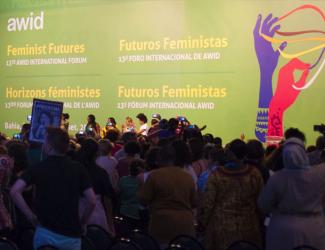
En septiembre de 2016, 1800 feministas y activistas por los derechos de las mujeres de todos los rincones de nuestros movimientos se congregaron en las costas de Bahia, en el 13º Foro Internacional de AWID.
En esta sección se destacan los logros, los aprendizajes y los recursos que surgieron de las ricas conversaciones mantenidas. Te invitamos a analizar, compartir y comentar.
¿Qué ha pasado desde 2016?
Uno de los aportes más importantes del Foro fue la necesidad de ampliar y profundizar nuestro trabajo entre movimientos, frente a la confluencia de los fascismos en auge, fundamentalismos, codicia corporativa y cambio climático.
Con esto en mente, AWID, en asociación con múltiples aliadxs, ha estado trabajando para que estas semillas de resistencia:
-
Nuestras Iniciativas Semilla han ayudado a 20 ideas que surgieron en el Foro para crecer en forma de acciones concretas
-
El vídeo «Defendiendo a las Personas y al Planeta» y la guía «Tejiendo la resistencia a través de la acción» estan protagonizados por defensoras de derechos humanos y presentan estrategias concretas para confrontar al poder corporativo
-
Con nuestras animaciones El estado de nuestros movimientos feministas y Justicia climática y ambiental, los movimientos ahora tienen herramientas creativas para apoyar su trabajo.
-
La compilación de las expresiones artísticas «Los Movimientos Importan», sigue inspirando una organización más fuerte y creativa en todo el mundo.
-
Los movimientos también pueden beneficiarse de nuevas metodologías para imaginar nuestros futuros feministas (¡pronto!)
AWID se ha comprometido, mediante su próximo plan estratégico y su proceso del Foro, a continuar y profundizar las relaciones, las lecciones y los procesos iniciados en el Foro 2016 y basándonos en el momento actual.
¿Que pasa ahora?
El mundo es un lugar muy diferente de lo que era un año atrás, y seguirá cambiando en los próximos años.
El próximo Foro de AWID se realizará en la región del Pacífico Asiático (el lugar y la fecha exactos serán anunciados en 2018). Esperamos que te unas a nosotrxs.
El próximo Foro de AWID se realizará en la región del Pacífico Asiático (el lugar y la fecha exactos serán anunciados en 2018). Esperamos que te unas a nosotrxs.
Sobre el Foro de AWID
Los Foros de AWID comenzaron en 1983 en Washington DC. Desde entonces, el evento ha crecido hasta convertirse en muchas cosas para muchas personas: un proceso iterativo para darle forma a nuestros análisis, objetivos y acciones; un hito crucial que fortalece los feminismos de lxs participantes e infunde energías a sus procesos de organización; un hogar político donde lxs defensoras de derechos humanos encuentran un santuario y solidaridad.
Contenido relacionado
Domaine prioritaire : Co-Création des réalités féministes
Alors que nous rêvons d’un monde féministe, il y en a qui sont déjà en train de le construire et de le vivre. Ce sont nos réalités féministes !
Que sont les réalités féministes ?
Les réalités féministes sont les exemples concrets des mondes justes que nous sommes en train de co-créer. Elles existent aujourd’hui, dans les manières, dont les personnes et les mouvements vivent, luttent et se construisent.
Ces réalités féministes vont au-delà de la résistance aux systèmes oppressifs pour nous montrer à quoi ressemble un monde sans domination, sans exploitation et sans suprématie.
Ce sont ces histoires-là que nous voulons mettre en lumière, partager et amplifier à travers notre aventures des réalités féministes.
Transformer des visions en des expériences vécues
Au travers de cette initiative, nous voulons:
-
Créer et élargir les alternatives: Ensemble, nous créons de l’art et des expressions artistiques qui placent au centre et célèbrent l’espoir, l’optimisme, la guérison et l’imagination radicale que les réalités féministes inspirent.
-
Enrichir nos connaissances: Nous documentos, démontrons & diffusons des méthodologies qui permettront d’identifier les réalités féministes de nos différentes communautés.
-
Promouvoir des programmes féministes: Nous élargissons et approfondissons notre réflexion et notre organization collectives afin de promouvoir des solutions et des systèmes justes incarnant les valeurs et les visions féministes.
-
Mobiliser des actions solidaires: Nous incitons les mouvements féministes, en faveur des droits humaines et de la justice de genre et leurs allié-e-s à partager, échanger et co-créer des réalités, des récits et des propositions féministes lors du 14ème Forum international de l’AWID.
Le Forum international de l’AWID
Bien que nous mettions l’accent sur le processus avant, pendant et après les quatre jour du Forum, c’est lors de l’événement lui-même que la magie opère. Grâce à l’unique énergie des participant·e·s et à l’opportunité de rassembler les gens.
Nous espérons que le prochain Forum :
-
Construira le pouvoir des réalités féministes, en nommant, célébrant, amplifiant et en alimentant l’énergie autour des expériences et propositions qui font émerger les possibilités et nourrissent notre imagination
-
Remplira nos puits d’énergie et d’inspiration comme le carburant de notre activisme et de notre résilience pour les droits et la justice
-
Renforcera la connectivité, la réciprocité et la solidarité au sein des divers mouvements féministes et avec les mouvements en faveur des droits et de la justice.
En savoir plus sur le processus du Forum
Le prochain forum de l'AWID aura lieu du 20 au 23 september 2021 à Taipei, Taiwan.
Contenido relacionado
#6 - Sexting like a feminist Tweets Snippet ES
¡Está siempre dispuestx a explorar nuevas experiencias!
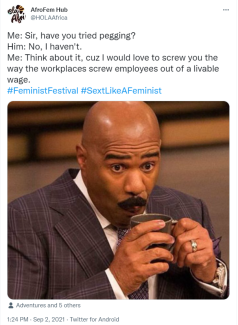
Yo: Señor, ¿probó por el culo?
Él: No, no probé.
Yo: Piénselo, porque me gustaría cogérmelo / joderlo tal como a lxs trabajadorxs nos cogen / joden en los trabajos cuando lo que nos pagan no alcanza para vivir.
Snippet - COP30 Key Messages - EN
Our COP30 Key Messages for Climate Justice Activists
We encourage you to use the material in support of your advocacy!
AWID IN 2015: Building Collective Impact

In 2015 AWID grew and diversified.
We ramped up preparations for the 13th AWID international Forum, focused a lot of energy on the Post 2015 Development Agenda and Financing for Development processes, and continued the core work of our priority areas:
- Challenging Religious Fundamentalisms
- Women Human Rights Defenders
- Economic Justice
- Resourcing Women’s Rights
- Young Feminist Activism
A sneak peak inside the report
The context
- We continue witnessing the rapid breakdown in democracy and democratic institutions, with spaces for dissent shrinking.
- Multiple and concurrent systemic crises (energy, food, finance and climate) continue to deepen inequalities and pose major challenges.
- Corporations are a leading power in determining the development agenda.
- Violence against WHRDs remains an urgent problem.
- Religious fundamentalisms are pervasive and increasingly powerful.
- New forms of online gender-based violence have emerged.
In response, we are moving out of our silos.
Increasingly, women’s rights and other movements worldwide are articulating the systemic and intersectional nature of these and other problems. We are making better connections with the agendas of other social and environmental movements for solidarity, alliance building and collective responses. We are also seeing greater visibility of these movements fighting for justice on the ground.
Our Impact
- For effective strategizing and advocacy, we need facts
- To exchange knowledge and join hands in solidarity, we need a strong online community
- To build our collective power, we need to work together
- To influence international processes, we need to increase our access and voice
- To reposition power we need to give visibility and emphasize the important role that feminist and women’s rights movements are already playing
Our Members
As at 31st December, 2015 we had:

Read the full report
CFA 2023 - Forum Theme - ar
النهوض معًا: تواصل، شفاء، ازدهار
إن موضوع المنتدى – “النهوض معًا” – هو دعوة للتفاعل مع أنفسنا بالكامل، والتواصل مع بعضنا البعض بتركيز واهتمام وبشجاعة، حتى نتمكن من الشعور بنبض الحركات العالمية والنهوض معًا لمواجهة تحديات هذه الأوقات.
تمر الحركات النسوية وحقوق المرأة والعدالة الجندرية ومجتمع الميم عين والحركات الحليفة في جميع أنحاء العالم بمرحلة حرجة، وتواجه ردة فعل قوية على الحقوق والحريات المكتسبة سابقًا. لقد جلبت السنوات الأخيرة صعوداً سريعاً للأنظمة الاستبدادية، والقمع العنيف للمجتمع المدني، وتجريم النساء والمدافعين عن حقوق الإنسان من مختلف الأنواع الاجتماعية، وتصاعد الحروب والصراعات في أجزاء كثيرة من عالمنا، واستمرار الظلم الاقتصادي، والمشاكل الصحية والأزمات البيئية والمناخية المتقاطعة.
إن حركاتنا تترنح، وفي الوقت نفسه، تسعى إلى بناء والحفاظ على القوة والثبات اللازمين للعمل الذي ينتظرنا. لا يمكننا القيام بهذا العمل بمفردنا، في صوامعنا. يعد الاتصال والشفاء ضروريين لتحويل اختلالات القوة المستمرة والتصدعات داخل حركاتنا. ويجب علينا أن نعمل ونضع الاستراتيجيات بطرق مترابطة، حتى نتمكن من تحقيق النجاح معًا. يعزز منتدى جمعية حقوق المرأة في التنمية هذا العنصر الحيوي المتمثل في الترابط في البقاء أقوياء/ قويات وتأثير النمو والتحول للتنظيم النسوي على مستوى العالم.
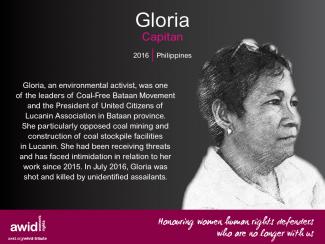
Gloria Capitan
Communiquer le désir et autres pratiques politiques incarnées | Title Snippet FR
Communiquer le désir et autres pratiques politiques incarnées
avec Manal Tamimi, Lindiwe Rasekoala et Louise Malherbe
Crédit podcast : Zuhour Mahmoud
Clone of Clone of Publications - Homepage - es
Publicaciones
Enciende tu fuego feminista leyendo nuestras investigaciones y publicaciones varias sobre financiamiento, defensoras de derechos humanos, construcción de movimientos, fundamentalismos, justicia económica, seguimiento y evaluación feminista y más
Annual Report 2010
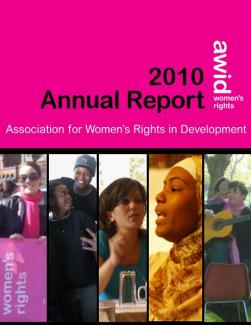
Our 2010 Annual Report highlights the major accomplishments of each of our strategic initiatives during the year.
Along with activity highlights, we include a brief analysis of the impact of our initiatives as well as reflections from our members and partners that further illustrate the relevance of AWID’s work and its connection to broader women’s rights movements.
This interactive document is complete with links to our websites and recent publications with in-depth information on the issues we address in the report.
Forum 2024 - FAQ - General Information
General Information
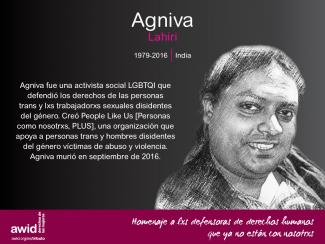
Agniva Lahiri
Communicating Desire | Small Snippet EN
Communicating Desire
and Other Embodied Political Praxes
We tend to think about communicating desire as something that is limited to the private intimacy of the bedroom and our personal relationships. But can we also think of this kind of communication as a structure, a praxis that informs our work, and how we are, how we do in the world?
Snippet - WID2026 - Join the Global _FR
Rejoignez la communauté féministe mondiale !
Inscrivez‑vous pour devenir membre de l’AWID afin de vous connecter à plus de 9 600 mouvements féministes dans le monde et co-créer une variété de plateformes et d’espaces conçus spécialement pour les activistes et les organisations, allant des ateliers de formation aux espaces de solidarité et aux rencontres entre membres.
La communauté des membres de l’AWID est disponible sous forme d’application. Téléchargez l’application et commencez à vous connecter avec les mouvements !
 |
 |
Demo article
Forum 2024 - FAQ - Call for Activities EN
Call for Activities
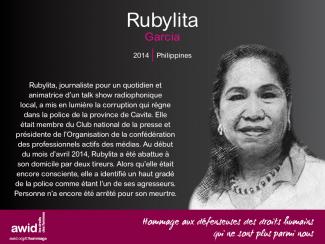
Rubylita Garcia
Illumination by the Light of the Full Moon | Snippet Small EN
Illumination by the Light of the Full Moon: An African BDSM experience
More than a fun kink to explore for the sensations, BDSM can be a way of addressing emotional pain and trauma. It has been a medium of sexual healing for me, providing a radical form of liberation.
Snippet - WD2026 - Resourcing Hub_FR
Pôle Ressource à Women Deliver
Organisé par l'Alliance pour les mouvements féministes en collaboration avec AWID, Prospera et le consortium Walking the Talk
🎧 Interprétation avec « Worldly » sera disponible. N'oubliez pas d'apporter vos écouteurs !
🏢
Resourcing Hub (Salle d'exposition).
Session 1 : Financer la solidarité en temps de transition
📅 Mardi 28 avril | 15 h 30 – 16 h 30
Session 2 : Financement autonome : Comment les mouvements féministes assurent leur pérennité;
📅 Mercredi 29 avril | 9 h 30 – 11 h 00
Session 3 : Financer les futurs féministes : Un talk‑show sur les prochaines étapes du financement des mouvements
📅 Jeudi 30 avril | 10 h 30 – 11 h 30
Margarita Salas Guzmán
Biography
Margarita is a feminist and LGBTIQA activist from Latin America; her passion is social transformation and collective wellbeing. She holds degrees in Psychology, Communications and Public Administration, as well as certificates in Public Policy, Leadership, Management & Decision Making. In her professional capacity, Margarita has had extensive experience with grassroots organizations, national and regional NGOs, universities and the public sector, developing facilitation, capacity building, political advocacy, communications & policy assessment.
Position
Special Projects Manager
Add to stories
Off
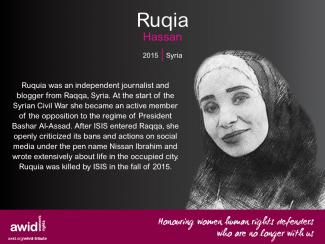
Ruqia Hassan