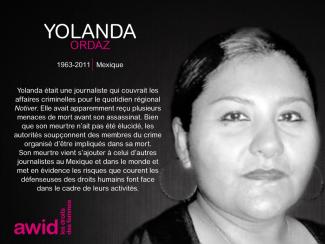
Yolanda Ordaz
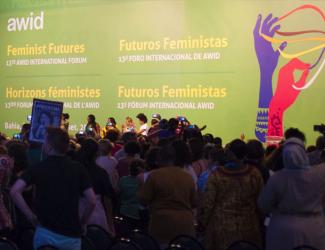
En septiembre de 2016, 1800 feministas y activistas por los derechos de las mujeres de todos los rincones de nuestros movimientos se congregaron en las costas de Bahia, en el 13º Foro Internacional de AWID.
En esta sección se destacan los logros, los aprendizajes y los recursos que surgieron de las ricas conversaciones mantenidas. Te invitamos a analizar, compartir y comentar.
Uno de los aportes más importantes del Foro fue la necesidad de ampliar y profundizar nuestro trabajo entre movimientos, frente a la confluencia de los fascismos en auge, fundamentalismos, codicia corporativa y cambio climático.
Nuestras Iniciativas Semilla han ayudado a 20 ideas que surgieron en el Foro para crecer en forma de acciones concretas
El vídeo «Defendiendo a las Personas y al Planeta» y la guía «Tejiendo la resistencia a través de la acción» estan protagonizados por defensoras de derechos humanos y presentan estrategias concretas para confrontar al poder corporativo
Con nuestras animaciones El estado de nuestros movimientos feministas y Justicia climática y ambiental, los movimientos ahora tienen herramientas creativas para apoyar su trabajo.
La compilación de las expresiones artísticas «Los Movimientos Importan», sigue inspirando una organización más fuerte y creativa en todo el mundo.
Los movimientos también pueden beneficiarse de nuevas metodologías para imaginar nuestros futuros feministas (¡pronto!)
AWID se ha comprometido, mediante su próximo plan estratégico y su proceso del Foro, a continuar y profundizar las relaciones, las lecciones y los procesos iniciados en el Foro 2016 y basándonos en el momento actual.
Los Foros de AWID comenzaron en 1983 en Washington DC. Desde entonces, el evento ha crecido hasta convertirse en muchas cosas para muchas personas: un proceso iterativo para darle forma a nuestros análisis, objetivos y acciones; un hito crucial que fortalece los feminismos de lxs participantes e infunde energías a sus procesos de organización; un hogar político donde lxs defensoras de derechos humanos encuentran un santuario y solidaridad.
Our collective power, wisdom, and commitment have no boundaries, but our bank accounts do.
Data snapshots are based on the responses of 1,174 feminist, women’s rights, LGBTQI+, and allied organizations (hereafter referred to as “feminist and women's rights organizations”) from 128 countries to the Where is the Money for Feminist Organizing? survey.
Nous reprendrons contact avec les anciens partenaires pour nous assurer que les efforts passés sont honorés. Si vos coordonnées ont changé depuis le dernier Forum, merci de nous les communiquer afin que nous puissions vous joindre.
El Foro Internacional de AWID es un verdadero espacio de encuentro mundial que brinda, a quienes participan, la oportunidad de tejer redes, alianzas, de celebrar y aprender en una atmósfera estimulante, emotiva y segura.

Como proceso, el Foro abarca mucho más que el momento en que nos reunimos. Durante todo el año estamos trabajando con organizaciones y grupos, profundizando nuestras relaciones con ellas, vinculándonos con movimientos locales para entender mejor sus problemas y crear soluciones juntxs.
Como evento, el Foro tiene lugar cada tres o cuatro años en una región diferente del mundo y cristaliza todas las alianzas que hemos venido construyendo como parte de nuestro trabajo.
El Foro de AWID disuelve nuestros límites internos y externos, alberga discusiones en profundidad, colabora con el crecimiento personal y profesional, y fortalece a los movimientos por los derechos de las mujeres y la justicia de género.
El Foro responde a la urgencia de promover una participación y acción más sólidas y coordinadas por parte de lxs feministas, defensorxs de los derechos de las mujeres y de la justicia social, sus organizaciones y movimientos. También creemos que el Foro es más que un evento, ya que puede facilitar procesos que influyen en las ideas y las agendas de los movimientos feministas y de otros actores con quienes nos vinculamos.
El Foro pasó de ser una conferencia nacional con 800 participantes a un encuentro que reúne alrededor de 2000 feministas, líderes comunitarixs, activistas por la justicia social y agencias de financiamiento de todo el mundo.
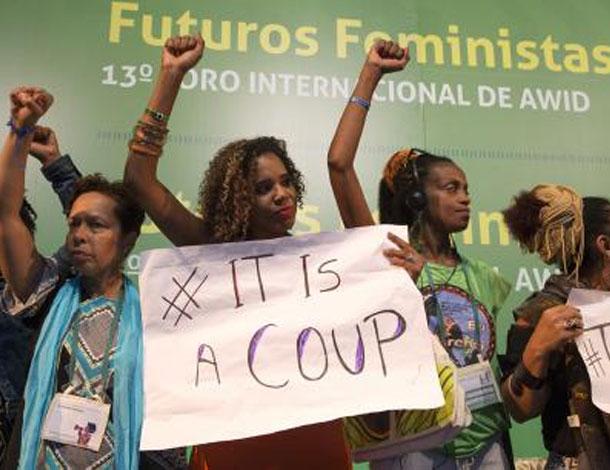
Dado el complejo mundo que enfrentamos hoy, el Foro de AWID 2016 no se centró en un ‘tema’ en particular, sino en la creación de formas más efectivas de trabajar juntxs.
Pese a las dificultades del contexto en el que se celebró este Foro (la epidemia del virus del Zika, una huelga de lxs trabajadorxs del servicio exterior brasileño, el juicio político a la presidenta Dilma Rousseff y la crisis que le siguió), se logró congregar a más de 1800 participantes de 120 países y territorios de todas las regiones del mundo.
Para el 96% de lxs participantes que respondieron a la encuesta de evaluación posterior al Foro, el evento fue una importante fuente de inspiración y energía.
El 98% de lxs participantes lo consideraron un importante espacio de convocatoria para los movimientos feministas, y manifestaron su esperanza de que AWID continúe organizado estos foros.
El 59% de quienes respondieron a la encuesta de evaluación del Foro declaró estar muy satisfechx con el Foro y el 34% algo satisfechx.
Se realizaron más de 150 sesiones en distintos formatos sobre diversos temas, desde la integridad y la libertad corporal, pasando por la violencia de género en el ámbito laboral, hasta estrategias de construcción de poder colectivo.
El primer Foro de Feminismos Negros, se celebró justo antes del Foro de AWID, y reunió a 250 feministas negrxs de todo el mundo, para crear colectivamente un espacio de poder desde donde construir y fortalecer las conexiones intergeneracionales y transnacionales.
Descargar el informe de evaluación del foro
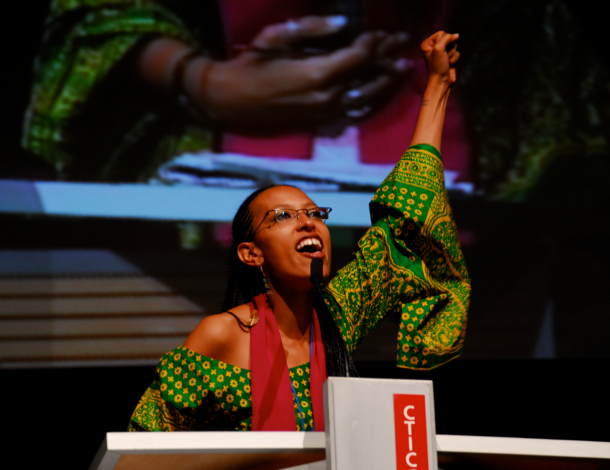
El 12° Foro de AWID se llevó a cabo en el año 2012 en Estambul, Turquía, bajo el título “Transformando el Poder Económico para Avanzar los Derechos de las Mujeres y la Justicia”. El Foro 2012 fue el más grande y diverso que hemos organizado hasta la fecha, con la participación de 2239 activistas por los derechos de las mujeres, de 141 países. El 65% provenía del sur global y casi el 15% eran mujeres jóvenes menores de 30 años, mientras que el 75% de las personas asistían a un Foro de AWID por primera vez.
El programa del Foro se enfocó en la transformación del poder económico para promover los derechos de las mujeres y la justicia. Se ofrecieron más de 170 sesiones de lo más diversas, incluyendo las sesiones de la caja de herramientas económicas feministas para forjar habilidades, sesiones interactivas que representaron los 10 temas del Foro, discusiones en profundidad y las mesas redondas de solidaridad.
Aprovechando el impulso del Foro, hemos transformado la página web en un centro de recursos y aprendizaje que se basa en el contenido generado por las participantes mediante recursos multimedia sobre todos los componentes del Foro.
Visita el archivo web del Foro 2012
Cuando el trabajo de nuestros cuerpos se convierte en ganancias en las manos de los sistemas que buscamos desmantelar, no sorprende que nuestras sexualidades y placeres queden relegados una vez más a las márgenes, especialmente cuando no son lo suficientemente rentables. En muchos momentos durante la producción de este número, nos preguntamos qué sucedería si nos negáramos a dar cabida a los servicios esenciales del capitalismo.
Where frontline organizers lead and corporations are held accountable.
📅 Tuesday, November 11, 2025
📍 Online and at the Universidade Federal do Pará, Belém
We have partnered with Global Voices for a special series of pieces for Pride Month 2023 (include music, video, and stories!) engaging with the intersectional issues that queer individuals and communities face around the world.
Partout sur la planète, les défenseur·e·s féministes, des droits des femmes et de la justice de genre remettent en question les programmes des acteurs fascistes et fondamentalistes. Ces forces opprimantes prennent pour cibles les femmes, les personnes non conformes dans leur identité de genre, leur expression et/ou orientation sexuelle, ainsi que d’autres communautés opprimées.
Les idéologies discriminatoires sapent et s’emparent de nos systèmes et normes en termes de droits humains de manière à ce que seuls certains groupes aient l’exclusivité des droits. Face à cela, l’initiative Promotion des droits universels et de la justice (Advancing Universal Rights and Justice, AURJ) s’attache à promouvoir l’universalité des droits - le principe fondamental selon lequel les droits humains sont le bien de chaque être humain, quelle que soit son identité, et ce sans exception.
Nous créons un espace pour permettre aux mouvements et à nos allié·e·s féministes, en faveur des droits humains et de la justice de genre de se reconnaître, d’élaborer des stratégies et de recourir à des actions collectives afin de contrecarrer l’influence et l’impact des acteurs anti-droits. Nous cherchons également à faire avancer les cadres, les normes et les propositions féministes et relatifs aux droits des femmes, ainsi qu’à protéger et promouvoir l’universalité des droits.
Enrichir nos connaissances : Dans le cadre du rôle de premier plan que nous assurons sur la plateforme collaborative, l’Observatoire de l'universalité des droits (Observatory on the Universality of Rights, OURs), l’AWID soutient les mouvements féministes, en faveur des droits des femmes et de la justice de genre en diffusant et vulgarisant des connaissances et des messages clés concernant les acteurs anti-droits, leurs stratégies et leur impact au sein des organismes internationaux de protection des droits humains.
Promouvoir des programmes féministes : Nous faisons des alliances avec des partenaires au sein d’espaces internationaux dédiés aux droits humains, notamment le Conseil des droits de l’homme, la Commission de la population et du développement, la Commission de la condition de la femme et l’Assemblée générale de l’ONU.
Créer et élargir les alternatives : Nous impliquons nos membres afin de garantir que les engagements, les résolutions et les normes à l’échelle internationale sont reflétées et réintroduites dans l’organisation d’autres espaces à l’échelle locale, nationale et régionale.
Mobiliser des actions solidaires : Nous agissons aux côtés de défenseuses des droits humains (women human rights defenders, WHRD), y compris de défenseur·e·s trans et intersexes et de jeunes féministes, et oeuvrons à contester les fondamentalismes et les fascismes tout en attirant l’attention sur les situations à risque.
con Vandana Shiva, Dilar Dirik y Nana Akosua Hanson
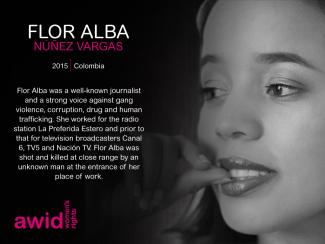
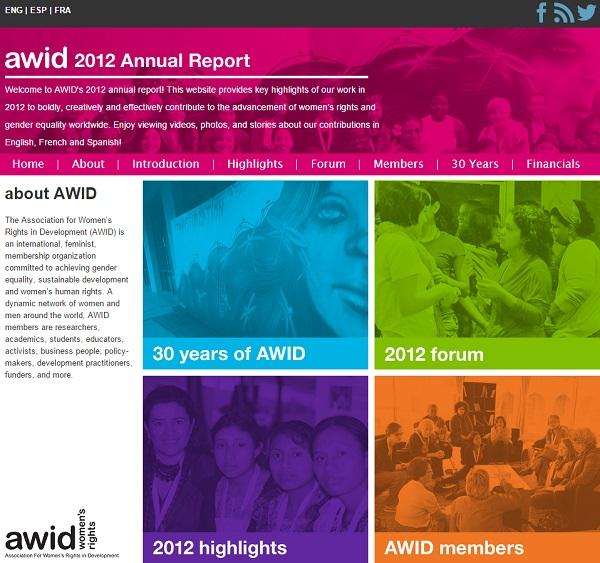
Our 2012 Annual Report provides key highlights of our work during the year to boldly, creatively and effectively contribute to the advancement of women’s rights and gender equality worldwide.
Enjoy viewing videos, photos, and stories about our contributions.
Visit our 2012 Annual Report site
Pour la première fois, le Forum de l'AWID propose trois modes de participation :
Les participant.e.s se réuniront à Bangkok, en Thaïlande. Nous sommes impatient.e.s de vous y retrouver!
Alors que le capitalisme hétéropatriarcal s’acharne à nous contraindre au consumérisme et à la conformité, nous constatons que nos luttes sont cloisonnées et séparées par des frontières aussi bien physiques que virtuelles.
Denunciar la captura corporativa. Comprender las soluciones falsas. Elaborar alternativas. Todo lo que necesitas para ejecutar la campaña “¿De quién es esta COP?”

En 2016 convocamos el 13º Foro Internacional de AWID en Bahía, Brasil, al que asistieron 1800 participantes de 120 países y territorios de todo el mundo. El Foro fue un espacio muy necesario para la construcción de estrategias y alianzas con feministas y otros movimientos de justicia.
Sabemos que los movimientos por lo derechos de las mujeres y feministas son actores clave en la creación de un cambio transformador sostenible. En nuestros movimientos, la organización, resistencia y respuesta al contexto desafiante se está agudizando, y en nuestro mundo cada vez más conectado, el potencial para la acción colectiva a través de diversos movimientos ha crecido dramáticamente. Este es el trabajo crucial que AWID busca amplificar y apoyar. Nos proponemos informar y equipar a organizaciones y movimientos por los derechos de las mujeres para responder a las oportunidades y contrarrestar las amenazas. Apoyamos una mayor visibilidad y comprensión de las iniciativas por los derechos de las mujeres y las amenazas que enfrentan, y también trabajamos para influenciar a lxs actores e instituciones que dan forma a los derechos humanos y a los resultados de desarrollo.
El innovador 13º Foro Internacional de AWID se realizó del 8 al 11 de septiembre de 2016 en Bahía, Brasil, con el tema: «Futuros Feministas: Construyendo poder colectivo por los derechos y la justicia». Si bien gran parte de la energía de AWID en 2016 se dedicó al proceso del Foro, también se valió del pensamiento y la energía de casi 500 aliadxs, presentadorxs, panelistas, moderadorxs, artivistas, escritorxs, facilitadorxs, innovadorxs de TI y artistas de performance, muchxs de ellxs líderes en su campo. También, en reconocimiento a la historia y la lucha de Bahía, albergamos al Foro de Feminismos Negros (BFF, por su sigla en inglés), de dos días, organizado por un grupo de trabajo conformado por feministas negrxs de todo el mundo.
SOBRE DESAFIAR AL PODER CORPORATIVO. Produjimos Desafiar al poder corporativo: las luchas por los derechos de las mujeres, la justicia económica y de género junto con el Solidarity Center, revelando la escala y el alcance del poder corporativo y describiendo cómo las corporaciones en connivencia con élites y otros actores poderosos están teniendo impacto en las vidas de las mujeres y los pueblos oprimidos. El informe ofrece ideas sobre estrategias de resistencia, destacando cinco luchas que utilizaron la colaboración entre movimientos para desafiar al poder corporativo.
SOBRE ECONOMÍAS FEMINISTAS. Produjimos Propuestas feministas para una economía justa juntamente al Centro para el Liderazgo Mundial de las Mujeres (CWGL, por su sigla en inglés) y la Red de Mujeres Africanas para el Desarrollo y la Comunicación FEMNET. Propuestas Feministas es una plataforma en internet que propone una agenda feminista para el desarrollo y la justicia
económica y de género.
SOBRE DESAFIAR A LOS FUNDAMENTALISMOS. El diablo se esconde en los detalles: En el nexo entre el desarrollo, los derechos de las mujeres y los fundamentalismos religiosos detalla cómo los fundamentalismos religiosos limitan el desarrollo y los derechos de las mujeres en particular y proporciona recomendaciones a lxs actores del desarrollo para fortalecer los derechos de las mujeres.
SOBRE ACTIVISMO JOVEN FEMINISTA. Junto a FRIDA lanzamos Valientes, creativxs, resilientes: La situación a nivel global de la organización de jóvenes feministas en el Espacio de Activismo Joven Feminista durante el Foro de AWID. Este proyecto de descripción del estado del activismo feminista joven se basa en los datos recopilados de 1360 solicitudes de subvenciones recibidas por FRIDA entre los años de 2012 y 2014 y una encuesta global, que contó con 694 respuestas de 118 países diferentes.
AWID, en asociación con otras organizaciones feministas y por los derechos de las mujeres, se involucró en la incidencia y el diálogo para explorar mejores soluciones para las agendas de derechos de las mujeres, como nuestro trabajo con el consorsio Count Me In!
Las experiencias de mujeres con discapacidad, mujeres negras y afrodescendientes, trabajadorxs sexuales, mujeres indígenas, personas trans y personas intersexuales, trabajadorxs domesticxs
y cómo sus vidas se ven afectadas por múltiples opresiones y violencias estuvieron en el centro del proceso del Foro.
Durante los 16 Días de activismo, y gracias a las contribuciones de nuestrxs increíbles afiliadxs, lanzamos el Tributo a lxs defensorxs de derechos humanos 2016 para celebrar la vida de lxs defensorxs que ya no están con nosotrxs.
Nuestra colaboración con The Guardian y Mama Cash: la sección de enfoque en derechos de las mujeres e igualdad de género del portal de desarrollo global de The Guardian ha resultado en una mayor atención a los grupos y temas
que no suelen recibir la cobertura adecuada de los medios de comunicación dominantes.

La date limite pour proposer une activité est prolongée jusqu'au 1er février 2024
Dans l'esprit du thème du Forum, nous vous invitons à proposer une diversité de sujets et de formats d'ateliers qui :
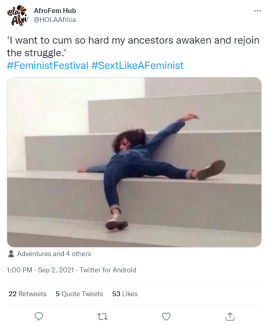
« Je veux jouir tellement fort que ça réveillera mes ancêtres, qui se joindront à la lutte. »
AWID members will explore and critically evaluate the role that mutual aid can play in resourcing our movements, through collective collage making.
📅 Wednesday, November 12, 2025
📍 The People’s COP Space