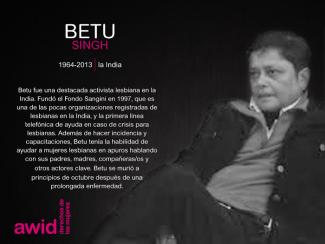
Betu Singh

Lxs defensorxs se identifican a sí mismas como mujeres y personas lesbianas, bisexuales, transgénero, queer e intersex (LBTQI) y otrxs que defienden derechos y que debido a su trabajo en derechos humanos están bajo riesgos y amenazas específicos por su género y/o como consecuencia directa de su identidad de género u orientación sexual.
Lxs defensorxs son objeto de violencia y discriminación sistemáticas debido a sus identidades y su inclaudicable lucha por derechos, igualdad y justicia.
El Programa Defensorxs colabora con contrapartes internacionales y regionales así como con lxs afiliadxs de AWID para crear conciencia acerca de estos riesgos y amenazas, abogar por medidas de protección y de seguridad que sean feministas e integrales, y promover activamente una cultura del autocuidado y el bienestar colectivo en nuestros movimientos.
lxs defensorxs enfrentan los mismos tipos de riesgos que todxs lxs demás defensorxs de derechos humanos, de comunidades y del medio ambiente. Sin embargo, también están expuestas a violencia y a riesgos específicos por su género porque desafían las normas de género de sus comunidades y sociedades.
Nos proponemos contribuir a un mundo más seguro para lxs defensorxs, sus familias y comunidades. Creemos que actuar por los derechos y la justicia no debe poner en riesgo a lxs defensorxs, sino que debe ser valorado y celebrado.
Promoviendo la colaboración y coordinación entre organizaciones de derechos humanos y organizaciones de derechos de las mujeres en el plano internacional para fortalecer la capacidad de respuesta en relación a la seguridad y el bienestar de lxs defensorxs.
Apoyando a las redes regionales de defensorxs y de sus organizaciones, tales como la Iniciativa Mesoamericana de Mujeres Defensorxs de Derechos Humanos y la WHRD Middle East and North Africa Coalition [Coalición de Defensorxs de Derechos Humanos de Medio Oriente y África del Norte], promoviendo y fortaleciendo la acción colectiva para la protección, poniendo el énfasis en establecer redes de solidaridad y protección, promover el autocuidado y la incidencia y movilización por la seguridad de lxs defensorxs.
Aumentando la visibilidad y el reconocimiento de lxs defensorxs y sus luchas, así como de los riesgos que enfrentan, a través de la documentación de los ataques que sufren, e investigando, produciendo y difundiendo información sobre sus luchas, estrategias y desafíos.
Movilizando respuestas urgentes de solidaridad internacional para lxs defensorxs que están en riesgo a través de nuestras redes internacionales y regionales y de nuestrxs afiliadxs activxs.
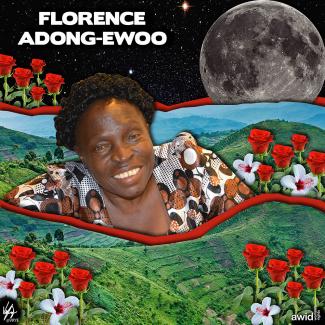
Florence était une militante des droits des personnes handicapées qui travaillait avec plusieurs organisations de femmes handicapées en Ouganda.
Elle a également occupé le poste de présidente de l’Association des femmes handicapées du district de Lira, ainsi que du caucus des conseillères du district de Lira. Formée en tant que conseillère pour personnes handicapées et parents d'enfants handicapés, elle a soutenu de nombreux projets appelant à une plus grande représentation des personnes handicapées.
Elle est morte dans un accident de moto.
Nos esforzamos por ser transparentes, por utilizar nuestros recursos en forma responsable, por ser equitativxs en nuestras colaboraciones, y por ser responsables e íntegrxs con nuestrxs afiliadxs, contrapartes y donantes, y con los movimientos con los que trabajamos y en los que participamos. Estamos comprometidxs a reflejar nuestras experiencias, a compartir abiertamente nuestrxs aprendizajes, y a esforzarnos por cambiar nuestras prácticas en consecuencia.
При необходимости, вы можете сохранить свои ответы и вернуться к опросу позже. Eсли Вы хотите сохранить ответы и вернуться к опросу позже, это можно сделать при условии, что Вы продолжите работу на том же устройстве. KOBO сохранит Ваши ответы в левом верхнем углу страницы опросника и подгрузит Ваш черновик, когда Вы вернетесь к опросу.
À la Commission africaine et au Système interaméricain, les antidroits promeuvent les notions essentialistes de culture et de genre pour miner les avancées en matière de droits et décrédibiliser la redevabilité. Les antidroits gagnent en influence dans les systèmes de protection des droits humains régionaux et internationaux.
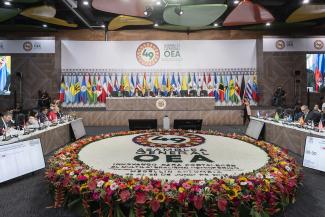
La Commission africaine des droits de l’Homme et des peuples commence à présenter les droits des femmes et droits sexuels comme mettant en danger sa capacité à adresser les « droits réels » et contraires aux « valeurs africaines », un précédent inquiétant à l’égard des droits. Le retrait de son statut d’observatrice à la Coalition des lesbiennes africaines est un exemple de cette tendance, et traduit la répression de l’engagement féministe panafricaniste.
Au sein de l’Organisation des États américains (OEA) et du Système interaméricain de protection des droits humains, les stratégies antidroits incluent l’ONGisation de groupes religieux, l’adoption d’un langage séculier et la prise de contrôle de cadres discriminatoires. L’influence antidroits a pris plusieurs formes, et notamment l’intimidation d’activistes trans et l’entrave à l’introduction d’un langage progressif dans les résolutions.
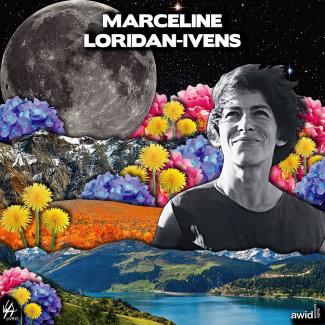
Born in 1928, Marceline worked as an actress, a screenwriter, and a director.
She directed The Birch-Tree Meadow in 2003, starring Anouk Aimee, as well as several other documentaries. She was also a holocaust survivor. She was just fifteen when she and her father were both arrested and sent to Nazi concentration camps. The three kilometres between her father in Auschwitz and herself in Birkenau were an insurmountable distance, which she writes about in one of her seminal novels “But You Did Not Come Back.”
In talking about her work, she once said: "All I can say is that everything I can write, everything I can unveil — it's my task to do it.”
Étant donnée la situation mondiale, notre Conseil d’administration a pris la décision difficile d’annuler le Forum, qui devait avoir lieu en 2021 à Taipei.
Tem o direito de eliminar a sua resposta, por qualquer motivo e se assim o desejar. Queira entrar em contacto connosco através deste formulário, ao indicar "WITM Survey" ("Inquérito WITM") no título da sua mensagem, e iremos proceder à eliminação da sua resposta.
Lost For Words |
 |
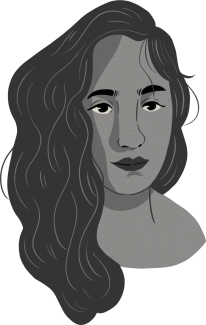 |
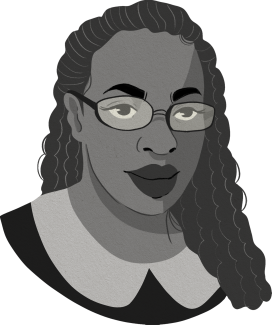
| Chinelo Onwualu | Ghiwa Sayegh |
When we are desperate for change, as we are both in illness and insurrection, our language drains of complexity, becomes honed to its barest essentials... As illness and revolution persist, though, the language made in them and about them deepens, lets in more nuance, absorbed in the acutely human experience of encountering one’s limits at the site of the world’s end.
Johanna Hedva
When we began scheming for such an issue with Nana Darkoa, ahead of AWID’s Crear | Résister | Transform: a festival for feminist movements!, we departed from a question that is more of an observation of the state of the world – a desire to shift ground: why do our sexualities and pleasures continue to be tamed and criminalized even as we are told, over and over again, that they bring neither value nor progress? We came to the conclusion that when they are embodied, something about our sexualities works against a world order that continues to manifest itself in border controls, vaccine apartheids, settler colonialism, ethnic cleansing, and rampant capitalism. Could we speak, then, of the disruptive potential of our sexualities? Could we still do that when, in order to be resourced, our movements are co-opted and institutionalized.
When our embodied labor becomes profit in the hands of the systems we seek to dismantle, it is no wonder that our sexualities and pleasures are once again relegated to the sidelines – especially when they are not profitable enough. In many instances during the production of this issue, we asked ourselves what would happen if we refused to accommodate the essential services of capitalism. But can we dare ask that question when we are exhausted by the world? Perhaps our sexualities are so easily dismissed because they are not seen as forms of care. Perhaps what we need is to reimagine pleasure as a form of radical care – one that is also anti-capitalist and anti-institutional.
As we enter our second full year of a global pandemic, our approach to transnational embodiments has had to focus on a single political realization: that taking care is a form of embodiment. And because right now so much of our work is being done without consideration for the borders between and within ourselves, we are all Transnationally Embodied – and we are all failing. We are failing to take care of ourselves and more critically, to take care of each other.
This failure is not of our own making.
Many of our parents thought of labor as transactional, something to be given in exchange for compensation and a guarantee of care. And while that exchange was not always honored, our parents did not expect that their work would provide them fulfillment. They had their leisure, their hobbies, and their communities for that. Today, we their children, who have been conditioned to think of our labor as intertwined with our passion, have no such expectations. We think of work and leisure as one and the same. For too many of us, work has come to embody our whole selves.
However, heteropatriarchal capitalism doesn’t value us, let alone our labor or our sexualities. This is a system that will only demand more and more until you die. And when you die, it will replace you with somebody else. Expectations to be online round the clock mean we simply can’t get away from work, even when we want to. This commercialization of labor, divorcing it from the person, has infiltrated every aspect of our lives and is being perpetuated even in the most feminist, the most radical and revolutionary circles.
Capitalist expectations have always been particularly pernicious to bodies who don’t fit its ideal. And those seeking to consolidate their powers have used the pandemic as an opportunity to target women, sexual minorities, and any others that they see as less than.
This special issue exists because of, and certainly in spite of this.
Almost every contributor and staff member was pushing themselves past their capacity. Every single piece was produced from a place of passion, but also incredible burnout. In a very real way, this issue is an embodiment of transnational labor – and in the digital world we live in, all labor has become transnational labor. As we have to contend with new borders that do not break an old order but reify it, we experienced firsthand, alongside our contributors, how capitalism drains our limits – how it becomes difficult to construct cohesive arguments, especially when these come with a deadline. We collectively became lost for words – because we are lost for worlds.
Feeling lost and alone in the world of heteropatriarchal capitalism is exactly why we need to re-evaluate and rethink our systems of care. In many ways, we turned this issue into a mission of finding pleasure in care. Because it has become more difficult to construct cohesive arguments, visual and creative mediums have come to the forefront. Many who used to write have turned to these mediums as ways to produce knowledge and cut through the mental fog that’s enveloped us all. We brought into the issue other voices, in addition to many whom you heard at the festival, as a way of opening up new conversations, and extending our horizons.
As we are robbed of our words, it is our political duty to continue to find ways to maintain and care for ourselves and each other. So much of our current realities are trying to erase and displace us, while still exploiting our labor. Our embodiment, therefore, becomes a form of resistance; it is the beginning of us finding our way out and into ourselves.

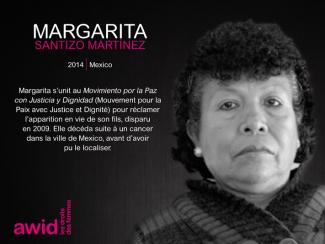
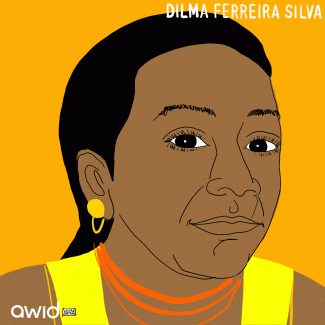
She herself was among the 32,000 people displaced by the Tucuruí, a mega-hydroelectric power plant, built in Brazil during the 1964-1985 military dictatorship.
In 2005 Dilma was invited to join the Movement of Dam-Affected Peoples in Brazil (MAB), and in 2006 she formed the women’s collective, eventually becoming regional coordinator of the movement.
In speaking about her activism, her colleagues commented:
“She stood out very fast because she was always very fearless in the struggle.”
Dilma lived in the rural settlement of Salvador Allende,50 kilometers from Tucuruí, and dedicated her life to better protect communities and the land affected by the construction of mega projects. She was especially concerned with the gendered impacts of such projects and advocated for women’s rights.
At a national MAB meeting in 2011, Dilma spoke to women affected by the dams, saying:
“We are the real Marias, warriors, fighters who are there, facing the challenge of daily struggle”.
In the following years, Dilma organized grassroots MAD groups and worked with the community to form farming cooperatives that created a better distribution of food for the community. They improved the commercialization of fishing, and developed a cistern project for safe drinking water. She was also an advocate for farmers whose lands were being coveted by ‘grileiros’ (land grabbers).
On 22nd March 2019, at the age of 48, Dilma, her husband and their friend were all brutally murdered. The three killings came as part of a wave of violence in the Amazon against the Movimento dos Trabalhadores Sem Terra (translates as ‘landless workers’ movement’), environmental and indigenous activists.
نعم! الرجاء القيام بذلك! نشجعكم/ن على مشاركة رابط الاستطلاع في شبكاتكم/ن. سيسمح لنا جمع وجهات النظر أكثر تنوعاً، فهم البيئة التمويلية للحركات النسوية بشكل أكبر.
Entrevista realizada por Chinelo Onwualu

 |
Naike Ledan es una defensora de la justicia social, una feminista comprometida y con 20 años de experiencia en la defensa de los derechos humanos y la justicia social, el empoderamiento de las mujeres, la lucha por el acceso universal a los servicios básicos y la inclusión social, así como por el desarrollo de las capacidades de la sociedad civil. Tiene una vasta trayectoria de trabajo en Canadá, en África occidental y meridional, y en Haití, en la promoción de los derechos civiles, el desarrollo de las capacidades de las organizaciones de la sociedad civil, enfocada sobre todo en los determinantes sociales de la exclusión estructural. Valora los principios de un liderazgo compartido, anticolonial, contra la opresión y los espacios antipatriarcales. |
Chinelo Se te conoce como activista por los derechos trans; me intriga cómo fue tu recorrido hasta allí.
Naike Crecí en Haití donde viví hasta los 18 años y luego me fui a vivir a Montreal donde pasé 19 años. Cuando volví a Haití, en 2016, pensaba que estaba regresando a casa pero el lugar había cambiado y tuve que readaptarme. No volví a conectarme como había esperado hacerlo con la familia y las amistades de mi infancia. Volví habiendo vivido en el exterior, con una situación laboral cómoda y durante mucho tiempo me sentí bastante extranjera. Y a la vez me sentía muy en casa por el idioma, los silencios entendidos, no tener que explicar nada cuando empezamos a cantar un anuncio publicitario. Ya sabes: esas cosas que compartimos, esa energía, ese espacio, ese espíritu.
Lo que me ayudó fue que me gustó mucho la tarea de andar por el país y documentar lo que la gente sabía. Entonces, dejé la comodidad de lado. Me convertí en directora nacional de una organización regional que era completamente queer. Mi trabajo consistía sobre todo en conseguir recursos y desarrollar capacidades en la sociedad civil. Mi estrategia era salir a las zonas rurales, buscar a todas las organizaciones pequeñas que había ahí, ayudarlas a desarrollar su capacidad y financiarlas. No me interesaban lxs polítiquxs, ni andar a los apretones de manos o sacarme fotos (risas). Tuve un muy buen aliado: Charlot Jeudy, el activista (queer) que fue asesinado hace tres años en su casa. Nos acercamos mucho después de que se prohibió en Haití un festival de cine afro-queer que habíamos planeado juntxs. La prohibición hizo mucho ruido y logró que se hablara de ser queer en todas partes, entonces Charlot me presentó a todas las OSC pequeñitas que había en cada rincón del país. Y ahí estaba yo para ayudarlas a registrarse o a elaborar sus planes estratégicos. Fue esa clase de trabajo la que me convirtió en activista queer y, por extensión, en activista trans. Aunque yo no me defino como activista. Es una palabra con mucho peso, ¿no crees? Es algo que otrxs dicen de ti. Yo creo que solo soy amante y luchadorx (risas).
Chinelo Cuéntame sobre el taller que facilitaste durante el Festival de AWID. ¿De qué se trataba y en qué contexto surgió?
Naike Los medios internacionales no hablan en serio sobre Haití, pero en un ambiente político tan malo como el que estamos viviendo, el ambiente económico se torna aún más catastrófico. Como haitianx más bien de clase media, que habla otros idiomas, que tiene otros pasaportes, al principio dudé de si yo debía ocupar ese espacio o no. Pero muchas veces me veo como un puente más que como alguien que va a hablar de sí mismx. Entonces decidí invitar a Semi, una joven mujer trans brillante que vive fuera de Puerto Príncipe, para que tomara el espacio y la palabra, y nos trazara un recorrido sobre el ecosistema de las realidades que viven las mujeres trans en Haití. Terminamos creando una sesión sobre el feminismo que no incluye — o, diría yo, los espacios feministas formales (que no lo hacen) — y cómo en Haití las chicas trans no cuentan con espacios donde puedan contribuir al conocimiento de las mujeres y compartir sus realidades. Por eso el Festival de AWID me dio la oportunidad de ceder el espacio a las mujeres que deben ocuparlo. Lo pasamos muy bien, tomamos vino en línea mientras charlábamos. Mi cofacilitadora, Semi, contó cómo fue haber sido unx niñx/niña/mujer trans en distintas etapas de su vida. También habló de los peligros de la calle, de la pobreza, la exclusión, lo que ocurre cuando «se te nota», así como de sus victorias.
Chinelo ¿Qué relación existe en Haití entre las mujeres trans y las organizaciones feministas? ¿Cómo ha sido tu experiencia en este sentido?
Naike La experiencia de las mujeres trans en Haití ha sido realmente difícil; devastadora en realidad. Pasaron de la invisibilidad absoluta a estar extremadamente sexualizadas. Otra cosa que sucede es que las están matando y los medios no informan acerca de esos asesinatos. Así de inexistentes, de borradas son y están las mujeres trans. Están en todas partes pero no en los espacios laborales, ni en los espacios feministas ni en las organizaciones. Ni siquiera en las organizaciones LGBT. Solo muy recientemente, y gracias a mucha presión del activismo, algunas de estas organizaciones de alguna manera se están readaptando, pero en los espacios feministas esto sigue estando fuera de toda consideración. Todavía tenemos que escuchar el viejo discurso excluyente que dice «No son mujeres. Por supuesto, si no se les nota … » La cultura de que no se note es una conversación sobre gestión de riesgos: cuánto se te nota y cuánto no se te nota, y lo que eso implica para tu cuerpo y en términos de la violencia que causa. En las realidades trans-excluyentes que vivimos, que se reproducen en muchos espacios feministas, a las que no «se les nota» en absoluto tal vez se las considere chicas, pero solo hasta cierto punto. Pero, ¿qué pasa cuando se enamoran, cuando quieren conversar, cuando están en el armario, cuando quieren adoptar una determinada estética o seguir una carrera? La conversación sobre la terapia hormonal termina centrándose en la reducción de riesgos, como lo dijo la propia Semi en el taller. Pero no tenemos la opción de las terapias hormonales, no tenemos ni el marco médico ni un sistema que apoye a las que quieran tomar por ese camino.
Chinelo Cuando hablas de lo que piensa la sociedad acerca de las personas trans y las personas queer, suena bastante similar a lo que ocurre en Nigeria que puede ser un ambiente profundamente homofóbico.
Naike Haití es un país muy complejo de maneras muy hermosas. Aquí nada es simple, ¿sabes?, las cosas nunca son de una sola forma. La gente es muy tolerante, y también muy homofóbica. Hay zonas rurales en las que la gente no es para nada homofóbica porque allí hay muchos templos vudús y esa es una religión que respeta la vida. Un principio básico de la religión vudú es que todxs lxs niñxs son niñxs. Por eso es una religión que no define lo que está bien ni lo que está mal. Durante muchísimo tiempo la gente pensó en Haití como un refugio, un lugar donde había tolerancia — estamos hablando de los setenta, ochenta, antes del VIH, inclusive los noventa. Luego vino el terremoto (en 2010) donde murieron casi 300 000 personas. Y entonces llegó todo ese dinero de las iglesias evangélicas del sur de Estados Unidos para reconstruir el país y encontrar a Jesús. Por eso la homofobia en Haití es algo muy reciente. En lo profundo, en el corazón del alma de su cultura, no puedo realmente decir que sea un país homofóbico. Pero en la vida cotidiana no hay duda de que esa violencia lastima la piel de las personas queer. Y de las mujeres, de las mujeres empobrecidas, las mujeres de piel oscura, porque el colorismo está muy arraigado en el Caribe.
Chinelo ¿Cómo te has enfrentado a esto? ¿Cuál ha sido tu estrategia para sobrevivir?
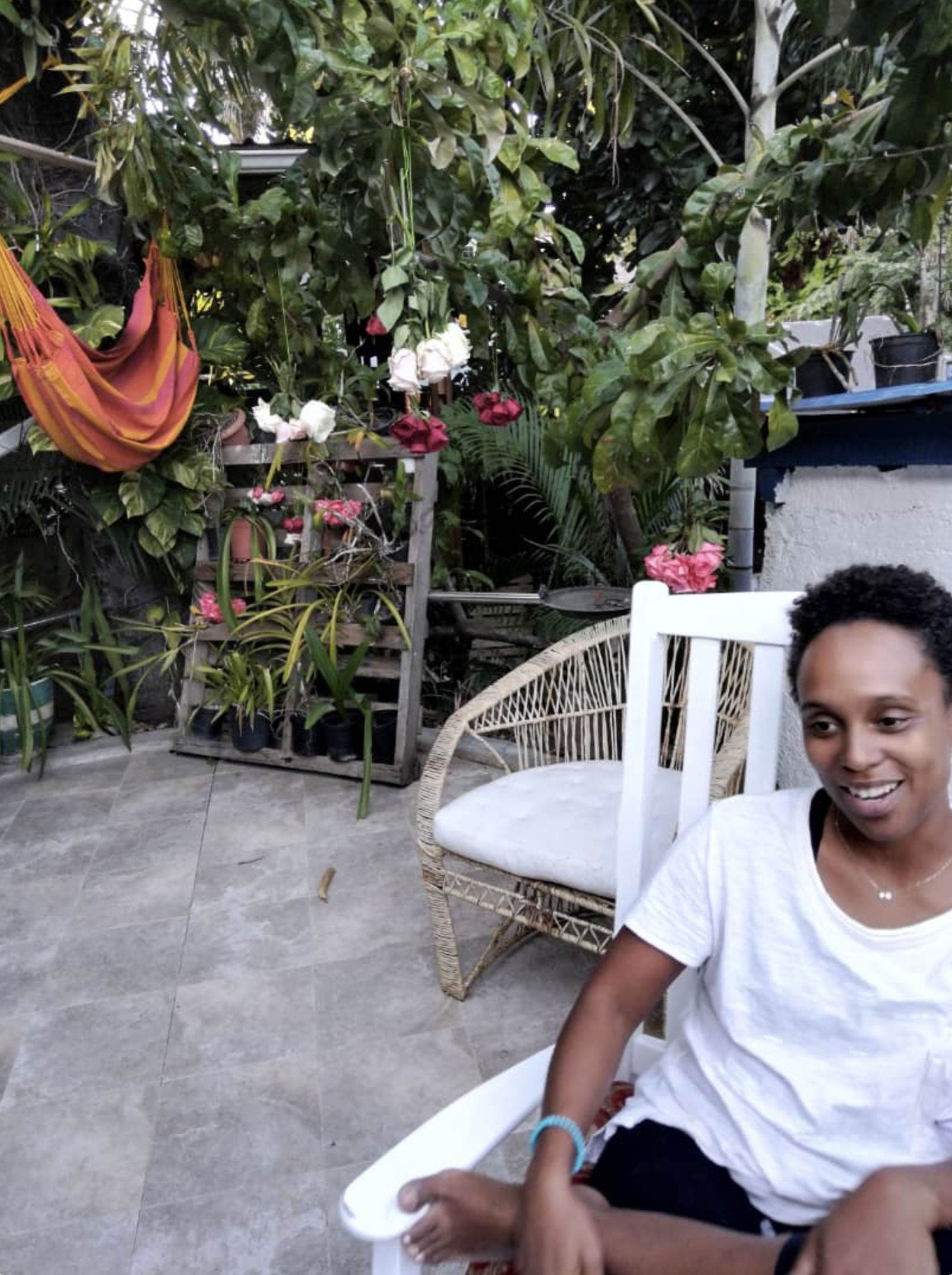
NaikeEstoy enamoradx de mi trabajo. Me encanta trabajar. Cuando recién llegué trabajaba en una ONG horrible pero el trabajo que hacía era maravilloso. Estaba siempre en zonas rurales, conversando y aprendiendo de la gente, de las mujeres. Y eso me colmó el corazón durante mucho tiempo porque adoro mi cultura, a la gente negra, a las mujeres negras, a las ancianas negras, lxs bebés negrxs. Es algo que me colma espiritualmente. Cuando vivíamos en Canadá, mis hijxs iban a esas escuelas sólo de blanquxs donde lxs trataban como mascotas. No hablaban creole ni francés. Y ahora corren libres por el jardín y ya están empezando a pelearse en creole. También encontré espacios de supervivencia en la gente a la que conocí. Forjé lazos con gente queer y con otra gente rara como yo, y eso ha sido realmente maravilloso. Pero ahora todo se ha vuelto más difícil porque ya no me siento segurx en Haití. En Puerto Príncipe ocurren casi 40 secuestros por semana, y esto es así desde 2018. Ahora tengo ataques de ansiedad y de pánico. Entonces, es hora de irme y he comenzado a preguntarme dónde está mi hogar. Pasé 19 años en Montreal pero allí nunca sentí que estuviera en mi casa. Desde que me fui, nunca lo extrañé y por eso no quiero volver. Últimamente estoy llorando mucho porque siento como que está comenzando mi segundo exilio.
Chinelo ¿Cómo es tu relación con el placer, el tiempo libre y el descanso?
Naike Mi relación con el placer, el tiempo libre y el descanso es la misma, porque para mí son una sola cosa. Son esos momentos vividos en los que disfruto del sol sobre mi rostro, por ejemplo. Es placer, tiempo libre y descanso a la vez.
Placer: Es el espacio al que siempre voy, casi siempre como refugio donde puedo celebrarme a mí mismx. Me reservo el poder y el derecho de hacer mucho ruido o nada de ruido cuando disfruto del placer que siento — de todo el placer en el que me deleito en abundancia, viciosamente, que incluye el placer de la soledad y el silencio pero no se limita a eso.
Tiempo libre: andar en bicicleta, ir a festivales de música, comer, descubrir vinos, bailar las danzas vudús tradicionales de Haití son algunas de las muchas opciones que se me ocurren en este momento.
Descanso: Para eso vivo. Como persona que sobresale en su trabajo y que está literalmente enamorada de él, es una paradoja lo haraganx que soy. Nadie lo sabe porque lo que todo el mundo ve es una persona que trabaja muchísimo y es muy exitosa. No saben que puedo ser inflexible en cuanto a disfrutar profundamente de no hacer nada.

Esta edición en alianza con Kohl: una publicación para Body and Gender Research analizará soluciones, propuestas y realidades feministas para transformar nuestro mundo actual, nuestros cuerpos y nuestras sexualidades.
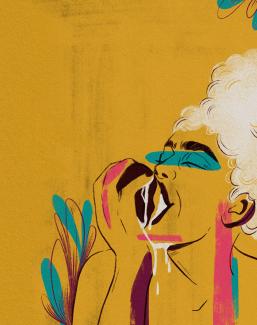
نصدر النسخة هذه من المجلة بالشراكة مع «كحل: مجلة لأبحاث الجسد والجندر»، وسنستكشف عبرها الحلول والاقتراحات وأنواع الواقع النسوية لتغيير عالمنا الحالي وكذلك أجسادنا وجنسانياتنا.
"Pero, ¿ fue el maestro alguna vez
seducido por el poder?
¿Alguna vez se rompió
un sistema con aceptación ?
¿Cuándo el JEFE te entregará el poder con amor?
¿En Jo'Burg, en Cancún o en la ONU? - Molara Ogundipe
A través de los diferentes continentes y países, la profesora Ogundipe enseñó literatura comparada, escritura, género y filología inglesa, y utilizó la literatura como vehículo para la transformación social y el replanteamiento de las relaciones de género.
Molara Ogundipe, como pensadora, escritora, editora, crítica social, poeta y activista feminista, logró combinar el trabajo teórico con la creatividad y la acción práctica. Se la considera una de las principales voces críticas de los feminismos africanos, los estudios de género y la teoría literaria.
Molara acuñó el concepto de "estiwanismo" a partir de las siglas STIWA (Social Transformations in Africa Including Women) [Transformaciones Sociales en África Incluyendo a las Mujeres], con el fin de reconocer la necesidad de “alejar la definición del feminismo y los feminismos en relación con Euro-América u otro lugar, y declamar lealtades o deslealtades". Con su obra fundamental, "Recreándonos Nosotras Mismas", de 1994, Molara Ogundipe (publicada bajo el nombre de Molara Ogundipe-Leslie) dejó tras de sí un inmenso cuerpo de conocimientos que descolonizó el discurso feminista y "re-centró a las mujeres africanas en sus completas y complejas narrativas... guiadas por una exploración de la liberación económica, política y social de las mujeres africanas y la restauración de la agencia femenina en las diferentes culturas de África".
Comentando los retos a los que se enfrentó como joven académica, dijo:
"Cuando empecé a hablar y escribir sobre el feminismo a finales de los años sesenta y en los setenta, se me veía como una chica buena y admirable que se había extraviado, una mujer cuya cabeza se había arruinado con un exceso de aprendizaje".
Molara Ogundipe se destacó por su liderazgo a la hora de combinar el activismo con el mundo académico; en 1977 fue una de las fundadoras de la Asociación de Mujeres en la Investigación y el Desarrollo, AAWORD (por sus siglas en inglés),. En 1982 fundó Mujeres en Nigeria, WIN (por sus siglas en inglés), con el fin de abogar por un acceso pleno a los "derechos económicos, sociales y políticos" para las mujeres nigerianas. Posteriormente, estableció y dirigió la Fundación Internacional para la Educación y el Monitoreo y pasó muchos años en el consejo editorial del periódico The Guardian.
Luego de haber crecido con el pueblo yoruba, sus tradiciones, cultura e idioma, dijo una vez:
"Creo que la celebración de la vida, de las personas que mueren después de una vida llena de logros, es uno de los aspectos más hermosos de la cultura yoruba".
El nombre de alabanza yoruba 'Oiki' de Molara era Ayike. Molara nació el 27 de diciembre de 1940 y falleció el 18 de junio de 2019 a la edad de 78 años, en Ijebu-Igbo, Estado de Ogun, Nigeria.